When rain comes through the ceiling
Roof Waterproofing
When the flat roof or roof terrace over a bedroom leaks, the ceiling stain shows where the water comes out, which may not be where it enters. A leak beside a pipe, a failed joint where the roof meets the parapet wall and a worn flat-roof membrane need different repairs, so we start by finding where the water gets in.
Why Choose Us
What You Get
A repair aimed at where the water gets in
Water can run along a pipe or the underside of the slab before it drips, so the stain may sit some way from the gap that let it in. That is why a repair priced from the stain alone can miss the leak. The roof, its joints and its drain outlets need looking at together.
Coat over the old layer, or strip it first
A new coating only holds if the layer under it is still good. Sika's data sheet for its Sikalastic-590 roof coating says an existing coating must be sound and firmly stuck down, loose or weak concrete removed, and the surface dry, below 6% moisture. An old layer that is lifting, or a slab that stays damp, has to be dealt with before anything goes on top, and that is what turns a recoat into a bigger job.
The edges, pipes and drains included
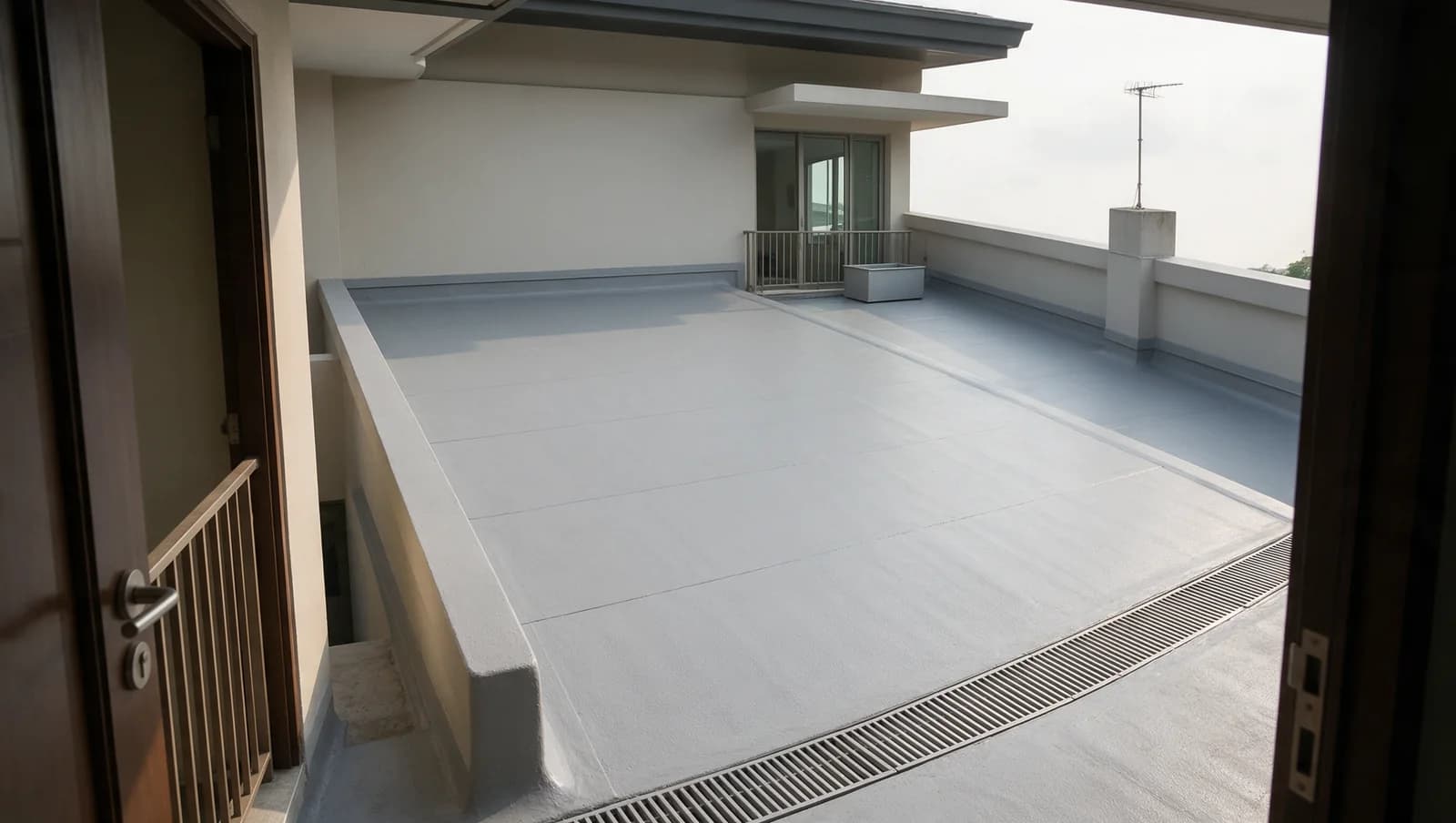
Waterproofing has to carry on up the parapet wall, around every pipe and into each drain outlet, because those are the places where it stops, turns or joins. Sika, for one, specifies a reinforcing fleece over cracks, joints and details in its reinforced Sikalastic-590 system. A job that covers only the main flat area can leave the leak exactly where it was.
Cover for the rooms below while the roof is open
Once the old layers come off, the room under that part of the roof has less between it and the rain until the new waterproofing is on and set. That is the stage when covers over the open area matter, at the end of each day and whenever rain stops the work.
Options
Materials & Systems
Acrylic or PU roof coating
A liquid rolled or sprayed on that cures into one seamless layer. Sika lists roofs with many details among the uses of both its Sikalastic-590 acrylic coating and its SikaRoof PUR-18 polyurethane hybrid system. It says the 590 is an exposed system that must not be covered with tiles or concrete, and that PUR-18 resists standing water but is not made for permanent immersion.
Torch-on bitumen membrane
Factory-made bitumen sheets melted onto a primed deck with a torch. For its SikaShield P24 sheet, Sika says to start at the lowest point of the roof and work uphill with each overlap sealed, so the joins face downhill and water runs over them. Its mineral top can be left in the sun without tiles or a coating, and Sika also lists rooftop gardens and patio decks among its uses.
Local junction repair
When one joint, pipe collar or drain outlet has failed on a roof that is otherwise sound, the repair can stay at that spot, joined into the good waterproofing around it. It is the smaller job, but only while the rest of the roof really is sound. Patching one spot on a roof that is worn all over leaves the next weak spot to leak.
How It Works
Our Process
Photos and notes from inside
Going onto the roof is a contractor's job, so the first record comes from inside the house. Photos of the ceiling stain, when it leaks (only in heavy rain, or every time it rains) and any earlier repairs are enough to start the discussion and decide what needs checking on site.
Check the roof and the old layer
On site, the roof's joints, pipes, drain outlets and any spots where water stands are checked along with the existing waterproofing, including whether it is still stuck down, cracked or holding damp underneath. Where part of the roof can't be judged without opening it up, that should be said before the scope is fixed.
Prepare the surface to the maker's rules
Preparation follows the rules for the product chosen. For its Sikalastic-590 coating, Sika says loose and weak concrete is removed, hollows and voids are opened up and filled, broken or missing roof tiles are replaced and glazed tiles are roughened before priming. An old layer that fails those checks comes off rather than being coated over.
Carry the waterproofing up walls and into drains
At the edges the waterproofing turns and carries on up the parapet wall, a detail known as the upturn, and it wraps around each pipe and runs into the drain outlets, joined to the main layer rather than left as separate patches. Each coat or sheet goes on only when the surface is dry and the weather suits the product.
Check the finished roof and hand over
The finished work is inspected, and any defects found are listed and put right. The handover should say which areas were done and which product went on, and any written warranty, with who gives it, which area and work it covers and what upkeep it requires.
From assessment to handover
Plan each stage around your home

Start with the existing conditions, measurements and access the work will need.

Agree which surfaces and belongings need protection before work begins.

Use the handover to record outstanding items and collect the care and service information.
Common Questions
Roof Waterproofing FAQ
How much does roof waterproofing cost?
What should I do while the roof is leaking?
Will another coating stop a recurring leak?
What is the best waterproofing system for a flat roof?
Can a roof terrace be waterproofed under tiles?
How long does roof waterproofing last?
Can roof waterproofing be applied in the rain?
Can I stay at home during waterproofing?
Does roof work need approval?
Have a different question? See all FAQs or WhatsApp us
Get Started
Discuss your project
Send photos and tell us what you want to change for your Roof Waterproofing project. We can discuss what needs checking on site before a firm scope and quote.
Your Contact Details
Resources
Roof Waterproofing Guides
roof-waterproofing
Water Pooling on Your Roof? Waterproofing Alone May Not Fix It
Water pooling on a roof may indicate a drainage problem that a new waterproof layer cannot correct. The surface slope, outlets and overflow provision determine how rainwater leaves the roof. Investigate them alongside the waterproofing so the repair addresses both water entry and the reason water is collecting there.
roof-waterproofing
Can Roof Waterproofing Be Done in the Rain?
Rain can interrupt preparation, application and curing during roof waterproofing. Whether a particular stage can proceed depends on the product and site conditions, not a single waiting period that applies to every roof. Before work begins, ask how exposed areas will be protected and how the contractor will decide when the surface is ready for the next stage.
roof-waterproofing
Roof Waterproofing Maintenance: What an Inspection Should Cover
A professional roof inspection should look for conditions that allow water in or prevent it draining away. That includes the waterproofing, outlets, joints and connections around roof features. Ask for findings tied to the inspected areas and a clear distinction between work needed now and items to monitor; a generic checklist alone will not explain your roof's condition.
roof-waterproofing
Condo vs Landed Roof Leaks: Who Should Arrange Repairs?
Who arranges a roof repair depends on ownership and responsibility for the affected roof. A landed homeowner may be responsible for their own roof, while a condominium leak can involve common property and the management corporation. Establish that responsibility before appointing a contractor, including where a private terrace sits above another unit.
roof-waterproofing
Bathroom vs Roof Waterproofing: Why the Repair Is Different
Bathroom and roof waterproofing both prevent water entering the building, but the conditions are different. A bathroom system sits beneath finishes around showers and drains; a roof system must suit its weather exposure, drainage and intended use. A repair that works in one place cannot be chosen for another on the word “waterproof” alone.
roof-waterproofing
Aluminium Roof Leaks: Reseal or Replace?
Resealing may be enough when an aluminium roof leaks at a joint or fixing and the surrounding sheets remain serviceable. Damaged sheets, poor junction details or wider deterioration can call for more work. The first decision is where water enters and what condition the roof is in, rather than which sealant to apply to the nearest visible gap.
Where We Work
Roof Waterproofing anywhere in Singapore
We take on landed homes across the whole island. These are the estates we get asked about most often, each with notes on the houses and the access there.
Your estate not listed? It makes no difference to us. Tell us where the house is.