Fix the wall first, then paint it
Facade & Exterior
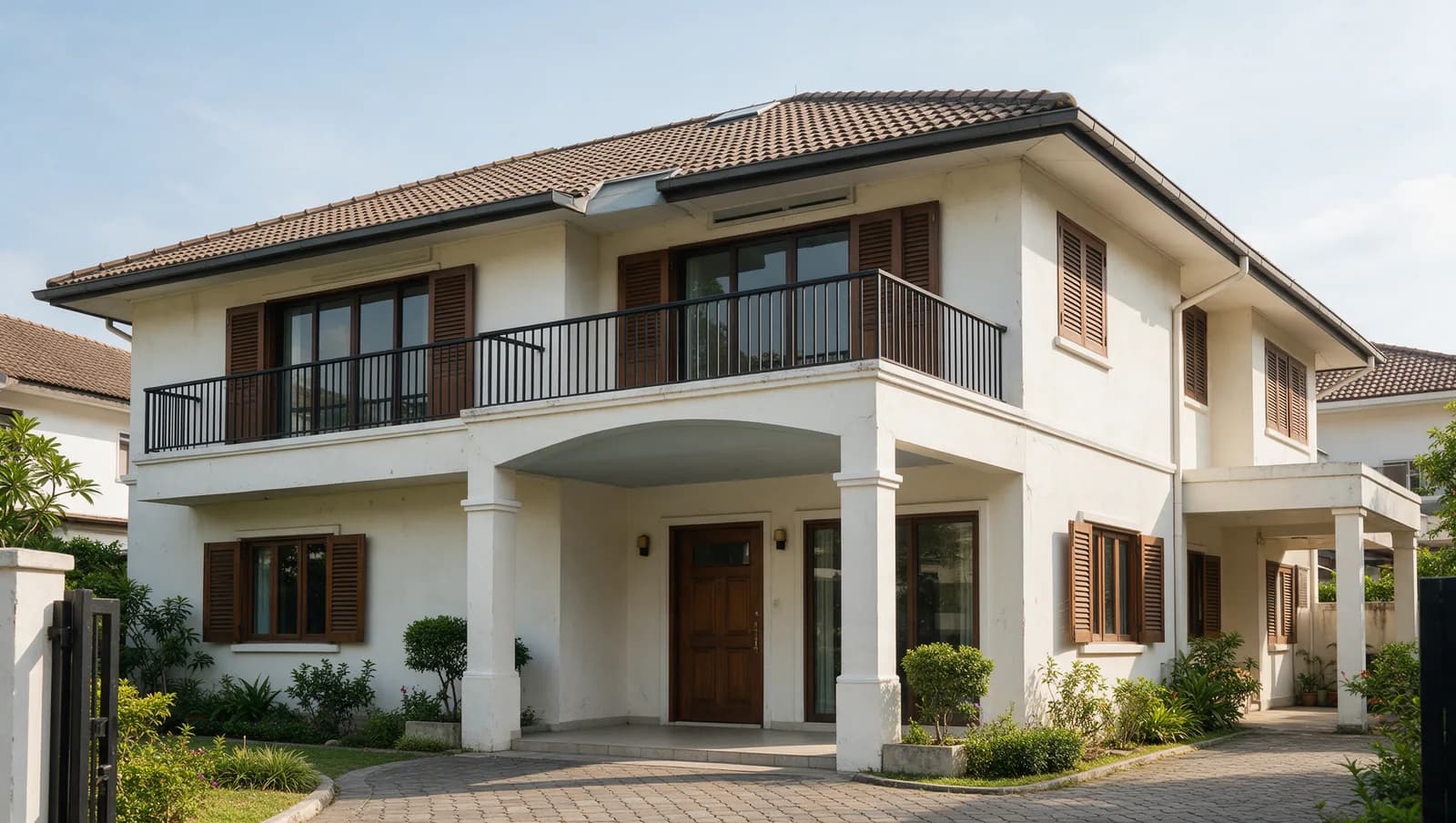
Exterior painting starts with the wall under the paint. Faded or chalky paint on sound plaster can be repainted. A damp patch, a crack that comes back, or loose or bulging plaster has to be repaired first, because paint needs a sound, dry wall. Our house painting and facade works cover repainting, plaster and render repair, batten screens and cladding.
Why Choose Us
What You Get
Find out why a wall is stained before it's painted over
Streaks, damp patches and green growth can come from rain running off a ledge, water getting in through a crack or a joint, or a wall that stays damp in shade. Finding which one first means the repair goes where the water is, not under a new coat of paint.
Know which walls the quote covers
A middle terrace has mainly a front and a back to paint. A corner terrace adds a whole side wall open to the weather, a semi-detached house has three sides because it shares one wall with next door, and a bungalow can have all four plus a deep car porch to reach. The upper floors need a scaffold or other safe access, which a quote may price as a separate item. Ask for each side of the house to be listed with how it will be reached.
See the finish on your own wall before you agree to it
A colour chip can look different across a whole house. Ask for a sample of the colour and finish on a wall you can see from the ground, next to the window frames, roof tiles or stone that are staying, and look at it in sun and in shade. With cladding, the sample shows the face, but the frame and fixings behind it are what hold it on the wall, so ask to see those drawn too.
Know where the wall was repaired
Keep the dated photos of each repaired area and the paint names and colour codes from handover, and note where screens or cladding are fixed into the wall. Whoever replaces a window or fixes the roof later can then avoid cutting through the repairs, and you can touch up with the same paint.
Options
Materials & Systems
Exterior paint
Acrylic exterior paint goes on as a system, such as a primer and then finish coats, over a wall that is sound, clean and dry. Elastomeric paints are sold as more flexible over fine cracks, within limits that differ by product, and they don't fix a crack that keeps moving.
Plaster and render repair
Loose, hollow or bulging plaster is hacked off back to a sound edge and re-rendered, then left to dry before painting. Where tapping finds hollow plaster across most of a wall, renewing that wall's render can make more sense than patching it. A patch can show through new paint as a change in texture, so agree how it will be finished.
Timber or aluminium batten screens
Battens on a frame fixed to the wall, for privacy and shade. The frame and fixings carry the screen's weight, so they're designed for it. Timber and aluminium both need cleaning and some upkeep.
Fibre cement or stone cladding
Panels or stone fixed to the wall on brackets or a frame, with their own joints, edges around windows and way of shedding rain. It's a new layer with its own structure, not a finish, and it may need a Qualified Person's design.
How It Works
Our Process
We visit and measure the house
Anything on the roof, the upper walls or reached by ladder or scaffold is our specialist's job, done from proper access, because the WSH Council counts scaffolds, open edges, ladders and roofs as work at height. We come for a free site assessment, walk round the house and measure each side. Your part is to note and photograph what you can see from the ground, the garden and inside the windows, such as peeling paint, cracks and where a damp patch shows inside after rain. If plaster or a fixed feature looks loose or ready to fall, keep people away from the area below and have it checked promptly.
We set out the repairs and give a fixed price
From the site assessment we set out which areas are patched, which walls get new render, and whether the finish is a repaint, screens or cladding, and we give you a fixed-price quote within 3 to 5 working days, never from photos. Where a crack keeps reopening or the structure is a worry, we arrange an engineer to assess it. You agree the scope, colour and finish with us before work starts.
Approvals, scaffold and protection
Where cladding needs structural plans, we arrange the Qualified Person and the BCA submission, which includes a certification letter on how the cladding's load is transferred. If the house is conserved, URA's Conservation Permission must be issued before any work starts, even just to repaint the facade, and owners or contractors can apply for it. Our specialist puts up the scaffold or other access and the protection for windows, plants and cars, and we agree with you who asks a neighbour if a scaffold has to stand on their land.
Repair first, then paint on a dry wall
Once the scaffold is up, our specialist taps the plaster to find hollow patches that look sound from the ground, hacks off loose or hollow plaster, re-renders it and fills cracks before any paint goes on, and we supervise the work. Paint goes on a dry wall and not in the rain. Dulux's Weathershield data sheet, for example, says not to apply that paint in wet weather or where the wall's moisture reading is above 17%, and to scrape off loose paint and treat algae first. Anything found outside the quoted scope is shown to you and agreed before it's done.
We check the upper walls and hand over
We check the finished upper walls, window tops and roof edge from the scaffold before it comes down. You look from the ground and the windows and don't climb it. At handover we give you dated photos of each repaired area, the paint names and colour codes, and a list of anything still to be put right, and the work comes with our warranty and after-care.
From assessment to handover
Plan each stage around your home

Start with the existing conditions, measurements and access the work will need.
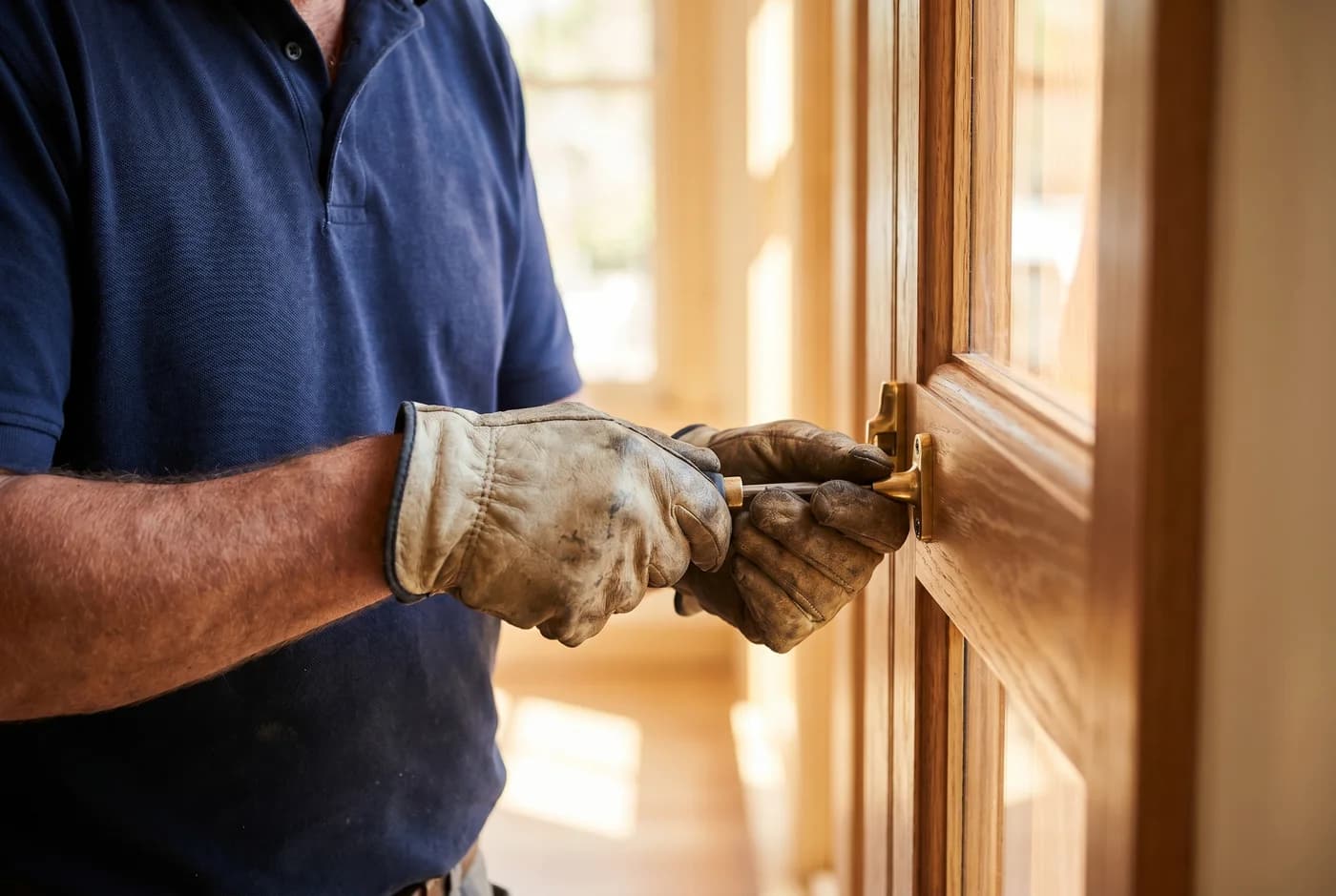
Agree which surfaces and belongings need protection before work begins.

Use the handover to record outstanding items and collect the care and service information.
Common Questions
Facade & Exterior FAQ
How much does a house facade renovation cost in Singapore?
Do I need approval for facade works on a landed house?
How long does an exterior renovation take?
How much does it cost to paint the exterior of a landed house?
What is the best exterior paint for Singapore weather?
Timber or aluminium battens for a facade screen?
Why does my exterior wall keep staining and growing algae?
Do I need to move out during facade works?
Can facade works be combined with my gate or roof work?
Have a different question? See all FAQs or WhatsApp us
Get Started
Discuss your project
Send photos and tell us what you want to change for your Facade & Exterior project. We can discuss what needs checking on site before a firm scope and quote.
Your Contact Details
Resources
Facade & Exterior Guides
facade-exterior
How to choose the best exterior colours for your house
Start your exterior house colour shortlist with warm white, soft grey or a muted colour that works with the roof and window frames. The best choice is one you like on the actual house. Test the proposed paint beside those fixed finishes before committing to the whole exterior.
facade-exterior
Damp Walls After Painting? Find the Cause Before Recoating
If damp patches or peeling paint keep returning on an exterior wall, another coat may cover the damage without stopping the water. First establish how moisture reaches the wall, especially around joints and openings. Once the cause is repaired and the surface is ready, the paint can do its proper job as the selected finish.
facade-exterior
Timber vs Aluminium Facade Screens: Privacy, Shade and Upkeep
Timber and aluminium facade screens can provide privacy and shade, but their appearance, detailing and maintenance differ. Look at the proposed screen from inside the house as well as the street. Spacing and orientation affect the view and light, while the chosen material and finish determine the care needed over time.
Related Services
Auto Gates
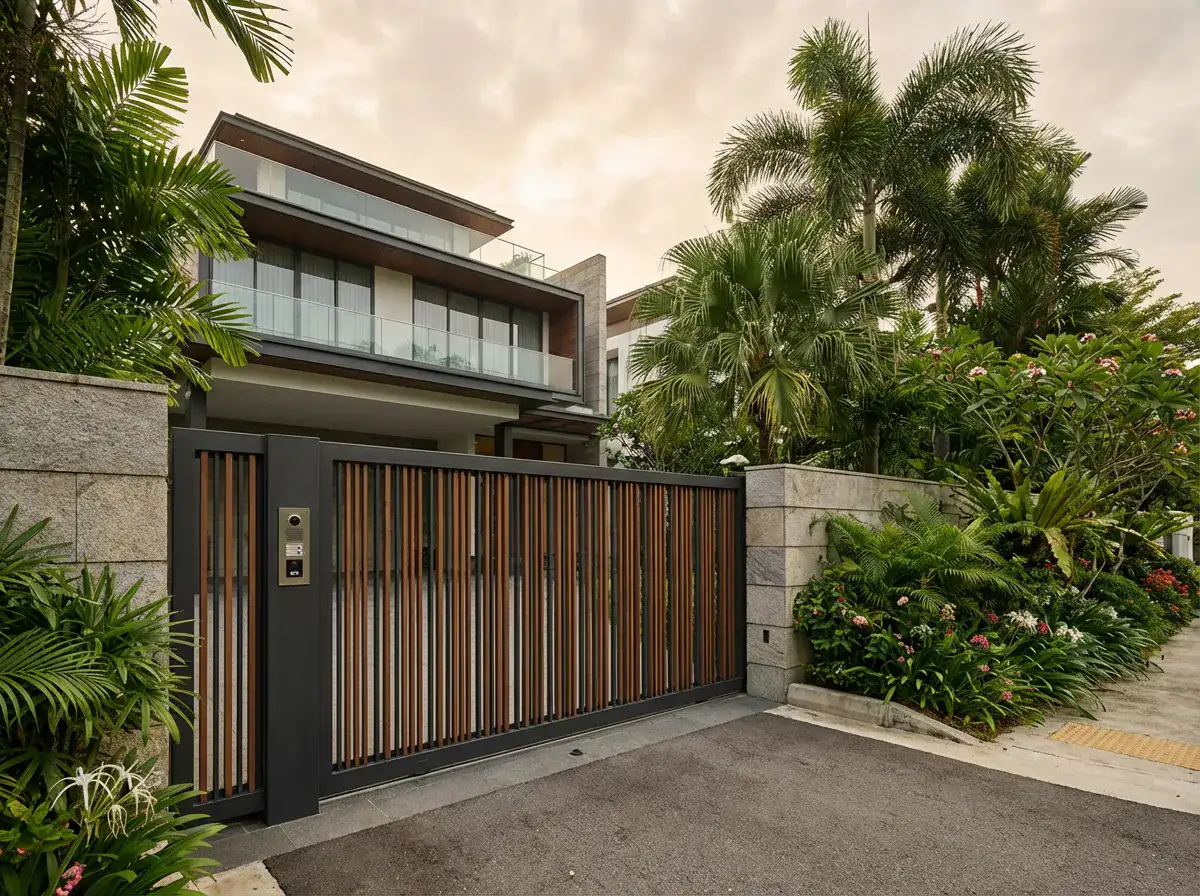
Swing or sliding, motor matched to the weight of your gate. Open it from the car, or from your phone.
Roof Waterproofing
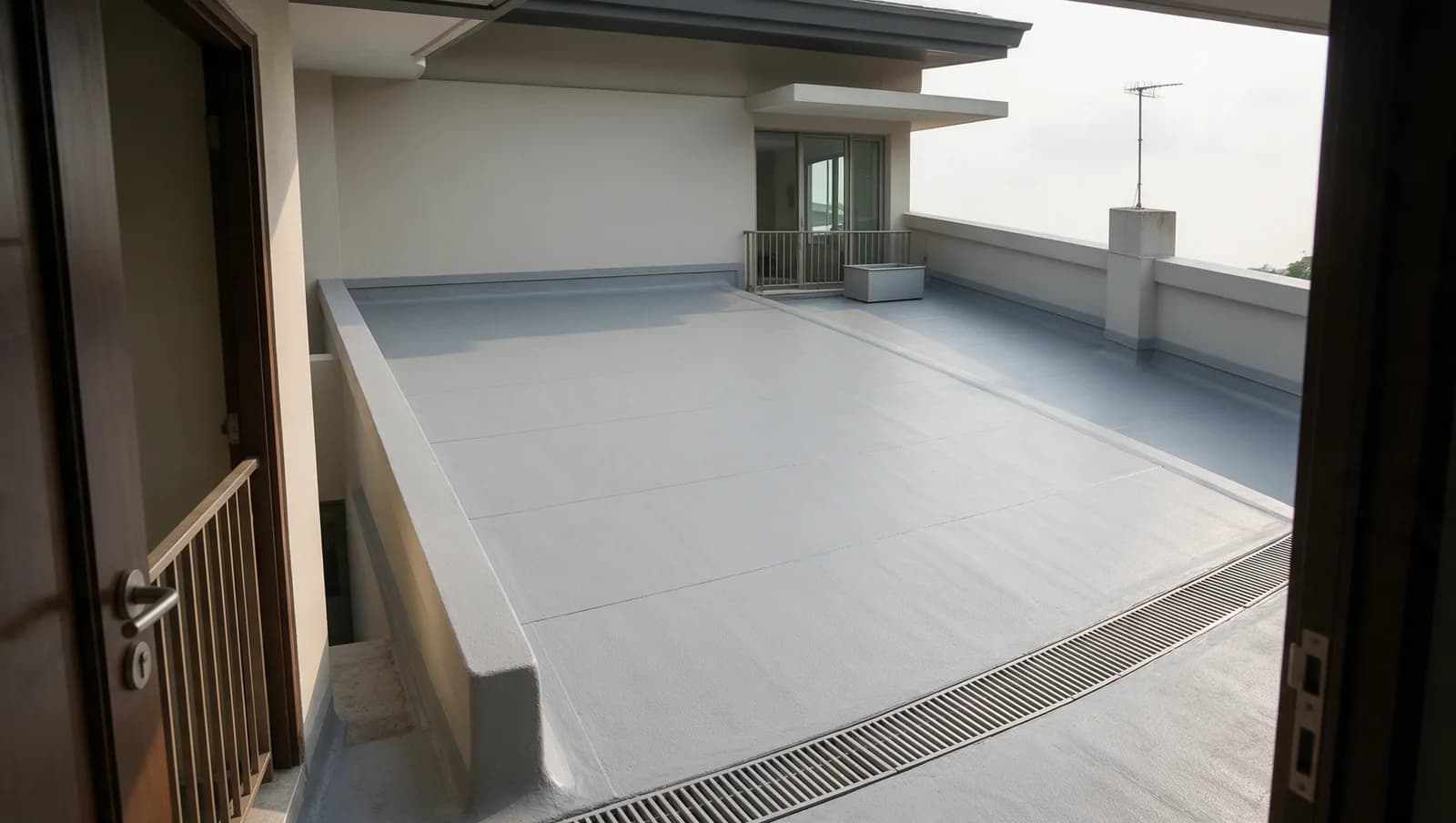
We trace where the water actually gets in and fix the cause. One proper job instead of a patch every monsoon.
Landed Interior Design
We design your home and build it ourselves. Moving walls, wiring, beams and approvals are our job, not someone else's.