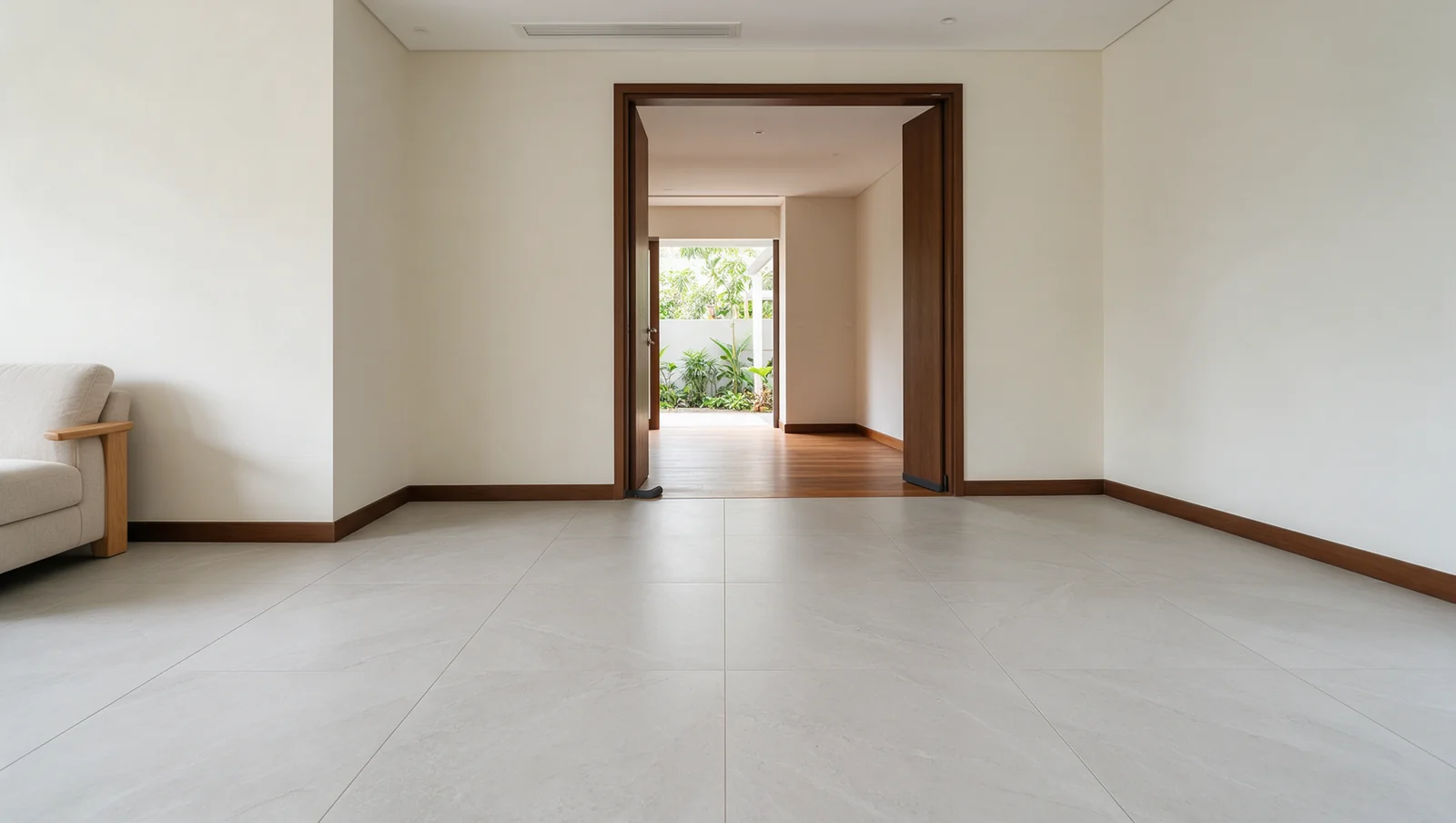
Vinyl, tiles, parquet and marble for landed homes
Flooring
Vinyl planks, vinyl tiles, floor tiles, parquet and marble each suit different rooms of a landed home, and the floor already there decides how the new one goes in. Firm old tiles can stay under click vinyl. Tiles that sound hollow, damp in a ground-floor slab, and doors or steps the raised floor would catch need sorting out first.
Why Choose Us
What You Get
Know whether your old tiles can stay
Firm ceramic tiles can stay under click vinyl, which saves hacking them out and carting the debris away. Tiles that sound hollow or have cracked may not be firmly fixed, and a floating floor needs a firm base, so loose ones are refixed or taken up before anything goes over them.
Doors that still close over the new floor
A new layer raises the floor, so each door swing, threshold and sliding track is checked against the new level before laying starts. Door frames are undercut, or a gap is left, so a floating floor can still move, and a door that would scrape is trimmed at the base. Agree the trim where two floors meet, so there's no lip to catch a foot.
Know whether the slab is dry enough
Where a ground-floor slab is laid straight on the earth, Quick-Step's vinyl instructions require an effective damp-proof membrane under the new floor, and its parquet instructions want concrete dry enough before laying, with the moisture readings recorded and kept. Ask to see those readings. If there's a leak or a damp patch, its cause is fixed first, because a new floor on top won't stop it.
Know which rooms you lose, and for how long
Hacking is dusty and noisy, and a room can't be used until its floor is laid and the product allows furniture back on it. Get the order of rooms and the days each one is out of use before work starts, then decide whether to stay in the house, move out for part of it or do one floor at a time.
Options
Materials & Systems
Vinyl and SPC
Vinyl planks and vinyl tiles come rigid or flexible. Rigid click vinyl, SPC being one kind, floats without glue, so it can go over firm ceramic tiles. Thinner, flexible vinyl can be glued down, which suits a kitchen where units or an island sit on the floor, because a floating floor pinned under them can open at the joints. Vinyl is softer underfoot than tile but dents more easily. It stays indoors, and Quick-Step keeps its vinyl out of showers and rooms with a floor drain.
Floor tiles
Porcelain and ceramic tiles are waterproof, which is why they're commonly used in bathrooms, kitchens and balconies. Porcelain is the harder and more durable of the two, and homogeneous tiles carry their pattern right through, so chips show less. A damaged tile can be replaced on its own, and large-format tiles mean fewer grout lines. The trade-offs are grout that collects dirt and a floor that's hard underfoot.
Parquet and timber
Parquet is real timber laid in small blocks or strips. It's warm underfoot, and a worn surface can be sanded and refinished, which a vinyl plank printed to look like wood can't. A sound timber floor may only need renewing. Bona, which makes timber-floor finishes, lists a deep clean, a recoat that adds a fresh layer of finish and a full refinish that repairs damage and can change the colour. The catch here is humidity, which can make wood expand and shift.
Marble and natural stone
Marble is very durable, and no two pieces are marked alike. It's also porous, so spills can stain it for good, sealants wear off over time and it discolours with age. It's hard underfoot, so a fall on it hurts more, which matters with elderly parents or young children at home. Granite has similar properties.
How It Works
Our Process
Free site assessment
We visit, measure each room, tap the old tiles for hollow spots, look for cracks and loose pieces, and check the levels, door clearances and any signs of damp. That decides whether the new floor can go on top or the old one has to come out. If the job is more than replacing a floor finish, we arrange a Qualified Person, as BCA advises, to check which approvals it needs, and arrange any BCA submission.
Choose the floor for each room
You choose from samples seen in the actual room, in daylight and under your own lights. Each product has to suit its room, such as tile where there's a floor trap, glue-down vinyl or tile where kitchen units sit on the floor, and an outdoor floor on a porch.
Get a fixed-price quote
We send a fixed-price quote within 3 to 5 working days of the site assessment, never from a photo. Check that it covers hacking and disposal, any waterproofing in wet areas, levelling or a new screed, the floor and its laying, skirting, trims where floors meet, and door trimming. Skirting and door trimming are the items some quotes leave out.
Prepare the base
Our specialist refixes or removes loose tiles, levels dips and wide grout lines, and lays timber or vinyl only once the base is as flat and dry as that product's instructions require. Each product sets its own limits, so a base that was fine for tile isn't automatically fine for vinyl. We supervise the work throughout.
Hand over and keep spares
At handover we open every door with you, check the trims and walk the floor for gaps, raised edges or hollow-sounding tiles. The floor comes with our warranty and after-care. Keep the product codes, care instructions and any moisture readings, along with spare planks or tiles from the same batch for later repairs.
From assessment to handover
Plan each stage around your home

Start with the existing conditions, measurements and access the work will need.
Agree which surfaces and belongings need protection before work begins.

Use the handover to record outstanding items and collect the care and service information.
Common Questions
Flooring FAQ
How much does new flooring cost in Singapore?
Is it cheaper to overlay the old floor or hack it off?
How long does it take to redo the flooring in a landed home?
Do I need approval to change the flooring in my landed home?
Which flooring holds up best in Singapore's humidity?
Can I lay timber on the ground floor of a landed house?
What flooring works for the car porch, balcony and patio?
My tiles sound hollow when tapped. Do they have to come off?
Can the new floor continue onto the staircase?
Have a different question? See all FAQs or WhatsApp us
Get Started
Discuss your project
Send photos and tell us what you want to change for your Flooring project. We can discuss what needs checking on site before a firm scope and quote.
Your Contact Details
Resources
Flooring Guides
flooring
Hollow or Cracked Tiles: Can You Repair Just the Affected Area?
A hollow sound, visible crack and raised tile are different signs, and none should be used on its own to decide the whole repair. A local problem may allow a local repair; movement or damage extending beneath a wider area may need more work. Have the affected tiles and their supporting layers assessed before assuming the entire floor must be replaced.
flooring
Large Floor Tiles: What to Plan Before Installation
Large floor tiles can create a calm appearance with fewer visible joints, but their cuts and joint positions need planning. The room's edges, doorways and floor condition affect the finished result. Review the layout and preparation with your installer before laying starts, when an awkward strip or badly placed cut is still easy to change.
flooring
Is flooring overlay cheaper than hacking?
Vinyl over old tiles skips hacking and disposal, but loose tiles, damp and door or stair work can eat the saving. Compare full quotes for the same rooms.
Related Services

Landed Interior Design
We design your home and build it ourselves. Moving walls, wiring, beams and approvals are our job, not someone else's.
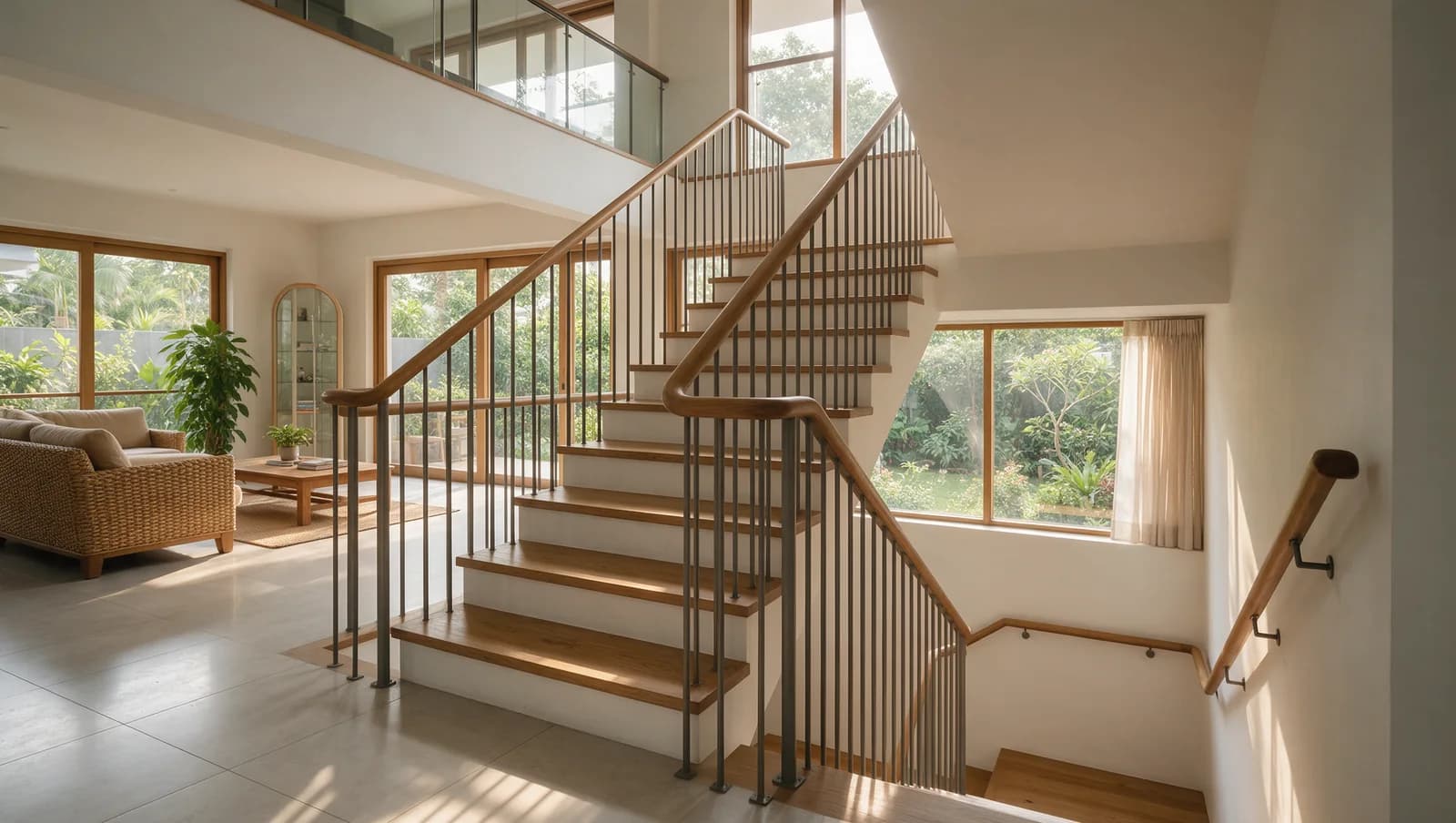
Staircase Renovation
New treads, balustrades and handrails, or a full rebuild. The staircase sets the tone for the whole house.

Carpentry & Built-Ins
Wardrobes and storage measured to your real walls, ceiling height and awkward corners, not a standard box with filler panels.