On this page
View In PDFA hollow sound, visible crack and raised tile are different signs, and none should be used on its own to decide the whole repair. A local problem may allow a local repair; movement or damage extending beneath a wider area may need more work. Have the affected tiles and their supporting layers assessed before assuming the entire floor must be replaced.

Before committing to replacement flooring, have the contractor explain which tiles, bonding layers or parts of the base are affected. An isolated problem may allow a local repair; damage involving a wider area or the layers beneath may require more work. Where the cause is still uncertain, further investigation should come before the repair choice.
Why the same noise can have different explanations
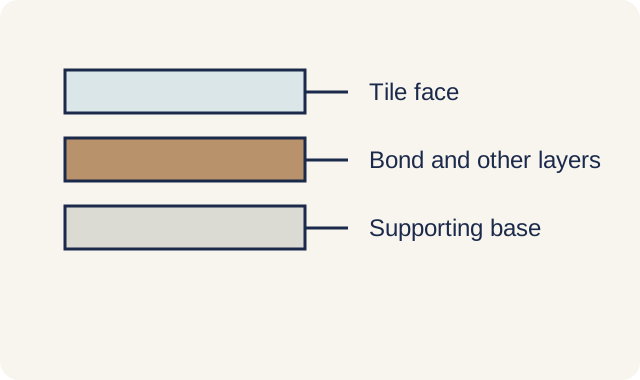
A tiled floor contains more than the surface you walk on. Tiles, adhesive, any intermediate layers and the base beneath them all affect how the finished floor performs. An acoustic difference can come from a void or a change in those layers. Hearing that difference does not reveal its depth, size or effect on support.
Hollow sounds do not, on their own, confirm a failed tile. A void or some layers beneath the tile can change the sound. The inspector needs to assess the installed floor before deciding whether the affected area needs repair.
The practical consequence is simple: a contractor who proposes widespread replacement should be able to explain the physical findings behind that scope. Equally, a reassuring explanation based on sound should not dismiss visible lifting, cracking or movement. Each observation deserves an account of what it does and does not establish.
Respond to the condition you can see
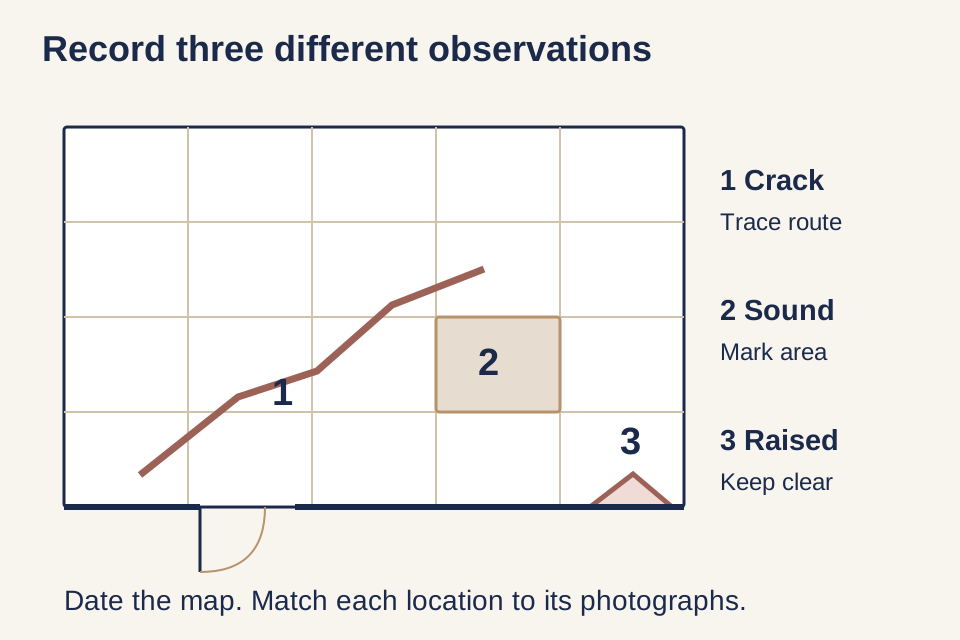
If tiles have lifted, edges are sharp or pieces are loose, keep people away from the affected area and arrange assessment. Do not press, strike or walk repeatedly over it to demonstrate the problem. A photograph from a safe position can record the change without testing how much more it will move.
For a sound difference without visible damage, arrange a condition review without turning it into an emergency diagnosis. Keep the observation precise: where it was noticed, whether it is new and whether there are other changes nearby. “Every tile is failing” and “there is nothing wrong” both go beyond what the noise alone can establish.
Cracking deserves its own description. A chip at one exposed edge and a crack crossing several tiles and grout joints need different investigation. Those patterns can guide where an inspector looks. They cannot prove a cause or assign responsibility without examining the installation and its history.
Show where the cracks, raised edges or sound changes occur
| Observation to record | Useful detail | Conclusion it cannot establish alone |
|---|---|---|
| Sound difference | Exact location, extent noticed and whether it is new. | Bond strength or remaining service life. |
| Crack | Route through tiles and joints, dates and visible change. | The layer where the movement began. |
| Raised or moving tile | Location and photographs from a safe position. | Why the assembly lost stability. |
| Dampness or staining | Location, timing and known water incidents. | The source or route of water. |
| Earlier repair | Repaired area and available records. | That the original cause was resolved. |
Start with a simple room sketch. Mark a doorway or other fixed feature so the orientation is unambiguous, then locate the affected tiles. Number photographs to match the sketch. A close-up shows the detail; a wider photograph shows where that detail sits in the floor. A collection of close-ups alone can be surprisingly hard to place later.
Record when the problem was first noticed and what has changed since. Include known events such as a leak, building work nearby, replacement of a section of floor or a heavy object being moved. Record them as history rather than causes. A crack appearing after another job does not establish that the job produced it.
Keep original photographs with their dates. Where it is safe to observe, take later photographs from a similar position so a reviewer can compare the same location. Let the assessor set any monitoring needed for the actual floor. If the condition changes, update the person assessing it.
Find out which layer is affected and how far the problem extends
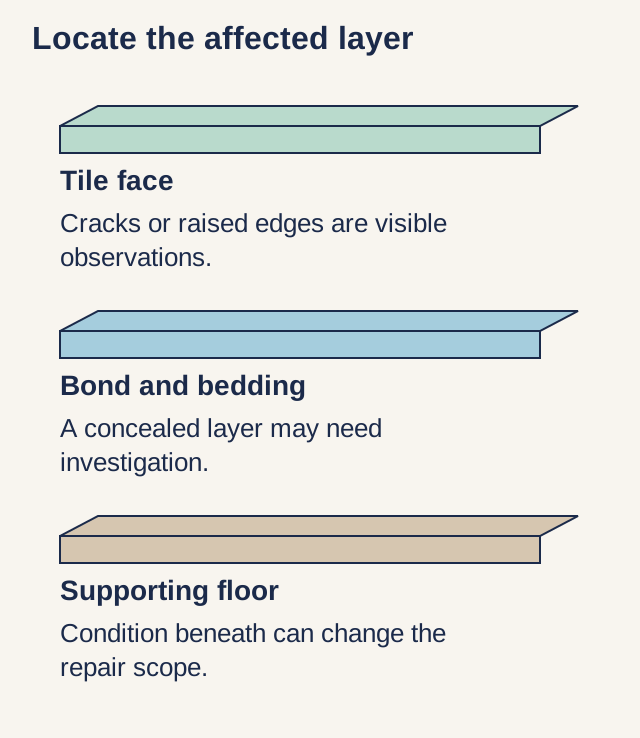
An assessment needs to relate the surface symptoms to the construction beneath. The technical literature on cracked tiles describes how movement in a substrate can affect the tile above it. Damage visible in the tile therefore does not automatically identify the tile product as the cause.
Ask the assessor to distinguish an observation, a likely explanation and a verified finding in the report. A surface survey may identify a pattern while leaving concealed conditions unresolved. If selective opening is proposed, agree its purpose, location, documentation and reinstatement before it happens. Opening an area without a clear question can damage the floor while producing little useful evidence.
The report should identify the basis used to judge the installation: the applicable specification, selected materials, available construction records and site findings. There is no reason to import an isolated percentage from an overseas article and treat it as the agreed acceptance rule for a Singapore renovation. Where the original specification is missing, that limitation should remain visible.
If responsibility is disputed or the proposed work is extensive, an appropriately qualified independent assessment can help separate the condition from the sales proposal. Clarify the assessor’s scope and experience with that type of floor. A general renovation quotation and a forensic investigation answer different questions, even when both involve looking at the floor.
Match the repair to the affected area and underlying cause
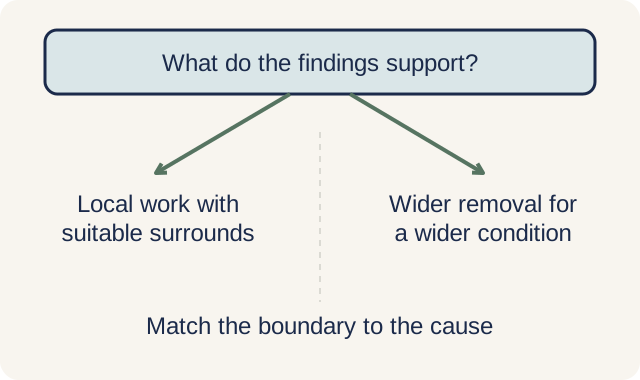
A local repair can be reasonable where the affected area and underlying cause are sufficiently understood and the surrounding floor is sound enough to keep. The scope should say what happens beneath the replacement tile, how adjacent areas are treated and what finish match can realistically be achieved. A spare tile solves a supply problem; it does not resolve an unexplained substrate problem.
Broad removal may become justified when the evidence shows a wider condition that local work cannot adequately address. The report should connect that conclusion to the affected area and the proposed method. Neither a dramatic sound demonstration nor a tidy photograph of the finished surface is a substitute for that explanation.
Overlay also needs an acceptable base. A manufacturer’s requirements for retaining an existing floor make that condition explicit for its specified floating vinyl. An overlay cannot make an unsound existing floor suitable to keep. Resolve the condition assessment before treating an overlay as the least disruptive answer.
The flooring buying guide can help with the material and installation choices once the repair basis is clear. Keep that selection conversation tied to the findings, including any uncertainty that remains. A new finish should follow an understood scope.
After the inspection, you should know which areas can stay, which need work and what remains uncertain beneath the surface. Ask the contractor to connect the recommended repair to those findings, including the preparation below any replacement tiles. That is the basis for deciding whether a local repair is enough or a larger section of floor needs to come out.
Need help with your project?
Tell us what you need on WhatsApp and send a few photos. We'll arrange a free site assessment, then give you a fixed-price quote within 3 to 5 working days.