On this page
View In PDFFive signs deserve a roof-waterproofing assessment: ceiling stains that return after rain; cracks or splits in the exposed waterproofing; blistering or peeling membrane; gaps at roof joints and flashings; and water that repeatedly ponds or overflows. These signs point to different problems. They do not all mean the whole roof needs a new coating, and some call for drainage or junction repairs instead.

If the pattern suggests the roof, include it in a roof-waterproofing assessment, together with dated photographs and any previous repairs. The contractor may also need to examine nearby walls and the joints where building parts meet. Those details can admit water even when the mark appears to sit directly below the roof.
In Singapore, rain is plentiful and often heavy, so a roof has to shed water as well as resist it. The signs below cover concrete flat roofs and waterproofed terraces; open joints and rain-related leaks also matter on pitched roofs. Observe only from a safe indoor or ground-level position, or use photographs taken by the inspection team. An inaccessible roof is a reason to arrange access professionally.
First distinguish a stain from an immediate hazard
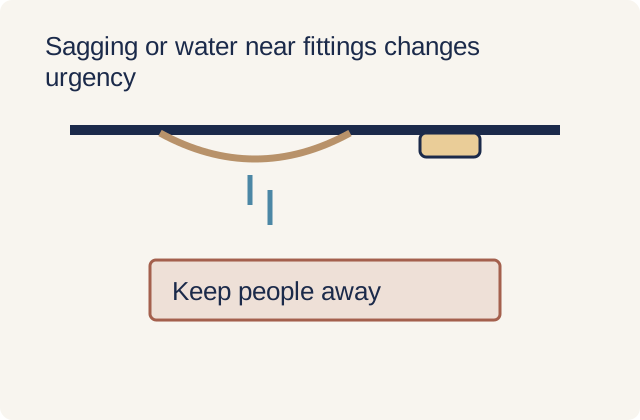
An old, dry mark and an actively dripping ceiling are different situations. If the ceiling is sagging, pieces are loose or water is near electrical fittings, keep people away from the affected area and seek prompt professional assistance. Do not poke the ceiling, remove a fitting or enter a roof void to look for the source.
Where the area can be observed safely from the floor, photograph the overall location and then the detail. Include a recognisable fixed feature so later photographs show the same place. Note whether there is active dripping, a change in the stain’s edge or a damp area, without climbing or disturbing the surface.
Roof access is separate professional work. Work-at-height guidance includes open edges and fragile surfaces, including roof skylights. A homeowner’s useful observation record does not require walking onto the roof or clearing an outlet during a storm.
1. Ceiling stains or drips return after rain
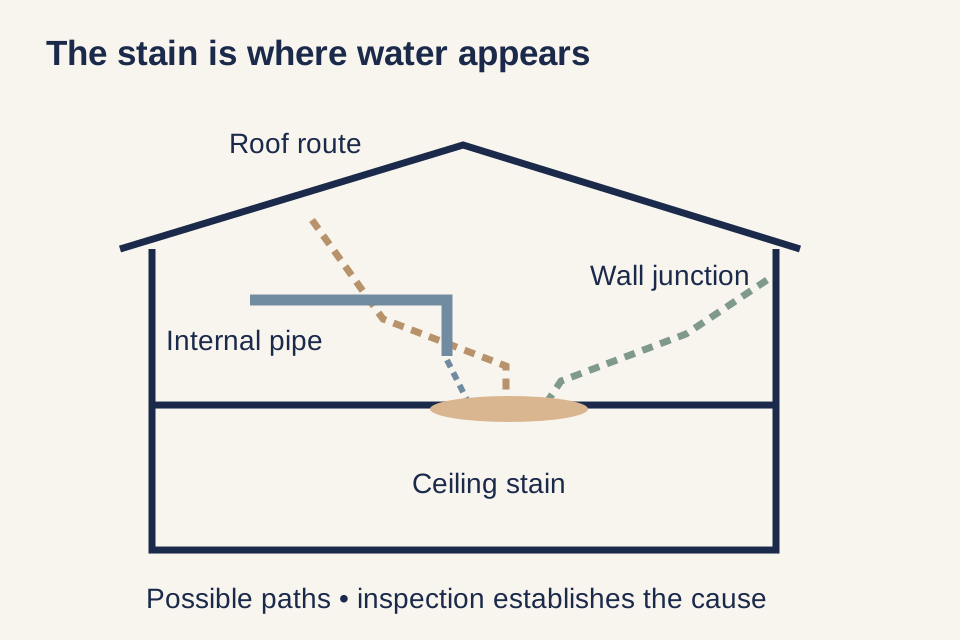
A stain that grows during or after rain makes external water entry a useful line of investigation. It does not prove that the membrane directly above the mark is the source. The roof, wall junction, flashing, penetration and drainage arrangement may all need to be considered.
BCA’s external-wall waterproofing guidance explains how water can enter through cracks and joints. Near the roof, the inspection therefore needs to include connections between the wall, roof and windows, as well as the main roof surface.
Water can emerge at a different location from its entry. Hidden surfaces and junctions can carry it before it reaches a visible ceiling. The diagram shows possible routes, not a diagnosis. Its purpose is to explain why a coating applied only above the stain can miss the joint where water enters.
Record whether the symptom appears during the rain, after a delay or only in certain storms. If wind direction is known from ordinary observation, include it without trying to measure conditions on the roof. The timing and weather pattern may help a contractor choose a focused inspection or test, but they do not identify a defect with certainty.
2. Cracks or splits appear in the waterproofing
| Visible detail | What it does and does not establish |
|---|---|
| A split through an exposed membrane | The water barrier is interrupted; its depth and surrounding condition need assessment. |
| A crack in a tile, screed or surface finish | The layer beneath may still be intact; this alone does not establish a leaking membrane. |
A split across an exposed waterproof layer is a more direct warning than a mark on the ceiling. The barrier needs to remain continuous across the roof and its details; splits and failed connections need repair before coating. Photograph the split and its wider location if it is already visible safely, or ask the roofer to show it in the inspection photographs.
The distinction between layers matters on a tiled roof terrace. A cracked tile does not reveal the condition of the waterproofing below it. Equally, an attractive finish can hide a defect. Ask the inspection team to identify the damaged layer and whether the same problem appears elsewhere before accepting either a cosmetic fill or a full replacement.
3. The membrane bubbles, lifts or peels
| What the inspection photo shows | Question the repair must resolve |
|---|---|
| A raised bubble under the membrane | Is moisture trapped beneath, and is the surrounding material still bonded? |
| A lifted edge or peeling patch | Which layer is coming away, and what sound surface can receive the repair? |
Bubbles, peeling and lifted patches indicate a problem within or beneath the coating. Trapped moisture is one possibility: vapour-permeable roof membranes allow moisture to escape, helping avoid blistering. The roofer needs to establish the cause and whether the underlying layer remains sound before adding another coat, even if no water is dripping indoors yet.
A photograph cannot settle whether one small area or a wider part of the system is affected. Ask the team to explain what they found beneath any authorised inspection opening and how the proposed work deals with it. Do not puncture blisters or pull off loose material yourself; disturbing the covering can expose the roof before a repair is ready.
4. Gaps open where the roof meets a wall or fitting
| Detail | Visible warning |
|---|---|
| Roof-to-wall junction | A waterproofing edge or seal has separated from the wall. |
| Pipe or skylight base | The sealing detail is split or pulling away. |
| Sheet overlap or metal flashing | A seam has opened or the protective covering has lifted. |
A roof has to remain watertight where it turns up a wall, passes around a pipe or meets a skylight. Flashing is the protective covering at a joint that helps direct water away from the gap. A sound-looking main roof surface does not compensate for an open connection beside it.
Repair guidance for roof coatings treats open seams, loose terminations and flashings as preparation work before the main coating. The exact repair depends on the existing roof system. Ask for close and wider photographs of the failed connection so the proposed scope includes the place water can enter, rather than only the easily measured flat area.
5. Water repeatedly stands on the roof or spills over its drainage
| Observed pattern | What needs checking |
|---|---|
| Water remains in the same low area after rain | Roof falls and the route to the outlet. |
| A gutter or outlet overflows | Obstruction, damage and the drainage arrangement. |
| Ponding beside a membrane defect | Both drainage and the condition of the water barrier. |
Water should have a route off a flat roof. Ponding and drainage conditions belong in the roof inspection, alongside the membrane and its connections. If repeated inspections show water left in the same area, check whether an obstructed outlet, local depression or interrupted drainage path is keeping it there.
A blocked outlet and a low spot in the roof are different problems. Clearing an obstruction may restore drainage where the surrounding roof remains sound; a persistent low area needs a different assessment. A new coating does not create a missing fall or clear a blocked pipe. Ask what is causing the water to collect and whether the repair includes that cause.
There is no need to climb up during rain to gather better evidence. Record overflow from a safe position and share previous inspection photographs. Avoid treating a fixed number of hours as a universal pass-or-fail rule: the roof design, weather and specified system matter. The useful finding is why water remains and what work will allow it to drain.
If it changes with household water use, widen the investigation
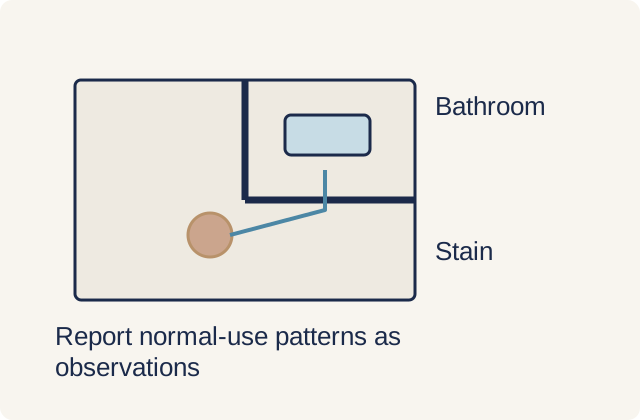
A mark that changes when an upstairs bathroom is used, or when air-conditioning operates, creates a different line of enquiry. It may involve plumbing, a condensate route or another moisture source. That association should be reported as an observation rather than labelled “the pipe leak”.
Moisture guidance identifies leaking pipes, condensation and roof leaks as distinct possible sources of hidden dampness. The repair follows the source. Recoating an external roof cannot be expected to fix an unrelated internal pipe or condensation problem.
Keep the normal-use record simple. Note the room, approximate time, which fixture or system was in use and when the visible change appeared. Do not deliberately flood a floor, disconnect a drain or run an improvised test to prove a theory. A professional can decide whether controlled testing is appropriate and how to limit damage.
Multiple associations can occur together. Rainy weather and aircon use, for example, do not form a clean experiment. Give the investigator the complete record, including occasions when a suspected trigger occurred without a visible change. Those non-events can be useful context.
If the pattern is unclear, show the exact stain location
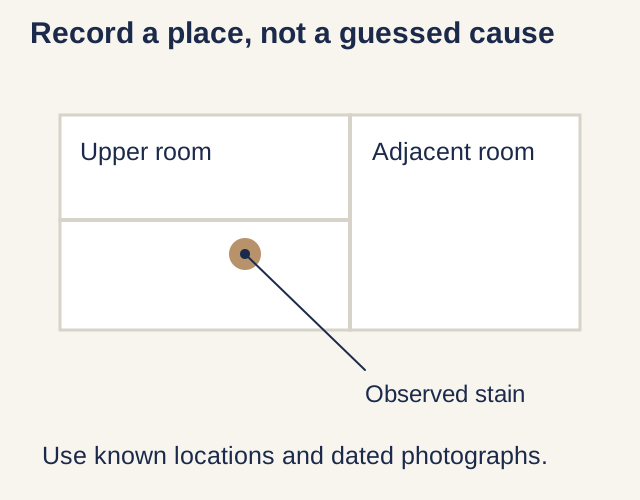
Sometimes the stain is dry during the visit and the household cannot identify a consistent pattern. That is a reason to make the uncertainty explicit, not to choose the most familiar repair category. The contractor can explain what was accessible, what could be inspected and what further investigation would change the scope.
Mark the stain on a simple plan with the room name and nearby external walls, bathrooms or aircon units. Available house drawings and photographs of earlier work can help establish what lies above. If previous alterations are uncertain, record that rather than filling in a guessed pipe or roof arrangement.
| Record | Why it helps |
|---|---|
| Exact room and location | Relates the symptom to plans and construction above |
| Date and visible change | Separates an old mark from a new event |
| Rain and delay | Provides context for exposed roof and wall routes |
| Normal water or aircon use | Identifies other systems worth investigating |
| Previous repair location and scope | Shows what has already been changed |
| What could not be observed | Keeps inaccessible areas from being treated as checked |
A useful investigation result separates findings from possibilities. “Failed junction observed at this location” is different from “water entry suspected above this room”. Both may be valid stages of the investigation. The repair proposal should show which stage supports the work being priced.
Ask how the proposed work addresses the water entry
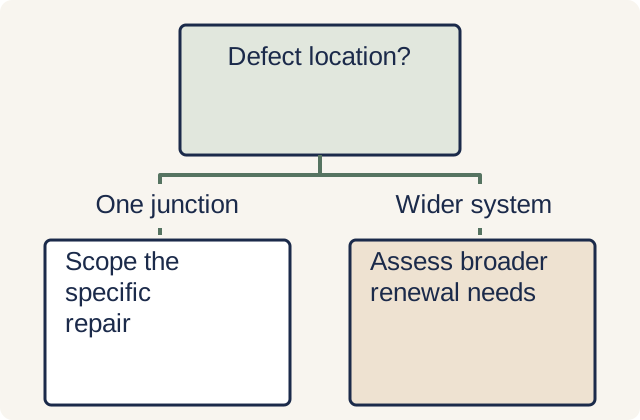
If the source is an isolated junction defect and the surrounding system is suitable, a targeted repair may be reasonable. If investigation identifies wider failure or incompatible existing layers, the scope may need to expand. Those are condition-led decisions, not conclusions available from the stain’s colour or size.
The proposal should connect the affected area to preparation, the specified repair system and the junctions included. If drainage or other building work is necessary, keep it visible. A large quoted roof area can still omit the outlet or upstand responsible for the symptom.
One proposal might offer a new coating over the main roof field, while another includes investigation and repair of a roof-to-wall junction. If the evidence points to the junction, the wider coating area is not automatically the more complete remedy. Compare how each scope addresses the identified path.
Testing should also have a defined purpose. The method must suit the roof's construction and site conditions, with the professional team controlling it. A test can provide evidence about the area and conditions tested; it cannot guarantee that every future water route has been eliminated.
Address the moisture source before repairing the ceiling
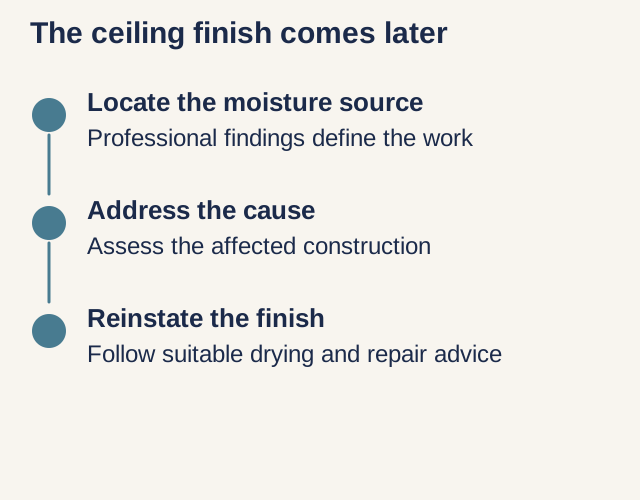
The visible finish may need repair after the moisture source is addressed and the affected construction has been assessed. Painting over the mark first can conceal useful evidence and leave the underlying issue active. The appropriate drying and reinstatement depend on the material and extent of damage.
Keep records of the repair and follow-up observations. Photograph the same location after relevant weather or use, with dates. If the symptom returns, those records help distinguish recurrence at the same place from a new problem nearby. A warranty claim is easier to discuss when the original finding, completed scope and subsequent event can be connected.
Use the roof-waterproofing buying guide when an investigation has established the likely roof scope. It explains how to compare system choices, preparation and handover without reducing the decision to a product name.
For the first assessment discussion, send the room location, dated photographs, weather or use pattern and earlier repair records. The useful starting question is where the water is coming from and what finding supports the proposed remedy. Once that is clear, the waterproofing scope can be matched to the problem.
Roof Waterproofing across Singapore
Need help with your project?
Tell us what you need on WhatsApp and send a few photos. We'll arrange a free site assessment, then give you a fixed-price quote within 3 to 5 working days.