D19 · Mass Landed
Roof Waterproofing in Serangoon Gardens, Singapore
Serangoon Gardens roofs are mostly older flat-slab construction whose original membranes have taken decades of monsoon and UV exposure. Leaks are common, particularly at the slab-to-parapet junction and around aging penetrations for old hot-water service lines and air-con pipework.
Why Serangoon Gardens
Roof Waterproofing for Serangoon Gardens homes
By the time owners here call for a proper system replacement, the roof has usually been patched several times already. Another patch tends to buy months, not years, because the failure is in the membrane as a whole rather than at any one spot. Roof areas on these homes are modest, which keeps a full strip-and-replace within reach.
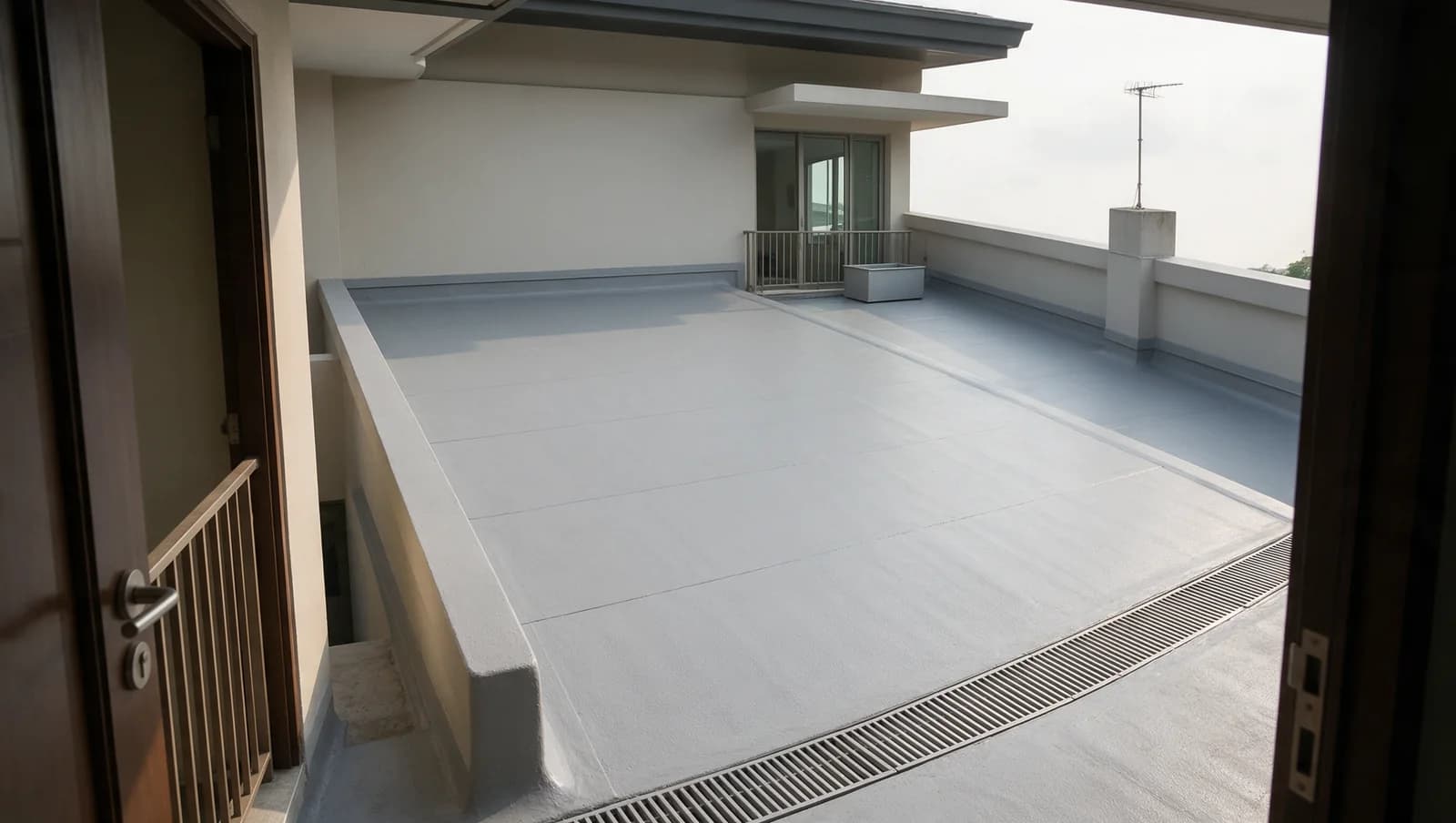
Typical jobs here are full torch-on or PU coating systems on modest terrace-scale roofs. PU coatings are common where budgets are constrained, with the understanding that they need recoating sooner than a full membrane system. We scope each roof after a free site assessment.
A roof that has leaked repeatedly despite several patches is telling you the membrane is done. The useful survey walks the whole slab, checks the parapet junctions and every penetration, and looks at whether the original outlets still cope with heavy monsoon bursts, because undersized drainage will find the next weak point in any new membrane.
Common Questions
Roof Waterproofing in Serangoon Gardens: FAQ
How much does roof waterproofing cost?
The biggest difference is whether one spot is fixed or the whole roof is redone. Resealing one joint or drain outlet on a roof that is otherwise sound is a small job. Coating a whole roof is bigger, and bigger again when the old layer has to come off first. Sika's data sheet for its Sikalastic-590 coating, for example, says an existing coating must be sound and firmly stuck down, and the surface below 6% moisture, before the 590 goes on, so a lifting or damp layer means stripping or drying work first. A tiled roof terrace adds lifting and relaying the tiles to reach the waterproofing underneath. Fixing a drain outlet or a slope where water stands adds work, and so does a roof that is hard to reach. Roof waterproofing costs for repair, recoat or replacement go through these in more depth.
What should I do while the roof is leaking?
Leave the roof to the contractor, because getting up there is work at height, and look and take notes only from inside the house or from a safe window. Catch the drips, move belongings out of the way, and keep clear of any light fitting or socket that is getting wet until an electrician has checked it. Take photos of the stain and the drip, note when it leaks (in heavy rain only, or every time it rains) and which rooms are affected, and send those to us with your enquiry. A temporary cover over the leaking area and the permanent repair are separate pieces of work, and the cover only buys time. What to do while you arrange help has more, and five signs a roof needs waterproofing covers the marks that show up before a drip.
Will another coating stop a recurring leak?
Only if the new coat covers the place where water is getting in and goes onto a sound surface. If the leak comes from the joint where the roof meets a wall, from a drain outlet or from damp trapped under the old coating, another coat over the main flat area leaves that route open. A leak that comes back after recoating suggests the entry point may not have been found. If the last job came with a written warranty, start the warranty claim before paying for another coat.
What is the best waterproofing system for a flat roof?
The one that suits how the roof is used and what is on it now. For an exposed flat roof with plenty of pipes and corners, a liquid acrylic or PU coating forms one seamless layer, and Sika lists roofs with numerous details among the uses of its SikaRoof PUR-18. A roof that will sit under tiles or a garden needs a system that can be covered, such as a torch-on sheet. If water still stands on the roof long after rain, ask whether the fall or the drain outlet should be corrected in the same job. Sika recommends a 1% fall for its Sikalastic-590, with 0.5% possible as a minimum depending on the roof layout and drains, and says the 590 can go on roofs with short ponding water, while it rates PUR-18 for standing water but not for sitting under water permanently. Choosing waterproofing for your roof and torch-on versus liquid waterproofing go further.
Can a roof terrace be waterproofed under tiles?
It can, with a system made to sit under a finish. A coating made to stay exposed is not automatically suitable, and Sika says its Sikalastic-590 is an exposed system that must not be covered with tile or concrete. Sika lists rooftop gardens and patio decks among the uses of its SikaShield P24 torch-on sheet. On an existing tiled terrace, redoing the layer underneath means lifting the tiles, and the drain outlets and the upturn at the walls are redone with it so the new layer joins them. Exposed versus screeded roof waterproofing compares the two set-ups.
How long does roof waterproofing last?
No single number holds across products, so a lifespan quoted for a whole type of waterproofing tells you little about your roof. What shortens it is easier to pin down. Water left standing on a product not made for it is one, since Sika rates its SikaRoof PUR-18 for standing water but not permanent immersion. Covering a coating made to stay exposed is another, and Sika says its Sikalastic-590 must not be tiled over. Coating over a damp or loose surface is a third. A written warranty, if one is given, is the firmer promise. Check who gives it, which area and work it covers, what the remedy is, what it excludes and what upkeep it requires, including what happens if later equipment work disturbs the roof. Roof waterproofing warranties are explained in more detail.
Have a different question? See the full Roof Waterproofing guide or WhatsApp us.
Get Started
Free Quote for Serangoon Gardens Homes
Tell us about your roof waterproofing project in Serangoon Gardens. We'll arrange a free site assessment and provide a detailed, no-obligation quotation.
Your Contact Details
Also Serving