On this page
View In PDFSingapore installers advertise liquid and torch-on flat roof waterproofing from about S$15 to S$70 per square metre on their own websites (checked October 2026), and about S$1,400 to S$10,000 for a whole flat roof of about 55 to 150 square metres. A minor leak repair, such as resealing a joint or replacing a few broken tiles, is advertised from about S$150 to S$800. These are advertised starting prices, not quotes, and removing the old layer or a hard-to-reach roof can push your price up.
What Determines Waterproofing Cost?
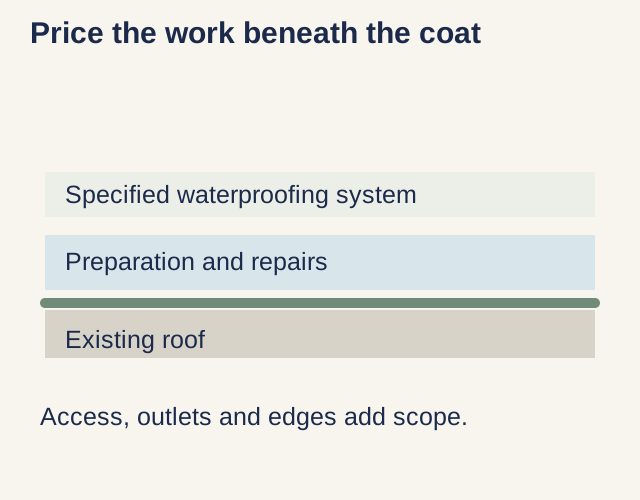
The useful starting point for a roof waterproofing budget is the repair the roof actually needs. Water can enter at a junction or outlet even when most of the roof remains sound. Paying to coat every square metre will not solve a defect that the new system leaves untreated.
Conversely, a small ceiling stain can come from a wider failure above it. If the old waterproofing is loose or traps moisture, a patch may leave the same weak base in place. The difference between a local repair and renewal should follow the leak diagnosis, then the measured area and the work needed to reach a sound surface.
Cost by Waterproofing Method
The table below shows what Singapore installers advertise on their own websites for each job (checked October 2026). They're starting prices rather than quotes, so when you compare a quote with them, ask whether it includes preparation, access and GST.
| Roof and work | Advertised starting prices |
|---|---|
| Flat roof, liquid coating such as polyurethane (PU) or a torch-on sheet | S$15 to S$70 per square metre |
| Whole flat roof of about 55 to 150 square metres, liquid or torch-on | S$1,400 to S$10,000 per roof |
| Minor leak repair, such as resealing a joint or replacing a few broken tiles | S$150 to S$800 per repair |
| Tiled roof on a landed home, all tiles replaced | S$8,000 to S$45,000 per roof |
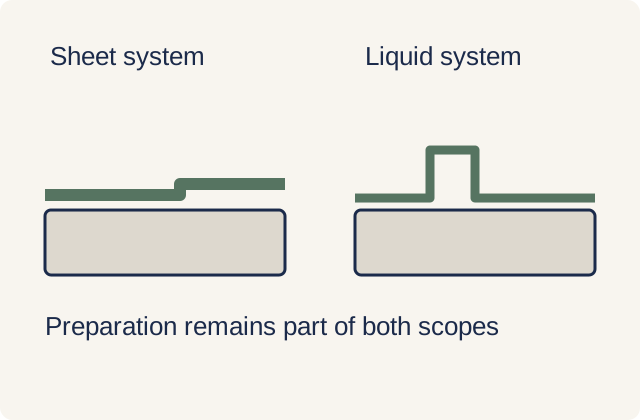
Liquid systems form the waterproof layer on the roof. Their price depends on preparation, primer, reinforcement and specified coverage as well as the coating itself. An acrylic system intended for metal roofing cannot be compared directly with a PU proposal for a concrete terrace as though they were interchangeable finishes.
A liquid-waterproofing quotation needs to identify the complete system. For example, the local requirements for Sikalastic-702, a polyurea-hybrid membrane, specify substrate-dependent primers and conditions for overcoating. Two liquid-waterproofing quotations can therefore include different preparation and coating work; compare the full specification alongside the price.
Torch-on sheet systems involve prepared substrates, specified overlaps and professional hot-work precautions. Whether they suit the roof depends on exposure, access and the specified roof layers and details. Cementitious products include flexible formulations; their roof use must follow the particular product documentation.
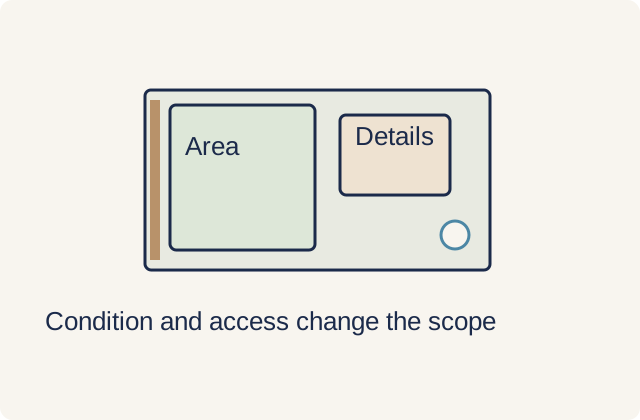
Don't multiply the per square metre price by your roof area to get a total. Small jobs can carry a minimum charge, and the setup and the work around drains, edges and pipes don't shrink in step with your roof's area.
If your quotation uses square feet, compare the same measured surface in both proposals. A whole plot area, the horizontal roof footprint and the actual treated surface need not be the same measurement. Upstands and other vertical details also need to appear somewhere in the price.
Labour Costs
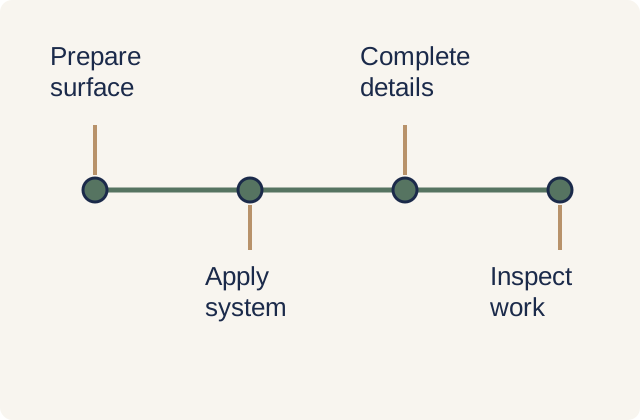
Labour cost reflects safe access, removal, preparation and detailing as well as membrane application. Both liquid and sheet systems need competent installers. A generic labour percentage does not describe a roof with difficult access or substantial repair.
Weather and curing affect how the work can be organised. A small roof with many pipes, awkward perimeter details or poor access may involve more labour than its area suggests. Ask for access, preparation and application to be identified separately, even if the contractor quotes one combined labour-and-materials total.
Surface preparation is necessary to provide a suitable base for the selected system. The proposal should identify loose or unsound layers, repairs and compatible primers. Ask how those conditions were assessed before accepting an allowance.
Additional Costs to Budget For
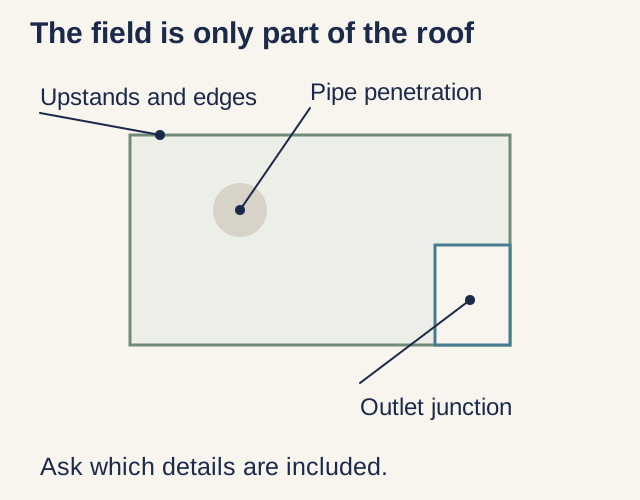
Identify which failed layers need removal and how the exposed substrate will be assessed. Applying a new coating over an unsound layer can leave the same weakness in place. The removal scope should follow the actual condition and system requirements.
Screed repairs and correction of drainage falls may be separate work. Added layers change levels and loading, so the proposal needs to address those effects. Do not assume a coating can eliminate ponding caused by the roof geometry.
Drains, upstands, joints and penetrations need compatible detailing. Ask for these locations to be identified in the scope rather than left as a general allowance. Their quantity and access can influence the price independently of area.
Treat the project total as the specified waterproofing work plus any separately priced removal, substrate or drainage repairs, access and making good, followed by applicable GST. Do not add an allowance again when it is already included in the base price. An inspection may narrow the work substantially, but an unidentified leak is not a basis for assuming the cheapest table row will solve it.
Warranty Considerations
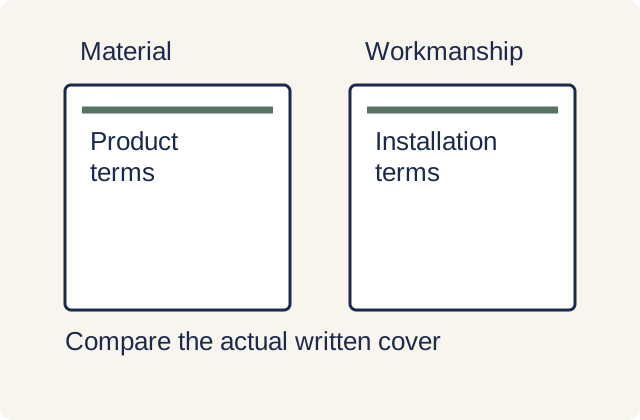
Obtain the actual material and workmanship warranty terms offered for the proposed job. There is no universal term attached to an acrylic, PU or sheet membrane. Identify the issuer, covered area, remedy and exclusions before signing.
If a warranty is prorated, the amount covered reduces over time. Check whether it excludes building movement, later work on the roof or missed maintenance, and whether a covered repair includes labour and access. A shorter period with a usable remedy can be more valuable than a longer period that leaves most of the repair bill with you.
When to Recoat vs Full Replacement
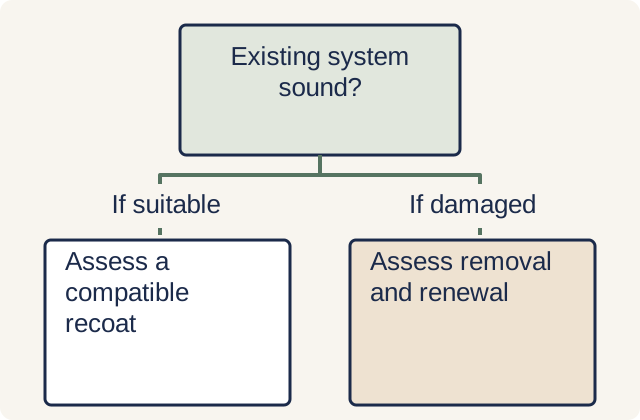
Recoating may be appropriate if the existing system is sound and compatible with the new material. Have the contractor investigate adhesion, moisture, damage and the leak path. Neither age alone nor a standard saving percentage establishes that a recoat is suitable.
Removal and replacement may be needed where existing layers cannot provide a sound base or conceal defects needing repair. The extent should follow the diagnosis. A persistent leak still needs its source identified; replacing an unrelated roof surface can leave it unresolved.
Ask for the proposed repair to be tied to inspection findings and for assumptions to remain visible in the quotation. Send DirectHome the leak history and safe photographs to discuss the scope.
DirectHome's site assessment is free, and we take the measurements. Don't climb onto the roof to measure it or take photographs.
Frequently asked questions
How much does roof waterproofing cost in Singapore?
Singapore installers advertise liquid and torch-on waterproofing for a whole flat roof of about 55 to 150 square metres from about S$1,400 to S$10,000 on their own websites (checked October 2026), or from about S$15 to S$70 per square metre. Those are starting prices, not quotes. DirectHome does a free site assessment of your roof, then gives you a fixed-price quote within 3 to 5 working days, never from a photo.
What is the cheapest roof waterproofing method?
The lowest suitable cost depends on the actual roof and repair scope. A local repair or compatible recoat may involve less work than replacement, but only where the existing condition supports it. Chemistry alone does not determine the cheapest useful solution.
How long does roof waterproofing last?
Service life depends on the selected system, exposure, preparation, drainage and maintenance. Read the actual warranty and care requirements. A generic acrylic, PU or bitumen label does not establish a guaranteed number of years.
Should I recoat my roof or do a full replacement?
Have the existing layers, adhesion, moisture and leak source assessed. Recoating needs a sound compatible base; defective layers may require removal. The decision cannot be made from age or a fixed cost percentage alone.
What warranty should I expect on roof waterproofing?
Ask for the actual written offer identifying the issuer, covered area, period, remedy and exclusions. Check whether labour, access and making good are included. A material warranty is not necessarily a complete repair warranty.
Roof Waterproofing across Singapore
Need help with your project?
Tell us what you need on WhatsApp and send a few photos. We'll arrange a free site assessment, then give you a fixed-price quote within 3 to 5 working days.