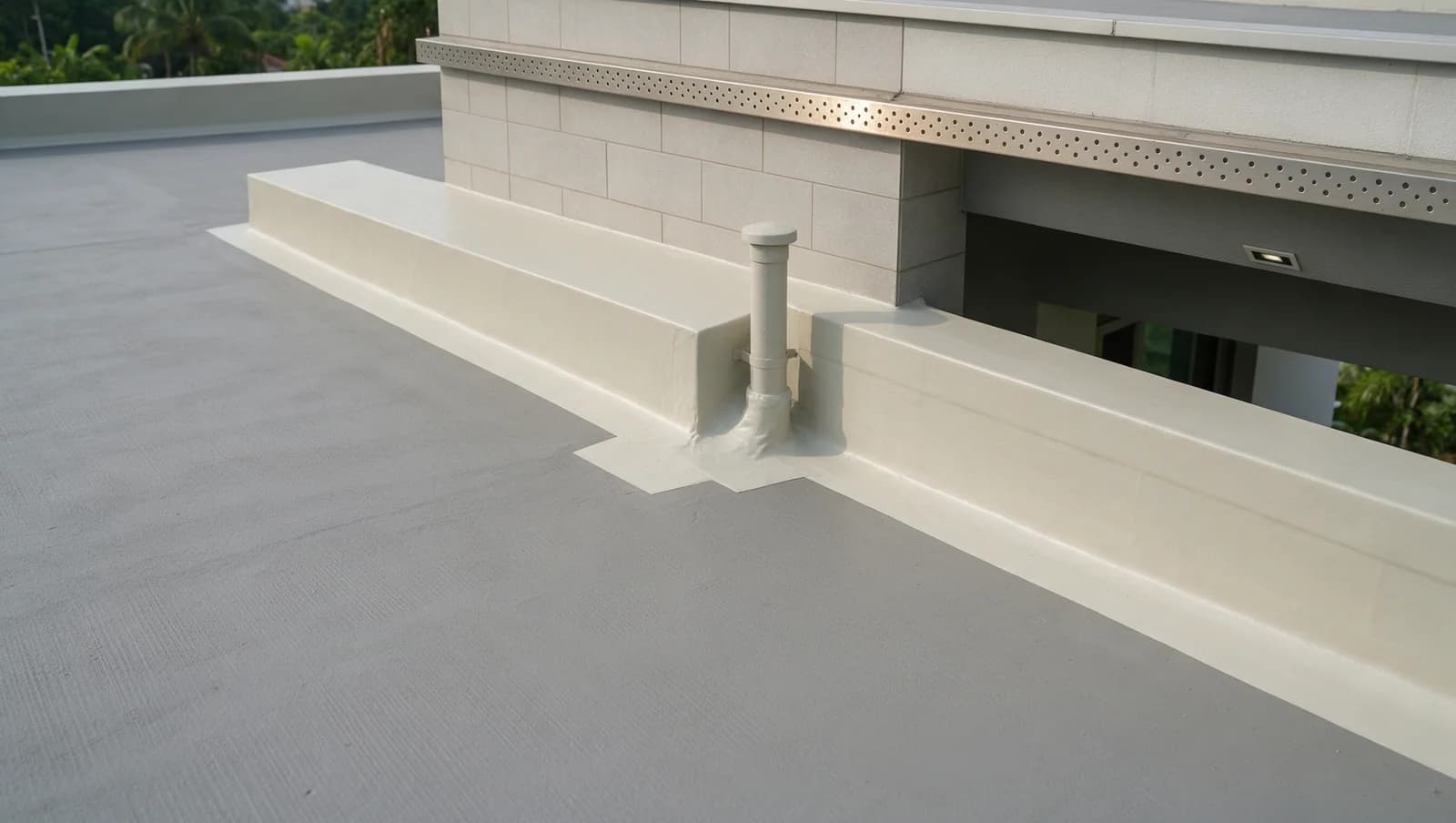
Waterproofing for roofs can mean patching one spot, laying a new layer over the old one, or stripping the old layer and redoing it. The first job is finding where the water gets in. A new layer only works if the old one is sound and stuck down. If rain pools instead of draining, fix the drainage too.
For roof waterproofing in a landed home, choose the product only after the leak has been traced, and make sure the work covers the outlets, wall edges and pipe openings around it. A longer warranty or a stronger-sounding product name won’t stop water that gets in somewhere the new coating doesn’t reach.
Find the cause before choosing a waterproofing system
Roof access and close inspection are contractor work. The WSH Council identifies open edges and fragile surfaces as work-at-height hazards; homeowners should record indoor stains and observations only from safe places. Note whether the leak follows rain, appears after a delay or returns near an earlier repair.
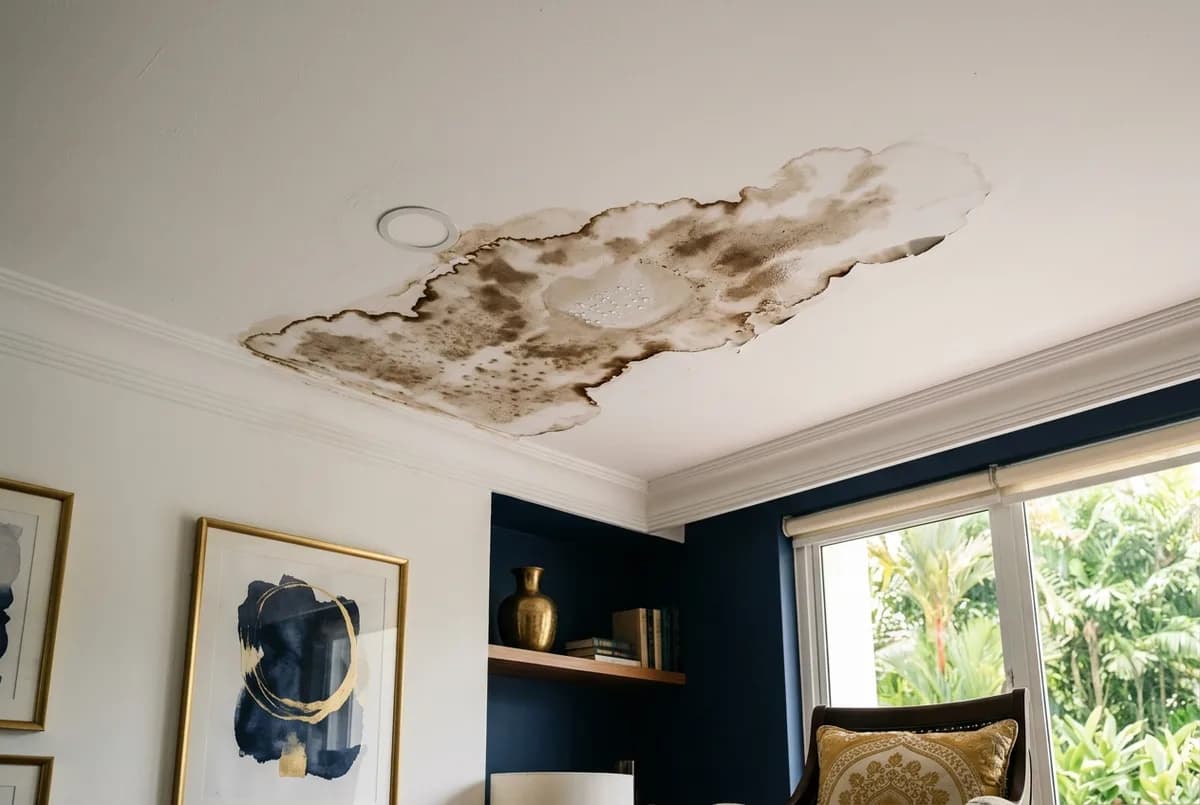
A stain marks the place water becomes visible indoors. It does not prove that the entry point is immediately above it. The inspection should consider the roof surface, adjoining walls, flashings, openings and drainage, then explain which findings support the proposed repair.
Ask for the affected area to be marked on a roof plan or photograph. If the source remains uncertain, agree a suitable investigation before a whole-roof coating is priced as the answer. Before agreeing to a new layer over the old one, ask what is known about the layers that will stay underneath.
Compare complete assemblies, not a chemistry ranking
Roof waterproofing is the continuous layer that stops rain getting through, carried across the roof and up into its edges, outlets and openings. A liquid membrane is rolled, brushed or sprayed on and sets as one seamless skin, while a sheet membrane is laid in rolls and is only as watertight as its overlaps and edges. There is no strongest waterproof material for every roof, because either kind can fail on a surface or in conditions it isn’t made for. Our comparisons of acrylic coatings and heat-applied sheets and of PU, acrylic and cementitious coatings go through the common types, and the flat and pitched roof guide explains why a sloped tiled roof leaks in different places.
Choose the product for how the roof will be used once the work is done. Sika’s Sikalastic-590 data sheet describes that coating, a polyurethane-modified acrylic, as an exposed system that must not be covered with tile or concrete, so it is the wrong kind of product for a roof you might later tile as a terrace. Sika rates the same coating for short ponding, and says its SikaRoof PUR-18 system resists ponding water but is not suitable for permanent water immersion. If puddles stay on your roof long after rain, ask why before choosing a coating, because no product rating changes where the water goes.
If the new layer is going over an old one, check that the product is made for that surface. Sika lists existing bitumen sheet membranes, existing liquid membranes and unglazed ceramic tiles among the surfaces PUR-18 can go on. Its Sikalastic-590 data sheet asks for old coatings to be sound and firmly adhered, and old bitumen felt to be firmly stuck or fixed down with no badly degraded areas, so an old layer that has come loose fails that requirement.
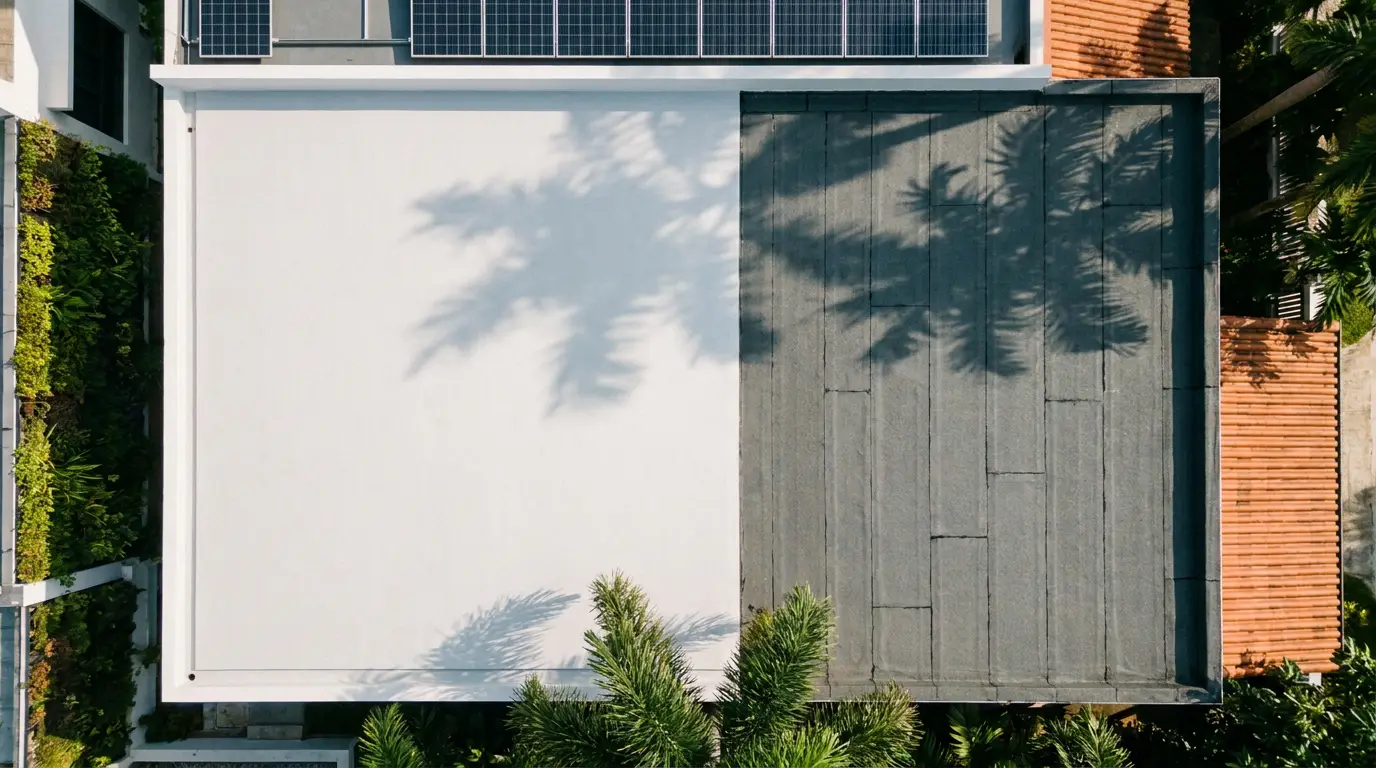
Sheets bring their own checks. Torch-on sheets such as Sika’s SikaShield P24 MG are torched onto the roof as they are rolled out, with the overlaps sealed by trowel, so the seams need inspecting as closely as the sheet. Torching puts an open flame on a lived-in house, so ask the contractor for their fire-safety method before work starts. WSH Council guidance on hot work has a competent person check that combustible materials have been cleared and that fire protection such as a fire watch and fire extinguishers is in place before the work is authorised. Sika’s PUR-18, by contrast, is cold applied and needs no heat or flame.
| If your roof | Ask for |
|---|---|
| Will stay bare to sun and rain | A product sold for exposed roofs, with the primer, number of coats and any reinforcement written into the quote. |
| Might be tiled later as a terrace | A system made to go under tiles, not an exposed-only coating. |
| Already has an old membrane, coating or tiles | Confirmation that the product is listed for that surface and that the old layer is sound and stuck down. |
| Holds puddles long after rain | A check of the falls and outlets as well as the product’s ponding limits. |
| Will carry aircon units, solar frames or regular foot traffic | How those areas will be protected and how fixings through the membrane will be sealed. |
Include roof edges, junctions and water routes
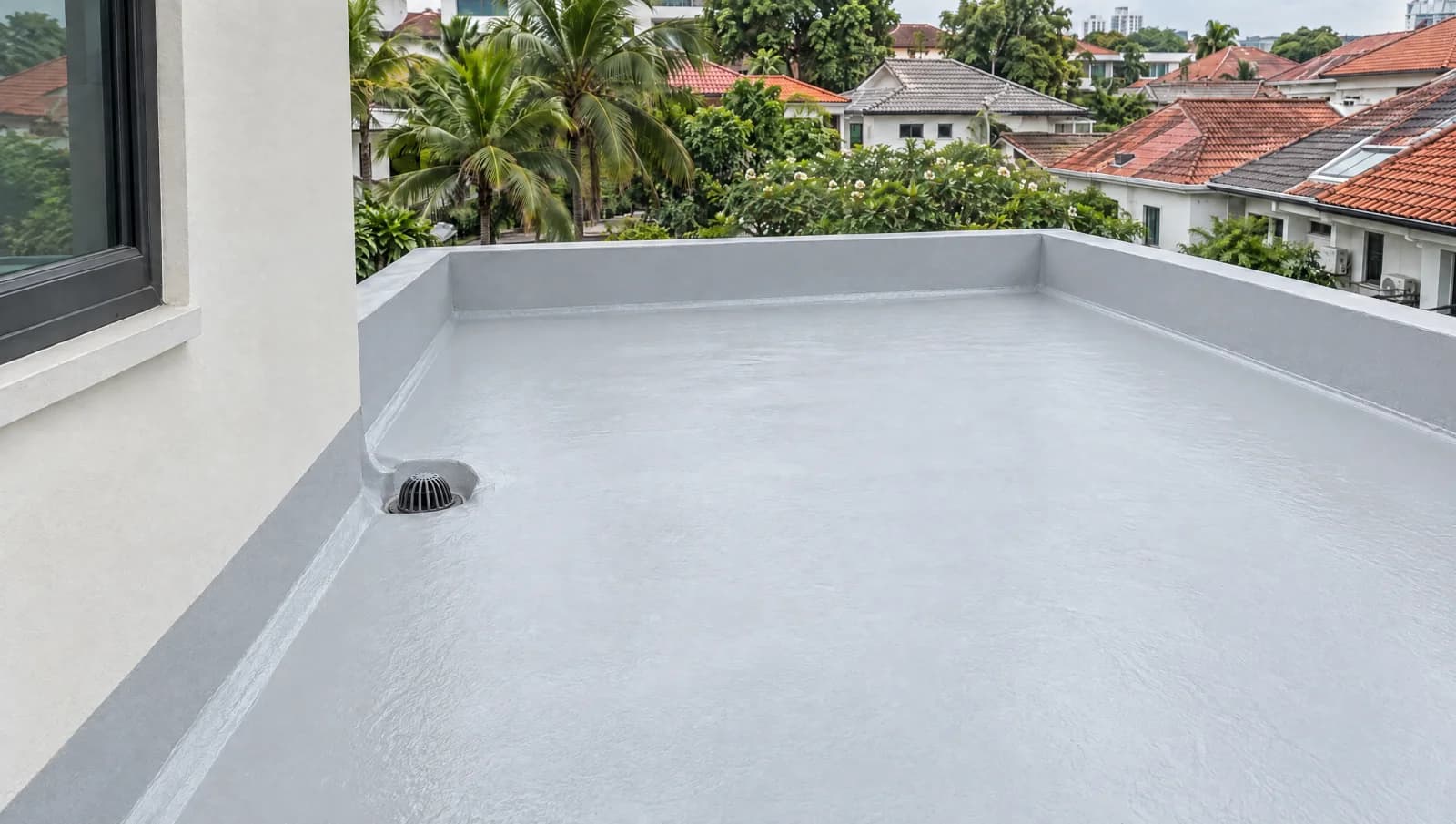
Waterproofing has to carry on through the places where the roof changes direction or meets something else. An outlet, a pipe coming through the roof or the joint with a parapet wall can let water in even when the main surface looks fine. The quote should show how each of those connections will be repaired.
Drainage needs checking too. Water that stands after rain can come from the roof’s levels or a blocked outlet, and a new coating doesn’t change either. Sika recommends a 1% slope under its Sikalastic-590 coating, with 0.5% possible depending on roof layout and drains; your contractor should set the falls and outlets for your roof rather than borrow one product’s figure.
Levels need a second look when the roof gets thicker. If a new screed, an extra layer or supports for equipment will raise the finished surface, ask for the levels at door thresholds and outlets to be checked before work starts, while a clash can still be solved on a drawing. A raised roof beside a door can leave the threshold too low to keep rain out.
The roof drainage scope guide separates clearing outlets, repairing drainage details and changing the roof’s levels, which are different jobs with different effects on the waterproofing.
Choose repair, overlay or removal from condition evidence
A local repair makes sense when the inspection finds a limited defect and the roof around it is fine to keep. A new layer over the old one keeps more of the existing roof, so it only works when the old layer is sound and the new product is made to go on it. Stripping the old layers lets the contractor inspect the roof underneath for repairs, but it can uncover more work and leaves the roof open to the weather until the new layer is down.
Sika’s Canadian roofing guidance on repair, recover or replace warns that with a new roof laid over the old one, you won’t know the condition of the deck below. Where a roof has insulation, Sika adds that any wet insulation still has to be torn out, because the moisture will contribute to the new roof failing early.
The downside of laying new waterproofing over a poor old layer is that the fresh finish hides the problem underneath. Before agreeing to an overlay, ask what was checked, what couldn’t be seen and what happens if bad material turns up during preparation.
Plan readiness, temporary protection and weather delays
Liquid coatings need a dry roof as well as dry weather. Sika’s Sikalastic-590 data sheet asks for the surface to be below 6% moisture with no water or condensation on it, and gives set times before a fresh coat can take rain, so a wet morning can hold work up even after the rain stops. If a coat gets rained on too early, the contractor should check it against the product instructions before carrying on.
Agree how the roof will be protected between work stages, which rooms below need protection and who responds if rain arrives while layers are removed. A work schedule should say what has to be true before the next stage starts, not just give a date that assumes the weather will cooperate.
CCS renovation guidance recommends agreeing the work schedule and how delays or contingencies are managed. The roof weather planning article develops those decisions without promising a completion duration.
Compare scope before comparing rates or warranty years
Compare the same measured area and repairs, including access, removal, preparation, junctions, temporary protection, making good and tax. A low area rate can cover less work even when two quotations name the same membrane. Ask for anything uncertain to be listed rather than assumed to be included. To get a sense of the budget before quotes arrive, the roof waterproofing cost guide explains what moves the price.
A warranty should identify the issuer, covered work, remedy, duration, exclusions and required maintenance. Establish whether the promise concerns material or installation, and who pays for access or removal of equipment if a covered repair is needed. Later drilling or equipment work needs its own agreed responsibility.
If opening the roof reveals more damage, the extra work should be priced and agreed in writing, through the process the contract sets for changes, before anyone carries it out.
| Align these items | What the comparison resolves |
|---|---|
| Existing layers and removal | Whether both prices retain or expose the same roof. |
| Outlets, edges and penetrations | Whether the detailed leak routes are included. |
| Access and temporary protection | Whether the occupied home and incomplete roof are protected. |
| Testing, defects and warranty remedy | What establishes completion and how a later claim is handled. |
When to change the proposed scope
Change the scope when the findings point beyond a surface defect. Unexplained movement or deterioration of structural material needs the appropriate professional assessment. A more flexible coating cannot establish that the structure is sound.
BCA’s structural-plan requirements become relevant where the proposal includes regulated structural work. URA’s conservation permission process applies to works on conserved buildings independently of whether BCA plan submission is required. Let the appointed professional establish the route for the actual house and proposal.
If the roof is becoming a terrace or gaining equipment, coordinate that future use before repairing the surface. A new protected area, support or penetration changes the details; completing the coating first can create avoidable removal and reinstatement later.
Coordinate solar panels and future maintenance
EMA advises assessing roof condition and structure before solar installation. Fixings vary by roof type and some arrangements avoid roof penetration. Agree support locations, access routes and how the membrane remains inspectable before finalising either project.
The EMA implementation guide distinguishes the QP’s design and compliance role from the Licensed Electrical Worker’s electrical role. For later roof repairs, identify who arranges safe electrical isolation, any panel removal, waterproofing reinstatement and reconnection.
Keep both contractors’ records and warranty responsibilities together. Homeowners should not move equipment or go onto the roof themselves to sort out a problem where the panels meet the roof.
Accept the evidence and retain a usable roof record
Agree how the finished work will be checked before it starts. Ask which test will be used, on which area, for how long and what result counts as a pass, and have that written into the quote. A passed check only covers the area and conditions tested, so the report should say what it did and didn’t cover.
Collect photographs before concealment, the final repaired-area plan, product records, inspection findings and defect close-out. Keep warranty terms with the maintenance instructions so the next investigation can distinguish the original roof from later changes. The roof warranty guide explains how those records relate to later claims.
Arrange maintenance with safe access for the people doing it. A blocked outlet or damage from later work needs attention even where a membrane remains under warranty. Report new damp marks promptly with indoor photographs and dates; do not climb onto the roof to find their cause.
Regulatory compliance
Check which requirements apply to your proposed scope. Agree the responsible qualified professionals, submissions and inspections before work begins.
BCA (Building and Construction Authority)
The applicable structural work and submission route depends on the actual proposal; involve the QP for structural alterations or concerns.
Primary source: www1.bca.gov.sg/safety-and-standards/applications-and-licenses/structural-plan-submissionURA (Urban Redevelopment Authority)
Check conservation and other planning implications for the property and proposed changes; conserved-building works need their applicable permission route.
Primary source: www.ura.gov.sg/guidelines/conservation/additions-alterationsEMA (Energy Market Authority)
For rooftop solar, identify QP and LEW responsibilities and applicable approvals alongside waterproofing coordination.
Primary source: www.ema.gov.sg/consumer-information/solar/implementation-guideGlossary
- Roof assembly
- The connected layers and details that make up the roof, including its support, waterproofing and any finishes or protection.
- Overlay or recovering
- Installing a new specified assembly while retaining some existing roof layers, subject to assessment of their suitability.
- Flashing
- A detail that manages water at a junction, edge or penetration; its form depends on the roof system and adjoining materials.
- Upturn
- A continuation of waterproofing up an adjoining vertical surface; dimensions and termination are design-specific.
- Scupper
- An outlet through a parapet or edge that allows roof water to leave; its size, level and connection need coordinated design.
- Hold point
- A planned pause at which specified readiness conditions are checked before work proceeds.
- Ponding
- Accumulation of water on a roof. Its cause and significance require assessment of drainage, geometry, system limits and structure.
Frequently asked questions
What happens if new waterproofing gets wet?
Once a membrane has fully cured, getting wet is its job, within the ponding limits its maker gives, such as the short ponding Sika allows for its Sikalastic-590 coating. Fresh coating is different. At 30°C and 50% humidity, Sika says Sikalastic-590 is rain resistant after about 6 hours and fully cured after about 2 days, and it asks for the coat to be kept out of rain for 24 hours to get good ponding performance. If rain reaches a coat earlier than that, the contractor should inspect it against the product instructions and agree any fix before carrying on.
Which roof leaks can be fixed with a local repair?
A leak traced to one defect, such as a split in the membrane or a failed seal around an outlet or pipe, can be repaired on its own if the roof around it is sound. Sika’s Canadian roofing guidance treats repair as the best option when the roof is in good condition, with limited problems underneath and dry insulation. If the inspection finds the old layer loose or wet across a wider area, a new layer or a full strip comes into the picture.
Can I waterproof the roof myself?
Roof access and waterproofing at height belong with a contractor who can plan and carry out the work safely. Homeowners should make observations only from safe places and provide the leak history; do not use a ladder or walk onto a roof to investigate.
What do waterproofing specialists and consultants do?
A waterproofing specialist carries out or specifies the waterproofing work itself. A consultant may investigate the leak, design the repair or review the installation. Neither job title is a qualification or a guarantee on its own, so check the written appointment for what each one covers and which qualifications apply to the work. A consultant’s report and the contractor’s installation warranty are separate responsibilities.
If you read nothing else
Talk through the options for your home
Tell us what you want to change, how your household uses the space and when you hope to start. Share photos or plans on WhatsApp if you have them.
Browse all roof waterproofing articles →
Go deeper: roof waterproofing articles
In-depth pieces that expand on the sections above: real costs, brand and system comparisons, the installation process, and the edge cases most homeowners hit.
roof-waterproofing · 7 min read
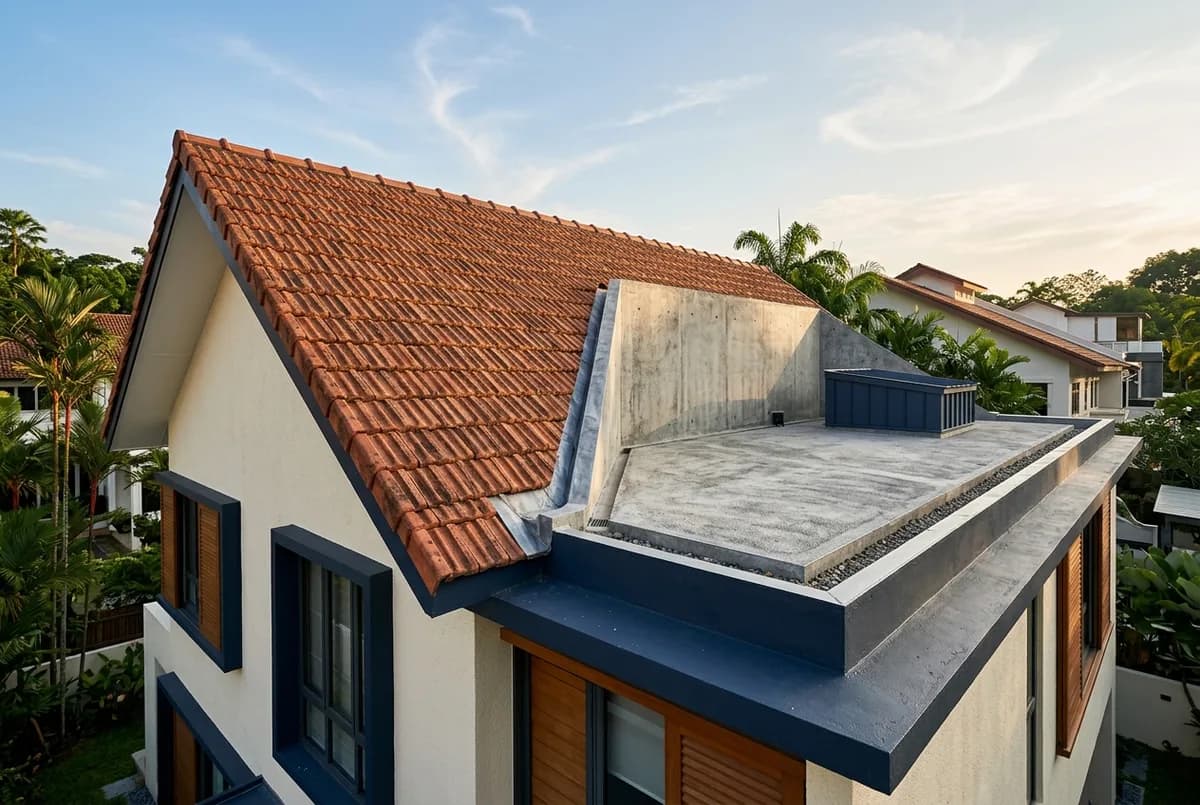
Water Pooling on Your Roof? Waterproofing Alone May Not Fix It
roof-waterproofing · 8 min read
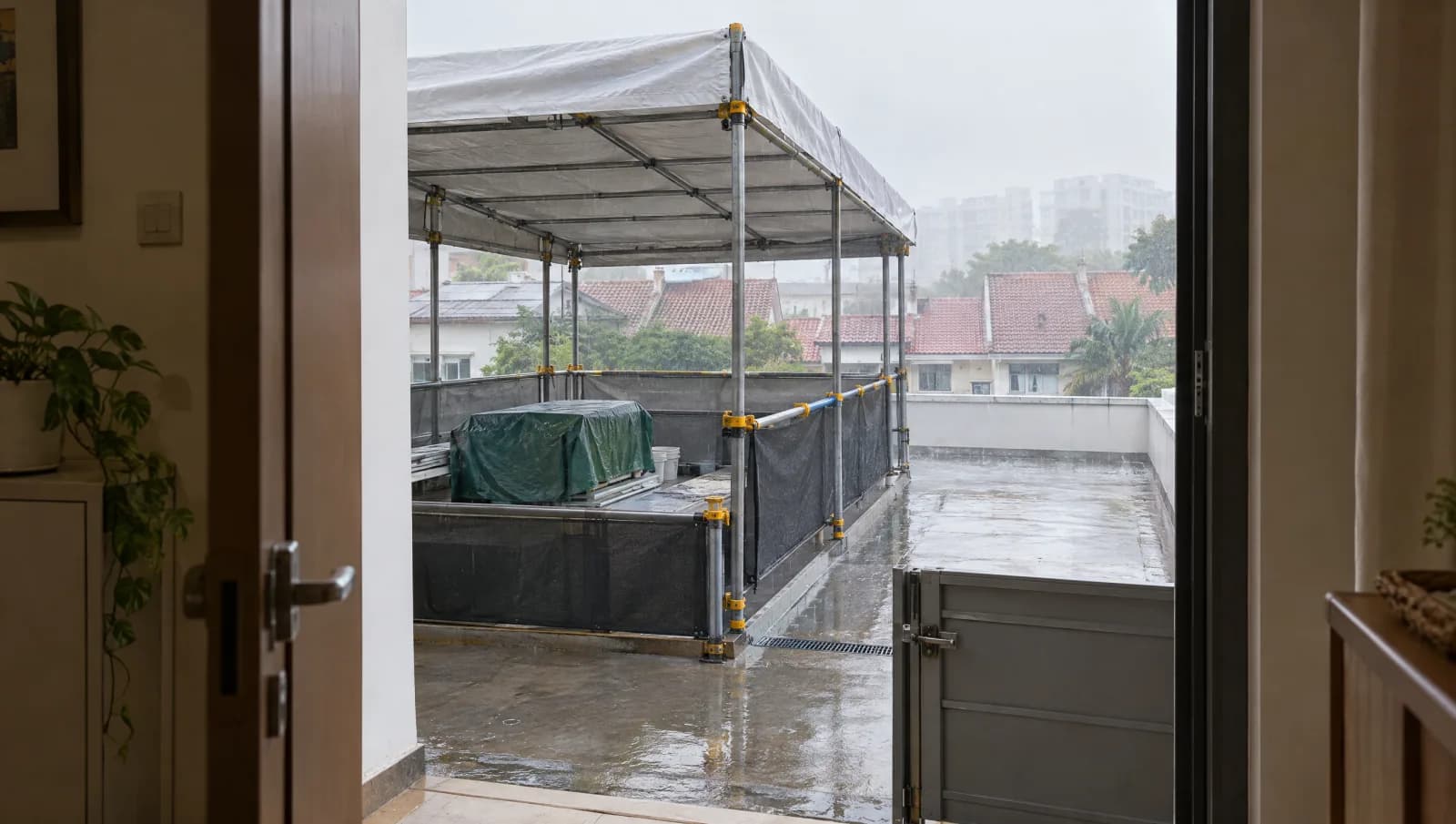
Can Roof Waterproofing Be Done in the Rain?
roof-waterproofing · 6 min read
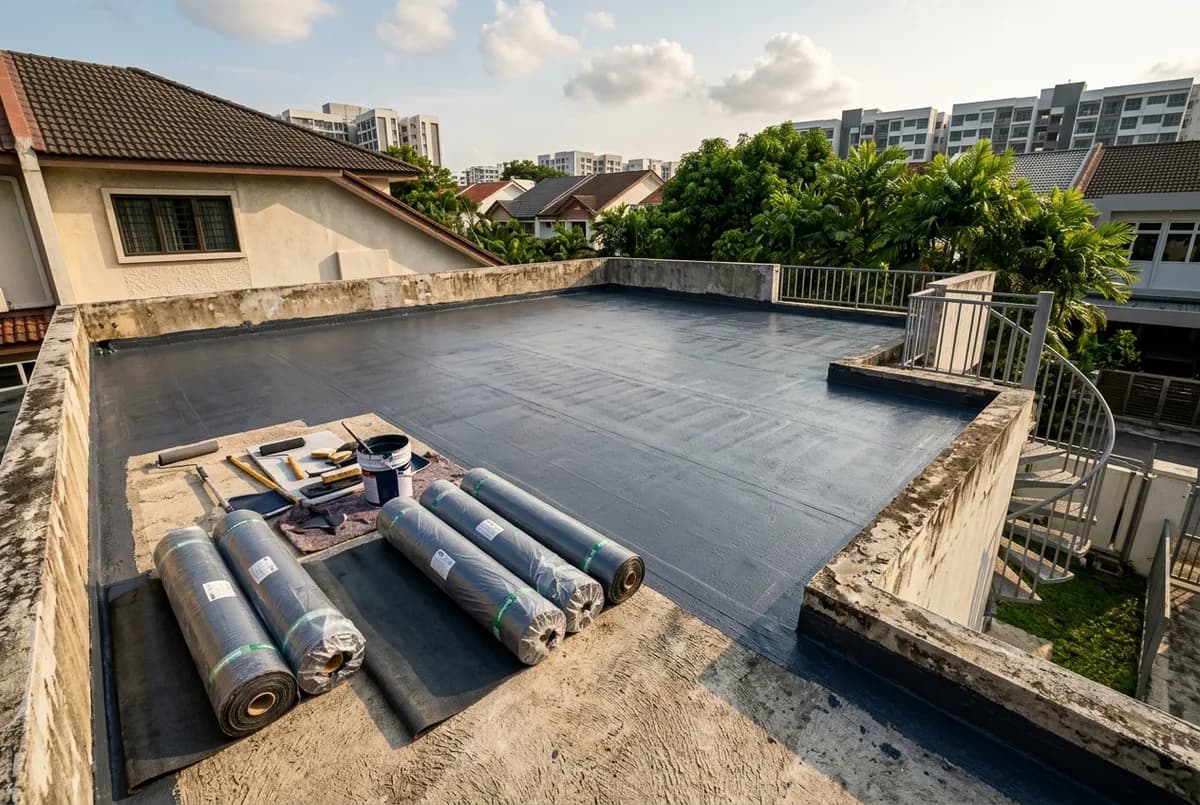
Roof Waterproofing Maintenance: What an Inspection Should Cover
roof-waterproofing · 4 min read
Condo vs Landed Roof Leaks: Who Should Arrange Repairs?
roof-waterproofing · 4 min read
Bathroom vs Roof Waterproofing: Why the Repair Is Different
roof-waterproofing · 5 min read
Aluminium Roof Leaks: Reseal or Replace?
roof-waterproofing · 4 min read
Exposed vs Screeded Roof Waterproofing: Which Suits the Job?
roof-waterproofing · 4 min read
Roof Waterproofing in Singapore: Do You Need Approval?
roof-waterproofing · 4 min read
Roof Leaking Under Warranty? How to Get the Claim Started
roof-waterproofing · 4 min read
Roof Leaking Now? What to Do While You Arrange Help
roof-waterproofing · 5 min read
Torch-On vs Liquid Waterproofing: Which Does Your Roof Need?
roof-waterproofing · 7 min read
What does roof waterproofing cost in Singapore?
Still deciding? Compare options & estimate cost
Side-by-side comparisons and an instant cost estimate for your Singapore home.
Related guides
Buying Guide
Does your landed home need a facade inspection?
What a thorough check involves, which defects to repair before painting, and how to weigh repainting, replastering and cladding quotes.
Buying Guide
Attic Conversion in Singapore: A Buying Guide
A worthwhile attic conversion creates a room the household can reach, use and maintain comfortably within the constraints of the existing house.