On this page
View In PDFPolyurethane (PU), acrylic and cementitious waterproofing are material categories, not interchangeable answers to every roof leak. The specific system must suit the surface, expected movement, weather exposure and any covering above it. Understand those conditions first so the quotation explains why a product fits your roof, rather than only naming a coating.
Three Families of Roof Waterproofing
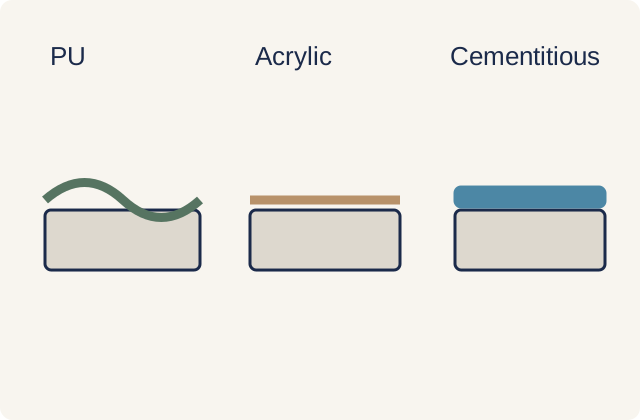
Liquid-applied waterproofing in Singapore mostly comes in three chemistries: polyurethane (PU), acrylic, and cementitious. Each one behaves differently under Singapore conditions: heavy UV, intense rain, and the constant thermal expansion of an RC slab sitting under the equatorial sun.
Picking the right system is not about which one is "best" in absolute terms. It is about matching the chemistry to the roof, the budget, and how long you want the job to last.
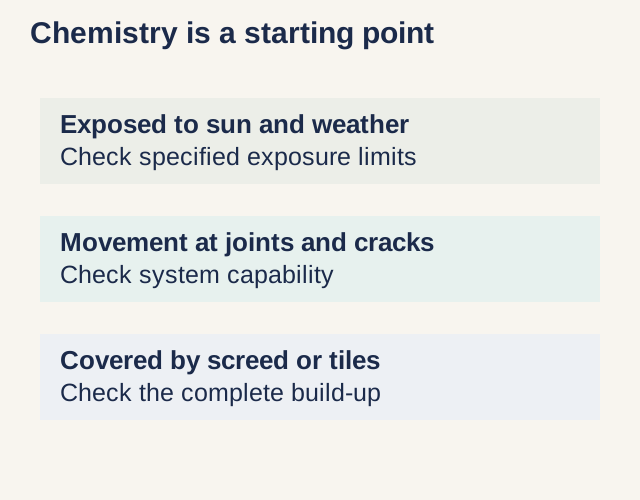
The membrane is only one layer in the roof. Below it, the substrate must support a sound bond; at joints, the detail must accommodate the movement expected there. Above it, exposure or a protective finish determines what weather and wear it receives. A system designed for a protected location may perform poorly when left exposed, even if its underlying chemistry also appears in other roof products. Choose the waterproofing with those roof layers and conditions in mind.
Polyurethane (PU) Waterproofing
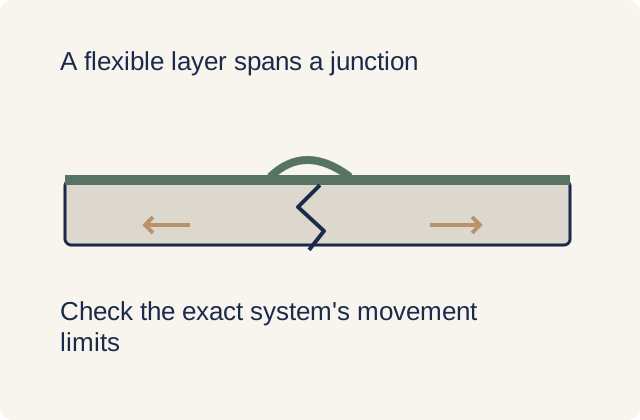
PU membranes form a flexible layer that can accommodate the movement allowed by the specified system. For an exposed roof, check its suitability for sunlight, the existing substrate and maintenance access. Some formulations require a separate UV-resistant finish; the chemistry label alone does not settle that question.
The quote should identify the primer, reinforcement and finish as one compatible system. Surface moisture and preparation can determine whether that system bonds properly. Compare the complete installation cost and maintenance plan rather than assuming every PU product has the same lifespan or price.
Acrylic Waterproofing
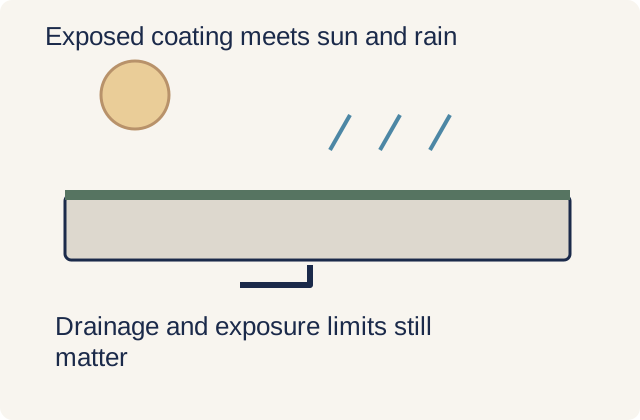
Acrylic roof membranes can provide a flexible, exposed finish where the product is suitable for the substrate and conditions. Reflective performance depends on the specified colour and coating; it is not an automatic property of every acrylic finish.
Standing-water suitability must be checked against the exact product, and drainage defects need their own remedy. For example, the local acrylic roof product linked here has its own reinforcement and preparation requirements. Do not turn those instructions into a universal specification for another membrane.
For an acrylic coating on a metal roof, ask your installer what service life they expect for your roof, what that expectation rests on and how the coating is renewed. Sound preparation, how exposed the roof is, its drainage and its maintenance decide how long the coating lasts.
Cementitious Waterproofing
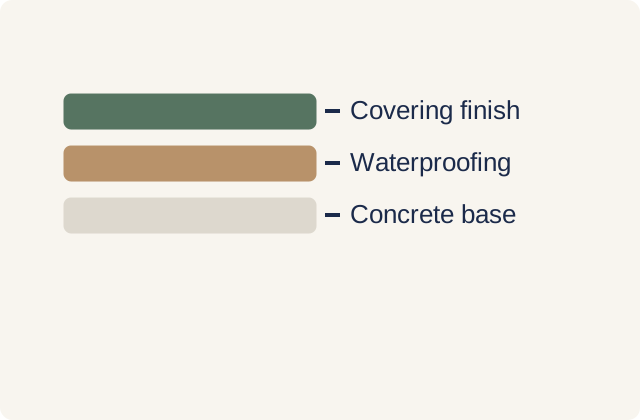
Cementitious waterproofing includes rigid and flexible polymer-modified formulations. They cannot all be described as rigid. Their suitability for a roof, wet room or water-retaining structure depends on the particular product, substrate movement and required protective finish.
A flexible cementitious product may be suitable beneath screed or tiles where its documentation permits that use. Check the proposed roof layers, including waterproofing around joints and anything passing through the roof. Covering an unsuitable membrane does not make it appropriate for the roof.
Hybrid Systems
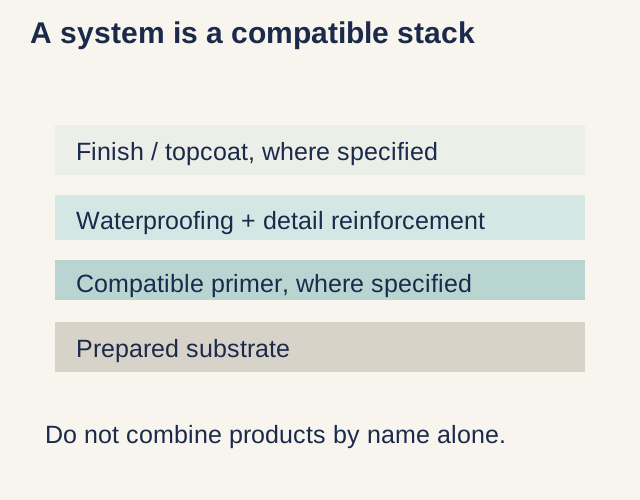
A roof system can contain several layers, but they must be specified as compatible. Do not combine a cementitious coating, PU membrane and topcoat simply because each is waterproof on its own. The manufacturer should identify the permitted substrate, primer and finishes for the proposed application.
Where screed or tiles protect a membrane, allow for drainage, movement and the additional load. Protection can reduce direct exposure and wear, but it also conceals the membrane and makes later access more involved. That trade-off belongs in the design discussion.
Matching the System to Your Roof
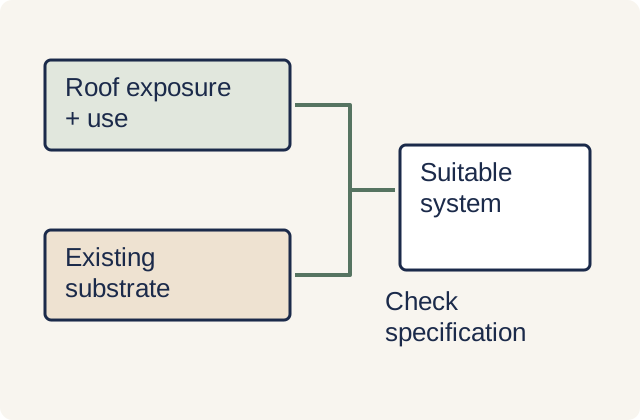
Begin with the roof condition and intended use: exposed or covered, maintenance-only access or a usable terrace, sound substrate or substantial repair. Then compare complete systems approved for those conditions. No chemistry is a substitute for correcting drainage or identifying the leak source.
Ask the contractor to explain the choice against those findings and provide the relevant product documents. Send DirectHome the roof type and leak history to discuss the scope. Roof inspection and access should be arranged professionally.
Frequently asked questions
Which waterproofing system is best for an exposed flat roof?
Choose a complete system suitable for the roof's exposure, movement and access needs. PU is one option, but UV protection, primer and reinforcement vary by product. Resolve drainage and substrate defects rather than relying on the membrane label.
How long does acrylic waterproofing last?
Ask your installer what service life they expect for the acrylic system on your roof, and what that rests on, such as the maker's data for that product. A coating over a different surface needs its own assessment. The warranty is a separate promise about covered defects and remedies, not a date when the roof must fail.
Can I use cementitious waterproofing on an exposed flat roof?
Some cementitious products are flexible; they are not all rigid. Use one on a roof only where its documentation permits the substrate, exposure and finish. A protected under-tile application is a different specification from an exposed roof.
What is the longest-lasting roof waterproofing specification?
You can't rank PU, acrylic and cementitious systems by their names alone. Compare proposed systems on the same roof, with the same exposure and access needs, and ask what supports each expected service life. A protected finish can reduce exposure but adds weight and makes future repair access more involved.
Roof Waterproofing across Singapore
Need help with your project?
Tell us what you need on WhatsApp and send a few photos. We'll arrange a free site assessment, then give you a fixed-price quote within 3 to 5 working days.