On this page
View In PDFA stairlift uses a powered chair travelling along a fitted rail to carry someone up and down the stairs. The seat, drive, controls and power arrangement work together, but the details depend on the model. Understanding those parts makes it easier to discuss ordinary use, charging and support before choosing one for your home.
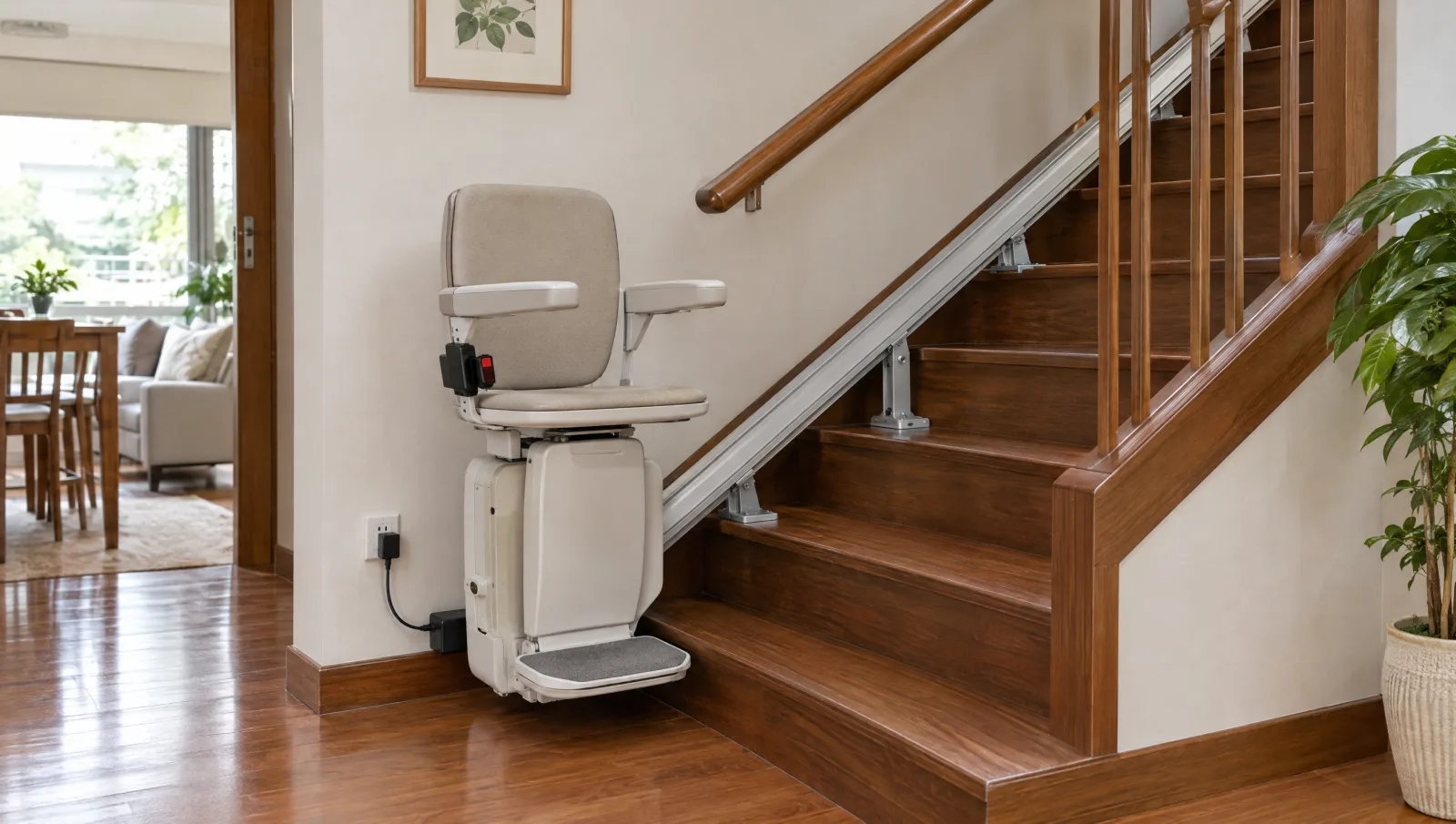
The one-sentence version, then the detail
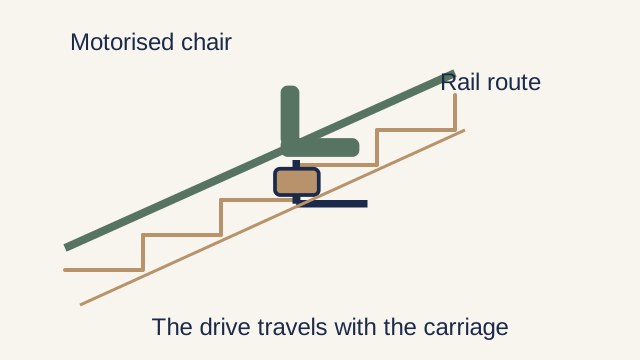
A common stairlift design uses a small motor and gearbox in the carriage beneath the seat to turn a toothed gear along a fixed rail. Pressing and holding the travel control moves the chair; releasing it stops normal travel. The rail guides the route while the drive, brakes and safety controls work together to move and hold the user.
This is a mechanism guide: how the chair climbs, stays level through a bend and, on battery-powered models, can continue through a mains outage. Understanding these parts makes a survey or service explanation easier to follow. The exact arrangement still comes from the manual for the stairlift being considered.
Understanding the mechanism matters for one practical reason: it tells you what can go wrong, what a service visit is actually checking, and why some staircases suit a stairlift and others do not. A machine you understand is a machine you can ask better questions about before you commit to it.
Rack-and-pinion: why the rail does the work, not the wall
On many residential models the rail stands on brackets fixed to the stair treads. The load must reach a sound fixing base beneath any decorative finish. The installer assesses the staircase, anchor locations and remaining walking space; tread mounting does not prove that no structural assessment or permission is needed.
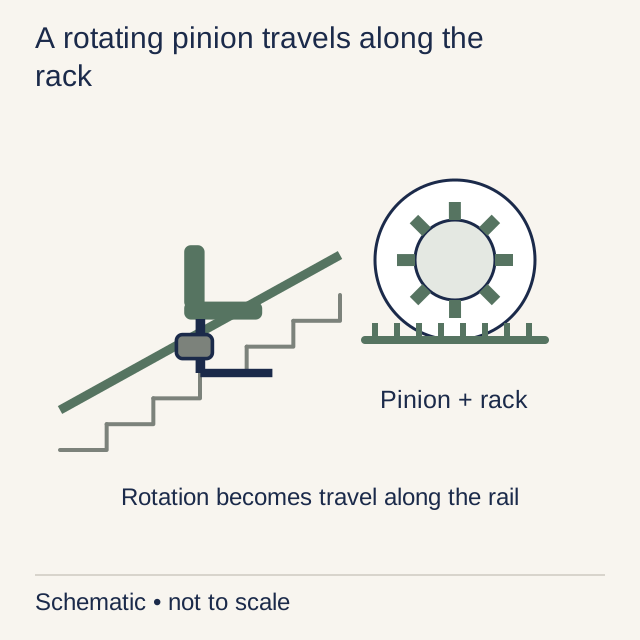
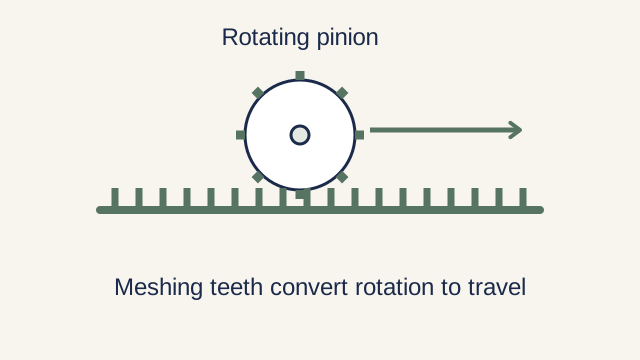
In a rack-and-pinion drive, the rack is a row of teeth along the rail and the pinion is a rotating gear in the carriage. Their teeth mesh, converting motor rotation into movement along the staircase. This explains how the chair can climb without being pulled by a motor at the top landing.
The meshing teeth alone are not a brake. The drive includes mechanisms to stop and hold the chair, with additional safety functions depending on the design. A technician checks those functions against the manufacturer's requirements. Do not release, adjust or test internal mechanisms yourself.
Inside the carriage: motor, gearbox, and the slow climb
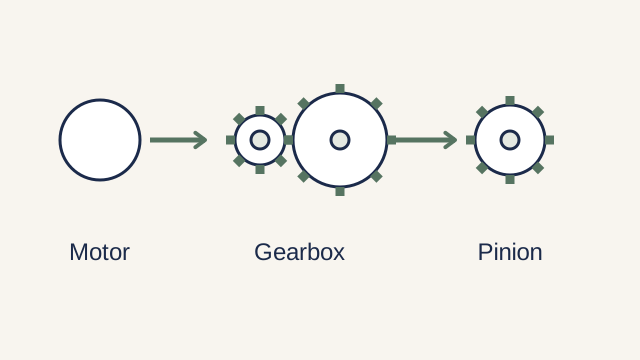
Inside the carriage, the gearbox reduces the motor's rotation speed and increases the turning force available at the drive gear. This lets a compact motor move the rated load at the intended pace. The casing protects the mechanism; understanding what is inside is not a reason to open it.
The ride is deliberately slow and controlled, with speed set by the product's design. Flight length, bends and any slowing near a landing determine the journey time. Ask the user to try a demonstration where possible, particularly if sitting, holding the control or waiting through the full trip is difficult.
The carriage also houses the seat swivel mechanism. At the top landing, the seat rotates to face away from the staircase so the user can stand up onto solid floor rather than over the open stairs. On powered models this swivel is motorised and locks into position; on simpler models it is a manual swivel with a positive lock. Either way, the swivel-and-lock is a distinct mechanism from the drive, and it is one of the parts a service technician checks and adjusts over the chair's life.
A battery-powered chair still needs its charger connected to a suitable mains outlet. An existing outlet may be usable; a new circuit or fixed wiring is a separate electrical task. Resolve the charging position during the survey so the chair can park where it charges without obstructing a doorway or the stairs.
How it climbs the power cut: battery drive and continuous charging
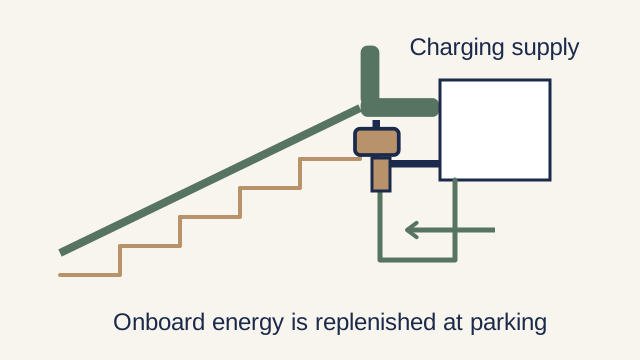
Many modern stairlifts use onboard batteries charged from the household supply. Depending on the model, charging occurs at defined parking points or along the rail. The installer should show the household where to leave the chair and how to recognise a charging warning.
A charged battery can allow continued travel when mains power fails, but the available trips depend on battery condition, load and route. It is a limited reserve, not a promise of uninterrupted access through an extended outage. Discuss what the user should do if power remains unavailable or the chair reports a battery fault.
Batteries lose capacity with age and use. Reduced range between charges can indicate a battery problem, but a charger or contact fault can produce similar symptoms. A service check distinguishes them. Follow the model's charging instructions and obtain a replacement quotation when testing shows that a battery needs changing.
Turning corners: the difference between a straight and a curved rail
A straight rail follows one continuous straight flight. Standard rail sections may be cut or assembled to the required length, but the survey still has to account for the chair's parking position and safe transfer space at both ends. A short fitting visit is possible only after the right equipment and site preparation are ready.
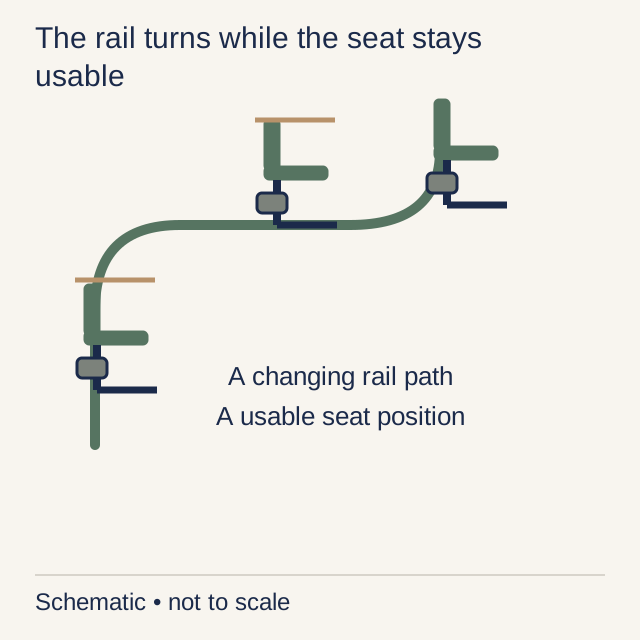
A curved route has to accommodate turns and changes in stair pitch. Manufacturers use different rail and levelling designs, including made-to-measure rails and modular arrangements. The carriage keeps the seat in the designed riding position while following that route; it should not tip the occupant through a bend.
The extra design and rail work can make a curved installation more involved than a straight one. Reusing a curved rail requires confirmation that it fits the new staircase and remains supported by the manufacturer. Similar-looking turns are not evidence that the rail geometry and boarding positions match.
What the mechanism tells you about owning one
A stairlift's ownership cost includes servicing, batteries and any replacement parts excluded from the contract. Ask for the maintenance schedule for the exact model and a written explanation of call-out charges. Comparing those inclusions with a home lift's servicing and inspection arrangements is more useful than assuming that a smaller machine always means a particular annual bill.
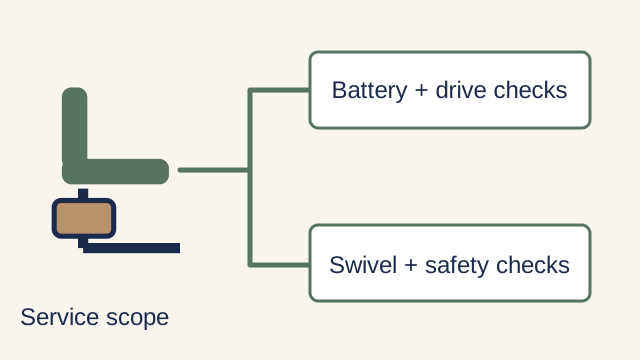
Servicing checks the complete working system, including charging, drive condition, stopping functions, obstruction protection and seat locking as applicable to the model. A fault in one part can prevent travel even when the motor is healthy. That is why a proper diagnosis describes the finding rather than treating every stopped chair as a failed battery.
A standard seated stairlift carries a person who can board and leave its seat safely. It does not carry an occupied wheelchair. The user's transfer ability and the route through the house therefore come before the equipment choice. In Singapore, BCA requires a valid PTO before a stairlift is operated; include the operating arrangements and registered contractor in the installation discussion.
Frequently asked questions
Does a stairlift need to be bolted to the wall?
Many models fix the rail to brackets on the stair treads. The exact support and anchor arrangement must suit the stair beneath its finish. That does not remove Singapore's stairlift operating requirements or any permissions for associated works. A damaged or uncertain staircase needs assessment before installation.
Will a stairlift still work during a power cut in Singapore?
A battery-powered model can continue for a limited period if its batteries have sufficient charge. Remaining trips depend on their condition, the load and the route. Follow the model's charging instructions and agree an alternative access plan if a prolonged outage would leave the user unable to reach essential rooms.
How does a stairlift follow a staircase that turns a corner?
The rail follows the measured route and the carriage's levelling system keeps the seat in its intended riding position. Rail construction and measurement methods vary by manufacturer. Have the complete route, boarding spaces and parking positions assessed before ordering a curved installation.
Why is a stairlift so slow, and can the speed be increased?
The product is designed for controlled movement along stairs. Speed and any slowing through bends belong to that design, so do not attempt to increase them. Compare the actual journey on a demonstration model if travel time matters; a drive-type label cannot establish the speed of an alternative lift.
What part of a stairlift wears out first?
There is no fixed failure order. Batteries are consumables, while charging contacts, controls and mechanical components can also develop faults. Reduced battery capacity should be established by testing rather than assumed from a stopped chair. Keep the manufacturer's service schedule and report new symptoms.
Stairlifts across Singapore
Need help with your project?
Message us on WhatsApp and we typically reply within 2 hours, then arrange a free site assessment and a no-obligation quote.