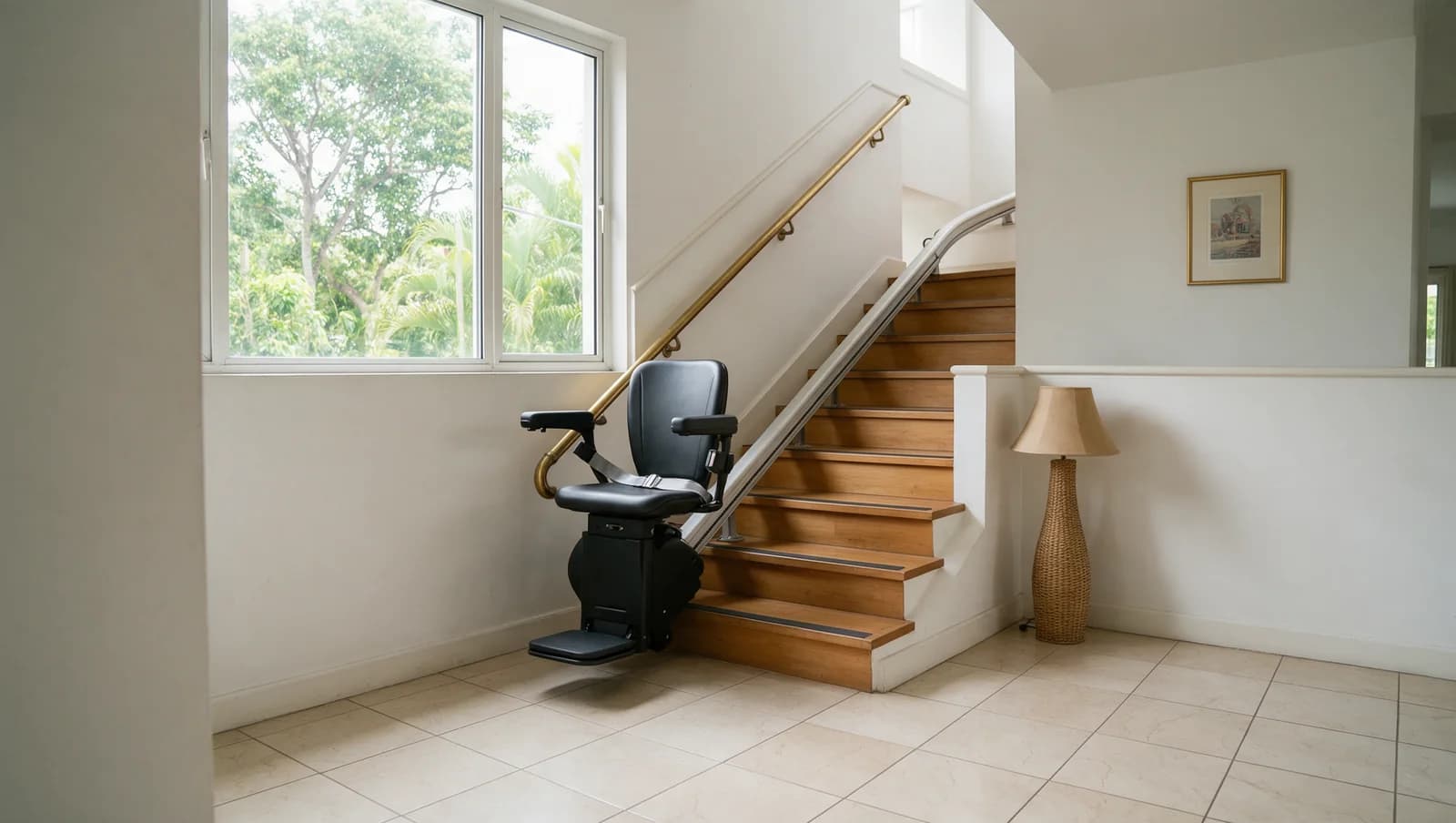
A stairlift is useful when its intended user can sit, travel and transfer safely, and when the rail and parked chair fit the household’s everyday route. The first decision is suitability for the person. The second is whether the complete installation works on the staircase, including both landings.
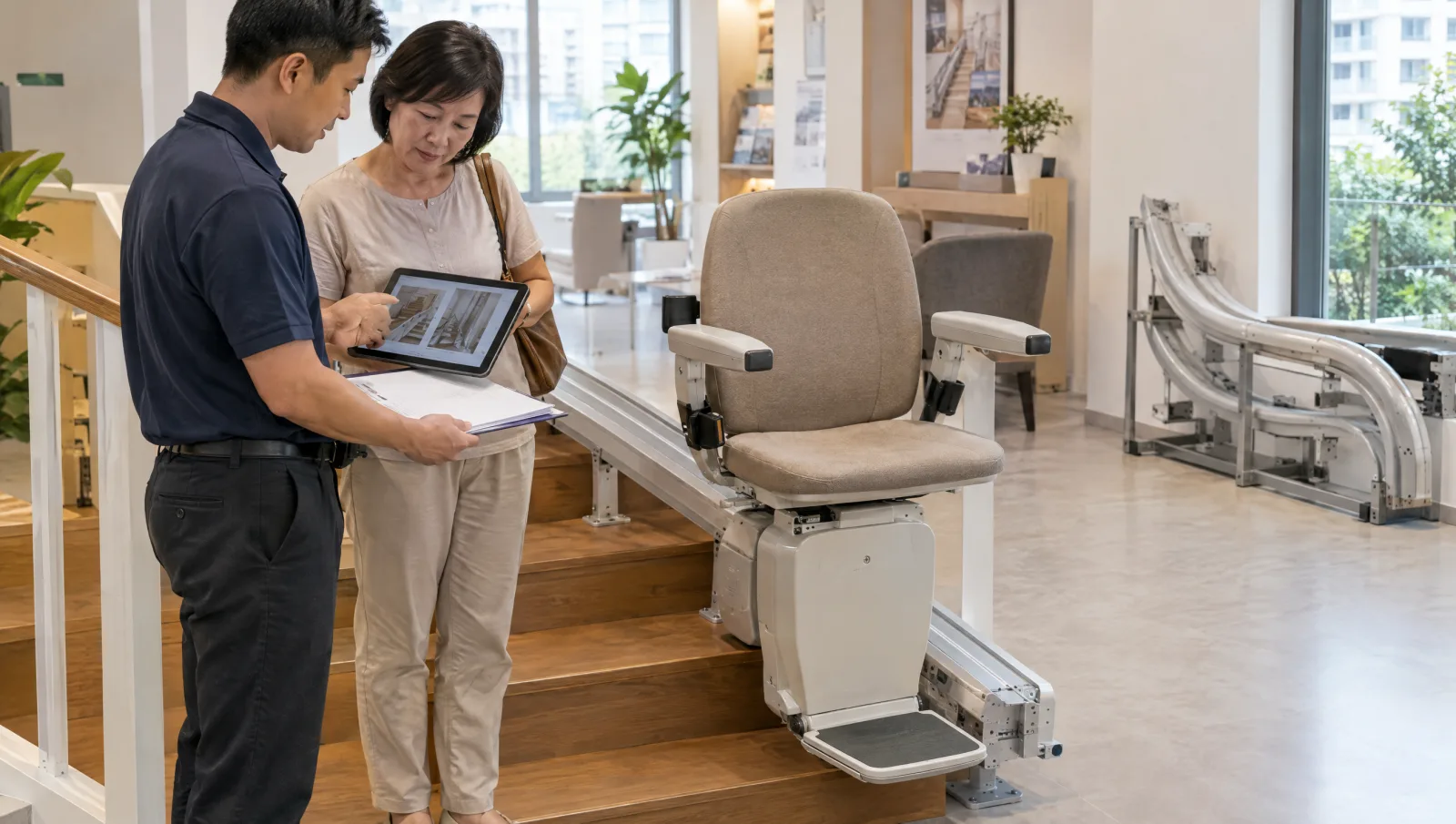
Arrange a site survey with the intended user present where possible. Share the actual mobility needs and likely assistance arrangements. A chair that travels successfully through a staircase is not enough if getting on at the bottom or stepping off at the top remains difficult.
Keep the proposed model, drawings and Singapore aftercare terms together when comparing offers. A lower equipment price is useful only after the user’s fit, surrounding work and continuing support have been established.
Assess the person before choosing the rail
Identify what makes stairs difficult: stamina, pain, balance, walking ability or a change in mobility. Avoid selecting a stairlift from age alone. AIC advises assessment and correct fitting of assistive devices, with familiarisation and follow-up support. A doctor, physiotherapist or occupational therapist can help establish the appropriate needs assessment.
Consider sitting and standing at each landing, reaching the controls, managing the footrest and seat belt, and travelling without losing a stable position. If the user transfers from a wheelchair, evaluate the transfer and chair arrangements at both ends. A seated stairlift does not carry the wheelchair with the user.
Ask for a trial of the proposed seat and control arrangement where available. A demonstration by a salesperson does not show whether the intended user can manage the same movements. Include the regular helper in the assessment if help will be needed.
| Household question | Decision it changes |
|---|---|
| Can the person transfer safely? | Suitability of a seated lift and the need for assessment or assistance |
| Is a wheelchair needed on both floors? | Equipment and transfer arrangement at each landing |
| Do two people share the lift? | Seat fit, controls, call points and parking routine |
| Will mobility needs change soon? | Whether a different access solution should be considered now |
Straight, curved and outdoor are different survey questions
A straight flight and a staircase with turns require different rail solutions. The survey should include the full route and landing arrangement rather than just a photograph of the visible steps. Intermediate landings, doorways, changes in slope and the desired parking location affect the proposal.
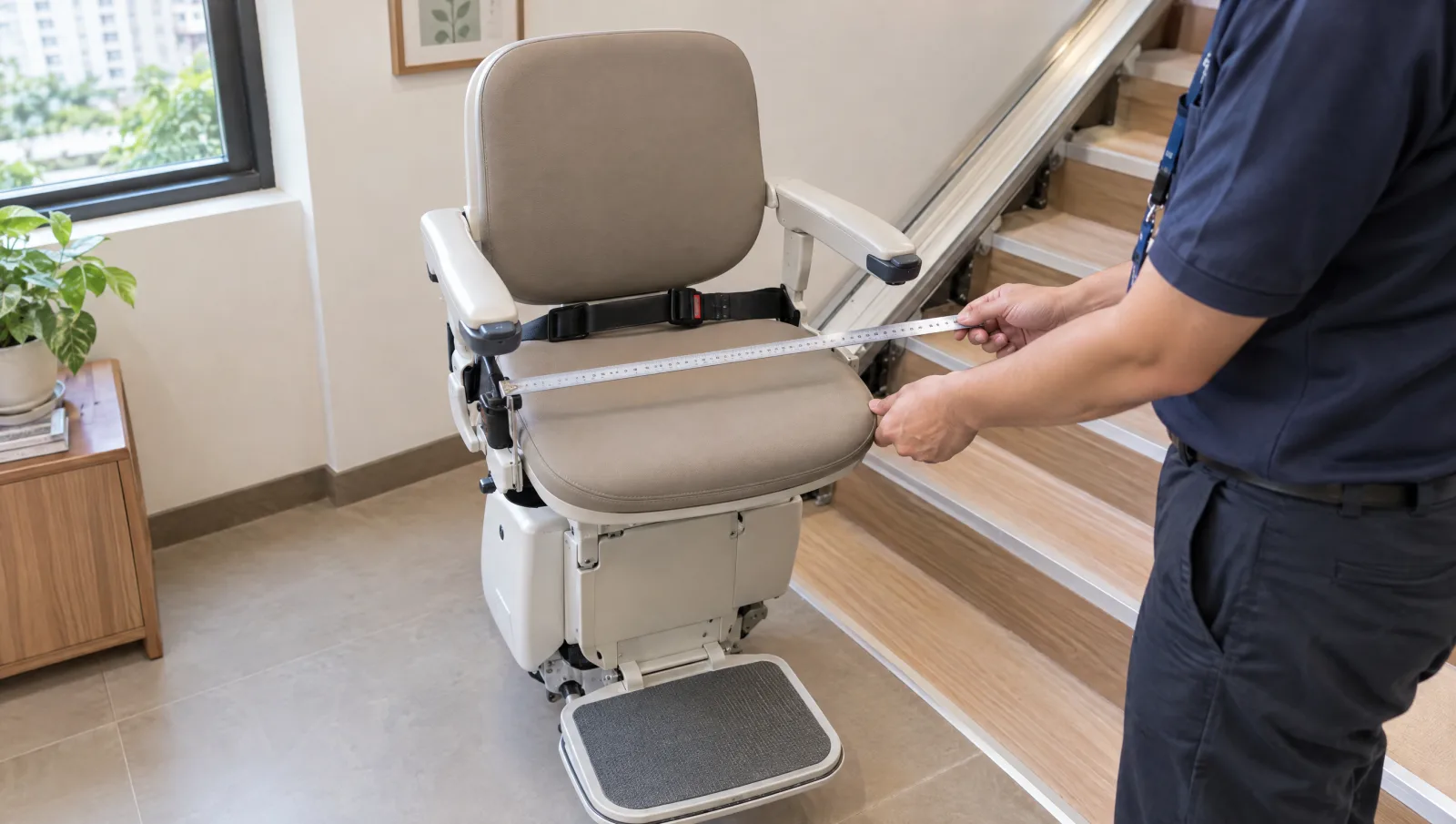
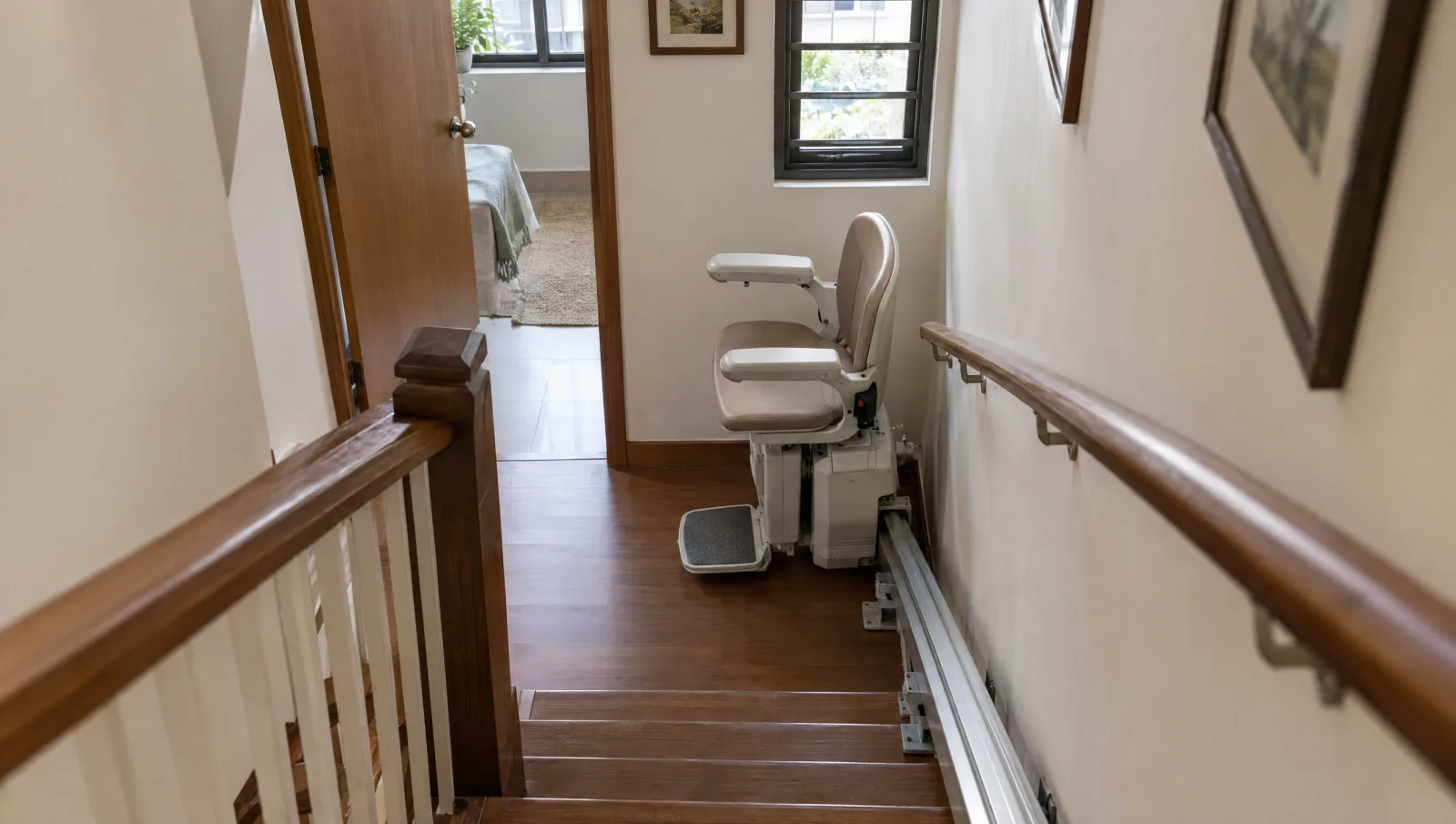
Ask the installer to show the chair’s travel path and the space it occupies when folded and unfolded. Include any rail extension beyond the bottom step and the space the person needs to get off at the top. A stair-width figure alone cannot establish fit.
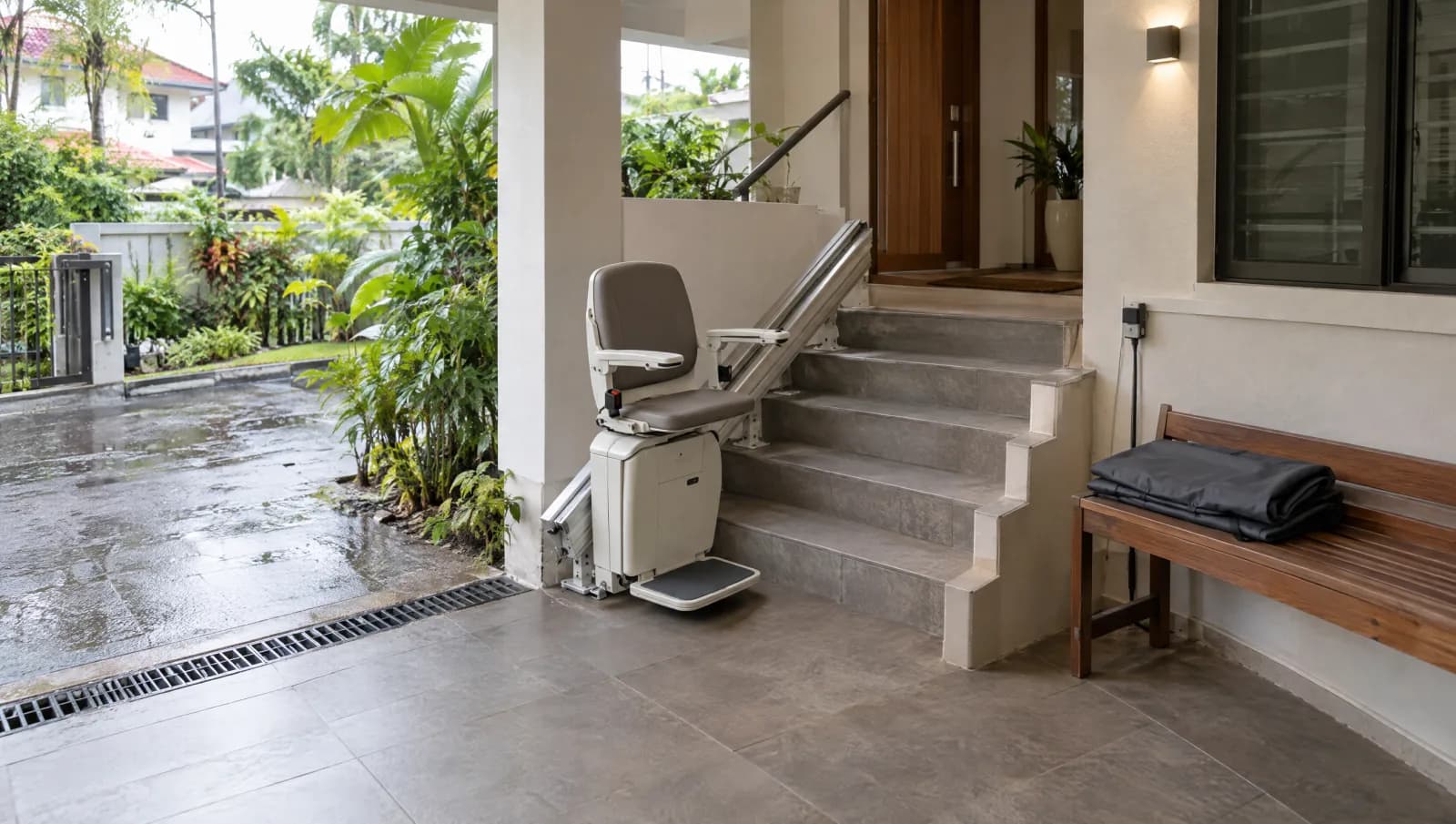
For an exposed stair, request confirmation that the exact system is designed for that location and weather exposure. Discuss shelter, charging points, surface conditions and the route to and from the seat. An indoor unit moved outdoors is not an equivalent specification.
Resolve doors, passing space and parking
Place a plan or marked survey image beside the quotation. Show where the rail ends, where the chair parks and how a door opens with the chair present. Check the bottom corridor, top landing and any doorway beside a turning rail independently.
A folding or retracting rail may address one obstruction, but ask how it operates, where it can be used and what happens if it is left in the wrong position. Confirm the required charging positions for the selected model. Do not improvise a parking routine that prevents charging.
Walk the route as other household members would: carrying laundry, guiding a child or moving between rooms. The aim is to retain a workable shared staircase as well as a usable stairlift. Resolve obstruction concerns with the installer before fabrication.
Compare the same complete installation
A meaningful quote names the chair, drive and rail configuration, route, stops or call points, parking position and selected options. Separate the core system from powered swivel, folding rail or other features so their purpose is clear. Ask which options address a measured difficulty for this user.
Include survey, installation, any electrical or building preparation, removal of an old lift, training and disposal. Record deposits and the point at which a custom component becomes non-cancellable. A curved rail price should not be compared with a straight-rail headline offer.
Ask for the written warranty and the first service agreement at the same time. A low initial cost can be acceptable if exclusions are understood and local support is available. Avoid calculating lifetime value using a guaranteed lifespan or resale value that no supplier has committed to.
| Quote line | Clarification to request |
|---|---|
| Model and rail | Exact configuration, route and user fit |
| Options | Why each is needed and whether included |
| Preparatory work | Power, surfaces, access and responsibility |
| Aftercare | Planned visits, breakdown labour, parts and exclusions |
| Future removal | Temporary removal, permanent removal and reinstatement terms |
Plan the works around access to the upper floor
Confirm how the rail is fixed and whether existing stair finishes or later renovation work affect the fixing design. The installer should explain any associated building or electrical work and which permissions or professional checks apply to that scope. Do not assume every domestic stairlift installation has identical requirements.
BCA identifies stairlifts as regulated fixed installations. Before use, the owner must ensure that a valid Permit to Operate (PTO) has been obtained. Check that the installation and maintenance contractors hold the relevant BCA registration; ACRA registration alone is insufficient. Confirm who coordinates the required testing, certification and PTO application.
Ask when the staircase will be unavailable and what safe alternative exists for the intended user. Include delivery, installation, testing and household training in the programme. Do not promise continued upper-floor access simply because the installation itself is described as quick.
If floor covering or stair renovation is planned, coordinate it before ordering. Have the provider assess the proposed removal or relocation scope before work begins. A rail removed for decorating should be reinstalled and checked by a competent provider; a move to another house requires a new suitability survey.
Check the installed safety features and operating instructions
Have the supplier identify the safety features fitted to the exact model and demonstrate normal operation. Check the seat and swivel arrangement, belt, footrest, controls and any obstruction response within the provider’s safe demonstration process. Do not test obstruction protection with a person’s body.
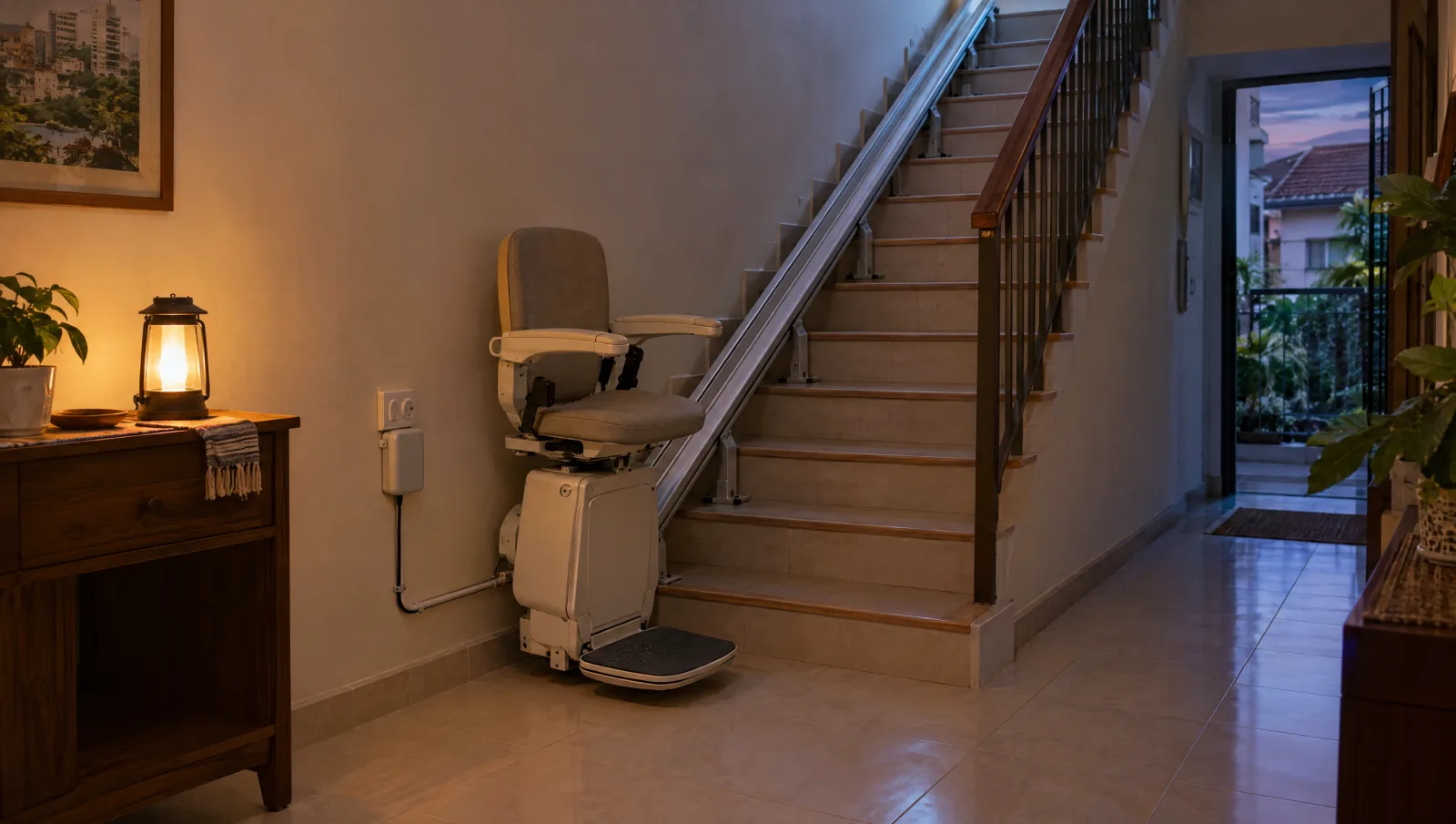
Learn how the system indicates a fault or loss of charging, and whom to contact. Battery operation does not mean unlimited travel in a power cut; behaviour depends on the equipment, battery condition and instructions. Avoid relying on a generic number of emergency journeys.
Warranty and servicing are separate. Obtain the start date, covered components, labour and call-out terms, wear exclusions and any maintenance conditions. A scheduled visit does not automatically include parts or breakdown attendance; ask the local provider which arrangement is actually offered.
Choose a service arrangement you can use
Confirm the local service contact, opening hours, geographic coverage and escalation route. Ask whether a quoted response means telephone support or an engineer attending. Establish what happens if a critical part must be ordered.
If changing provider, supply the model, serial number, manual and service history. The new company should confirm that it supports the equipment before accepting the contract. Keep a record of unresolved defects and check that the change does not unintentionally breach warranty conditions.
For a household depending on the lift, plan how essential activities can continue while it is unavailable. This may involve a temporary ground-floor arrangement or assistance agreed with the family. The service contract should sit alongside that practical plan.
Pause if safe transfers or access remain unresolved
Pause if the intended user cannot manage the proposed transfer, if the rail compromises an essential route, or if the provider cannot support the model locally. A more attractive seat or longer warranty headline will not resolve those issues.
For a temporary mobility need, compare rental, purchase and changes to daily living arrangements using actual local offers. Ask about removal, minimum terms, condition and the fit of the equipment; overseas rental advertising does not establish a Singapore option.
Compare a stairlift with other access changes
A home lift or suitable platform lift may be more appropriate when remaining in a wheelchair is important, when several people need a shared access solution, or when transfers are difficult. Feasibility, disruption and ongoing obligations differ, so compare the complete household route and building scope.
Handrails, lighting, step visibility and a ground-floor bedroom can also be useful changes. They do not make every staircase suitable for every user. Treat them as options to evaluate against the identified need rather than substitutes selected solely because they cost less.
Regulatory compliance
Check which requirements apply to your proposed scope. Agree the responsible qualified professionals, submissions and inspections before work begins.
BCA (Building and Construction Authority)
Obtain a valid PTO before operating the stairlift and verify the relevant BCA contractor registrations.
Primary source: www1.bca.gov.sg/safety-and-standards/lifts-escalators-and-mechanised-car-parking-systems/important-reminder-to-owners-of-stairlifts-and-vertical-platform-liftsGlossary
- Rail envelope
- The space occupied by the rail and moving or parked chair.
- Transfer
- Moving between standing, a wheelchair or another seat and the stairlift seat.
- Call control
- A control used to bring the chair to a landing, subject to the model’s instructions.
- Parking position
- A specified resting location that must also respect the model’s charging requirements.
Frequently asked questions
Can a stairlift fit a narrow staircase?
Possibly, but the survey must show the chair’s travel and parking envelope, both landings, doorways and remaining passage. Width alone does not establish suitability.
Can two people share a stairlift?
Potentially. Both users need a suitability check and a clear routine for the controls, adjustments, charging and calling the empty chair.
Can I move a stairlift during renovation?
Ask the provider to assess temporary removal and reinstatement. Relocation to another staircase needs a new survey and may require different components.
Does the warranty include every service visit?
Not necessarily. Routine servicing, breakdown labour, call-outs and parts are distinct contract items. Obtain the local written terms.
If you read nothing else
Talk through the options for your home
Tell us what you want to change, how your household uses the space and when you hope to start. Share photos or plans on WhatsApp if you have them.
Browse all stairlifts articles →
Go deeper: stairlifts articles
In-depth pieces that expand on the sections above: real costs, brand and system comparisons, the installation process, and the edge cases most homeowners hit.

stairlifts · 7 min read
Can Two Family Members Use the Same Stairlift?

stairlifts · 6 min read
Perch Stairlifts: An Option When Sitting Is Difficult?
stairlifts · 8 min read
Stairlifts in HDB Maisonettes: Approval and Installation
stairlifts · 8 min read
Wheelchair Platform Lift vs Stairlift: Which Fits Your Needs?
stairlifts · 8 min read
How Does a Stairlift Work? A Simple Guide for Families

stairlifts · 6 min read
EASE vs EASE (Private): Which Support Applies to Your Home?
stairlifts · 6 min read
Stairlift Weight Capacity: Model Limits, Seat Width and Safe Fit
home-lifts · 7 min read
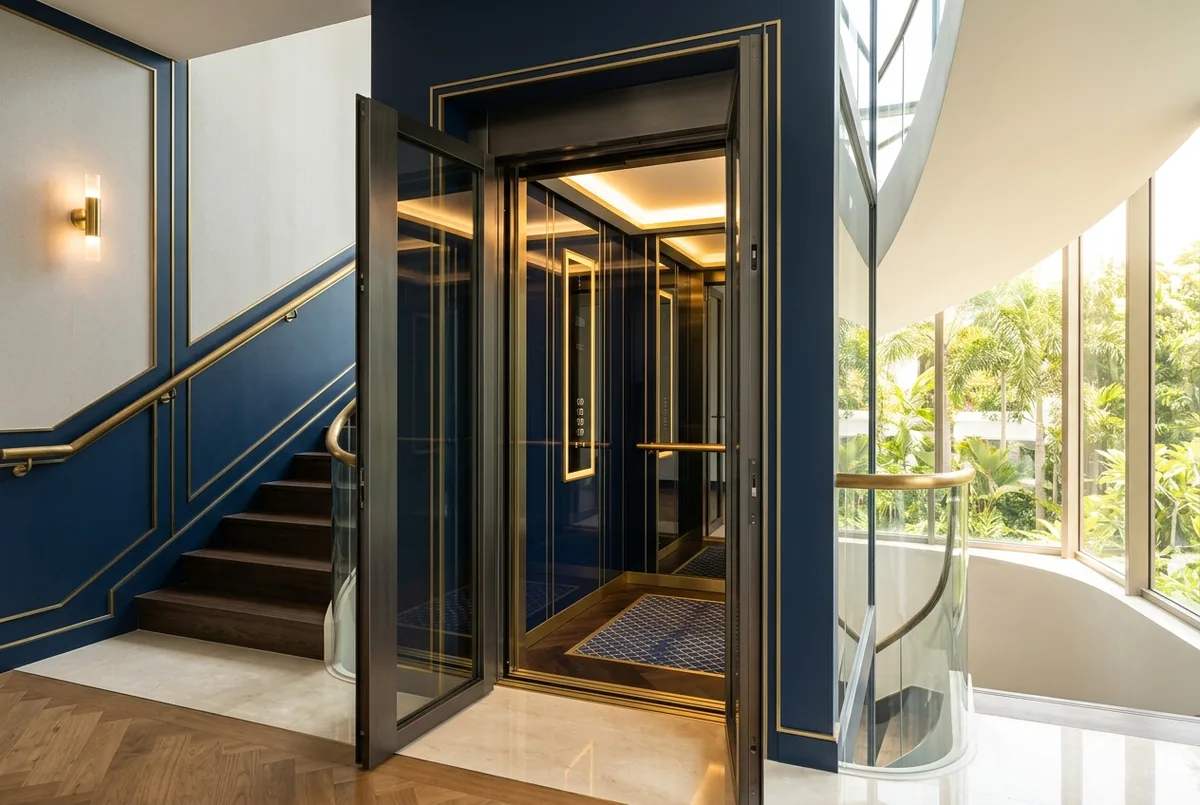
Can a Home Lift Fit Inside Your Existing Staircase?
stairlifts · 5 min read
Do Stairlifts Work in a Power Cut?
stairlifts · 5 min read
Outdoor Stairlifts in Singapore: What to Check Before Buying
stairlifts · 8 min read
Is Your Staircase Too Narrow for a Stairlift?
stairlifts · 5 min read
Second-Hand Stairlifts: What to Check Before You Buy
Still deciding? Compare options & estimate cost
Side-by-side comparisons and an instant cost estimate for your Singapore home.
Related guides
Buying Guide
Home Lifts in Singapore: A Landed Home Buying Guide
Compare home-lift suitability, landing space, building works, quotations, BCA owner duties and ongoing care before choosing a system.
Buying Guide
Staircase Renovation in Singapore: A Buying Guide
Define staircase scope, finished levels, materials, handrails and structural responsibilities. Plan safe household access, quote comparison and handover.