On this page
View In PDFHydraulic, traction and vacuum lifts move in different ways, which affects their equipment layout and the building work they need. The useful comparison is how a specific model fits your house and supports everyday access. This guide explains the three types, then compares space and ownership considerations without assuming every model in one category is identical.
Different Drive Mechanisms and Model-Specific Layouts
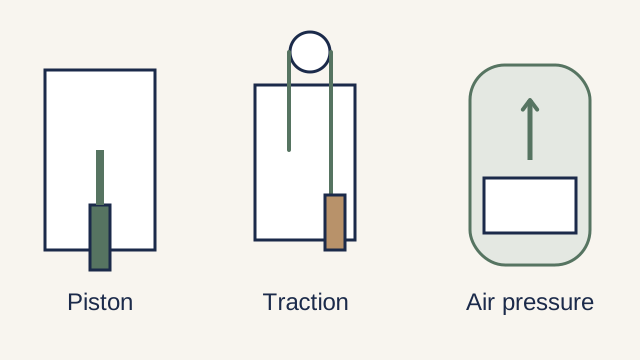
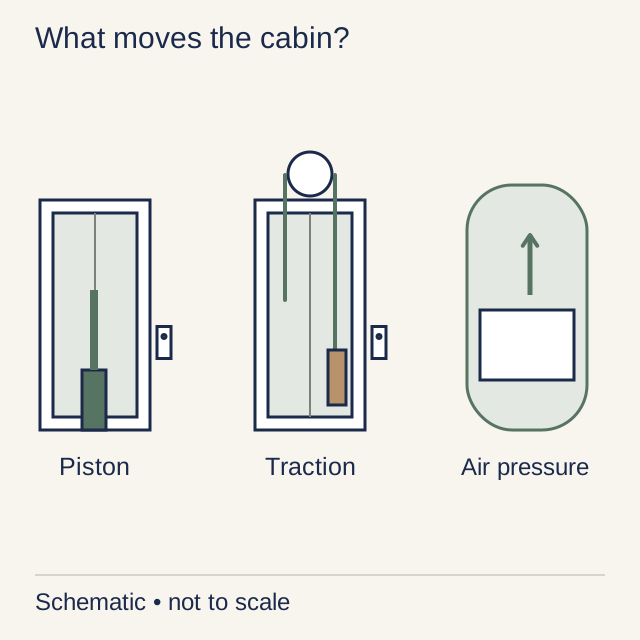
Hydraulic, traction and pneumatic lifts use different ways to move the cabin; other home-lift mechanisms, including screw drives, also exist. The right comparison begins with the floors, usable access and site constraints the household needs to resolve.
Compare the proposed model's drawings and operating requirements before ranking the drive types. A small external footprint, a smooth demonstration and an attractive price address different parts of the decision. None alone establishes the best complete installation.
Hydraulic Lifts: Cylinder and Pump Arrangement
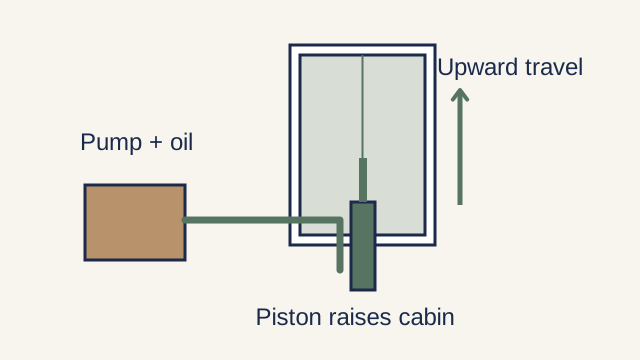
A hydraulic lift uses pressurised fluid and a cylinder to move the cabin. The arrangement of the cylinder, pump and controls varies by model. Confirm where the equipment sits and how it will be reached for maintenance.
A hydraulic design does not always require a separate walk-in machine room. Ask for the actual cabinet or machinery-space layout, pit and overhead requirements. Those drawings determine whether the equipment can fit the available area.
Compare rated load, speed, noise information and power requirements from the selected model. Maintenance instructions also vary; a universal oil-change interval or a drive-type lifespan is not an adequate ownership budget.
Traction Lifts: Drive and Suspension Arrangement
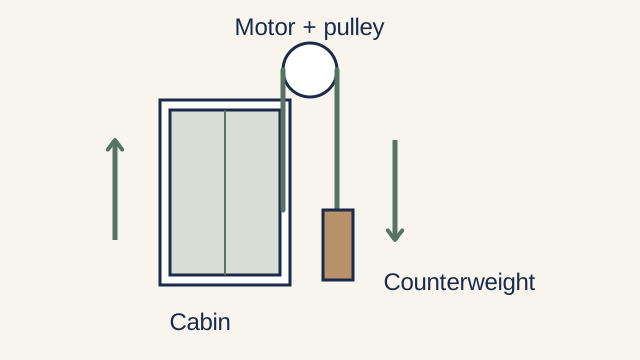
Traction equipment moves a cabin using ropes, belts or chains and a drive arrangement, commonly with a counterweight. The quoted layout should identify the machinery, supports and access needed. Some models are designed without a separate machine room.
Performance depends on the actual model and installation, including its controls and structure. Do not assume every traction home lift is faster, quieter or more efficient than every hydraulic alternative. Compare equivalent usable cabins and the household's expected operation.
Pit, overhead and maintenance requirements must come from the proposed model and project design. Suspension components need the prescribed inspections and replacement criteria, not a universal calendar interval. Ask what work and parts are excluded from the service agreement.
Pneumatic Lifts: Air Pressure and Self-Supporting Enclosures
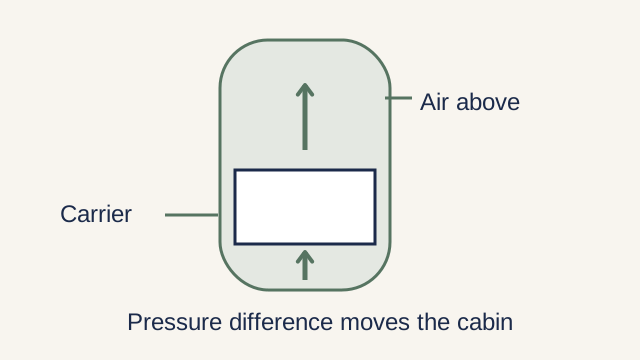
Pneumatic lifts move the cabin using an air-pressure difference. A self-supporting enclosure can reduce the need for a conventional shaft, but the model still needs appropriate supports, openings, top clearance and site approval.
The manufacturer's no-pit or no-machine-room arrangement describes the equipment, not every associated building task. Include openings, electrical work, access and required testing in the installation programme. A quick equipment assembly time is not the whole project duration.
Capacity and stops are model-specific. The PVE52 is an example marketed as wheelchair accessible and available for up to five stops. Confirm the actual wheelchair, user, cabin and landing fit, together with the applicable Singapore requirements, before selecting that configuration.
Space Requirements Compared
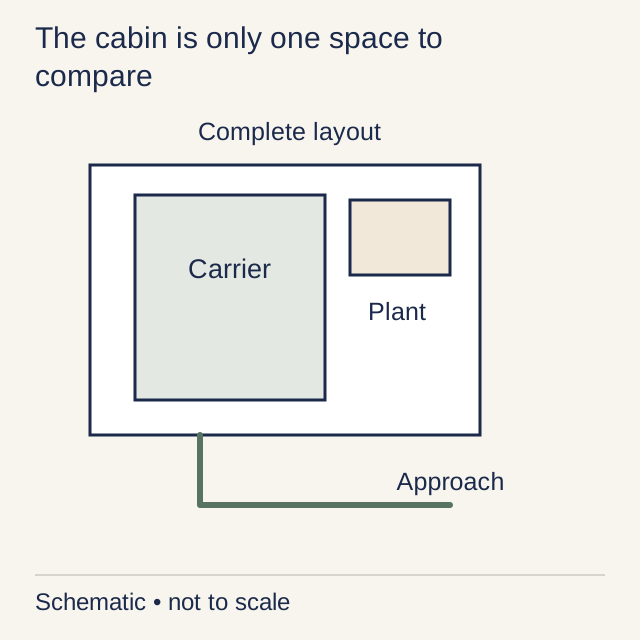
Measure the complete installation envelope: enclosure, doors, landings, equipment, pit where needed and overhead. Hydraulic and traction designs do not share one universal shaft dimension. The responsible professionals must check the model against the existing structure.
For wheelchair use, compare the actual chair and user with the clear doorway, cabin and landing manoeuvre space. An external tube or shaft dimension is not the usable cabin. Confirm any attendant requirement and rated load in the proposed configuration.
| Example model | Usable cabin and rated load | Building allowance |
|---|---|---|
| Infinity hydraulic, standard cabin | 914 × 1219 mm; select the 431 kg version | 203 mm pit; 2337 mm overhead; separate pump/controller provision |
| Eclipse geared chain traction, standard cabin | 914 × 1219 mm; select the 431 kg version | 203 mm recommended pit; 2438 mm overhead; drive in shaft, remote controller |
| PVE52 pneumatic | 44 in circular cabin (about 1118 mm); 525 lb (about 238 kg) | No pit; 54 11/16 in floor opening (about 1389 mm); 107 in standard or 97 in split-unit overhead |
For a hypothetical two-stop journey carrying a 200 kg combined load, all three ratings clear the load requirement. They do not provide the same usable space. The Infinity and Eclipse examples have rectangular cabins; the PVE52 has a circular cabin and a 32-inch entrance. Test the occupied chair and attendant arrangement before treating any of them as equivalent access.
The PVE52 floor-opening dimension includes more than its outside cylinder, and still excludes landing space. The two shaft lifts need enclosure walls and rail support as well as their cabin. For example, the Infinity Type 1 layout places a 914 × 1219 mm cabin inside a 1292 × 1429 mm finished runway; walls sit outside that. Small cabin area and small building footprint are different advantages.
Which Should You Choose?
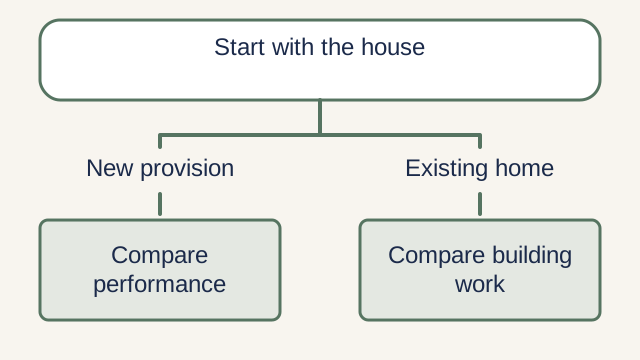
For a new build, integrate the proposed equipment and structural design early. For a retrofit, identify the feasible locations and associated alterations before selecting the drive. Compare like-for-like quotations for usable access and ownership obligations.
Where footprint is constrained, a model with reduced pit or machinery-space requirements may help. Check its capacity, stops and landing access rather than assuming one entire drive family is the only retrofit option.
Ask for model-specific maintenance, local parts arrangements and warranty terms. A low initial equipment price can omit building work or ongoing obligations; keep those costs visible in the decision.
Ownership also involves different components. Infinity adds hydraulic fluid, hoses and cylinder seals to the service scope; Eclipse uses a chain drive and counterweight; PVE52 depends on its pressure system and seals. The Singapore maintenance and annual examination/testing duties still apply to regulated installations. Fewer hydraulic components do not mean no servicing, and an overseas warranty does not price local labour or call-outs.
Send DirectHome the plans, required floors and access needs to discuss the scope. Confirm the assessment arrangements and responsible professionals before committing.
Frequently asked questions
| Decision | Key distinction |
|---|---|
| Space | Compare the cabin, shaft, machinery, pit and overhead |
| Purchase cost | Match usable access and include house work |
| Energy and noise | No three-way winner without comparable tests |
Common questions
Which home lift type is the cheapest?
No drive type is automatically cheapest. The compared models have no like-for-like Singapore installed-price schedule: equipment, building work and local support must be priced together. To see why, imagine an S$8,000 lower equipment quote that needs S$12,000 more building work: it ends S$4,000 higher. These are invented comparison amounts, not market prices. Retain the models that meet the access need, then compare their complete totals.
Which home lift is best for retrofitting an existing home?
The best retrofit option depends on measured space, structure and usable access. Reduced-pit or self-supporting designs may help, but associated works and approvals still need checking. Capacity and stops vary by model.
Which home lift type is the quietest and most energy-efficient?
There is no comparable noise-and-energy test covering these three configurations. The practical distinction is machinery placement: Eclipse has its drive in the shaft, Infinity separates the hydraulic power unit, and PVE52 can move its turbine unit away from the upper landing. PVE turbines run on ascent; hydraulic descent also uses controlled fluid release. Neither fact alone establishes a lower annual electricity bill. Compare measured energy for the same journeys and listen from the rooms beside the proposed equipment.
How much shaft space does each lift type need?
For the example configurations, Infinity needs a 203 mm pit and 2337 mm overhead; Eclipse uses a recommended 203 mm pit and 2438 mm overhead. PVE52 has no pit but needs a 54 11/16-inch floor penetration and 107-inch standard or 97-inch split-unit overhead. These are model-specific planning figures; cabin, doors, surrounding walls and landing approaches still need their own space.
Can a vacuum lift fit a wheelchair?
Some can. The PVE52 is a manufacturer example offered as wheelchair accessible, with up to five stops. Confirm the actual chair, user, door, cabin and landing fit and the applicable Singapore requirements for the proposed installation.
Home Lifts across Singapore
Need help with your project?
Tell us what you need on WhatsApp and send a few photos. We'll arrange a free site assessment, then give you a fixed-price quote within 3 to 5 working days.