On this page
View In PDFA home lift project can involve approval for the lift, permission for associated building work and the Permit to Operate before use. Those are separate responsibilities, even when one team coordinates them. Identify who handles each part and which documents you will receive, so equipment delivery is not mistaken for a completed, ready-to-use installation.
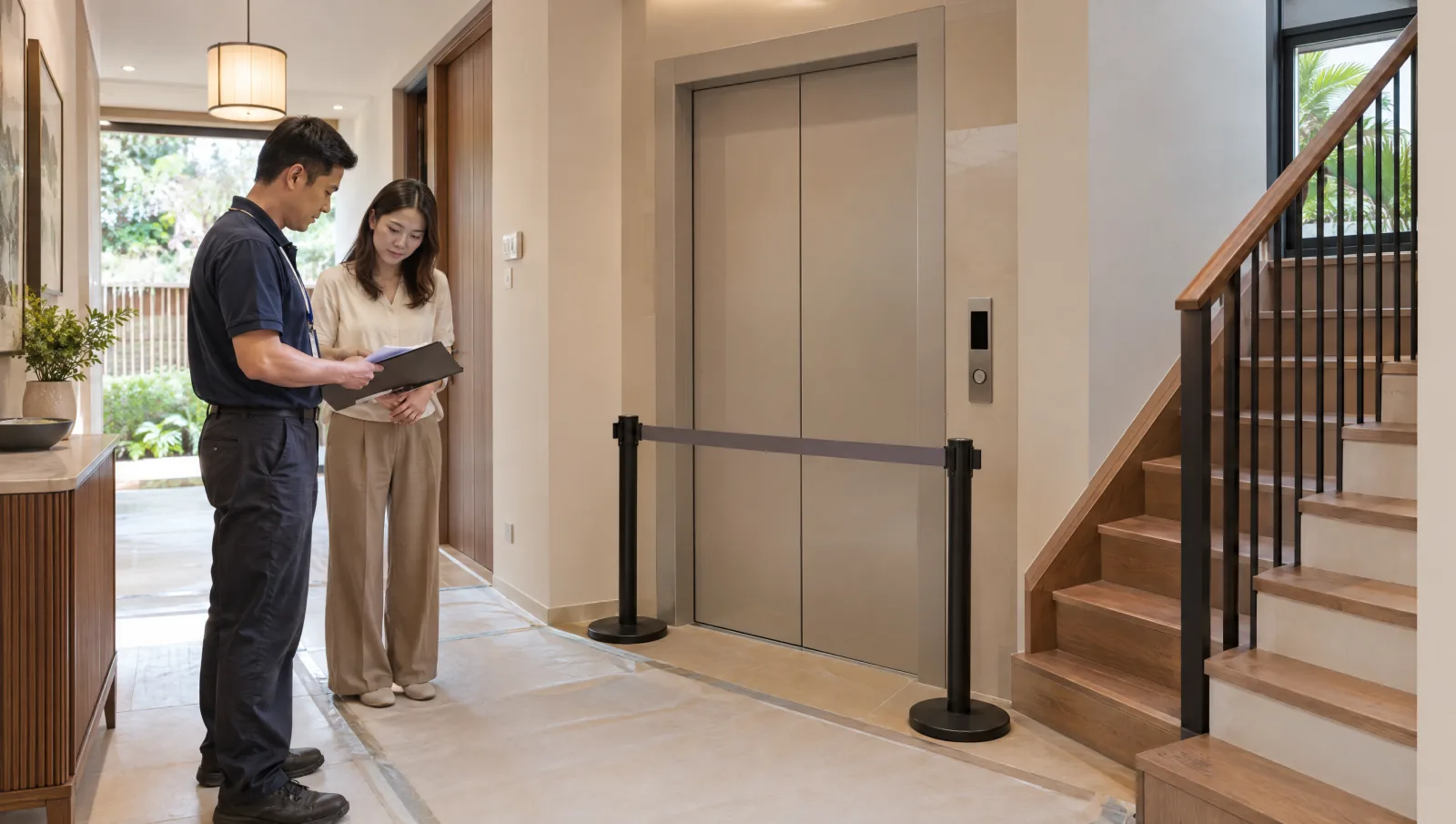
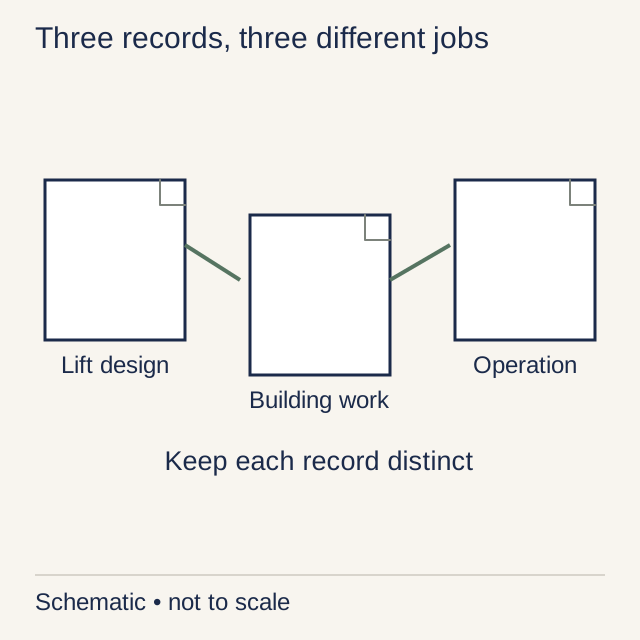
Separate FI approval, building works and permission to operate
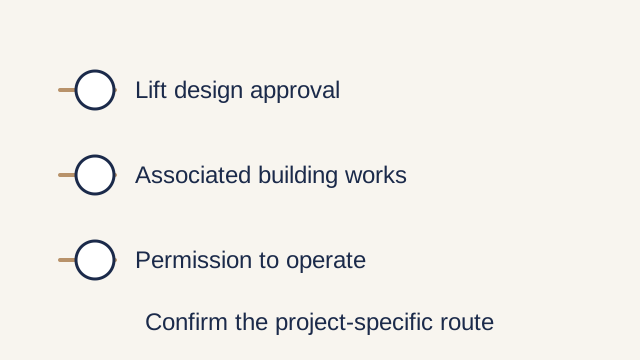
A home lift involves more than one approval question. BCA’s December 2025 LEAP FAQ says that new FI works starting on or after 1 October 2025 require FI plan approval before work begins where related building or structural plans were not submitted before that date. Ask the appointed professionals to confirm the applicable route against the actual scope and submission history.
Associated building works need their own assessment. BCA’s structural guidance distinguishes works requiring approval from exempt insignificant building works. Cutting a floor opening, altering a structure or constructing a shaft should be included in the scope supplied to the responsible professionals; the equipment brochure cannot settle those project questions.
Operation is a separate step: BCA requires a valid Permit to Operate (PTO) for a regulated lift. Keep the design approval, any building-work permissions and the PTO as distinct items in the handover record.
Identify the professionals and their scope
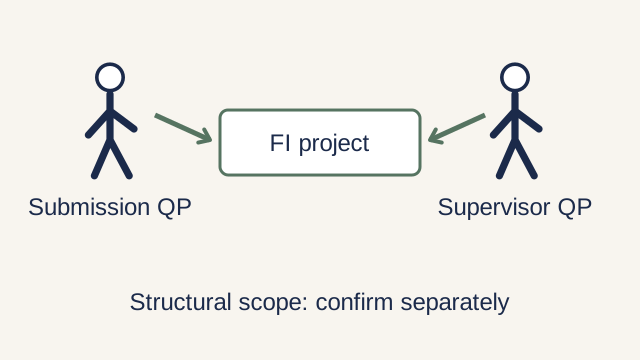
Under the current FI regime, BCA distinguishes the plan submission Qualified Person (QP), responsible for design submissions, from the Supervisor QP, responsible for supervising the required examination, inspection, testing and commissioning. The roles can be held by the same person. Record the appointments and responsibilities for your project.
For structural plan approval, BCA requires the submitting QP to be a registered Professional Engineer in the civil or structural discipline. That requirement concerns structural submissions; it does not establish an identical structural package for every home-lift installation. Ask which associated works require structural design, approval and supervision, and who is responsible for them.
Request a document checklist for the proposed installation
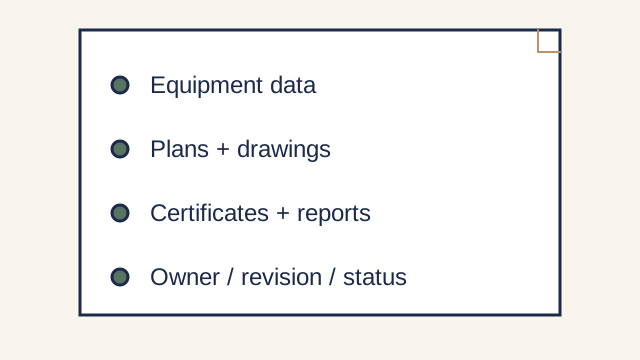
The FI submission information includes equipment data, drawings and supporting certificates or reports appropriate to the installation. Have the plan submission QP identify the applicable documents and confirm they match the proposed model. Keep the current drawing and certificate revisions together so a design change does not leave the submission describing different equipment.
Ask for a register showing each document, the person supplying it, its revision and any outstanding decision. Include separate planning, building or fire-safety submissions only where the responsible professionals identify them as applicable. Keep copies of what is actually submitted and approved.
Plan the programme around unresolved dependencies
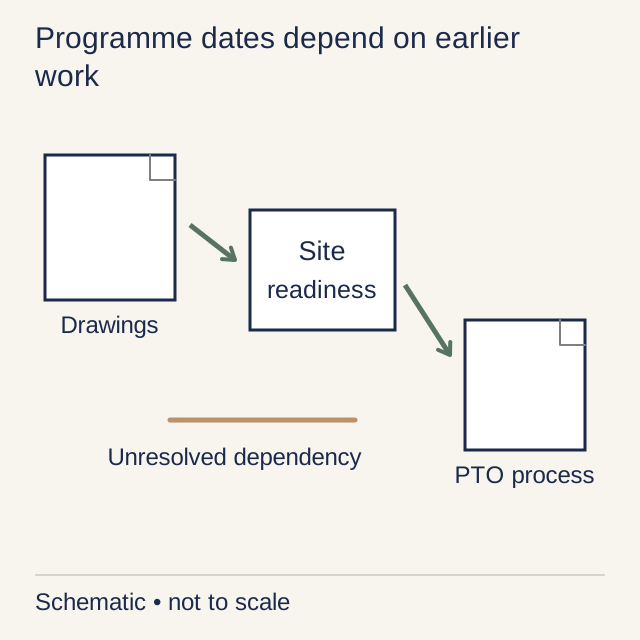
Ask for a programme that separates submissions, associated building work, manufacture and delivery, installation, testing, the PTO application and household training. Mark which dates depend on approval, site readiness or information still to be provided.
The published processing period for a new or recommissioning PTO application is 7 working days when the submission is complete and contains no errors. That period follows the required examination, inspection, testing and commissioning; it is not seven days from ordering the lift or starting construction. FI design approval and any building-work submissions sit earlier in the programme, with separate dependencies.
Agree the construction and installation programme with the responsible professionals. Required testing and certification are coordinated by the applicable registered FI contractor and professionals before the PTO application is completed. Do not assume that BCA itself performs a routine final inspection or that a standard booking period applies.
Ask who tracks queries and updates the programme if drawings or equipment change. Recent experience can help you assess a provider, but a sales promise is not an authority’s approval or a guaranteed completion date.
Check the proposal before committing to it
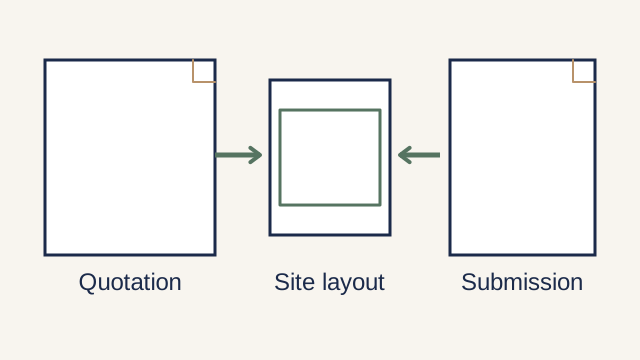
Compare the same model and drawing revision across the quotation, layout and submission pack. Ask the installer to show the measured fit and explain any unresolved requirements for space, supports, access, power and emergency arrangements. Seek clarification before accepting a substitution or site change.
Give the responsible professionals the available property plans and explain previous alterations. Ask which site conditions still need investigation and record who will resolve each item. That allows the proposal to move forward with clear decisions about the actual building.
Separate official fees from professional and site-work charges
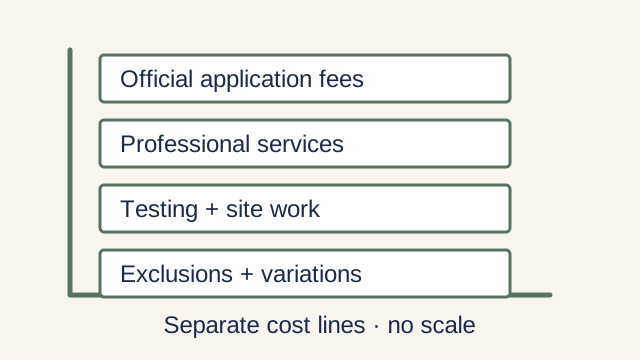
Request an itemised quotation. Keep official application fees separate from professional appointments, submission services, testing, investigations and associated construction where required. For each official fee, ask for the current authority fee basis; for each private charge, ask what work it covers and who receives payment.
| Cost item | Amount or basis |
|---|---|
| PTO application for one lift | S$20 statutory application fee |
| FI design and associated building submissions | Separate applicable official charges; identify them in the submission scope |
| QP, examination/testing and application support | Private professional/contractor quotation |
| Building works and later maintenance | Separate installation and ongoing charges |
For one lift, the official PTO application charge is S$20. A quotation described as “PTO support” may instead include testing, professional certification and application administration. Those are paid services, so the amount can be much larger than the statutory fee. Have the S$20 identified as included or additional, then count it once.
For example, if an assumed S$1,200 private support package excludes the statutory fee, that subtotal is S$1,200 + S$20 = S$1,220. This is arithmetic using an invented package amount, not a Singapore service-price estimate. Design submissions, building work, tax where applicable and future maintenance still need their own amounts.
Record exclusions, tax treatment, payment stages and the basis for variations or repeat submissions. Confirm whether maintenance is included and what begins at handover. Without dated quotations for comparable scopes, a single “compliance cost” allowance cannot reliably describe your project.
Confirm the PTO handover and ownership duties
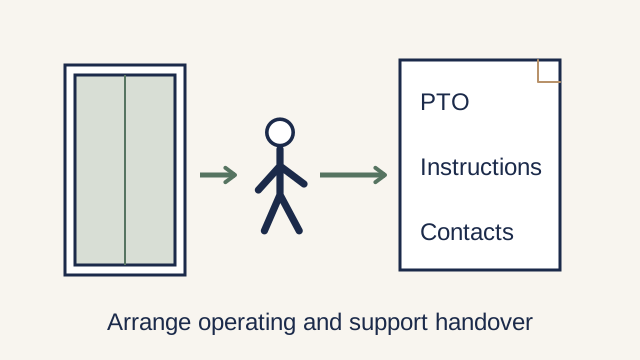
PTO applications use BCA’s LEAP portal. BCA identifies the Supervisor QP or Specialist Professional Engineer as initiating a new or recommissioning application. Agree who coordinates the application and how you will receive confirmation that the PTO is valid before use.
At handover, request the approval records, operating instructions, maintenance arrangements and emergency contact details. Use the home-lift buying guide for fit and ownership decisions; keep the approval checklist with the project records.
Home-lift buying and ownership guide — Assess fit, access and ongoing ownership alongside the approval records.
Frequently asked questions
| Decision | Key distinction |
|---|---|
| Permission | FI design, building works and PTO are separate |
| Published PTO processing period | 7 working days for a complete, error-free application |
| Single-lift PTO fee | S$20; private services are additional |
Common questions
Is BCA approval mandatory for a home lift in Singapore?
A regulated home lift needs a valid Permit to Operate (PTO) before use. New installations within the current FI plan-submission regime also need design approval before FI works begin. Ask the appointed professionals to confirm the applicable regime from the work scope and submission history, and identify any separate building-work approvals.
How long does BCA approval take for a home lift?
BCA gives 7 working days for a complete, error-free new or recommissioning PTO application. This is the operating-permit stage after the required examination, inspection, testing and commissioning. It does not include FI design approval, building-work submissions, manufacture or installation. Missing documents, queries or corrections can extend the programme; do not treat this as a whole-project completion promise.
Do I need a Professional Engineer (PE) for a home lift?
Confirm the professionals required for both the FI works and any associated building works. The current FI regime distinguishes the plan submission QP from the Supervisor QP. If structural plan approval is required, BCA allows a QP who is a registered PE in the civil or structural discipline to apply. The actual scope determines the appointments.
What should I check before a home-lift submission?
Ask for the proposed model, measured site drawings, applicable approval route and a document checklist agreed by the responsible professionals. Identify missing information and who supplies it. Match the quotation and drawings, and record how design changes will be reviewed. These are preparation checks, not a ranking of BCA rejection reasons.
What do BCA permit and compliance costs add up to?
For one lift, the statutory PTO application fee is S$20. Add separately quoted professional appointments, design submissions, examination/testing, application support and any building works. A private “PTO package” is not the official fee. If that package already includes the S$20, do not add it again; confirm exclusions and tax before totalling the project.
Home Lifts across Singapore
Need help with your project?
Tell us what you need on WhatsApp and send a few photos. We'll arrange a free site assessment, then give you a fixed-price quote within 3 to 5 working days.