On this page
View In PDFA straight stairlift rail follows a straight flight; a curved rail can follow bends and changes of direction. Even one turn may change the appropriate arrangement, but the full journey matters more than counting corners. Compare landing space, transfers and everyday use before choosing how the stairlift will serve the staircase.
What Decides Straight vs Curved
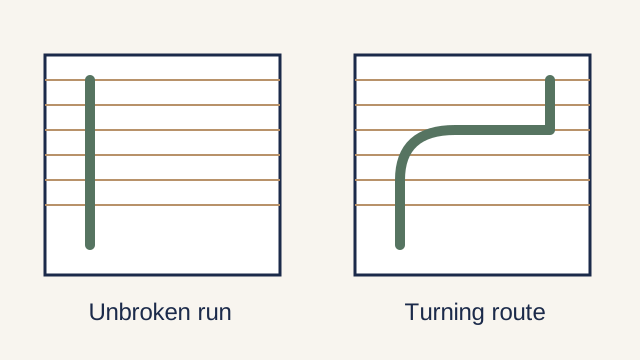
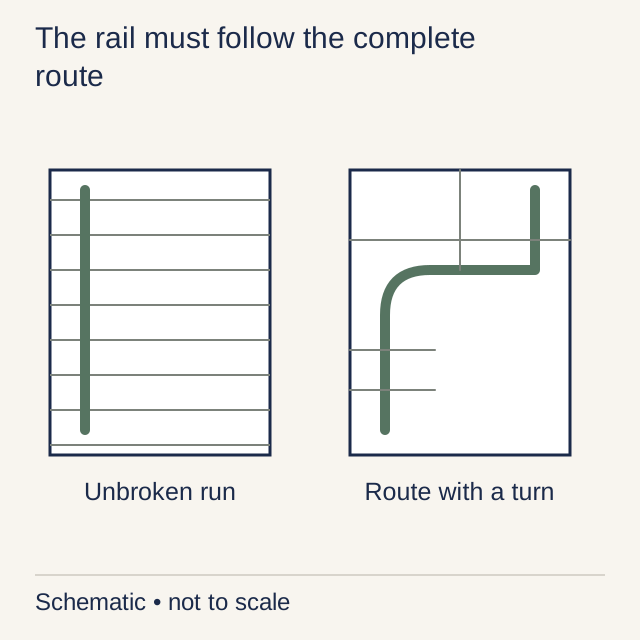
A straight rail follows a straight flight. A route that carries the seated user around a bend needs a system designed for that geometry. The shape of the complete journey matters: a straight flight may still have a turning parking arrangement at its end.
Curved systems can use different fabrication or modular arrangements, so do not assume every rail is manufactured in the same way. Ask for the route the supplier proposes, including any transfer between flights. A lower equipment price is less useful if it leaves the user having to stand and change seats at an awkward landing.
Straight Stairlifts: Simpler Rail Geometry
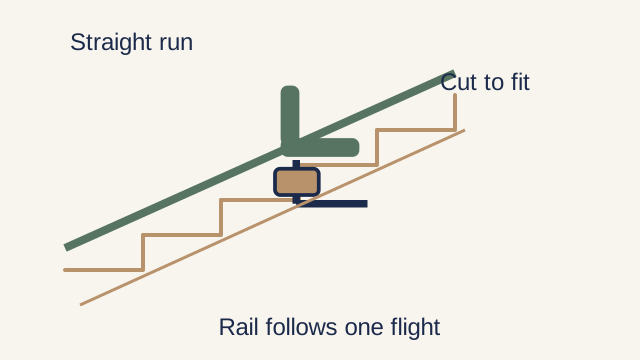
A straight route generally has fewer geometric complications than one with bends. The supplier still needs to establish rail length, stair incline, supporting construction, occupied clearance and safe parking. Available stock and the required options determine procurement time; the straight shape alone cannot promise delivery within a week.
Many systems mount through brackets fixed to the stairs. That can limit wider construction work, but drilling and later making good may still be needed. Obtain a quotation separating the chair and rail from electrical work, mounting preparation, installation and the Singapore testing and PTO process.
Curved Stairlifts: Design Around the Complete Route
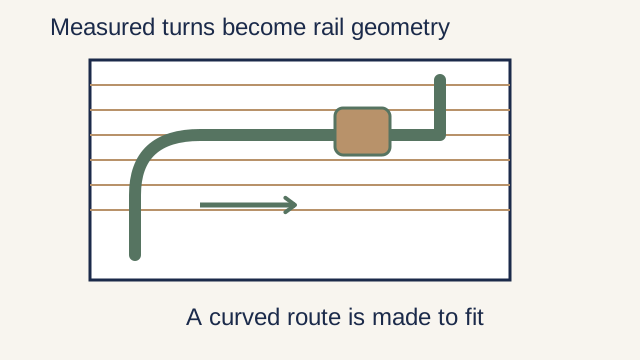
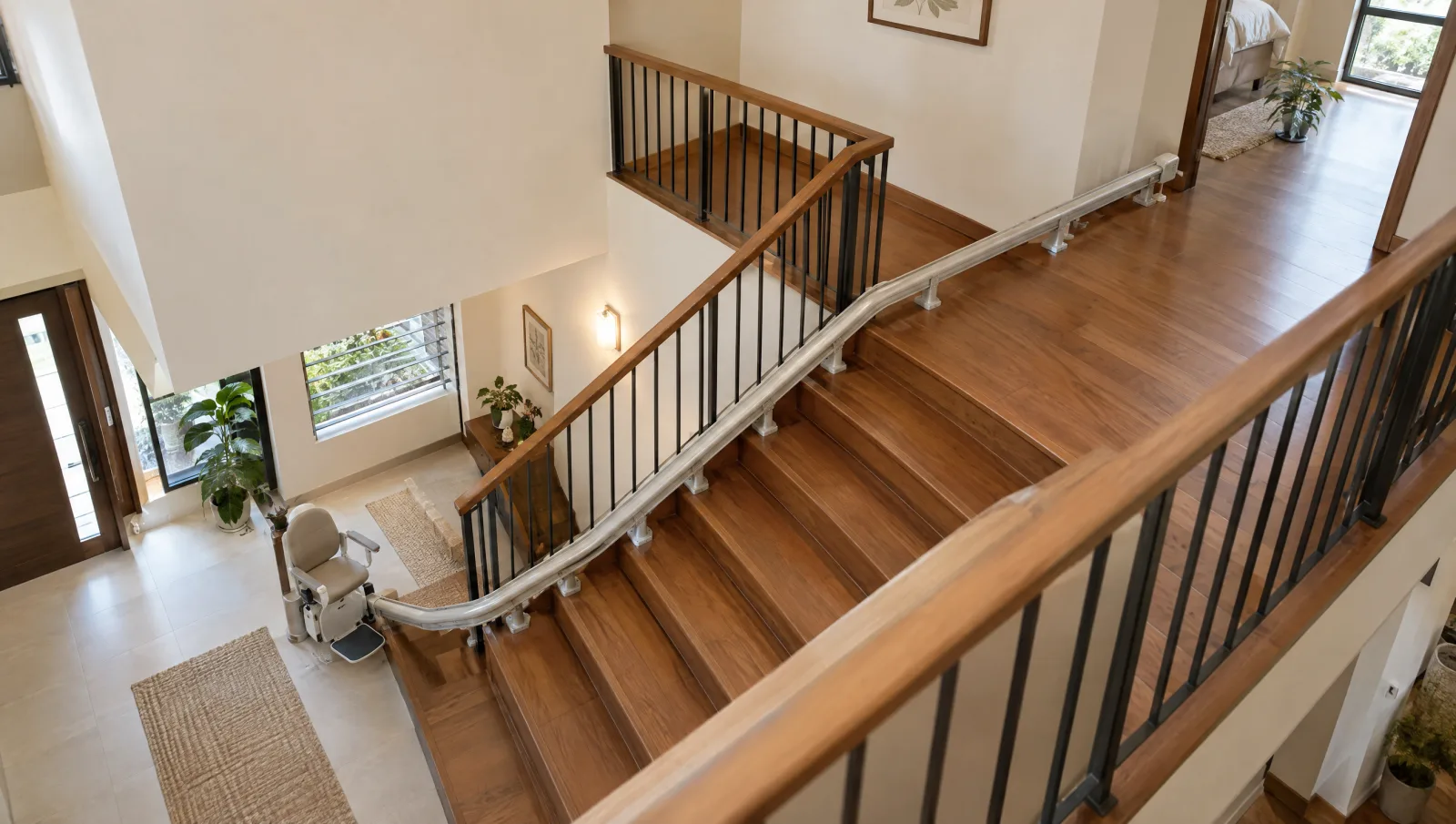
A curved route has to carry the chair and its user through the changing relationship between rail, steps, wall and balustrade. The bend radius, rail arrangement and parking extensions can affect fabrication, travel and price. A photograph of a similar staircase is not a dimensioned specification for yours.
Agree the survey, design sign-off, procurement and installation milestones before relying on an access date. If access is needed urgently, discuss interim room arrangements with the household and care team. Do not sacrifice a safe transfer or suitable chair merely because a different unit is available sooner.
Site Survey Is Non-Negotiable for Curved
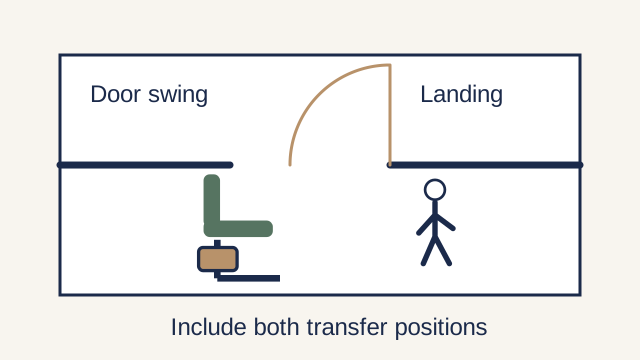
Both straight and curved installations need a site assessment before suitability is confirmed. Photographs and rough dimensions can support an initial estimate, but they may hide weak mounting surfaces, door conflicts or inadequate head clearance. Establish what remains provisional in any early quotation.
During the survey, include the actual user and caregiver where possible. The installer should consider the seated envelope, footrest, handrail, turns and landing transfers as well as the rail itself. Record the chosen route and the remaining space for people using the stairs on foot.
What If My Stair Has Just One Small Turn?
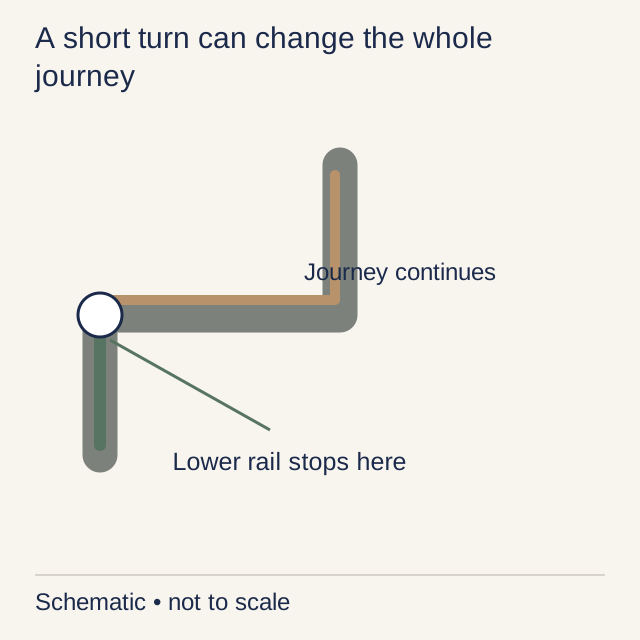
A straight rail cannot carry the user through a turn. The alternatives may include a continuous curved route or separate equipment on individual flights, subject to suitability. Separate chairs introduce a transfer at the landing and may leave steps or an awkward gap to negotiate.
Assess that transfer with the user’s care professional and supplier before treating two straight units as equivalent to one continuous journey. A person who can ride safely may still be unable to stand, turn and move between seats. Include this practical difference in both the cost comparison and the access plan.
Quick Decision Framework
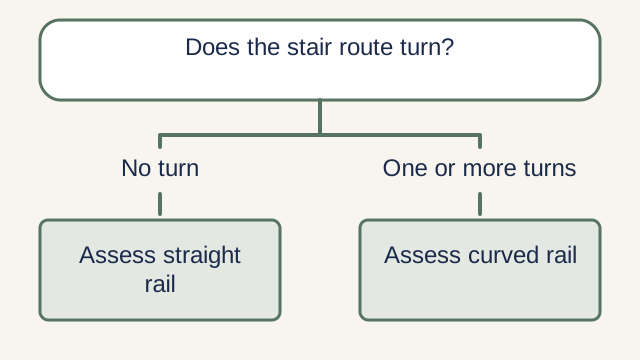
Trace the journey from safe boarding at the bottom to safe transfer at the top. Note every turn, door, narrow point and change of level. Use that record to request the appropriate survey, rather than deciding solely from whether the staircase looks straight in one photograph.
Compare suitable routes using installed quotations and written schedules. In Singapore, include the registered-contractor, testing and PTO requirements; physical installation is only one milestone. The right route is the one that carries the intended user through the complete journey safely and leaves the household a workable staircase.
Frequently asked questions
How do I know if I need a straight or curved stairlift?
A straight rail serves a straight route. A journey through a bend needs an appropriate curved system, while parking and transfer arrangements may add further geometry. Confirm the complete route by site assessment.
How much more does a curved stairlift cost than a straight one?
Compare surveyed quotations. Rail geometry, chair options, supports, electrical work and the testing and permit process affect the total; there is no verified universal price difference in this guide.
How long does a curved stairlift take to arrive?
Obtain the actual survey, design, procurement, installation and PTO programme. Curved systems differ in fabrication and stock arrangements, so no fixed arrival time applies to every order.
Can I get a firm quote for a curved stairlift without a site visit?
Photos can support an initial estimate. A site assessment is needed to establish mounting, clearance and user transfers for both straight and curved installations.
Stairlifts across Singapore
Need help with your project?
Tell us what you need on WhatsApp and send a few photos. We'll arrange a free site assessment, then give you a fixed-price quote within 3 to 5 working days.