On this page
View In PDFRenting a stairlift may suit a temporary need, while buying may be more practical for longer use. Compare the full cost over the period you expect to need it, including installation, servicing and removal. If the duration is uncertain, ask how extending the rental or buying later changes the total before committing.

First, ask a rental provider to confirm that it can supply a suitable arrangement for your staircase and user, with the terms in writing. A stairlift installation assessment helps define the equipment requirement. Rental availability, the minimum term and what happens if the need lasts longer must then be confirmed for that equipment and home.
Temporary use still needs a properly fitted installation
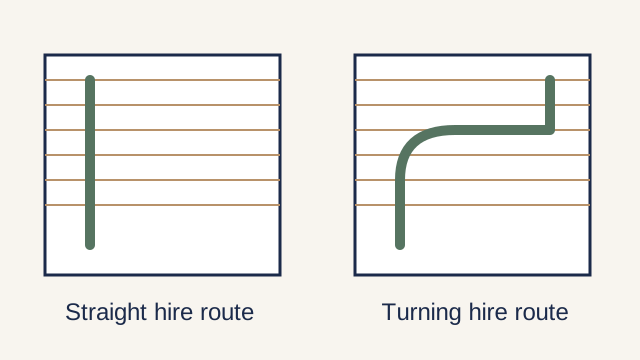
Hiring changes the commercial arrangement, not the need for a suitable rail, seat and transfer. The chair has to serve the actual stair route, and the user must be able to get on, travel and get off as intended. A short expected period of use is not a reason to accept a poor fit.
Temporary hire also needs the required operating arrangements. BCA requires a valid Permit to Operate before a stairlift is used and calls for BCA-registered installation and maintenance contractors. Establish who coordinates the applicable work and permit process, and include separately chargeable fees in the written offer. The hire period does not remove that scope.
Straight and curved routes can also lead to different equipment and preparation work. Do not assume that a rental offer for a straight flight covers a turning staircase, several levels or an outdoor route. Keep the configuration fixed when comparing rental and purchase; otherwise the price comparison is about different access solutions.
Where the need follows a change in mobility, discuss the appropriate device with the relevant care professional. Assistive-device assessment and fitting help establish suitability. The expected duration of use may remain uncertain, which is precisely why the contract needs to handle extension and early ending clearly.
Put the cost on a timeline
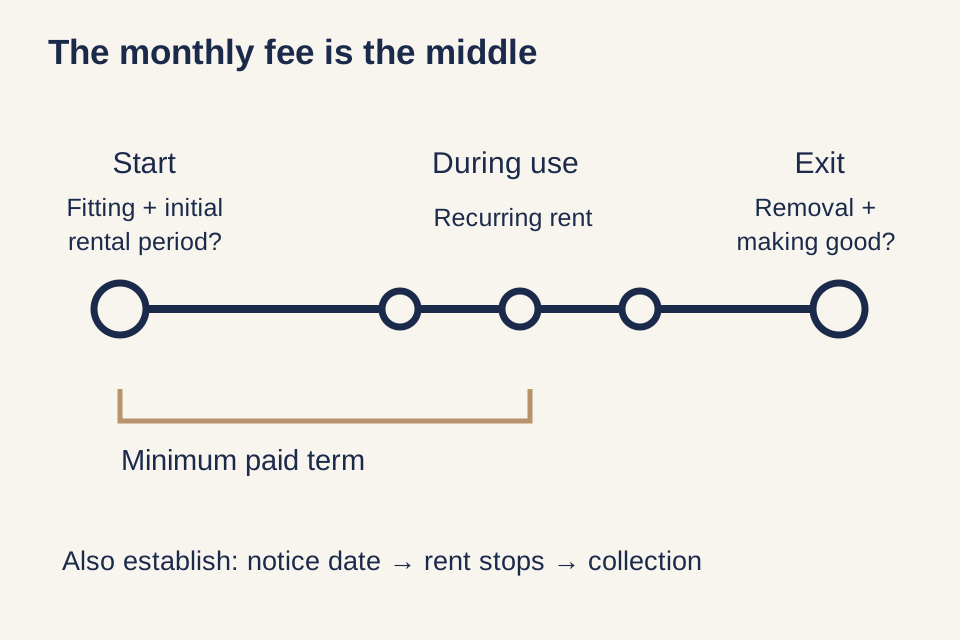
Rent is only one part of the comparison. List the upfront payment, monthly charge, minimum rental term and any exit fees from your quotation. A rental with a lower monthly rate can still cost more over a short period if its initial payment is higher. Confirm local availability and the terms for your staircase before calculating a total.
Read the starting payment carefully. It may already include installation and an initial rental period. Adding those amounts again would inflate the comparison. A refundable deposit should be shown as money tied up at the start, with its refund conditions, rather than automatically counted as a permanent cost.
The end of the arrangement is equally important. Notice requirements, the date rent stops, removal charges and making good can change the total. If rent continues until collection, a removal booking delay may matter financially. If the agreement ends on an accepted notice date, that is a different boundary. Establish it before using a planned recovery or moving date as the end of the budget.
Compare the same cost lines
| Cost or term | Rental offer | Purchase offer |
|---|---|---|
| Equipment and fitting | Initial payment and what it includes | Equipment, rail and installation scope |
| Time commitment | Minimum term, renewal and notice | Ownership begins; finance terms if applicable |
| Service and repairs | Included work and exclusions during hire | Warranty, service agreement and uncovered work |
| Change in duration | Extension price and purchase-conversion terms | Ongoing ownership and support cost |
| End of use | Rent-stop date, removal and deposit refund | Removal, making good and any written buyback |
| Tax and payment | Tax basis and payment schedule | Tax basis and payment schedule |
Compare the non-refundable charges for the same intended period: equipment and fitting, chargeable rental months where applicable, separately charged support and agreed exit costs. Keep refundable deposits in a separate starting-cash record. A confirmed contractual credit may reduce its corresponding cost only when it is due within the selected period; uncertain resale proceeds and later refunds are outside this calculation.
Use the calculator with actual eligible rental and purchase offers for the same configuration and period. Enter non-refundable amounts on the same GST basis and count bundled items once. Leave an unresolved amount blank; enter 0 only when the cost is confirmed to be zero. The monthly field applies to every selected month. If the offer includes prepaid, discounted or extra minimum-term months, enter 0 for the monthly field and put the correctly totalled recurring charges in other costs instead. Enter any confirmed credit due within the period net against the relevant charge; the tool does not calculate refunds or credit timing. If that would require a negative field, use a separate itemised comparison.
Compare written offers over the same period
Enter confirmed, non-refundable costs from comparable written offers, including tax where chargeable. Enter 0 for a confirmed no-charge line. Blank means unknown.
Use written offers for equipment that fits the intended user and staircase. Enter non-refundable costs, tax consistently and bundles once. Track refundable deposits separately as starting cash. Only net a confirmed credit due within the chosen period against its relevant charge. Blank amounts remain unknown; confirmed zeros must be entered. The tool does not model deposit refunds, future credits, resale, financing, availability or equal service cover.
Calculation: upfront + (monthly × months) + other costs for the period + end-of-period cost.
Do not insert a resale value because a used stairlift has asking prices online. A listing does not prove that your equipment will be bought, that the rail is reusable elsewhere or that collection is included. A written buyback offer can inform a separate comparison according to its actual conditions and payment date; uncertain resale proceeds remain outside the known total.
The manufacturer’s removal information also illustrates that collection and buyback can depend on who supplied the equipment and where it was installed. Those overseas terms do not establish a local entitlement. Your supplier needs to identify who removes your installation and what happens to the stairs afterwards.
Compare a shorter, expected and longer period of use
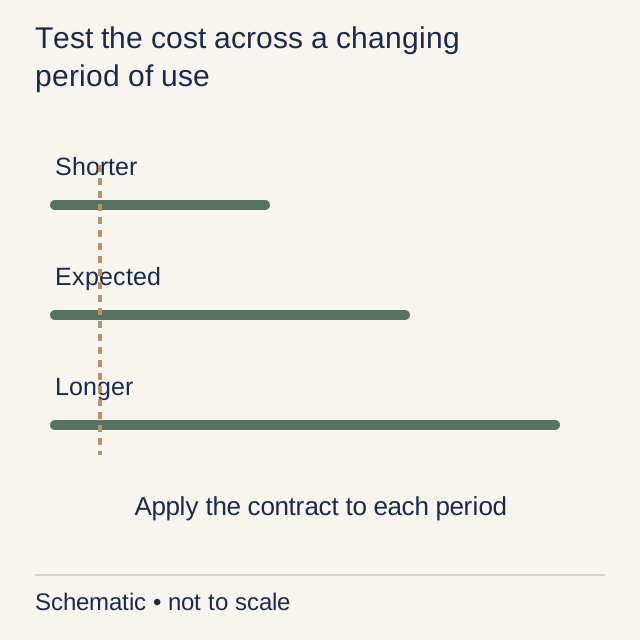
Use the shortest plausible period, the period you currently expect and a longer extension. Keep these as planning scenarios, not a prediction about a person’s recovery or future mobility. The purpose is to see how sensitive the cost decision is to time.
In the shortest scenario, the minimum term and initial payment may dominate. If the agreement requires payment for longer than the lift is used, the unused months are still part of that scenario’s cost. In the expected scenario, compare the complete totals. In the extended scenario, establish whether the monthly fee changes, servicing remains included and purchase conversion is available.
A rental-to-purchase option needs its own arithmetic. Does previous rent reduce the purchase price, and by how much? Is there a deadline or a different warranty start date? Without written answers, renting first and buying later is two separate transactions with an unknown combined cost.
A simple break-even point is meaningful only when both totals contain the same necessary work and the same time-dependent costs. If purchase servicing is excluded or rental removal is unknown, dividing a purchase price by monthly rent produces a precise-looking answer to an incomplete question. Leave the comparison unfinished until the missing line is resolved.
Service cover can outweigh a small monthly difference
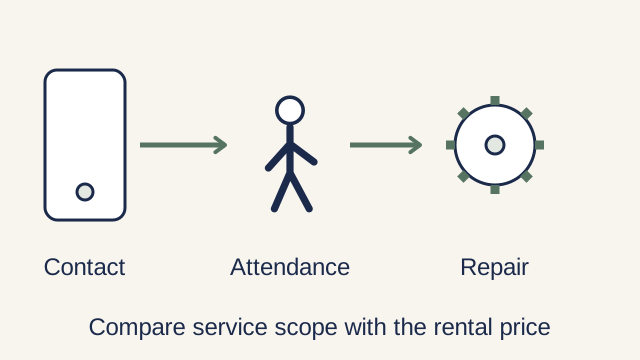
During a temporary access problem, an equipment outage may disrupt the household immediately. Rental can include a defined service arrangement, but the word “rental” does not itself guarantee parts, batteries, emergency attendance or every fault repair. Review the support schedule beside the price.
For either option, distinguish the ability to make contact from attendance and completed repair. A technician may need diagnosis, approval or parts before restoring the lift. What matters is a clear sequence and an arrangement the household can live with, particularly when the stairs cannot be used independently.
A lower fixed cost may leave more variable bills. A higher inclusive payment may make some costs more predictable. Neither is automatically better. Compare the remaining exclusions and the household’s ability to manage both a bill and a period without the equipment.
Plan removal before it becomes urgent
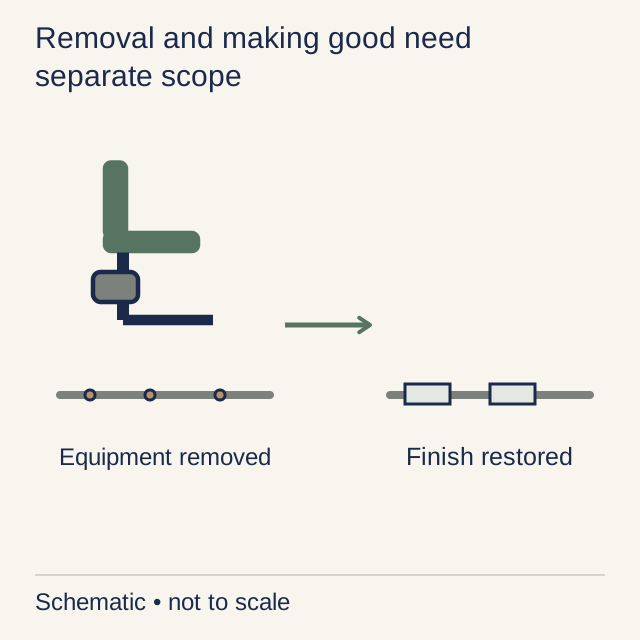
The end date may be influenced by a move, a renovation or a change in care. Give the supplier the relevant constraint when obtaining the offer. Removal needs an appointment and an access arrangement; it should not be treated as an instant cancellation button.
Making good is a separate practical issue. Establish whether removal includes repairing fixing locations, matching a finish or simply taking away the equipment. If staircase renovation follows, coordinate those scopes so one contractor does not repair an area another is about to alter. Keep any proposal to reuse or relocate the lift subject to the provider’s assessment.
For a rented property, obtain the necessary owner permission and agree how reinstatement will be handled before installation. This is a contract and property arrangement to resolve for the actual home, not an assumption that a temporary device leaves no alteration.
Choose the arrangement that remains workable when the date changes
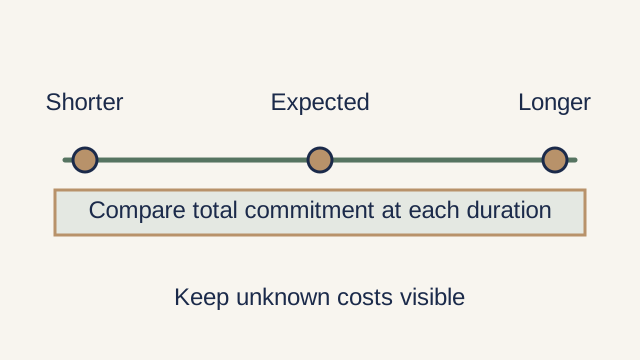
Rental deserves close consideration when local equipment is available, the temporary period is reasonably defined and the full exit terms are acceptable. Purchase deserves comparison when the need is longer or uncertain, provided its ongoing support and eventual removal are included in the discussion. The cost conclusion should come from written offers for a suitable configuration.
Use the stairlift buying guide to review fit and installation alongside the commercial choice. Take your stair layout, intended user’s requirements and the three duration scenarios into the supplier discussion. Ask for the total commitment under each scenario, with unknowns left visible.
The best comparison lets you explain what happens if the lift is needed for less time, the expected time or much longer. Once those outcomes are clear, the monthly figure becomes one useful input instead of the whole decision.
Stairlifts across Singapore
Need help with your project?
Tell us what you need on WhatsApp and send a few photos. We'll arrange a free site assessment, then give you a fixed-price quote within 3 to 5 working days.