On this page
View In PDFTwo family members can have different needs even when they share the same stairlift. Seat fit, controls and getting on and off should be assessed for both people. Plan how each person calls the chair and what assistance is available at the landings so one person's convenient setup does not make it difficult for the other to use.
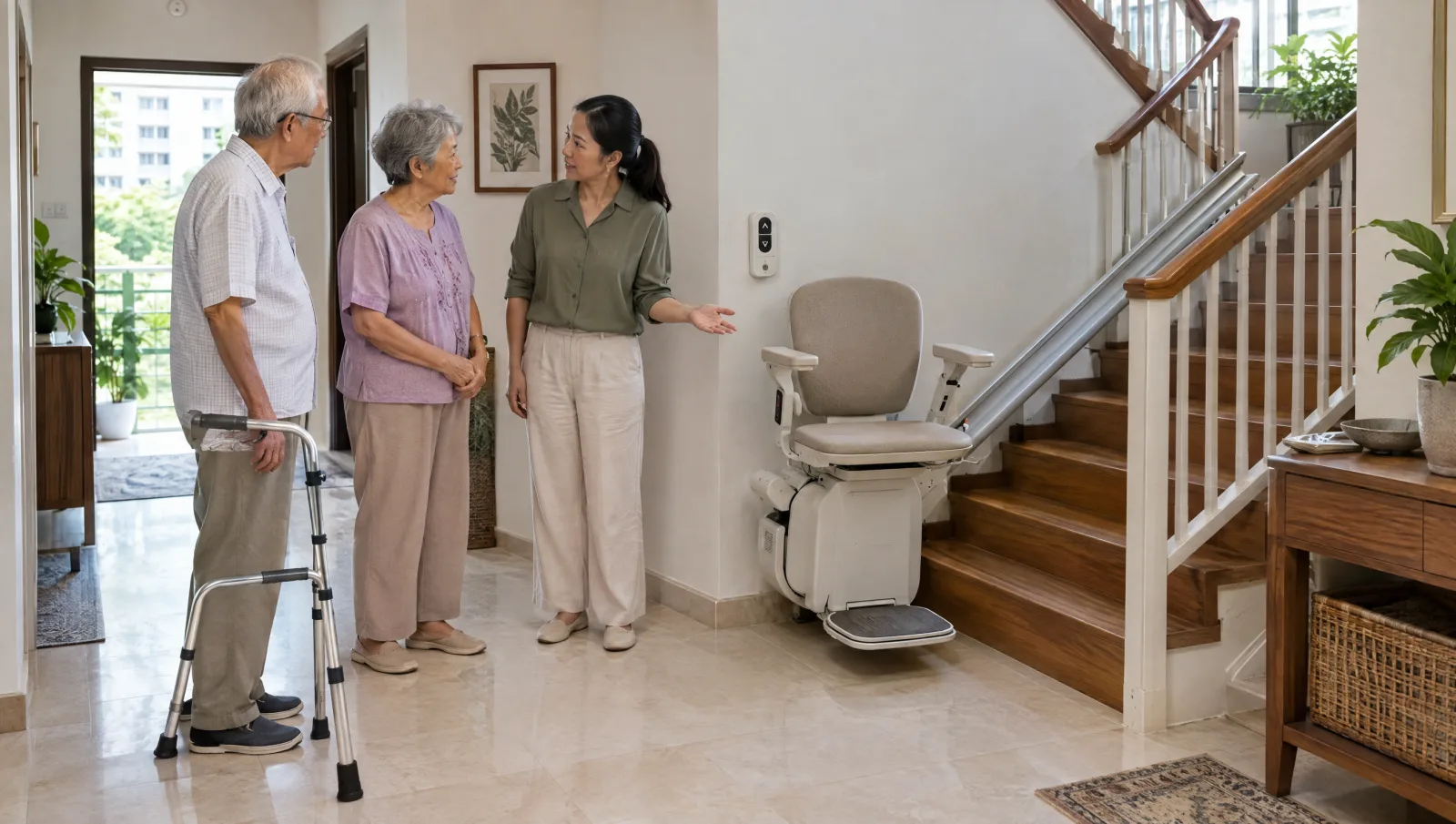
During the stairlift assessment, work through ordinary situations for both riders. If one person leaves the chair upstairs, can the other call it downstairs and board comfortably? Check where it parks, whether it obstructs a doorway and what help each person needs at either end.
Start with two assessments, not an average user
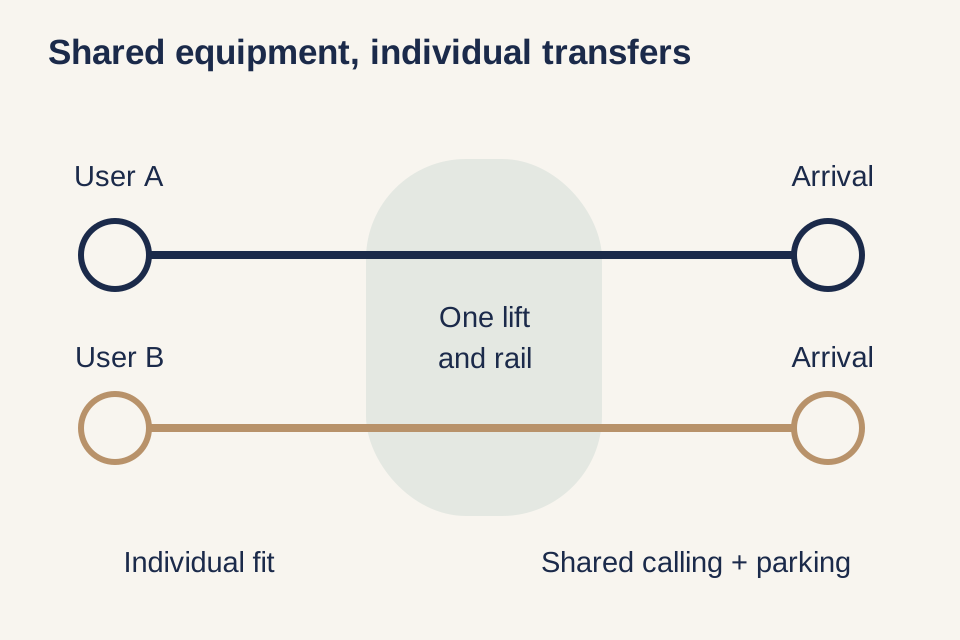
The two people may differ in height, reach, balance, walking aid and the assistance they need. A seat position that makes standing easier for one may leave the other struggling to settle securely. Controls may be easy for one hand and awkward for another. These differences need an appropriate assessment rather than compromise through an “average” body size.
Singapore’s guidance on assistive devices recommends consulting a doctor, physiotherapist or occupational therapist to establish need and suitable fitting. Where transfers are uncertain, include that professional advice in the stairlift brief. A supplier’s equipment survey and a person’s mobility assessment answer connected but different questions.
Describe the routine as it currently happens. Which floor has each person’s bedroom and bathroom? Is there a walking aid at both ends? Does someone usually assist with getting up from a chair? The answers help define the arrival and departure conditions without requiring the homeowner to make a clinical judgment.
The landing may be the deciding constraint
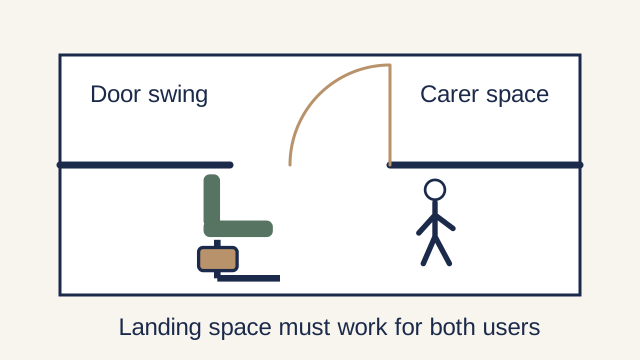
A shared lift still has one rail route and a limited set of stopping positions. Each user needs to reach the chair, get on, travel and move onto the landing at the other end. If one person needs assistance, the landing must support that actual arrangement.
A clear route for an unassisted person may be less usable when a carer must stand beside the chair. Nearby doors can occupy the space needed for that support. The manufacturer’s staircase-feasibility guidance treats the upper and lower landings, doors and obstructions as part of fit. Use a site drawing to make the proposed transfer positions visible for both users.
If one person normally walks with a frame, establish how they will have the appropriate aid available after leaving the chair. Do not assume it can travel loose on the stairlift or that the second user can carry it up the stairs. The household arrangement should be based on the equipment’s permitted use and the people’s assessed needs.
The question is also more than whether both can use the lift once during a demonstration. They need an arrangement that remains usable during the ordinary sequence of daily trips. A design depending on one person always being available to reposition equipment deserves scrutiny when that person also relies on the lift.
Calling an empty chair is a separate journey
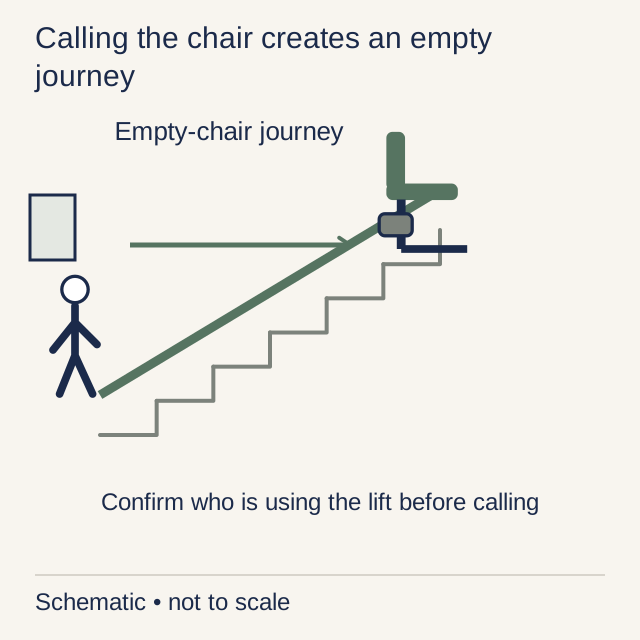
A chair can be at the wrong end of the stairs when another user needs it. Remote calling controls can address that, but their location and operation must suit the household. The person waiting below needs a suitable place to wait and a control they can reach and understand.
A model-specific user manual describes controls at opposite ends of the stairs and warns users to make sure nobody else is using the lift before calling it. The exact behaviour belongs to the installed model, but the household issue is universal: one person’s command must not conflict with another person getting on or off.
A simple verbal routine may work where both users can communicate clearly and the landings are within hearing range. In another house, a different agreed arrangement may be needed. Work through that during training rather than assuming the remote’s presence resolves shared use.
Keep the controls distinct from toys or general household remotes. The installer should explain who may operate them, how unauthorised use is prevented and what each person should do when the equipment does not respond normally. These are operational instructions for the actual model, not an invitation to override a control that appears inconvenient.
Parking must preserve both access and charging
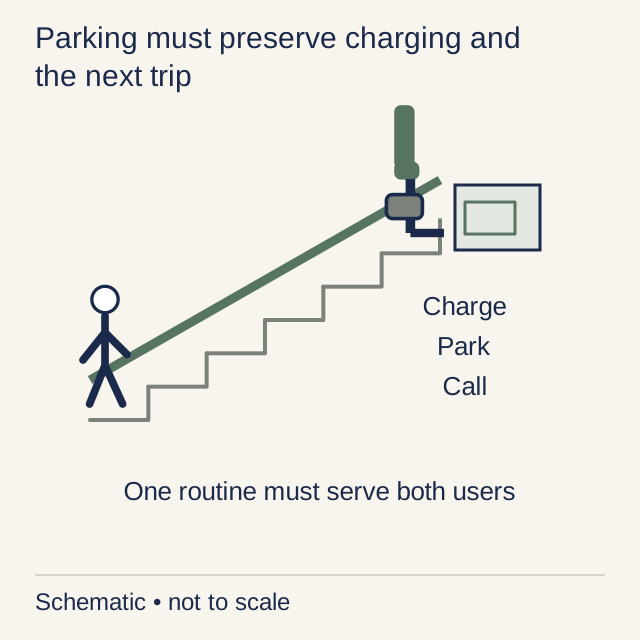
Where the chair stops after a trip affects the next user and everyone else using the staircase. Some configurations have specific charging positions; folding or hinged rails can introduce another parking condition. The household needs one clear explanation of where the chair belongs between journeys.
A chair parked where it clears a doorway may require an empty return trip before the next person can board. That may be acceptable, but it should be understood before purchase. If a person has difficulty waiting or reaching a call control, the convenience promised by a shared lift can become dependent on assistance.
If one user comes downstairs in the morning while the other remains upstairs, the next journey needs a ready chair. If the chair’s required parking position is upstairs, the first user may need to send it back empty. If a lower rail must also retract to clear the hall, those events need to occur in the manufacturer’s permitted sequence. The supplier should demonstrate the chosen arrangement rather than rely on a generic explanation of how stairlifts work.
At night the pattern may reverse. The preferred parking position should account for normal journeys and essential access, with the charging requirements preserved. A household habit that leaves the equipment away from its required charge point can undermine availability when it is next needed.
Assistance needs its own plan
| Discuss for each person | Then resolve together |
|---|---|
| Seat, reach and transfer suitability | Whether one installed configuration meets both assessments |
| Walking aid at each landing | How aids remain available without unauthorised carriage |
| Calling and control use | How users avoid conflicting commands |
| Help getting on or off | Who assists and how they reach the landing |
| Typical travel times | Where the chair parks and charges between trips |
Where a person needs help at a transfer, identify who provides it and how they reach the relevant landing. A helper who travels separately may need the stairs to remain clear. A plan depending on carrying or improvised support should be reviewed with the appropriate care professional.
The household also needs a workable arrangement when the usual helper is absent. Resolve that dependency before the lift becomes part of the essential daily routine. If the person cannot use the arrangement without assistance, the lift should not be described as providing independent access.
The table is a discussion aid, not a test that certifies suitability. A concern in one row may change the seat option, the rail layout, the assistance arrangement or the overall choice of access equipment. Resolve the concern with the relevant professional rather than treating a second signature on the sales order as a second assessment.
Train both users with the installed arrangement
Handover should include both intended users and the people who help them. Each person should understand the normal controls, the agreed parking routine and the way to report a fault. Instruction should take place around the actual doors, landings and rail options, because those are where shared-use conflicts occur.
Keep the user manual and support contact accessible. If the equipment is unavailable, use the agreed alternative household arrangement and seek professional help; do not attempt to move, release or repair the chair through an improvised procedure. The household’s ability to manage a period without the lift should be considered alongside the service contract.
The stairlift buying guide covers the wider equipment and installation decision. For shared use, bring a short account of each person’s daily trips and assistance needs to the site assessment. The aim is to preserve two workable journeys within one coordinated routine, with neither person’s needs hidden inside the other’s specification.
Stairlifts across Singapore
Need help with your project?
Tell us what you need on WhatsApp and send a few photos. We'll arrange a free site assessment, then give you a fixed-price quote within 3 to 5 working days.