On this page
View In PDFStaircase width is only one part of assessing whether a stairlift fits. The rider also needs room for their knees and feet during travel and for getting on and off at the landings. A survey should check the complete route and the space left for other people, rather than deciding from the chair's folded width alone.
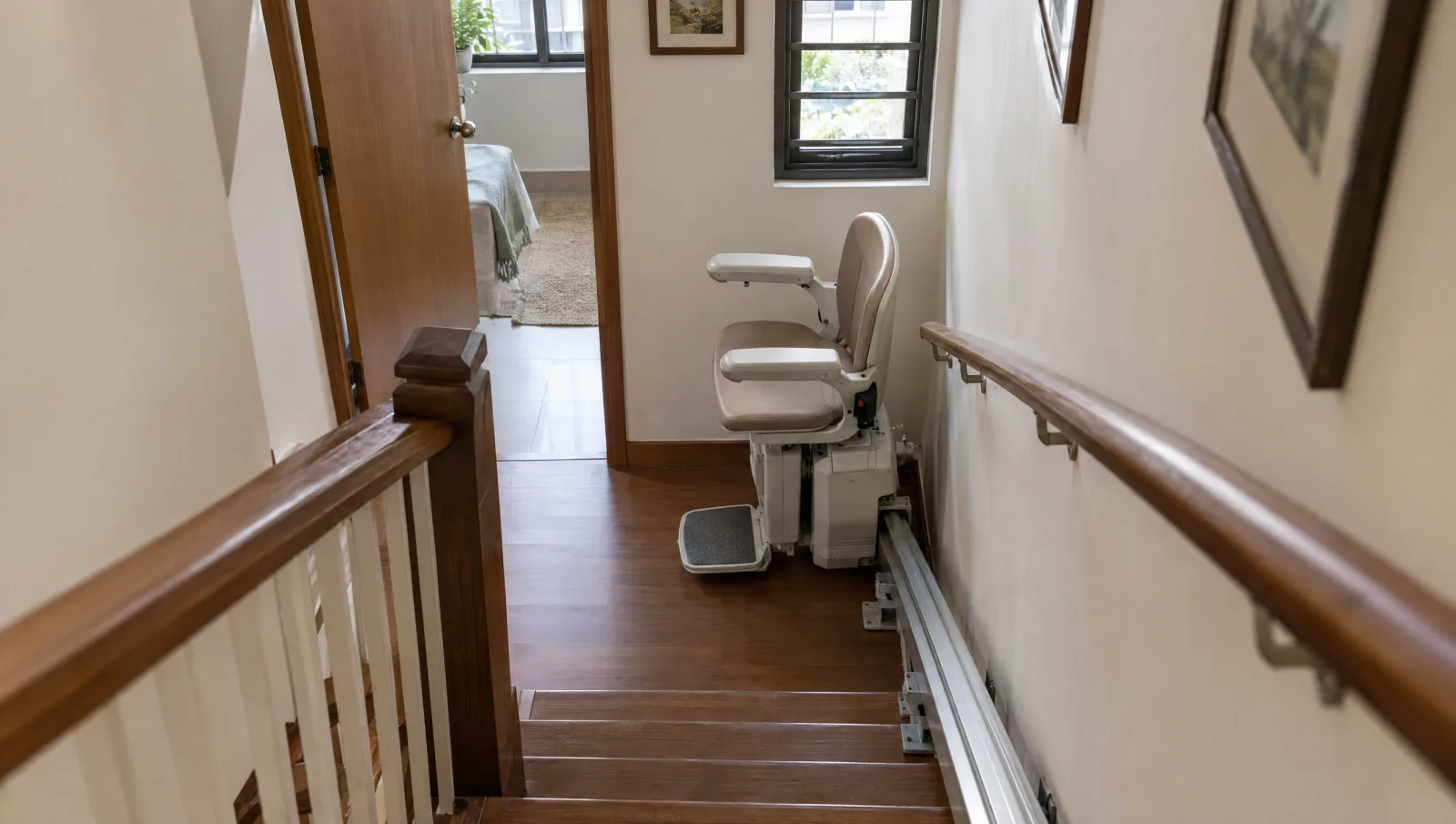
When considering a stairlift for your home, assess the person and the stair route together. The smallest folded chair may still leave an awkward transfer at the top. A slightly different rail position may improve that transfer but change the route through a doorway below. The survey needs to show these tradeoffs before a model is selected.
The person occupies more space than the folded equipment
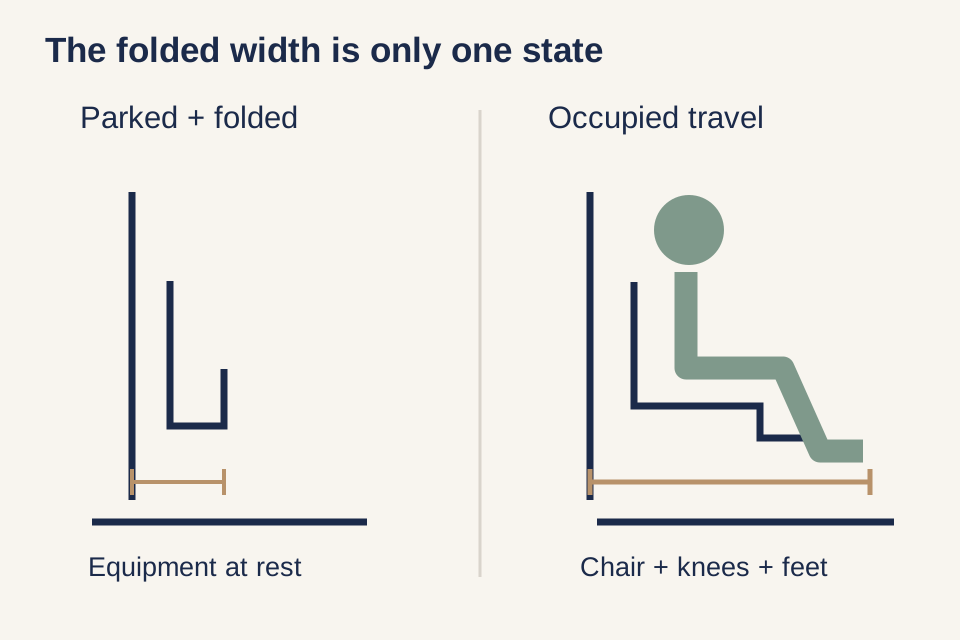
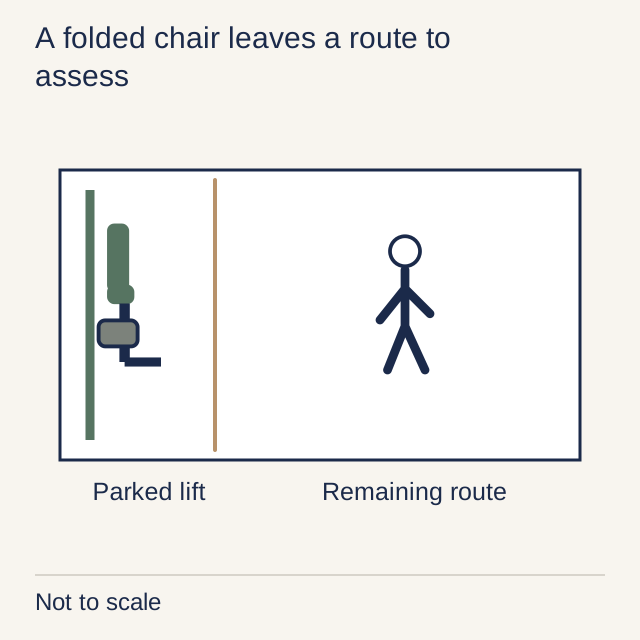
A folded chair tucks away its seat, arms or footrest according to its design. During travel, those parts move into their operating positions and the user’s knees and feet add to the space that must remain clear. The width left beside a parked lift cannot tell you whether the seated journey works.
The manufacturer’s feasibility guidance considers stair obstructions, head clearance and space at the landings, rather than width alone. Use that same complete view for the model offered locally. Dimensions from another country or product range are not a fit approval for your staircase.
A wall-to-wall measurement can also hide the limiting point. A handrail, projecting trim, newel post or turn may narrow the route at one location. A low ceiling may matter only near the top. The useful survey follows the whole path, including the user’s body position, instead of taking one convenient measurement halfway up.
This is why early photos should show the full stair run and its ends, with nearby doors open and closed. They help the supplier identify what needs attention on site. They do not replace a measured survey or justify ordering a rail from a photograph.
A safe arrival is part of fit
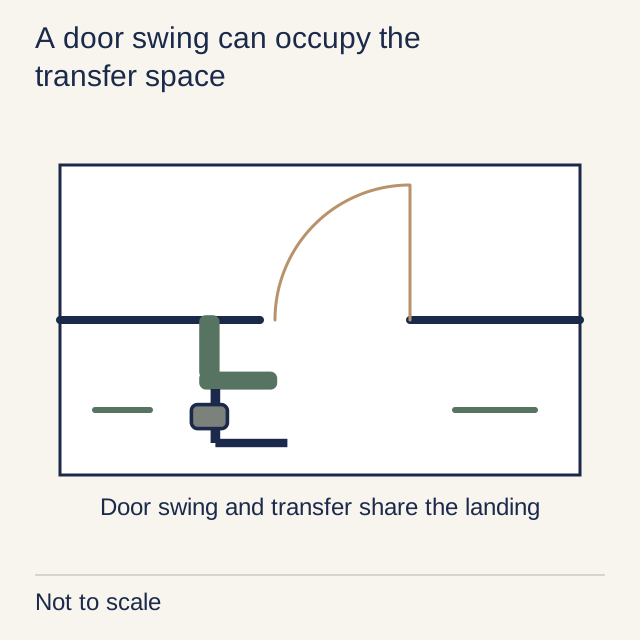
At the top, the user needs an appropriate position to move from the chair onto the landing. The chair’s final position, swivel arrangement and nearby doors influence that transfer. Being able to reach the top stair is not the same as being able to get off comfortably onto a usable landing.
The bottom has its own constraints. A straight rail may extend beyond the lowest step, placing equipment in a hall or doorway. A folding or retractable rail can address some layouts, but it introduces an operating step and a parking arrangement. The right option depends on whether the user and household can manage that routine.
For example, if a doorway is clear only after the chair has been sent upstairs and the rail has folded, ask how that works when the user arrives home alone. Where is the call control? Can the person wait securely while the chair comes down? Does moving the rail affect someone approaching from the other side? These questions turn an attractive feature into a practical access discussion.
A model-specific hinged-rail manual illustrates why parking, charging and doorway clearance must be understood together. It is not a universal operating sequence. The installer should explain the sequence for the actual equipment and proposed landing, with everyone who will use it present.
Preserve the stair route other people need
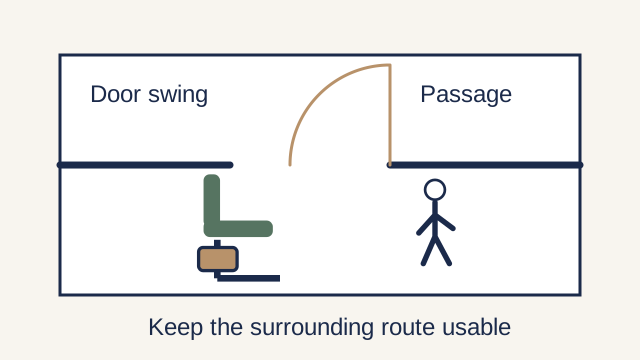
The staircase may still carry children, visitors, carers and family members who do not use the lift. Consider the route with the chair parked at either end, with folding components in their normal positions, and when the lift is unavailable. Do not assume people can or should squeeze past it while it is moving.
A handrail may be especially valuable to another person in the household. Moving or removing it to gain clearance therefore changes the wider access arrangement. That needs an appropriate assessment; it should not be treated as an automatic solution to a tight measurement.
Draw nearby door swings and normal household routes on the same plan. A cupboard that opens into the lower rail, a bedroom door beside the upper transfer or a narrow passage to the bathroom can matter more than a few centimetres in the middle of the flight. The equipment belongs in the daily circulation plan, not on an isolated staircase diagram.
User fit cannot be reduced to rated load
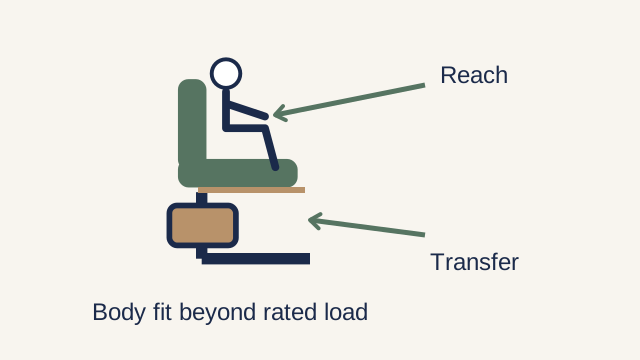
A model’s rated load is an operating limit, but it does not establish that the seat height, controls and transfer arrangement suit the person. Their reach, balance and ability to get on and off may affect the configuration. This is particularly important when the intended user was not present during the initial sales visit.
Singapore’s assistive-device guidance recommends assessment by a doctor, physiotherapist or occupational therapist where a device is needed, together with proper fitting. If there is uncertainty about a safe transfer, resolve it with an appropriate professional before using a narrow-stair model as the answer.
An accompanied demonstration can help establish how the controls and seating arrangement feel. It should inform a site-specific assessment rather than become a claim that the same chair will suit every staircase or future change in mobility. Record what the chosen configuration is intended to accommodate now and which needs remain uncertain.
Compare layouts by the constraint they resolve
| Proposal feature | Constraint it may address | What it does not settle |
|---|---|---|
| More compact folded chair | Space beside parked equipment | Occupied knee clearance or transfer suitability |
| Different rail side | An obstruction along one wall | Every landing and doorway conflict |
| Swivel or extended upper arrival | Position for getting onto the landing | Individual transfer needs or available landing area |
| Folding or retractable lower rail | A doorway or passage at the bottom | Who operates it and where the chair parks |
| Alternative lift arrangement | A stair route that cannot meet the brief | Space, building work and suitability of that alternative |
These are not upgrades to select automatically. A powered swivel may help one user’s transfer but does not create landing area that the house lacks. A retractable rail may clear a doorway when parked but still needs a safe place to deploy. A compact chair may reduce obstruction without resolving a difficult approach.
Prefer the layout that makes the complete journey understandable with the fewest unresolved compromises. Where two layouts are workable, compare how much daily intervention they require, who provides it and what happens if the lift is parked at the opposite end. The most useful design is the one the household can actually use as intended.
What the survey should leave you able to explain
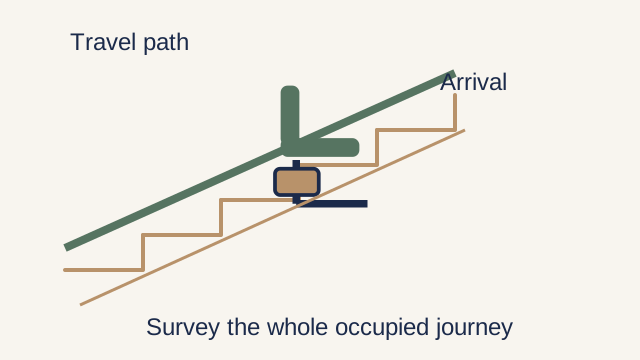
After the survey, you should be able to point to the chair’s travel path, both transfer positions, its normal parking place and any doorway interaction. The proposal should identify the exact seat and rail arrangement used for that assessment. If the model or rail position changes, the fit discussion needs updating too.
In Singapore, BCA requires a valid Permit to Operate before a stairlift is used, and owners should engage BCA-registered contractors for installation and maintenance. Include the applicable professional, testing and permit arrangements in the installation scope. A measured fit assessment resolves the physical layout; it does not complete those operating requirements.
The quotation should also distinguish the stairlift work from changes to nearby power, doors, handrails or finishes. A model fitting the stairs does not establish that all surrounding work is included in its price. The stairlift buying guide helps connect these access choices with installation and continuing support.
Bring photographs, available plans and the intended user’s daily access needs to a stairlift survey discussion. Include the people who still walk the staircase and any planned renovation. The useful result is not simply “yes, it fits”: it is a clear account of how the person travels, gets off and leaves a usable home around the equipment.
Stairlifts across Singapore
Need help with your project?
Tell us what you need on WhatsApp and send a few photos. We'll arrange a free site assessment, then give you a fixed-price quote within 3 to 5 working days.