On this page
View In PDF316 stainless steel offers greater resistance to some forms of corrosion than 304, which can matter near the coast. The grade is still only part of the gate specification: finish, fabrication, fittings and maintenance affect the completed installation. Compare those details together before deciding whether the higher material cost is worthwhile for your home's exposure.

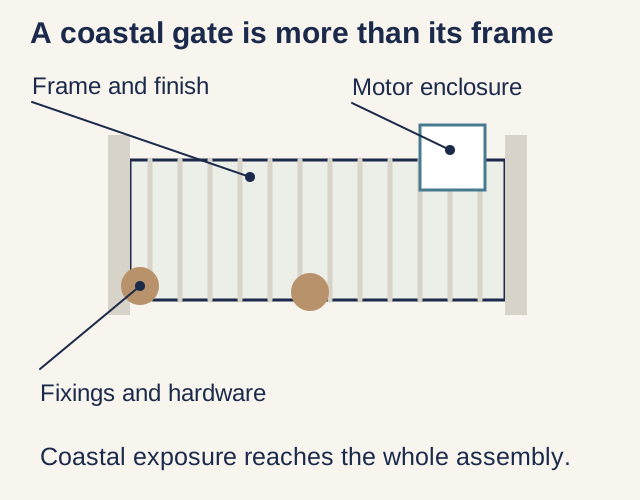
Sea Air Affects the Gate and Its Automation
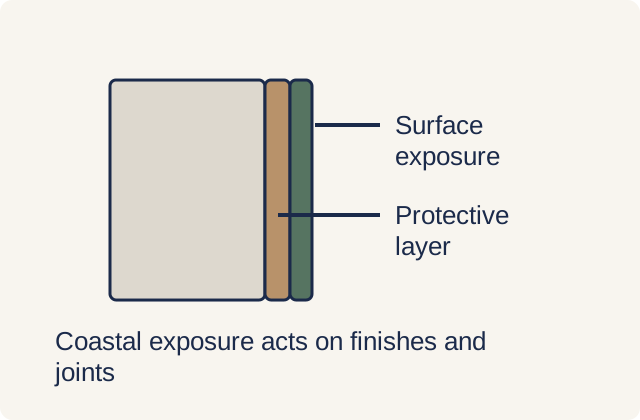
A coastal auto gate needs materials and equipment suited to salt exposure. Deposits can collect on the frame, fasteners and sheltered details, while water entering an enclosure can affect its electrical components. Corrosion and motor faults are both possible; one does not rule out the other.
Exposure varies with direct spray, wind, shelter, drainage and cleaning. Two gates in the same district may experience different conditions, and poor fabrication or damaged coating can matter inland too. Assess the actual entrance rather than assigning a fixed lifespan or price premium from the postcode.
The useful specification covers the visible frame and less visible parts: hinges, brackets, fasteners, weld treatment, motor housing and cable entries. If those details are omitted, an expensive frame material alone does not establish a durable installation.
316 vs 304 Stainless: The Difference That Earns Its Price
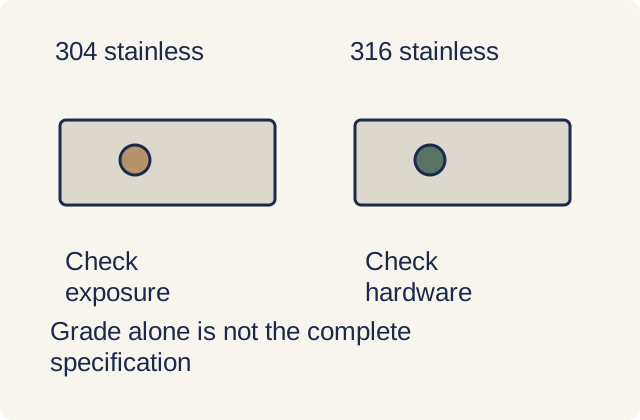
Stainless steel resists corrosion through a protective surface film, but it is not immune to chloride attack. Grade 316 contains molybdenum and generally provides better resistance to localised chloride corrosion than 304. More severe exposures may need a different grade or protective design; 'marine grade' is not a guarantee against every form of corrosion.
For chloride-exposed locations, 316 generally offers better corrosion resistance than 304 because it contains molybdenum. Grade selection still needs to account for the exposure, finish, joints and cleaning access: 'marine grade' does not mean maintenance-free. Specify the material for exposed fixings and hardware as well as the visible gate frame.
Specify compatible exposed hardware as well as the frame. Fasteners, crevices and damaged surfaces can perform differently from a broad panel, while contamination with iron particles can leave rust staining on stainless. The fabricator should identify cleaning and weld-finishing treatment appropriate to the material. Matching a grade label alone does not resolve every joint detail.
The Motor And Enclosure: Where Corrosion Quietly Wins
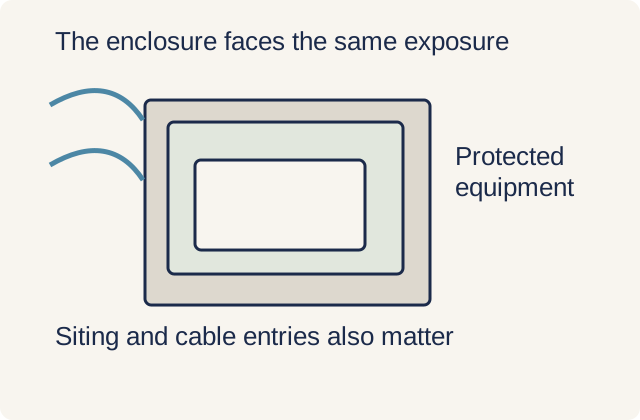
The motor and controls need their own environmental assessment. Moisture at terminals, damaged cable entries or corrosion inside a housing can contribute to faults, but intermittent movement needs diagnosis rather than an assumption that salt has destroyed the board. Keep electrical enclosures closed and have the technician inspect them safely.
An IP rating describes specified protection against solid objects and water ingress; it is not a salt-corrosion rating. Ask whether the complete motor and control arrangement is suitable for its exposure, including cable entries, drainage and ventilation. Do not seal openings or add a cover that conflicts with the manufacturer's requirements.
Aluminium is another material to compare. It does not develop iron rust, but it can still corrode, especially at damaged finishes or unsuitable metal connections. Its lower material density does not automatically mean a lower motor load: the finished gate's weight, size, wind area and movement determine the required operator.
What The Coastal Premium Actually Looks Like In A Quote
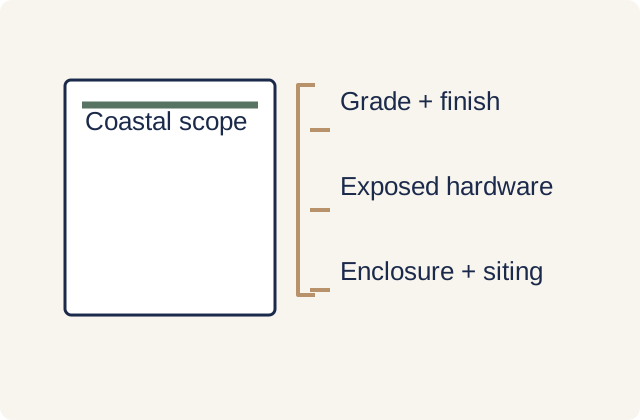
A coastal stainless steel gate quotation should identify the grade, finish, frame design, hardware and automation package. Compare like-for-like specifications before attributing a price difference to the steel alone. Gate dimensions, fabrication, installation access and the condition of existing supports can all change the work required.
Ask the quotation to separate coastal-exposure measures from optional features such as intercoms, access controls or battery backup. Confirm which materials and finishes are proposed and how they should be cleaned. A district name does not establish a fixed price premium; the actual exposure and installation requirements need to be assessed.
Where prices differ, ask whether the frame grade, finish, joint detailing, supports and automation are equivalent. A lower price is not proof of misdescription. Written material identification and the proposed maintenance method make the comparison useful without pretending that two specification lines can guarantee a particular service life.
A Coastal-Gate Checklist Before You Sign
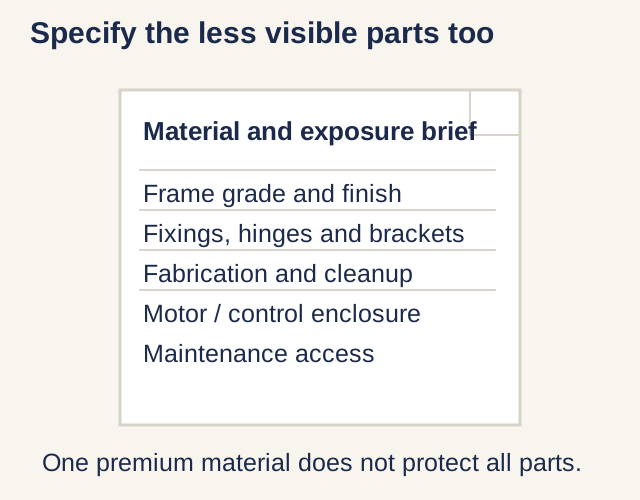
Use this as a quote-review list rather than a spec to memorise. If any item is not explicitly answered, ask the fabricator to put it in writing before you commit: asking costs nothing, and a like-for-like comparison across quotes is only possible once these are pinned down.
Have the proposal identify the frame material, compatible exposed hardware, weld and surface treatment, enclosure suitability and cleaning access. Use the manufacturer's recommended cleaning method for each component. Rinsing a metal frame is not permission to spray electrical controls or force water through enclosure seals.
Bring photographs of the entrance, visible corrosion and the gate's external model details to an auto gate discussion with DirectHome. Explain whether the site receives direct spray or has sheltered areas where deposits remain. Those observations help define the fabrication and automation questions; they do not establish the final material grade or diagnosis on their own.
Frequently asked questions
Is 316 stainless steel really necessary for a gate near the sea in Singapore?
316 generally offers better chloride-corrosion resistance than 304, but the actual exposure, finish, joints and maintenance determine suitability. More severe exposure can need additional measures or another grade. Ask the designer or fabricator to specify the whole assembly rather than relying on a universal distance-from-sea rule.
Why does my gate rust faster than my friend's even though we have the same brand?
Exposure is one possible difference, alongside material grade, fabrication, contamination, coating damage and cleaning. Inspect where deterioration starts and what the affected component is made from. A brand name and location alone cannot identify the cause or establish that the motor is healthy.
Will a 316 stainless frame still rust if the bolts are a cheaper grade?
Unsuitable or deteriorated hardware can corrode or stain adjacent surfaces. Specify compatible fasteners, brackets and hinges for the exposure, and assess crevices and joint details too. Rust staining can also come from iron contamination rather than failure of the underlying stainless grade.
Should I choose aluminium or stainless steel for a coastal auto gate?
Both can be suitable when the material, finish and connections are designed for the exposure. Aluminium can corrode even though it does not develop iron rust; stainless is also not corrosion-proof. Compare the finished gate's structure, weight, appearance and maintenance, then size the automation for that gate.
What IP rating should the motor have for a seafront installation?
An IP number alone does not establish suitability for sea air. It describes specified ingress protection, not resistance to salt corrosion. Have the installer confirm the manufacturer's environmental limits, mounting position, cable entries and maintenance for the whole installation, rather than adopting a universal minimum IP value.
Auto Gates across Singapore
Need help with your project?
Tell us what you need on WhatsApp and send a few photos. We'll arrange a free site assessment, then give you a fixed-price quote within 3 to 5 working days.