On this page
View In PDFWhether an auto gate works during a power cut depends on the backup fitted to that installation. A compatible battery may keep the motor operating for a limited period; manual release allows suitable gates to be moved by hand under the manufacturer's instructions. Plan for the people who actually need to get in and out, including anyone unable to move a heavy gate.
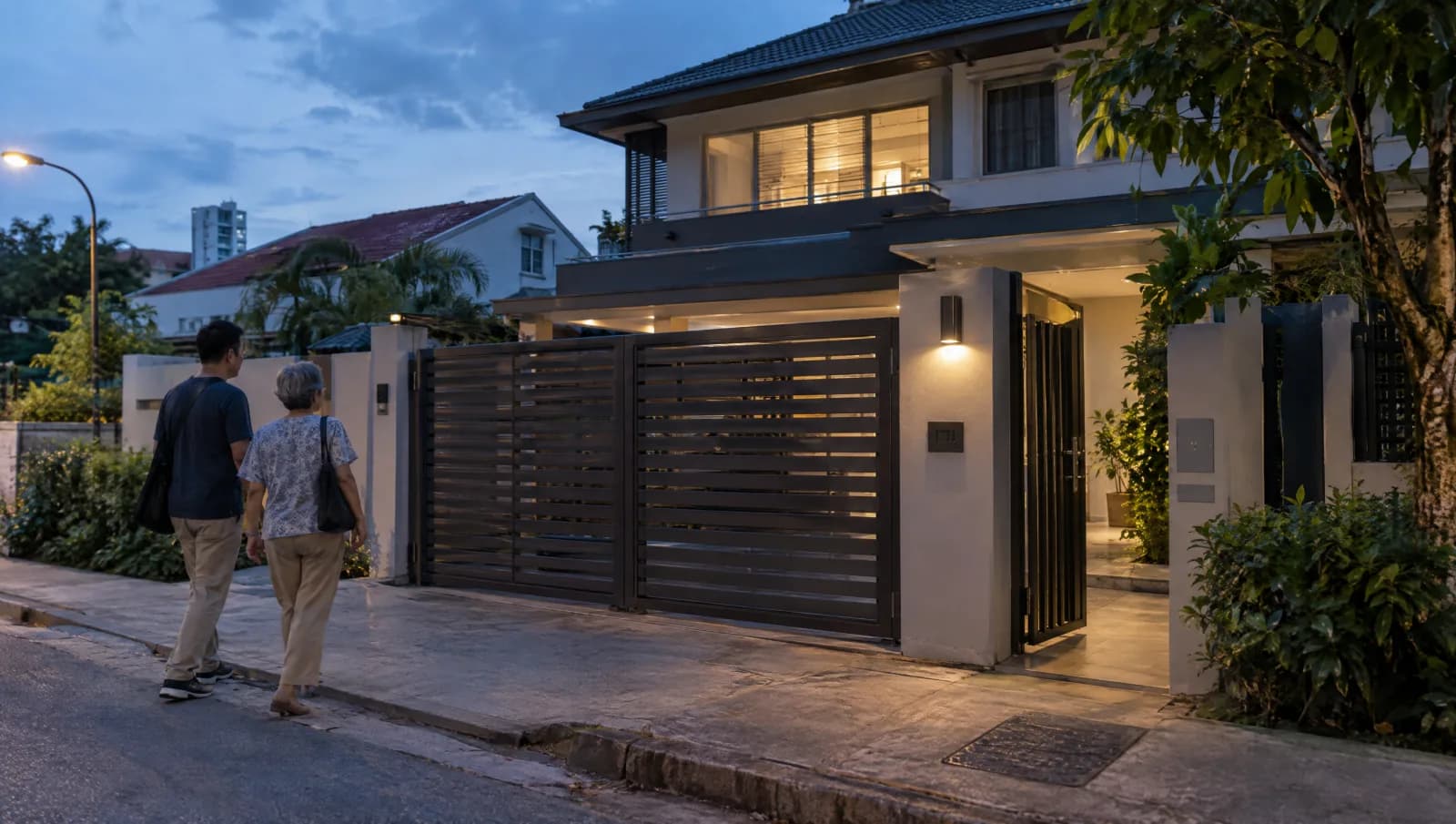
Include the outage routine when planning an auto-gate installation. Check whether the household can reach the manual release and use another entrance if the gate cannot move. The best time to understand their interaction is at design and handover, while the installer can explain the actual system.
Begin with a person outside the property
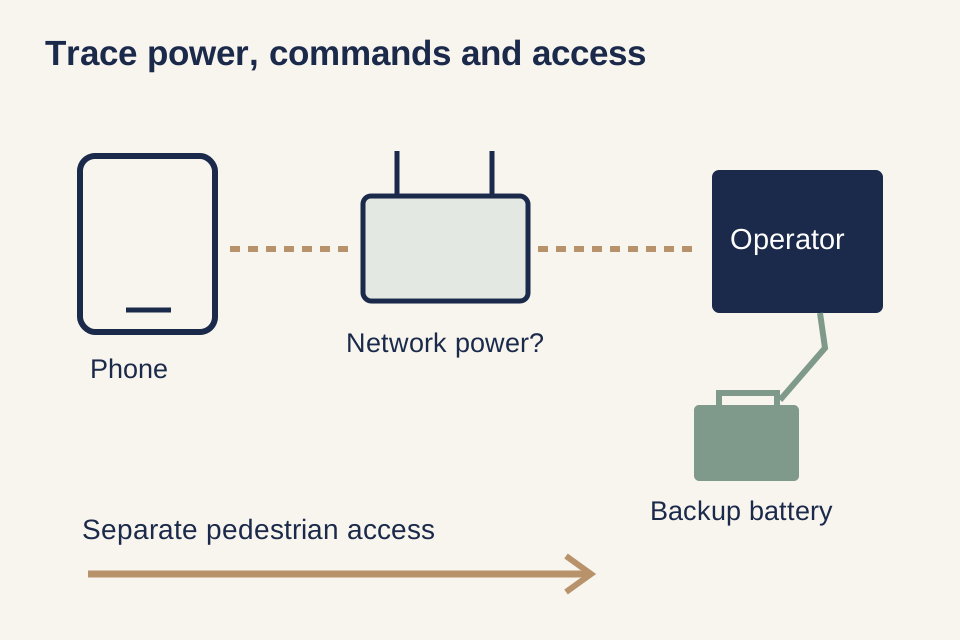
If you return home while the mains supply is unavailable, access can depend on more than the gate motor. The gate motor may have a backup battery, but the command you normally use may depend on another device. A phone app, network connection, intercom or access controller can have a different power arrangement.
The useful question is which complete command path remains available. A battery at the operator does not automatically power the home router or every connected access device. If the normal command is unavailable, the household needs to know which authorised alternative works with the installation.
This is also an access question, not just an electrical one. A release mechanism accessible only from inside the property may not help someone locked outside. A separate pedestrian gate with an appropriate access arrangement can change that situation, but it should be considered deliberately rather than assumed to exist.
Describe both directions during the survey: arriving from outside and leaving from inside. Include anyone who cannot move a heavy gate, reach a release location or use the normal controls independently. The installer can then recommend an arrangement around the people who will depend on it.
Check which gate functions the battery will keep working
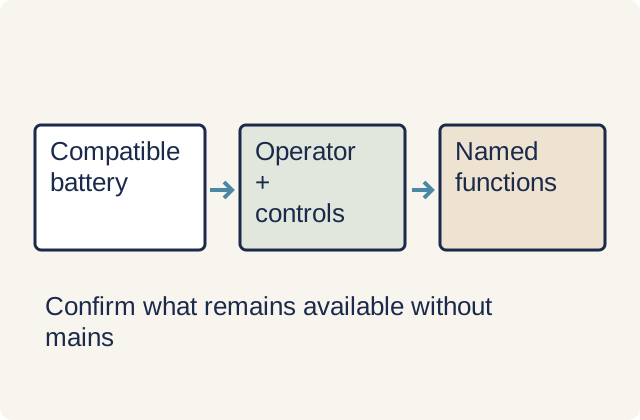
A compatible backup arrangement includes more than a battery-shaped item inside a cabinet. The operator, charging provision, control arrangement and associated devices need to be suitable for that use. The quotation should identify the actual backup package and what it supplies.
Check manual release and battery-backup capability separately for the exact gate equipment offered. A gate that can be released for manual movement does not necessarily have battery-powered operation. Ask which backup components are included and how the completed installation will work during a power cut.
Battery operation is finite. The useful duration or number of movements depends on the installed equipment, battery condition, charge and operating conditions. Without a defensible model-specific basis, a generic promise of “many cycles” does not help a household plan an extended interruption.
Ask the installer to explain the battery maintenance requirements, any condition indication and the way loss of backup capability is reported. Keep those instructions with the gate records. A feature that has never been checked after installation should not silently become the household’s only fallback.
Check who can use the manual release and move the gate
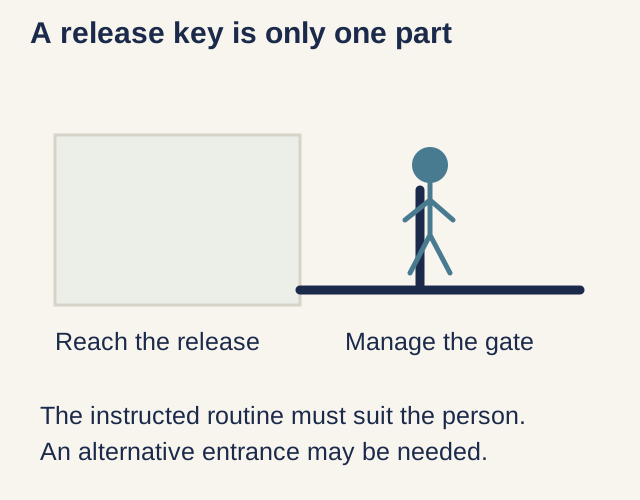
Manual release is not a generic sequence that can safely be copied from another gate. The mechanism, isolation requirements, locking arrangement and return to powered operation depend on the installed model and the condition of the gate.
A model-specific release guide warns that the power isolation instructions still matter during an outage. Power can return, and some systems contain backup energy. The installer should demonstrate the permitted process and make clear which actions the homeowner may perform and when professional help is required.
The physical gate matters too. Releasing an operator does not repair a damaged support or make an uncontrolled leaf safe to move. Powered-gate guidance identifies risks from gates moving unexpectedly, being affected by wind or not being properly restrained. If the gate is damaged, unstable or behaving abnormally, do not attempt manual movement.
For the household, the question is whether the instructed routine is practical. Can the authorised person reach the mechanism safely, keep others clear and manage the gate as intended? If not, the design needs another access arrangement. A manual-release key in a drawer does not create that capability.
Keep the release key secure and reachable when needed
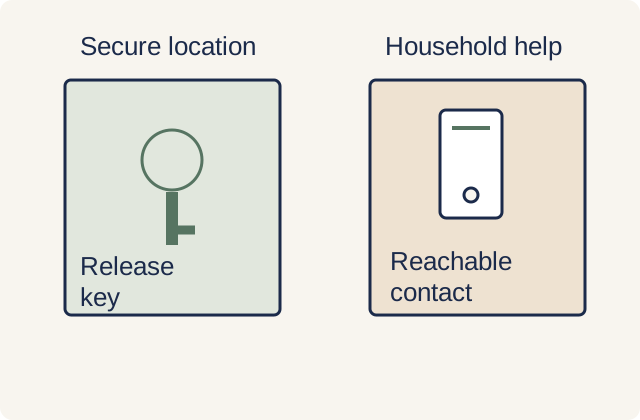
The release key and user instructions need an agreed location accessible to the appropriate household members. A key kept in a car trapped behind the gate, or in a locked room whose owner is away, may be unavailable when it is needed.
At the same time, access arrangements should remain controlled. Do not publish photographs of keys, access codes or security details in a maintenance enquiry. Give the installer the relevant information through an appropriate private channel, and agree how replacement keys or lost credentials are handled.
Visitors and helpers also need a clear route for obtaining assistance. They do not all need access to technical release equipment. A simple household contact and a usable pedestrian entrance may be the relevant provision, depending on the property and the people using it.
Agree what happens during a longer interruption
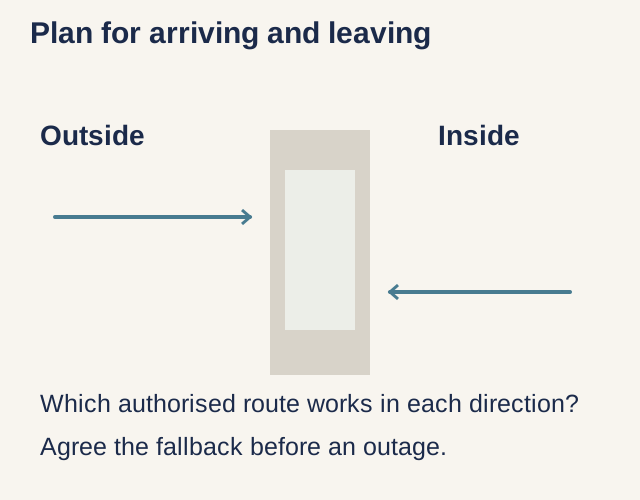
If backup operation is available, establish the manufacturer’s recommended use during a prolonged outage. The household should understand the limits rather than repeatedly cycling the gate to see whether the battery is still working.
Security and safe access may pull in different directions. Holding a gate open can provide access but leave the entrance unsecured or allow the gate to move unless it is properly secured. Leaving it closed can obstruct the vehicle route. The installer should explain the permitted states and any restraint or locking requirements; the household then needs a practical access plan within those instructions.
Where a resident depends on a vehicle for an essential journey, include that constraint in the design. It may justify a different backup arrangement, a clearer support commitment or a separate access provision. The right system depends on the property and equipment details, so resolve those with the installer before purchase.
Have the installer demonstrate the outage plan
0 of 7 reviewed
Use this to track your review. Checks stay on this page while it is open.
Returning to normal operation is part of the handover
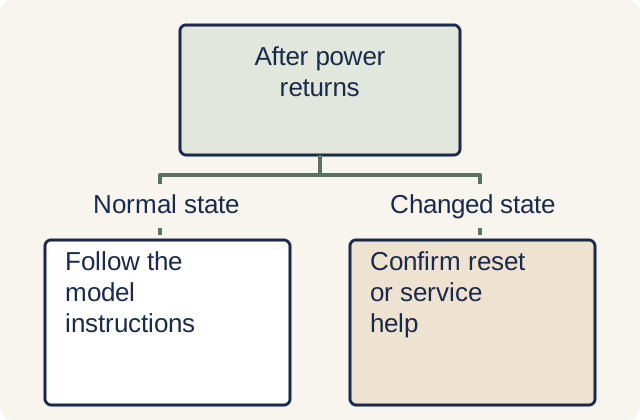
An outage does not end the moment a light comes back on. If the gate has been released, placed in a different state or taken out of service, returning it to normal operation requires the installed procedure. The household should know whether the task is within their instructions or needs the installer.
Do not use repeated commands to investigate an unexplained fault. If movement is unexpected, protection appears ineffective or the gate has been damaged, keep people clear and contact the responsible service provider. A power interruption and an equipment fault can occur together; the return of mains power does not establish that the latter is resolved.
The handover record should include the operator and backup details, normal command routes, model instructions and support contact. If an app, access controller or battery package is changed later, review the outage plan again. The old plan may no longer describe the installed system.
Use the auto-gate buying guide to connect these arrangements with gate movement and pedestrian access. Bring your normal entry methods and the household’s access needs to the installation discussion. A useful proposal can explain what works without mains power, what remains unavailable and how the people who live there will manage the difference.
Auto Gates across Singapore
Need help with your project?
Tell us what you need on WhatsApp and send a few photos. We'll arrange a free site assessment, then give you a fixed-price quote within 3 to 5 working days.