On this page
View In PDFThe fitting visit is only one part of an auto-gate installation. A new made-to-order gate also needs time for the survey, design, fabrication and site preparation. Get both dates in writing: when the order will be ready and when the driveway will be restricted.
The Full Timeline Includes More Than Fitting
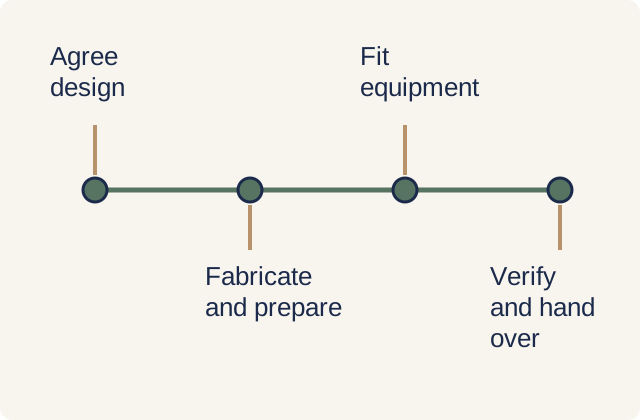
Ask the installer to confirm the fitting period for the actual gate and prepared entrance. Civil or electrical work can extend that period. A fitting date assumes the required equipment and site preparation will be ready.
| Time to distinguish | How to plan it | Effect on your household |
|---|---|---|
| Survey, design and supply | Obtain dated milestones for the selected gate and operator. | The existing entrance may remain usable while off-site work proceeds. |
| Fitting and site work | Confirm the duration for the agreed installation scope and site conditions. | Confirm the hours when the driveway is unavailable. |
| Checks and handover | Include them in the contractor’s programme before normal use. | Arrange to learn the controls and agreed power-failure procedure. |
Suppose your accepted programme allows three weeks for fabrication after design sign-off, followed by two days on site. The family should prepare for roughly three weeks of waiting and a two-day access restriction, rather than two days from the first enquiry. This is a sample programme; use the dates confirmed by your own fabricator and installer.
An auto gate installation programme needs to include the work before fitting: assessment, design, equipment supply, fabrication and electrical preparation. The actual duration depends on which of those tasks your entrance needs. A quick motor installation is not a reliable end-to-end timeline for a new gate or a damaged existing one.
A new leaf must be fabricated and finished before it can be installed. An existing leaf may instead need hinges, supports or a sliding rack adapted for the chosen operator. If the power supply is unsuitable, that work also has to be ready. These separate tasks explain why an installation visit may occupy only a small part of the programme.
For a short quoted turnaround, ask what is already available and what is assumed ready. The answer may be a stocked operator and a serviceable gate with suitable power. If the site survey changes either assumption, the schedule should be revised before you rely on the handover date.
Site Assessment, Measurement, and Sign-Off
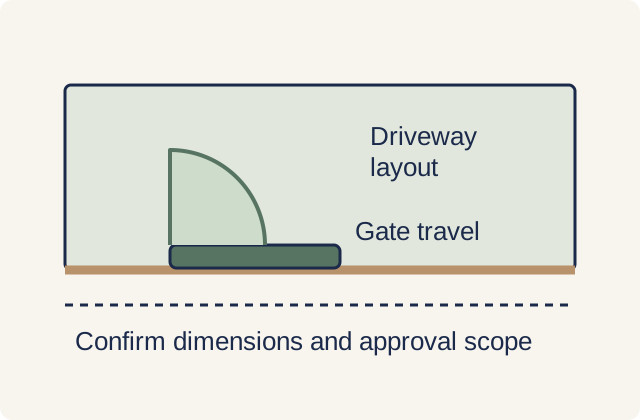
The first stage is a physical site visit. Someone needs to measure the gate opening, check the condition of the existing leaf and hinges, confirm whether your driveway suits a swing or sliding configuration, and locate the nearest power point. This is also where the gate weight and span get assessed, because a heavy or wide leaf changes which motor class is specified and whether the existing posts can take the load.
Check the approval position before fabrication, especially if the work changes the boundary enclosure or access arrangement. An exemption from BCA plan submission does not remove other approval requirements. URA planning exemptions have conditions and location exclusions, including conservation areas. Ask the appointed professional to confirm which requirements apply to the proposed work, and resolve any applicable MCST rules before signing off the design.
Agree the gate design, operator, protective devices and building work before fabrication or ordering. Confirm which decisions must be settled to release the order and how later changes will be priced. The useful start date is the one attached to those agreed conditions, not necessarily the date of the first enquiry.
Fabrication and Parts Lead Time
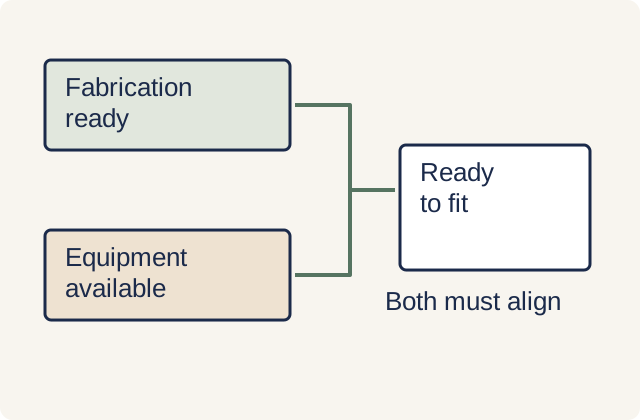
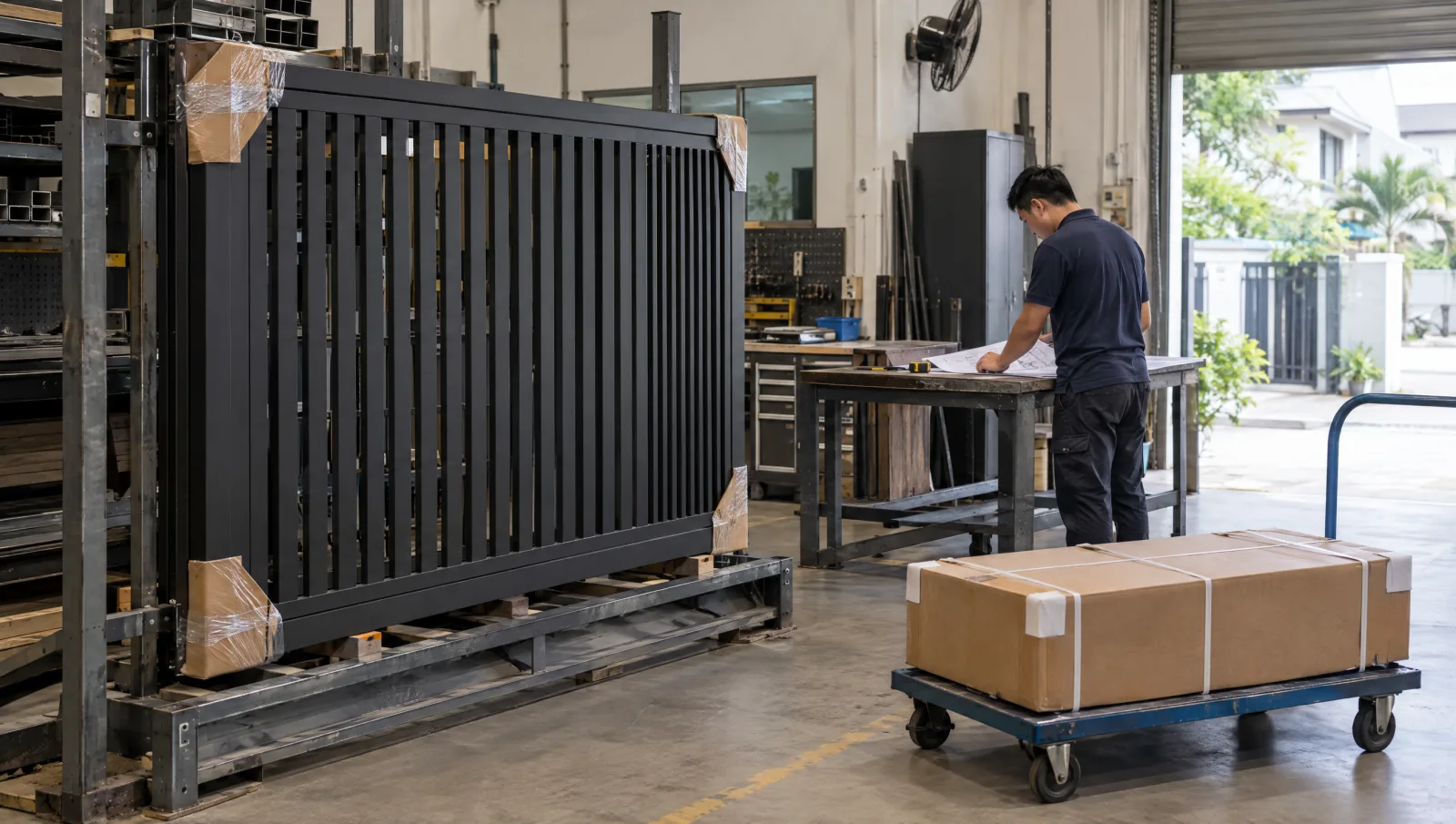
Fabrication time depends on the scope and workshop availability. Reusing a sound gate may reduce new metalwork, while a new design needs the appropriate structural details and finish. Show those tasks in the programme instead of assigning every entrance the same manufacturing window.
Confirm current availability for the actual operator, controller and accessories. A commonly sold brand may still have a particular part on order. Ask about compatible replacements and future parts support as well as the initial delivery date, so a fast installation does not obscure a difficult maintenance arrangement.
A replacement can be simpler when supports, wiring and the leaf are reusable, but existing equipment still needs assessment. Worn hinges, unsuitable foundations or obsolete controls may change the work. The condition of those retained parts matters more than whether the project is called a replacement or a new installation.
The Install Day and the Power-Supply Dependency
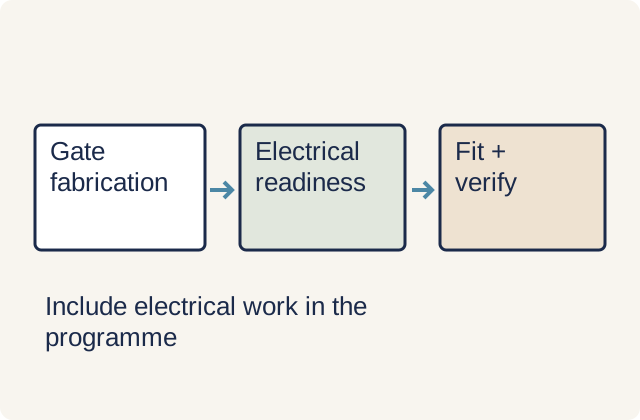
Fitting includes the operator, controls, wiring, receiver and specified safety devices, such as photocells. Commissioning then checks movement, limits and protective functions for the completed gate. Have the installer allow time for those checks and user handover; a gate that responds to its remote has not necessarily completed commissioning.
Electrical preparation may need a separate visit where a new supply or fixed wiring is required. Have the work assessed by the appropriate licensed electrical worker and show it in the programme. The gate installer needs the specified supply ready before the corresponding equipment can be commissioned.
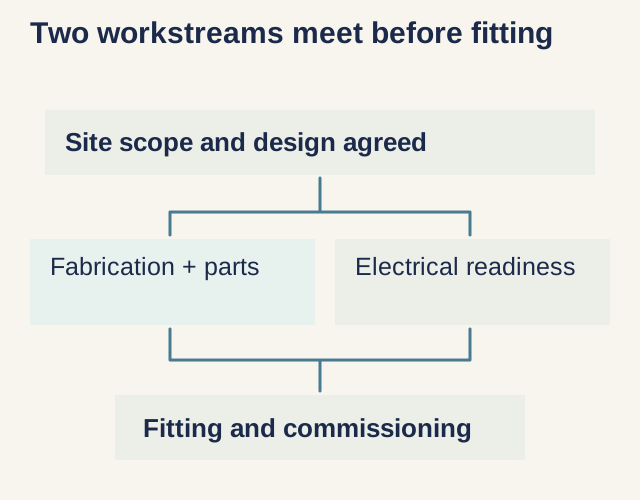
Some fabrication and electrical preparation can proceed alongside each other once their designs are settled. Other work depends on installed supports or finished levels. Ask the appointed team to coordinate those dependencies and tell you when driveway access will be restricted, rather than simply booking every trade for the same day.
What Can Extend the Programme
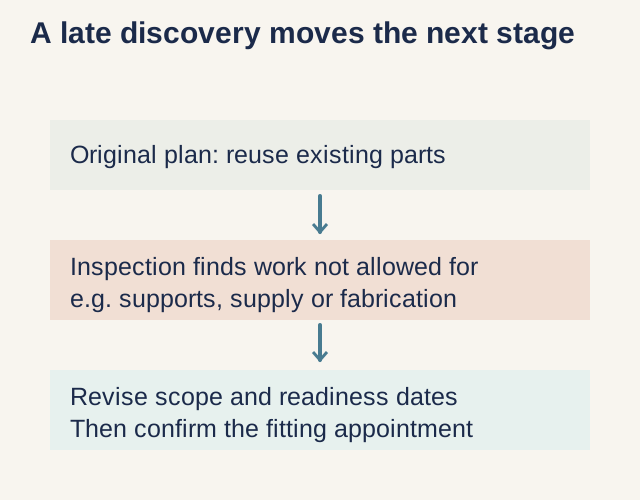
Late findings can change the programme: a support that cannot be reused, a concealed wiring problem, a revised gate design or a part that is not available. Record which conditions have been checked and which remain assumptions. This makes a change in duration understandable when the scope changes.
Delivery and work access also matter. The team may need space for lifting, temporary protection or a safe route around the entrance. Agree how the property will remain accessible and secure while the gate is removed or disabled. Those arrangements should not be discovered only when the installation crew arrives.
The protective move is to get every dependency named in writing before signing: gate condition, steelwork, power supply, motor availability, and any estate guideline. Ask who is responsible for each item, when it must be ready and how a delay would affect handover. A written sequence makes those dependencies visible; it does not guarantee that the programme cannot change.
How DirectHome Fits Into the Timeline
Discuss your auto gate installation with DirectHome before agreeing on the programme. Bring photos of the gate, driveway and nearby power supply, together with any quotation you want to discuss. These help establish whether the work involves reusing the existing gate, replacing it or resolving access and electrical constraints first.
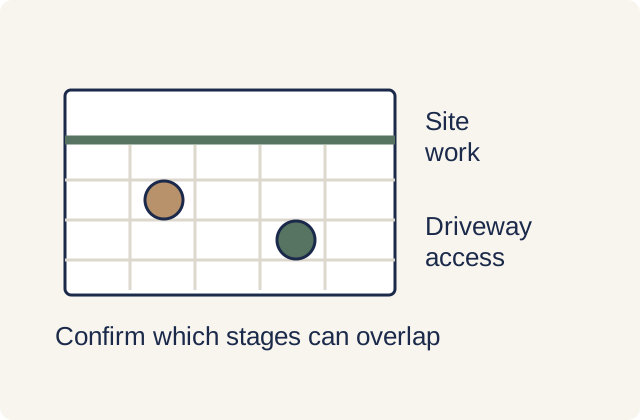
Ask for the electrical work, fabrication, fitting and handover to appear as separate stages in the proposal. Confirm which activities can overlap and which must wait, so you can plan driveway access and understand what could move the completion date.
Send photos of the gate and driveway with the proposed scope to DirectHome on WhatsApp at +65 8539 5310. Include any target date and whether the existing equipment still works. The next discussion can then focus on the preparation and access needed before a measured quotation and programme are agreed.
Frequently asked questions
Can an auto gate be installed in a single day in Singapore?
Ask the installer whether the complete scope, including commissioning and handover, can fit into one day. Design, fabrication, delivery and site preparation are separate from the fitting visit; their time must also appear in the programme.
Why does my auto gate quote say 2 to 4 weeks when the fitting is so fast?
The quotation may allow time for fabrication, equipment delivery, electrical preparation and scheduling before the installation visit. Ask which tasks account for the stated period and what must be ready first. The quoted range belongs to that proposal; it is not a standard duration for every Singapore gate.
Does installing an auto gate need a permit in Singapore, and does that add time?
The requirements depend on the proposed work and property. Changes to the enclosure, supports or vehicle access need separate consideration from fitting an operator. Check BCA and URA requirements and any applicable estate or MCST conditions before fabrication. An exemption under one process does not remove other obligations.
What is the most common reason an auto gate installation runs late?
Unresolved site work or an unavailable component can move the installation date. Check retained gate condition, supports, power provision, operator availability and required permissions before fixing the programme, and name who is responsible for each outstanding item.
Is replacing an old automated gate faster than automating a manual gate?
It may be faster if the existing leaf, supports and electrical provision are suitable for reuse. Their condition and compatibility need assessment first. A nominally simple replacement can expand if worn structure or obsolete controls must also be addressed, so compare the actual work rather than the project label.
Auto Gates across Singapore
Need help with your project?
Tell us what you need on WhatsApp and send a few photos. We'll arrange a free site assessment, then give you a fixed-price quote within 3 to 5 working days.