On this page
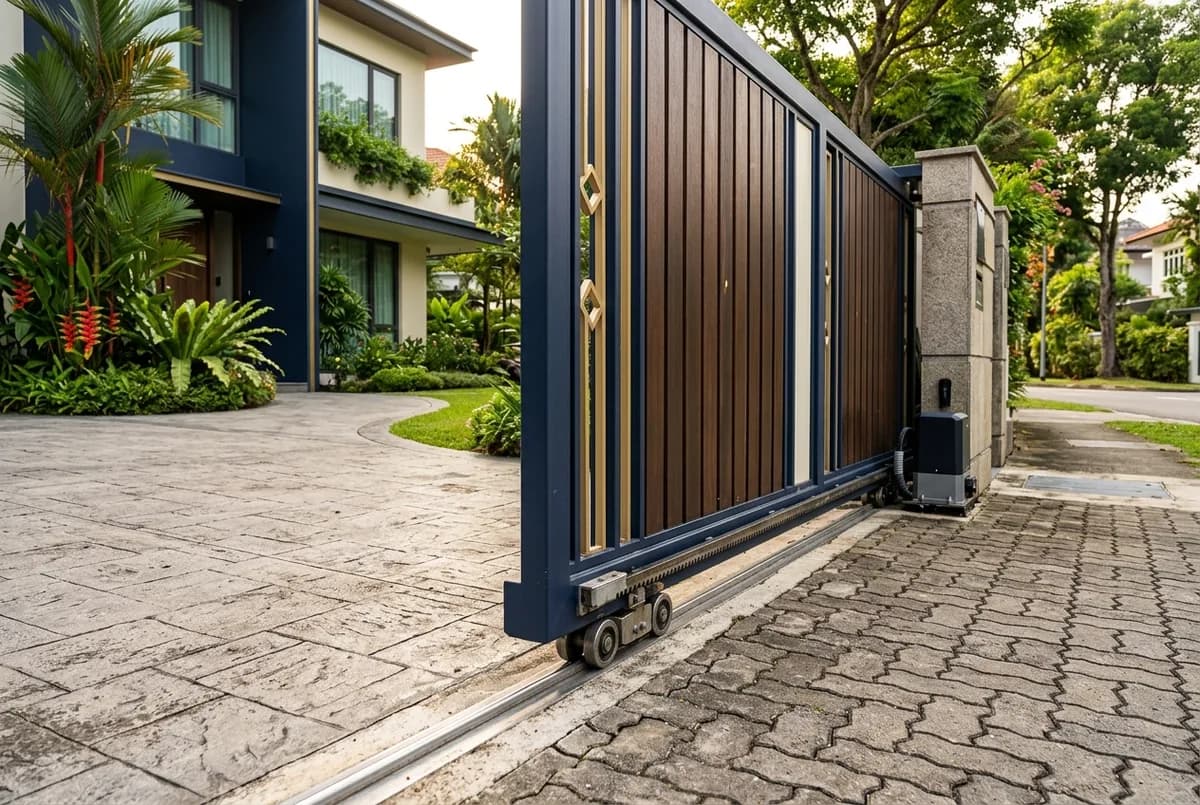
View In PDFChoose a sliding gate if your parked car leaves no room for the gate to swing inwards, provided there is space beside the entrance for it to slide open. A swing gate suits a driveway with room to open inwards but little space at the side. Check the slope and walking route before choosing.
The Gate Type Decision
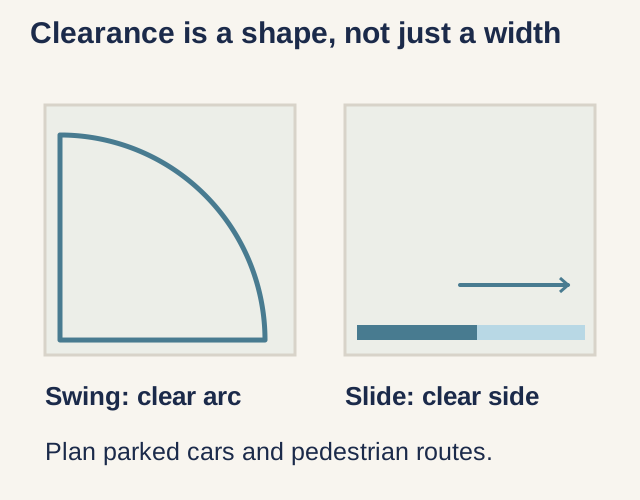
A swing gate opens on hinges, with one or two panels moving through an arc; a sliding gate moves sideways along the boundary. For an auto-gate installation, the useful comparison is whether each movement fits around the cars, people and fixed obstacles already using that space.
A narrow frontage does not automatically favour sliding. If a side entrance, meter compartment or wall leaves nowhere for the panel to go, saving driveway depth will not solve the problem. Equally, a deep driveway can still be unsuitable for an inward swing if a parked car occupies the arc.
We recommend comparing both layouts with the household cars in their usual parked positions. Draw the clear vehicle opening, each gate leaf fully open and the route from the pedestrian entrance to the front door on the same plan. This makes the tradeoff visible before the motor or finish is chosen.
Space Requirements
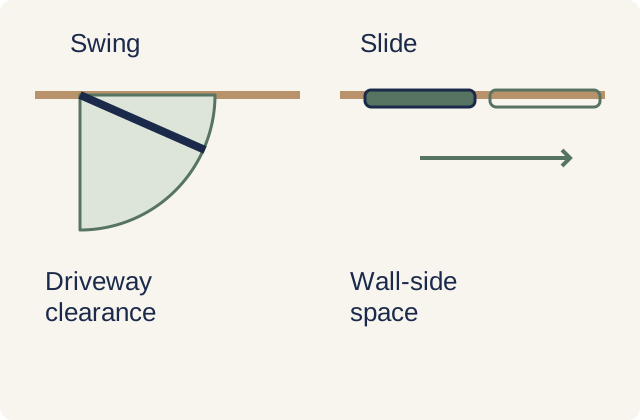
For a swing gate, allow for the whole arc from closed to fully open, including the motor arm and stops. Two shorter leaves reduce the reach of each leaf compared with one leaf spanning the same opening, but they still need clear space on both sides. A car that fits behind the closed gate may obstruct it halfway through opening.
For a sliding gate, measure the uninterrupted length beside the opening and the depth available for the panel and its fittings. A tree, return wall or regularly used side door can make part of that length unusable. The extra length beyond the clear opening depends on the overlap and supports, so ask for both the total gate length and its fully open position on the drawing.
A tracked sliding gate rolls along a rail across the entrance. A swing gate pivots on hinges, while a cantilever gate slides sideways with its weight supported above the ground. That avoids the driveway rail, but the rear counterbalance section also needs room beside the entrance. The tail length and foundations depend on the selected hardware and gate dimensions; there is no single allowance to apply to every model.
Sliding designs include gates on a ground track, cantilever gates without a driveway rail and telescopic gates with overlapping panels. A telescopic design uses two or more panels that overlap when open, reducing the length needed beside the entrance. If a single sliding panel will not fit, ask for the proposed telescopic layout with all panels fully open before ruling out sliding.
| Your driveway condition | Option to examine first | What could rule it out |
|---|---|---|
| Cars occupy the inward swing arc | Sliding | Insufficient clear space beside the entrance for the complete gate |
| Side space is interrupted, but the inward arc is clear | Swing | A parked car, rising ground or the walking route conflicts with the leaf |
| The entrance surface is uneven | Cantilever sliding | Insufficient room for the tail and its supporting foundations |
| Both the inward arc and side space are restricted | A different layout or folding design | The folded position and moving joints still need assessment |
The table is a way to narrow the options, not a clearance specification. An automatic swing gate needs protection at hinge gaps and moving edges, secure supports and ongoing maintenance; choosing swing alone does not make it safe. UK HSE guidance explains these mechanical risks for swing and sliding gates; it is not a statement of Singapore law. A space that physically holds the panel may still need guarding before it is usable.
Cost Comparison
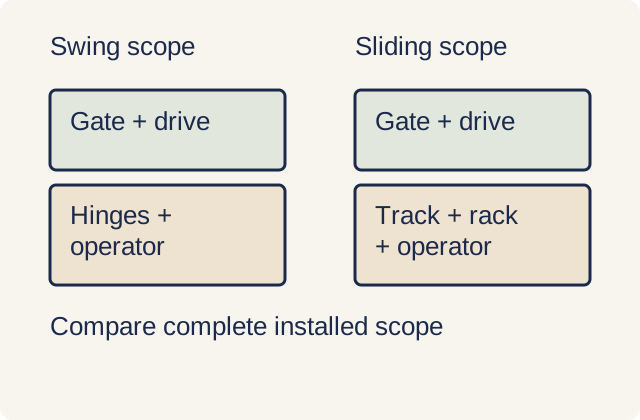
Neither type is reliably cheaper from the label alone. A useful comparison prices two feasible designs for the same opening, height, material and finish. If one quote includes new supports and electrical work while the other reuses them, the difference is partly the project scope, not simply swing versus sliding.
For swing, ask the quotation to separate gate fabrication, hinges and posts, the specified operators, electrical work and protective equipment. For sliding, identify the rail or cantilever support system, foundations, drive equipment and any work to the paving or drainage. Mark what is retained, what is replaced and what is made good afterwards so the total describes the same finished entrance.
For an underground swing motor, ask whether the proposed model needs a foundation box and a separate drainage pipe, and whether those are included in the quotation. Ask how water will drain away and how a technician will reach the motor for servicing. Get those details priced before choosing a hidden mechanism.
If your existing swing layout works, we recommend asking for an assessment of what can be retained before paying to change the gate type. If the arc prevents normal parking, price the sliding alternative with its groundwork included. Use the Singapore auto-gate cost guide for the wider budget, then compare actual installed quotations rather than an assumed percentage premium.
Maintenance Differences
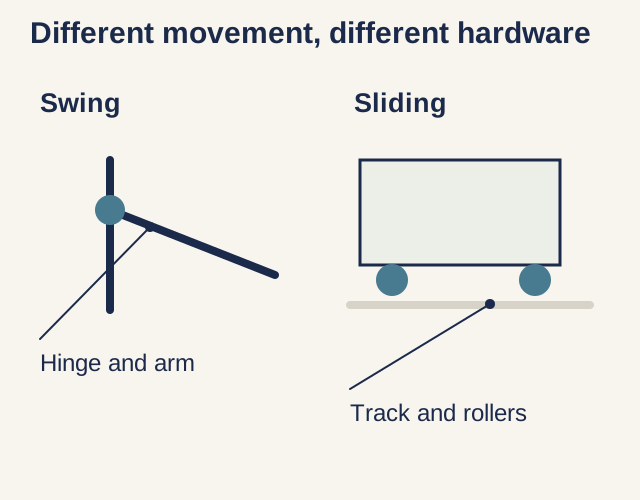
Swing and sliding gates place wear in different components. For swing, the service scope centres on the hinges, supports and drive arms where fitted; tracked sliding adds wheels, rail and guides. Professional maintenance also includes checking protective devices and the manual release, so counting mechanical parts alone does not tell you which system will be easier to own.
With a ground track, include access for cleaning and inspection in the layout. A cantilever design removes that rail from the driveway but keeps its own roller and support system. Choose the arrangement whose service points can actually be reached, particularly if planting or new paving is planned around the entrance.
Use the installed system's user and maintenance manual to set service intervals and lubrication requirements. Ask the installer to explain which owner-care tasks are appropriate and which need a technician; do not treat a general checklist as permission to adjust the mechanism. Our auto-gate maintenance checklist helps organise that discussion.
Compare maintenance proposals for the actual models, including visits, labour and excluded parts. If an existing gate has become noisy or unreliable, start with diagnosing common auto-gate problems before deciding that changing from swing to sliding will solve the fault.
Singapore-Specific Factors
An outward swing is not a way to recover lost parking space in the proposal. LTA's landed-house access guidance states that pedestrian and vehicular gates shall not swing outwards. Plan the movement on the property side of the entrance, with the boundary and adjoining footpath shown on the drawing.
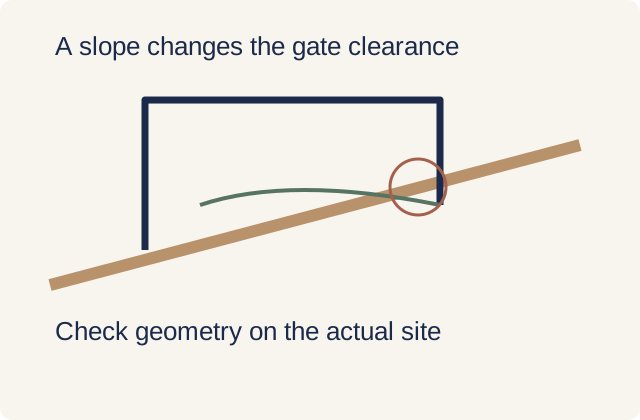
On a sloping driveway, first identify the direction of the rise. Ground rising towards the house can meet the bottom of an inward-swinging leaf as it opens. A sliding gate travelling across a suitably level line may avoid that conflict, but a slope along the gate's own travel is a different problem: uncontrolled downhill movement is a hazard that the design must address.
A cantilever arrangement can span uneven ground without a rail across the driveway. It still needs enough clearance beneath the moving leaf and room for its supports and tail. Have levels checked across the whole route; a photograph of a steep driveway cannot establish whether either gate will fit.
Keep pedestrian access in the same discussion. LTA's landed-house guide includes a dedicated pedestrian entrance for safe entry. For a narrow frontage, we recommend showing how someone reaches the front door with the cars parked and the vehicle gate operating, rather than leaving the walking route until after the gate is ordered.
The protective equipment should suit that route and the moving parts around it. Some vehicle-detection beams do not provide complete protection for people, so ask the installer to explain the protection at both the opening and closing positions. The auto-gate installation guide covers the next planning decisions once the layout is settled.
Our Recommendation
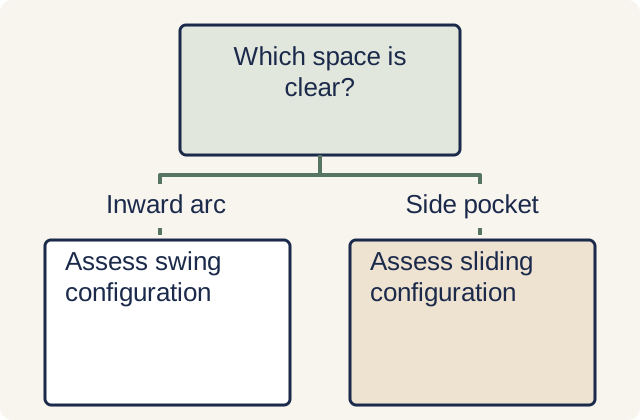
We recommend swing where the inward arc remains clear with the cars parked, ground levels permit the movement and there is little usable side space. We recommend examining sliding first where parking uses that arc and the full panel can move beside the entrance. For uneven ground, compare a cantilever option only after allowing for its tail and foundations.
If both layouts fit comfortably, we recommend a swing gate when you want to leave the side of the entrance free and avoid a rail across the driveway. Choose sliding if keeping the area behind the gate free for parking matters more. If you want that parking space without a ground rail, compare a cantilever design with enough room for its tail and foundations.
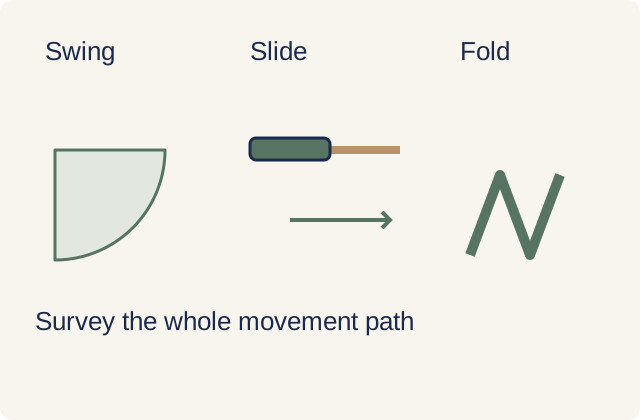
If neither layout fits, ask for a drawn folding alternative or a revised entrance layout before selecting equipment. Folding and other multi-leaf gates also have moving edges that need protection. A smaller footprint is useful only when the open position, parking and walking route all work together.
Folding driveway gates include 90-degree bi-fold designs for homes and heavy-duty bi-fold systems for larger openings. These trackless systems fold at the joints, with the heavier-duty version using a strengthened arm for larger gates. Ask where the folded panels will sit inside your boundary, since that position still has to leave room for parking and walking.
Common questions
Which is better, a sliding gate or a normal gate?
If you mean a hinged swing gate, sliding helps when a parked car blocks the swing arc and there is room beside the entrance. If you mean a manual gate, that is a separate choice from swing or sliding. Decide how the gate will move around your parking space first, then whether you want it motorised.
Once the layout fits, compare auto-gate brands and motors or use the auto-gate buying guide for the wider purchase. Send DirectHome photos of the entrance and both sides, the approximate opening width, the parked-car positions and any visible change in ground level. Tell us which space you need to keep clear so the installation discussion starts with the constraint that matters at your home.
Auto Gates across Singapore
Need help with your project?
Tell us what you need on WhatsApp and send a few photos. We'll arrange a free site assessment, then give you a fixed-price quote within 3 to 5 working days.