On this page
View In PDFThe cheapest auto gate repair is the one that fixes what actually failed. A sensor knocked out of line, a remote that needs pairing again or a sticking roller is a much smaller job than a new motor. And a new motor will strain just like the old one if the gate itself drags.
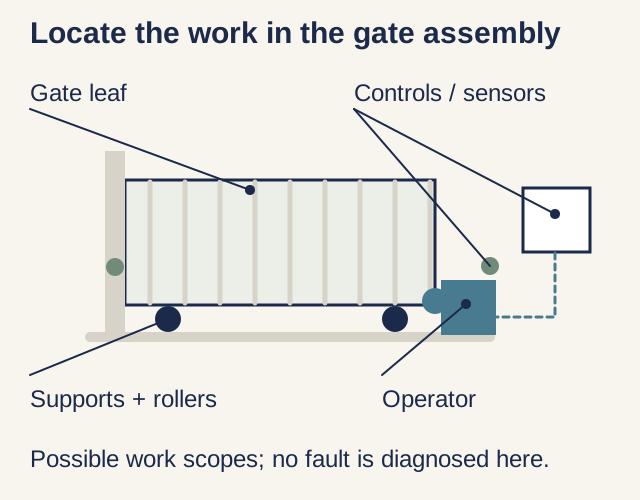
Repair options by part
| Possible scope | What you are buying | What can change the bill |
|---|---|---|
| Adjustment | Re-aligning a sensor, freeing a sticking roller or re-setting where the gate stops | Whether the component is sound or needs replacement. |
| Remote or receiver | A new remote paired to the gate, or a new receiver with its remotes | Whether only a handset or the receiver and controls change. |
| Control board | A new control board fitted and set up for the motors and sensors you keep | Compatibility with retained motors and safety equipment. |
| Motor replacement | A new motor unit fitted to the gate and set up | One unit or a pair, brackets, wiring and mechanical repairs. |
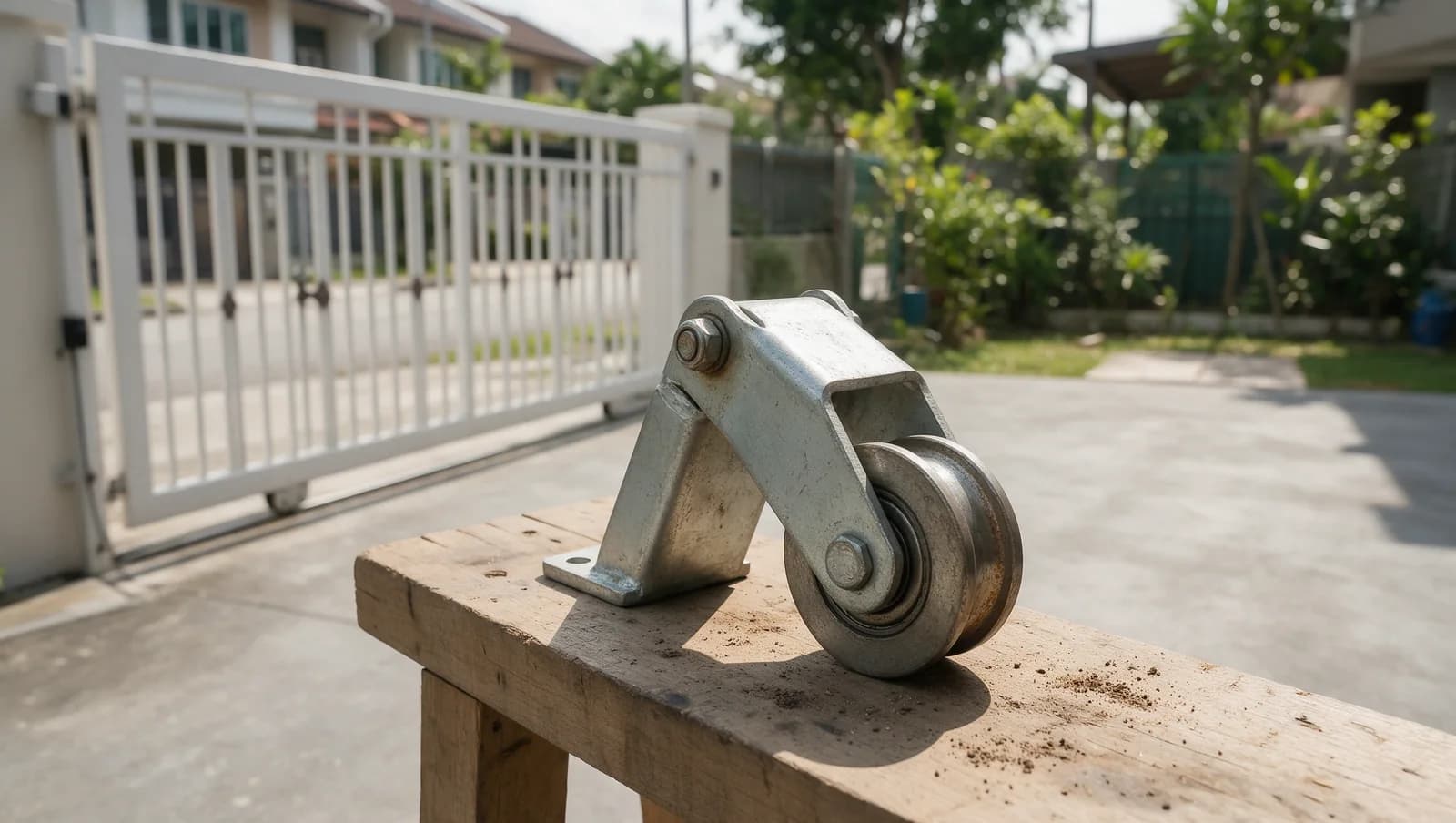
| Gate mechanism or support repair | Fixing the hinges, rollers, track or supports | Condition, access and whether associated automation work is needed. |
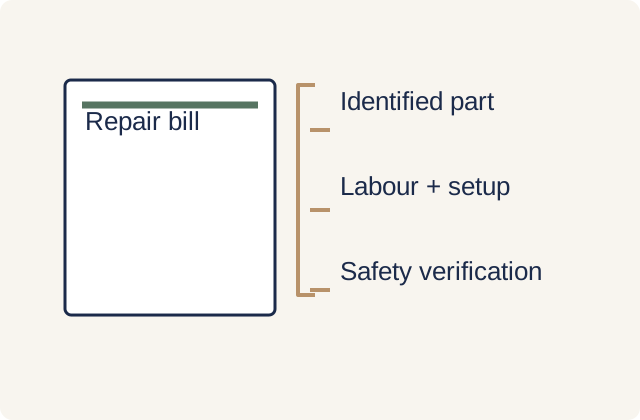
There is no current independent published price for auto gate repairs in Singapore, so the real number is the written quote you get once someone has found the fault. That quote should cover the fault found, the parts, the labour and testing the gate afterwards. When several parts need work, price a new gate or motor alongside the repair so you can see both totals.
Ask what the attendance charge includes before booking. Diagnosis, a return visit, out-of-hours attendance and repair labour may be separate items. If the first visit is credited against the work, have the final total show the credit once.
A remote replacement is a smaller scope than replacing a receiver and remotes together, but only if the existing receiver works and accepts the new handset. Ask whether the quote includes programming and deletion of a lost remote from the system where the equipment supports that function.
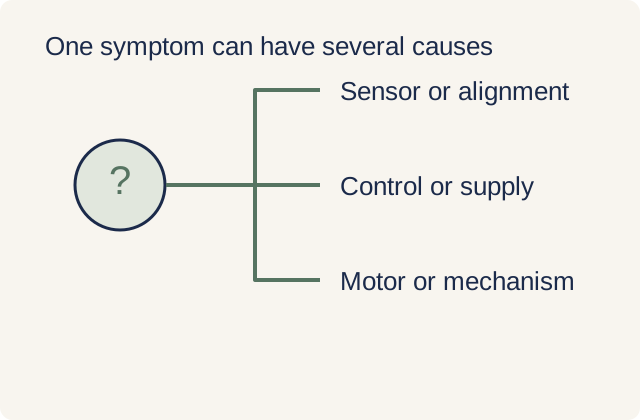
The same symptom can lead to different bills. A gate that will not close may be reacting to an obstruction, a false input or mechanical resistance. A technician should identify the finding that separates those causes before a motor is ordered. Until then, stop using the gate and keep everyone out of its path. The technician switches off the power and secures the gate before anyone looks closely.
Use the common auto gate fault guide to describe what you observed and the auto gate buying guide if the assessment points to replacement. Neither a symptom list nor a photo sent from home can confirm which part has failed.
What actually drives an auto-gate repair bill
Ask why the part can't just be adjusted or re-set, and what exactly the replacement includes. A motor that struggles because the gate binds needs the mechanical problem resolved as well, or the replacement may face the same load.
The UK HSE’s technical gate guidance explains why safety depends on the complete combination of motor, controller, sensors and the installation. It is technical guidance, not Singapore law. A substitute component needs to work with the retained system, including its protective functions; matching supply voltage alone does not establish that. If the repair changes electrical wiring or the electrical installation, EMA advises using a Licensed Electrical Worker. Confirm that electrical scope separately from the gate mechanism repair.
When Repair Is Better Value Than Replacement
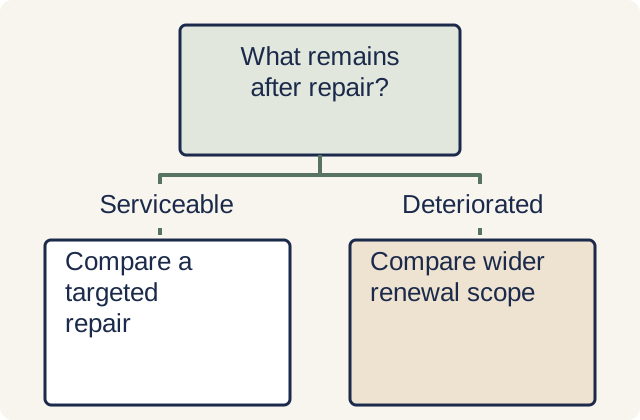
Compare three options only where the technician considers them viable: adjust or repair the existing component, replace the failed component while retaining the gate, or renew the wider automation. The first buys the least new equipment, but the best value depends on the condition and support of what remains.
A targeted repair makes sense when it resolves an isolated fault and leaves a serviceable system with obtainable parts. Wider replacement deserves consideration when several components are deteriorated, parts are unsupported or the required safety work extends beyond the failed item. Ask the technician to name anything else that is worn, so you decide on the gate's real condition.
A history of repeated breakdowns is a reason to investigate the pattern, not proof that the whole gate is finished. If the same symptom returns after each repair, check whether the diagnosis addressed its cause. The price of the next component alone cannot answer that.
How to read the quote line by line
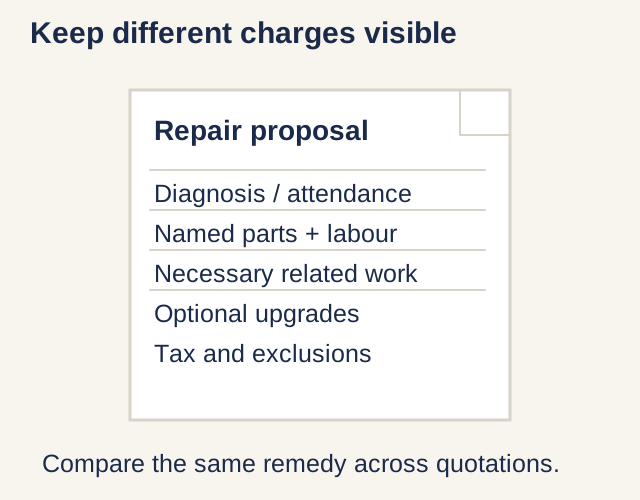
CCS renovation guidance calls for clear itemised prices and disclosure of mandatory charges. Apply that principle to the proposed gate work: identify the part or adjustment, labour, attendance, electrical or support repairs, disposal and completion checks. Agree how newly discovered work will be priced before it proceeds. The same guidance asks for rights and remedies to be stated clearly in the contract, so have the quote say in writing what warranty covers the new part and the work.
Separate required repairs from optional additions such as extra remotes or app control. A failed protective function belongs in the safe-repair scope; an optional add-on for phone control can be decided on its own. Ask for the final amount including applicable tax and any visit credit.
Budget for routine servicing and separate repairs
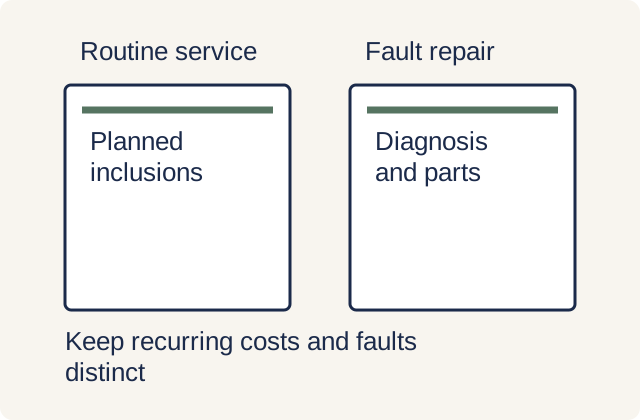
A service visit is not a pre-priced allowance for every breakdown. Match the tasks to the equipment’s maintenance requirements, then identify which fault repairs and parts are excluded. This prevents the same routine work being counted in both a maintenance fee and a repair quotation.
Keep dated records of the fault, diagnosis and replaced parts. They help a technician recognise whether rain, mechanical wear or another recurring condition needs attention. Do not buy a maintenance package on an unsupported promise that no future repair will be needed.
Prepare for the Repair Discussion
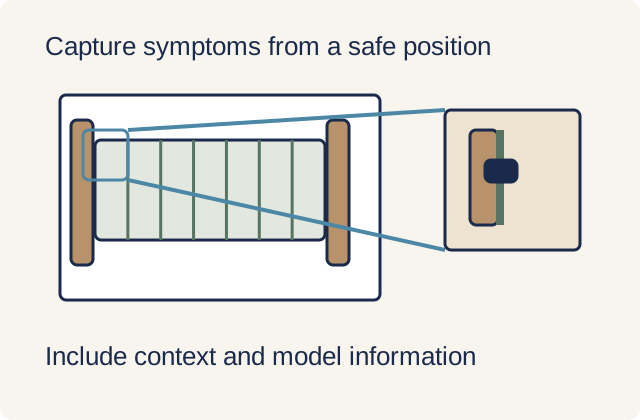
Stop using a faulty gate and keep everyone out of its path. A qualified technician should switch off the power and secure the gate before anyone looks closely. Homeowners should keep clear, record observations from a safe place and avoid removing covers, forcing the leaf or bypassing sensors. Ask for the applicable movement and protective-function checks after the repair; opening successfully is only part of handover.
For the discussion, write down what you already saw before you stopped using the gate, such as whether it failed opening or closing, which remote or button you were using, and whether it followed rain or a knock. Don't keep operating the gate to test it. Send us those notes, a few photos taken from outside the gate's path and any model label or earlier repair record you already have. Photos help us prepare, but we don't quote from them. We arrange a free site assessment, then give you a fixed-price quote within 3 to 5 working days.
Common questions
Should I repair my auto gate or replace it entirely?
Repair it when the fault is in one part and the rest of the gate is sound, with parts still available. Consider replacing it when several parts are worn or the safety work goes beyond the failed part. Either way, put the repair quote, with its warranty, beside a quote for equivalent new equipment.
Why do two repair quotes for the same auto-gate fault differ so much?
They may price different faults, components or retained equipment. Compare the diagnosis first, then the same complete scope including labour, protective-function checks, applicable tax and any credited attendance fee. A cheaper total is meaningful only once those differences are clear.
What ongoing cost should a working auto gate actually have?
There is no current independent published figure for auto gate servicing in Singapore, so the ongoing cost is whatever the service agreement for your gate sets out. A service visit should follow the maker's schedule for that motor, with a technician checking how the gate moves, its fixings and its safety features. Repairs and parts outside the agreement are billed separately.
Does an auto-gate repair need any permit or authority approval in Singapore?
Swapping a part on the existing gate, such as a motor, sensor or control board, is a smaller matter than changing the entrance, the pillars or the supports the gate hangs on. For work that changes the structure, BCA advises private property owners to engage a Qualified Person, a registered architect or professional engineer, to advise on the clearances needed from BCA and other authorities such as URA. Our auto gate approval guide covers the BCA, URA, road-access and estate checks that can apply to gate work.
Can DirectHome help if I only need a repair, not a new gate?
Send us what the gate was doing when it stopped working properly. We start with a free site assessment, then give you a fixed-price quote within 3 to 5 working days; we don't quote from photos.
Auto Gates across Singapore
Need help with your project?
Tell us what you need on WhatsApp and send a few photos. We'll arrange a free site assessment, then give you a fixed-price quote within 3 to 5 working days.