D15/D16 · Premium Landed
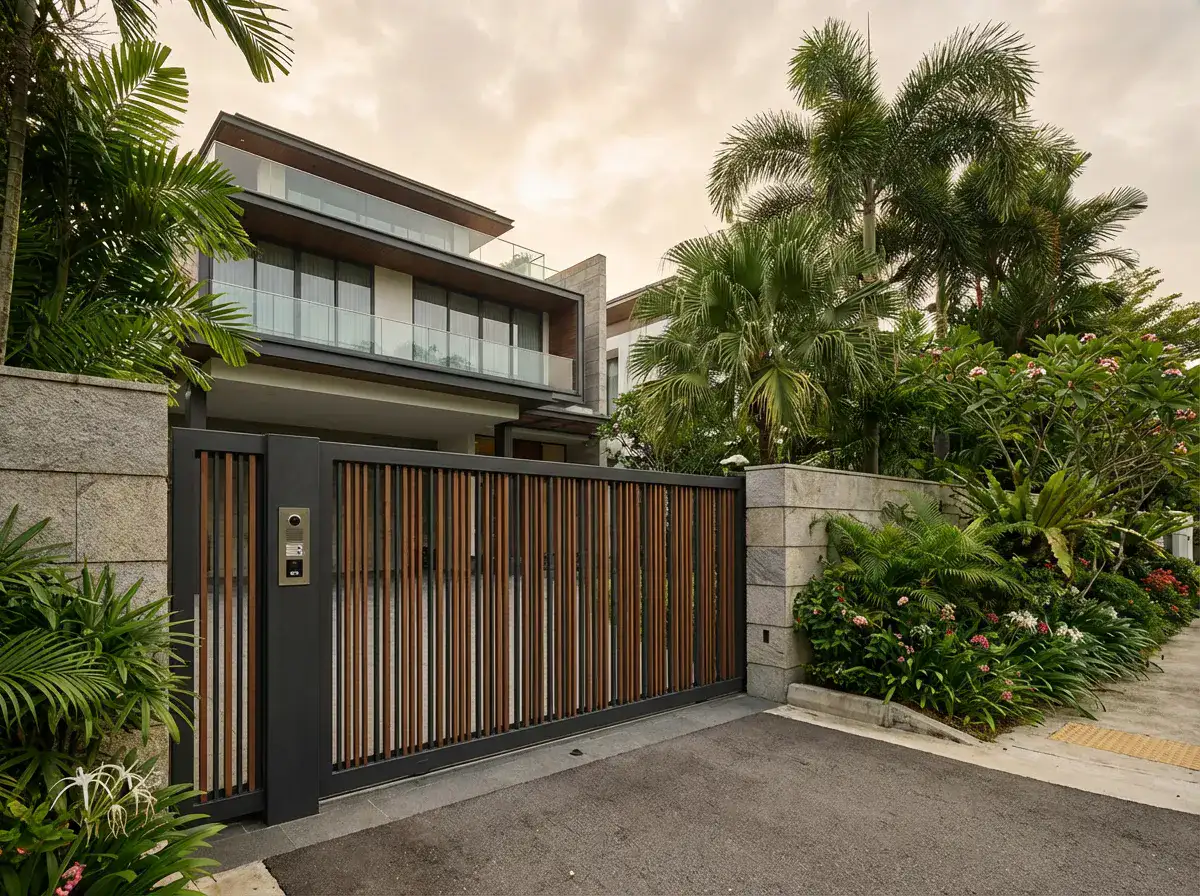
Auto Gates in East Coast, Singapore
East Coast auto gate work spans the full range of the belt's landed housing, from new installations on rebuilds to replacements of gates that have served since the estate's earlier decades.
Why East Coast
Auto Gates for East Coast homes
Driveway configurations vary widely from short single-vehicle terrace driveways to deep multi-vehicle driveways on detached properties. Marine air corrosion is a meaningful issue throughout, with mild steel pitting well before its inland service life even on inland-facing properties. Stainless steel and powder-coated aluminium are the dominant material choices for durable installations.
Mid-range scope, with a step up for marine-grade specifications. Stainless 316 systems are typical on coastal-facing properties. We scope each gate after a free site assessment.
A corroded mild-steel gate near the coast is not worth restoring: the pitting continues under fresh paint. Replace in 316 stainless or marine-rated aluminium, house the motor in a sealed enclosure, and the next owner of the problem is decades away.
Common Questions
Auto Gates in East Coast: FAQ
How much does an auto gate cost in Singapore?
We price each gate from what we find on site, so there is no single figure here. These are the things that move it. A motor on a sound existing gate is a much smaller job than a new gate and motor. A swing gate needs hinge posts strong enough to carry the leaf; a sliding gate needs a track or supports along its whole run. A bigger, heavier leaf needs a stronger motor. Pillar, foundation or drain work adds cost, and so does new wiring to the motor, which only a licensed electrical worker may do. Then come safety edges or sensors, extra remotes, an intercom, phone control and regular servicing.
Can a swing gate work on a sloping driveway?
Yes, if the leaf clears the ground all the way through its swing. On a driveway that rises behind the gate, the slope decides how far an inward-opening leaf can swing before it hits the ground, so the arc is checked against the actual levels. A sliding gate avoids the arc but still needs a firm, well-supported run beside the entrance, and on any slope the gate has to be designed so it cannot run away downhill.
Can I add a motor to my existing gate?
Yes, if the gate is sound. First a technician checks the leaf, the hinges or rollers, the posts and the gaps where hands or feet could be caught, because automating an old gate can leave those pinch points exposed. If it moves freely and can carry the motor, keeping it makes sense. Worn hinges, a sagging leaf or weak posts get fixed before any motor goes on.
Can I control my gate with my phone?
Yes, if the gate's control box supports it, though it can need an extra part. CAME, for example, connects its app to compatible motors through a CONNECT GW gateway added to the system. Before it goes into the quote, check which app it uses, whether there is any ongoing fee, who can be given access, and that the ordinary remote still opens the gate when the home Wi-Fi is down.
What happens during a power failure?
Without power the motor can't move the gate, so it stays where it is until someone releases it by hand, unless a backup battery is fitted. At handover you should be shown the safe release for your model and told whether a battery option exists for it. A heavy or unstable gate can move unexpectedly once released, so if it can't be handled safely, keep clear and get a technician.
Does installing an auto gate need approval?
It can, if the job involves building work. BCA says private property owners carrying out building works may have to submit plans to it for approval, though some minor works, listed as insignificant building works, are exempt. It says owners should engage a Qualified Person, a registered architect or professional engineer, to advise on the clearances needed from BCA and other authorities such as URA, and the QP can tell you whether your job is exempt. A motor on your existing gate is a much smaller change than rebuilding the pillars or the entrance, so be clear which one you are planning.
Have a different question? See the full Auto Gates guide or WhatsApp us.
Get Started
Free Quote for East Coast Homes
Tell us about your auto gates project in East Coast. We'll arrange a free site assessment and provide a detailed, no-obligation quotation.
Your Contact Details
Also Serving