On this page
View In PDFGate sensors help detect certain obstacles, but a clear sensor beam does not mean every part of the gate is safe to move around. Someone can stand near a hinge or trapping point without interrupting that beam. Three common assumptions can lead owners to overestimate the protection: beam coverage, automatic reversal and a sensor merely appearing on the quotation.
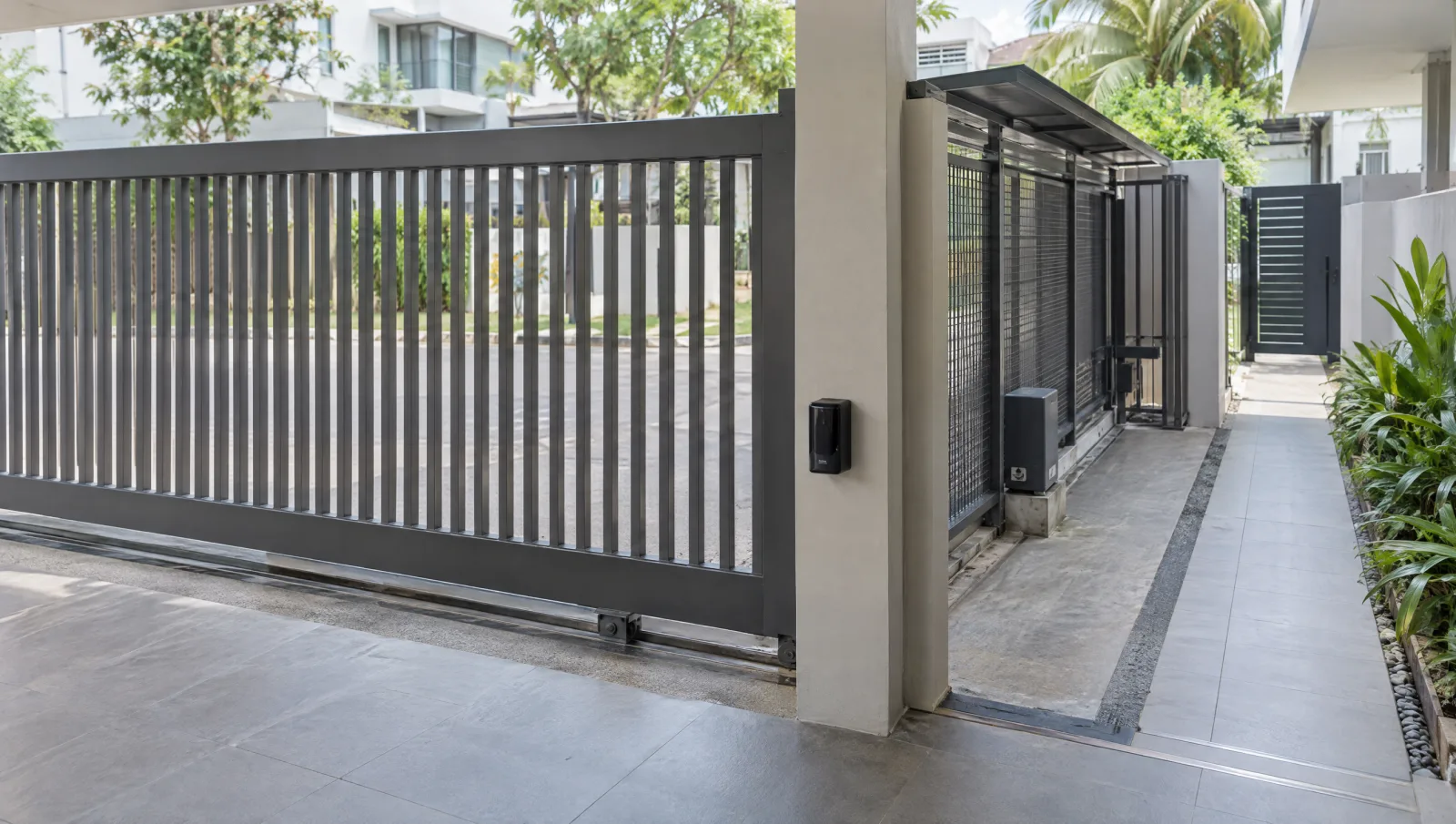
When discussing an auto-gate installation, ask how the design addresses the actual movement of the gate and the people around it. The important answer is where each hazard is and how it is controlled. A quotation listing “safety sensors included” leaves that connection unexplained.
Assumption: if the beam is clear, the whole area is clear
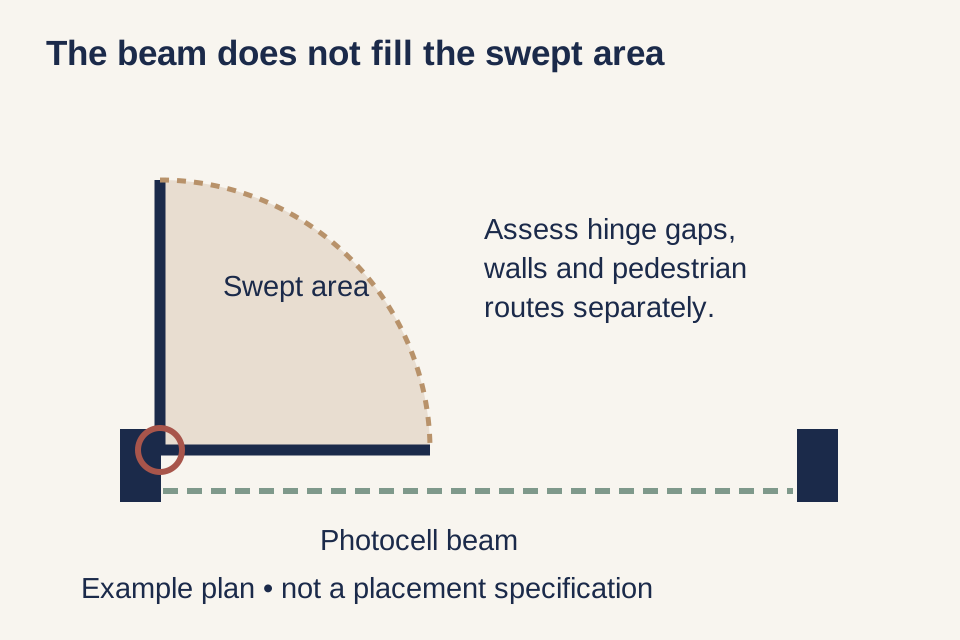
A beam crosses one line. A person can be elsewhere in the gate’s travel area without breaking that line. The gate can also create a trapping point at a hinge, against a wall or around moving components that sit outside the beam.
The photocell manufacturer’s instructions describe detection along the line of sight and warn that the devices are safety aids with limitations. That is a useful boundary for reading a specification. It does not mean the device is unhelpful; it means the system must be designed around what it actually detects.
For a swing gate, consider the space swept by the leaf between closed and open positions. A beam near the entrance may not account for every position within that arc. For a sliding gate, the rear runback area, supporting guides and the relationship between the moving leaf and fixed fencing need attention. The visible opening is only part of the machine.
A driveway plan should therefore show gate travel, adjacent walls, pedestrian routes and the position of safety devices. The installer can then explain how those devices relate to the identified hazards. Counting sensors without understanding their placement provides less information than a clear drawing of the protected areas.
Assumption: automatic reversal means contact is harmless
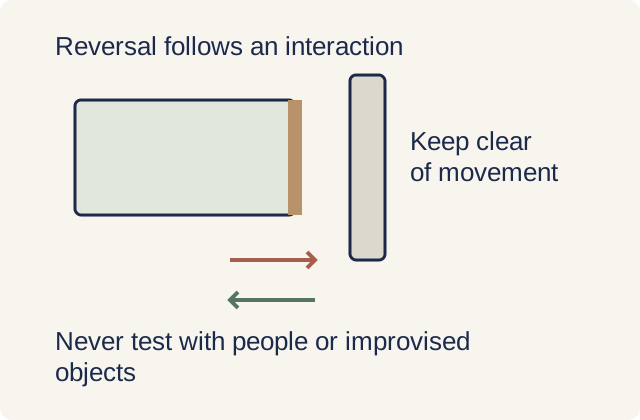
A gate that reverses after detecting an obstruction has already entered an interaction that the system must control. Whether a person is protected depends on the whole arrangement, including geometry, forces, detection, response and foreseeable use. A reversal feature is not permission to walk through a moving gate.
Safety guidance for powered gates emphasises a thorough assessment of the environment and verification of protective measures. Where force limitation is used, its performance needs appropriate professional testing. A demonstration that the gate changes direction does not establish every relevant measure.
For the household, the operating rule should be clear and easy to follow: keep people clear of moving gates and use the intended pedestrian route. Do not hold a hand, object, vehicle or pet in the path to test the system. The installer has the responsibility and equipment to carry out the appropriate checks.
The distinction matters particularly when someone describes a gate as “child-safe” because it has an anti-crush motor. Children can approach a hinge, reach through a gap or enter an unexpected part of the travel area. The design needs to account for foreseeable behaviour rather than depend on a child understanding the sensor layout.
Assumption: a sensor shown on the quote is a completed safety check
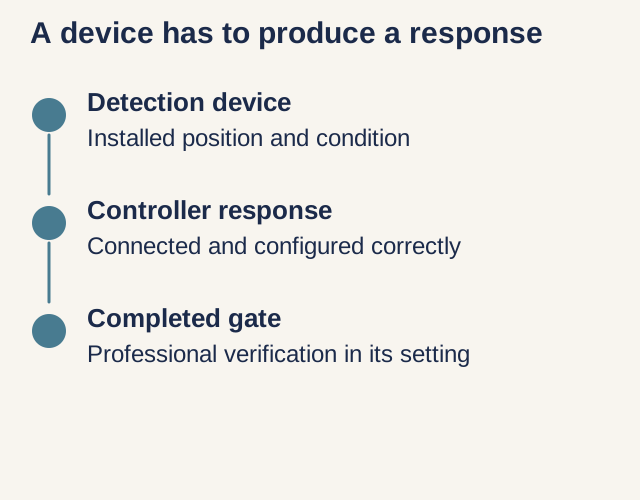
A component can be suitable in principle and still require correct installation, connection and verification in the finished gate. The controller must respond appropriately to the device. The device must also remain effective in the conditions where it is installed.
The photocell instructions include verification of detection and the automation’s response. Keep those as professional commissioning tasks. For a homeowner, the resulting handover should identify the devices installed, their intended function and the maintenance or fault-reporting instructions relevant to them.
A list of product codes alone may not explain whether the opening and closing directions are addressed, whether a rear trapping area remains or how the gate behaves after a fault. A useful installer explanation follows the gate through its full movement and shows where each protection applies.
| Measure discussed | Function to establish |
|---|---|
| Photocell or other non-contact detection | What area or line is detected and how the controller responds |
| Sensitive edge | Which contact location it addresses and the system response |
| Force limitation | Which movement is controlled and how performance is verified |
| Guards, separation or altered geometry | Which trapping or moving-part access is prevented |
| Pedestrian route and operating instruction | How people avoid the gate's moving area |
The table does not prescribe the combination needed at your property. It gives you a way to hear whether the proposal addresses different functions. Some situations require changes to geometry or access routes, not simply another electronic device.
Changes around the gate can change its safety needs
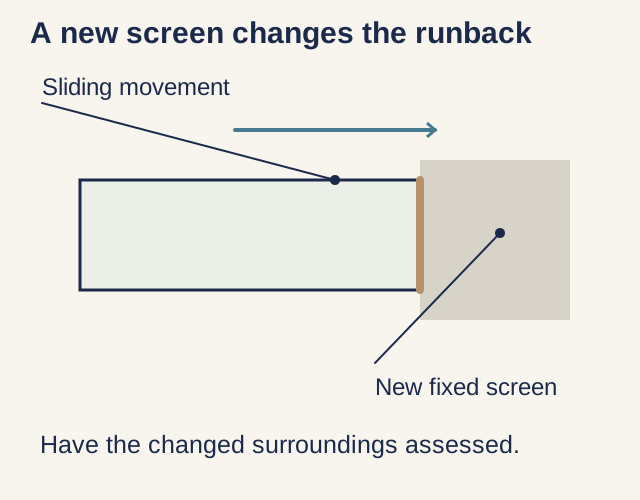
Conditions around an outdoor gate change over time. Plants can grow into its path, stored objects can obstruct it and components can wear. A new wall or fence may create a trapping point, while an automatic-closing setting changes when the gate moves. Have those changes assessed with the gate's existing safety arrangements.
The powered-gate basics identify weather, damaged wiring and control components, inadequate restraints and maintenance as relevant to safe use. These physical principles explain why the completed system needs continuing attention. They are not a claim that UK legal duties apply to a Singapore homeowner.
Keep alterations within the same review. If a garden contractor builds a screen beside the sliding runback area, or an access installer changes the controls, the gate installer should assess the implications. A previous handover record does not automatically cover a changed site.
A visible damaged sensor, unstable gate, exposed cable or unexpected movement calls for professional attention. Keep people away and follow the installed instructions for taking the gate out of use safely. Do not tape over, disconnect or bridge a safety input so the gate will operate while the fault remains.
Have the installer explain the hazards and the protection provided
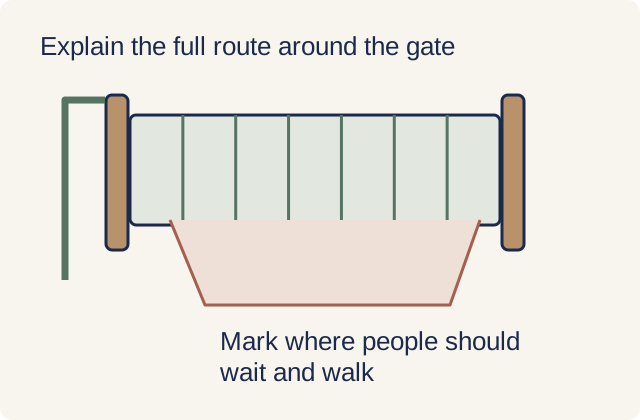
The household should know the normal controls, where to stand clear, how the gate behaves in its intended modes and whom to contact when behaviour changes. The installer should also explain the model-specific arrangements for power failure and any manual release. These instructions need to be accessible to the people who use the driveway.
Keep the equipment details, commissioning record and maintenance requirements together. If a later service visit changes a component or control setting, the relevant record should change too. That gives the next technician a reliable starting point and the household a consistent explanation of normal behaviour.
The auto-gate buying guide connects the safety discussion with gate movement, access and equipment choice. For a new installation, bring a plan showing the driveway, pedestrian entrance, nearby walls and usual waiting areas. The site assessment can then consider the entire route around the gate.
A strong proposal can answer a specific question: what protects a person at each part of this gate’s movement? A photocell may be part of that answer. Its presence should lead to an explanation of the rest of the design, rather than bring the discussion to an end.
Auto Gates across Singapore
Need help with your project?
Tell us what you need on WhatsApp and send a few photos. We'll arrange a free site assessment, then give you a fixed-price quote within 3 to 5 working days.