On this page
View In PDFFor an inground pool, pick the cover for the job you need done. A leaf cover keeps leaves out, a solar blanket cuts evaporation, and only a cover tested as a safety cover is meant to stop a child or pet falling in. Then check it fits your pool, copes with rain and is easy to open before a swim.
Different Covers Solve Different Problems
It’s easiest to choose the cover while you’re planning the swimming pool, when the deck, pool edge and storage space can still be planned around it. If the pool is already built, the installer needs its actual shape, edge details and the space around it. A cover that fits the water can still be a pain to use if there’s nowhere to roll it up or store it.
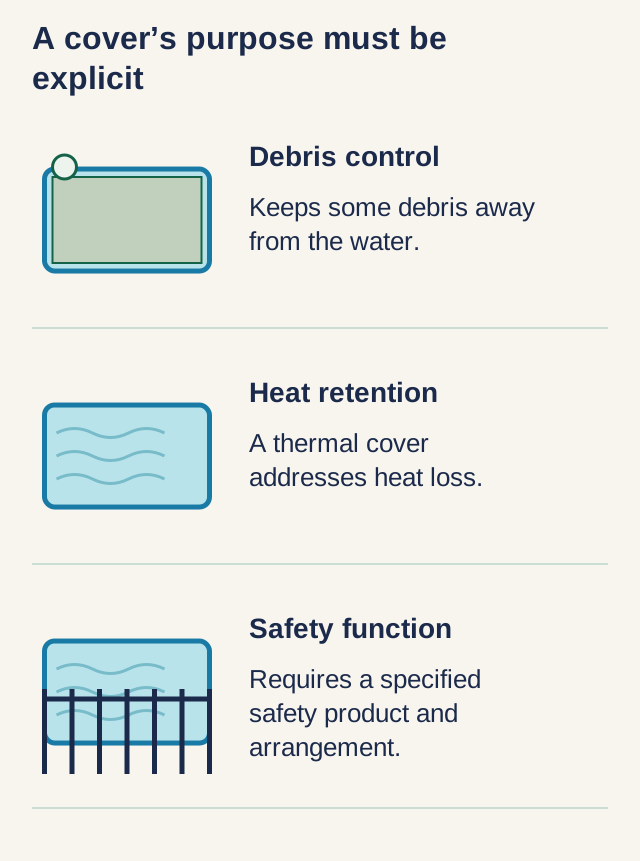
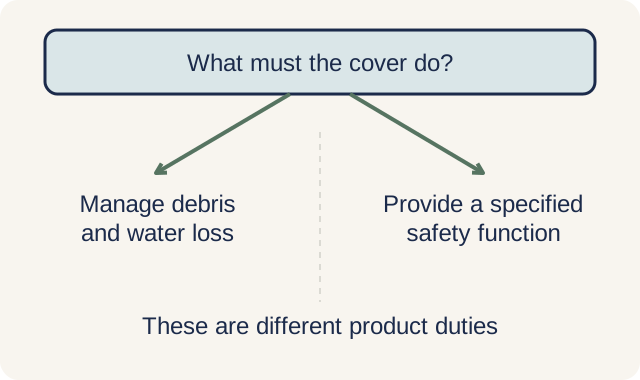
Start with why you want one. Leaves landing in the water, topping up the pool all the time and worry about a child getting in each need something different. One cover can do more than one job, but being made of mesh, vinyl or slats doesn’t make it a safety cover. What counts is whether that model has been tested as one.
| Your main concern | Cover to look at | What to be clear on before buying |
|---|---|---|
| Leaves and larger debris | A fitted leaf or debris cover | What gets through, how leaves are cleared and where the cover is stored |
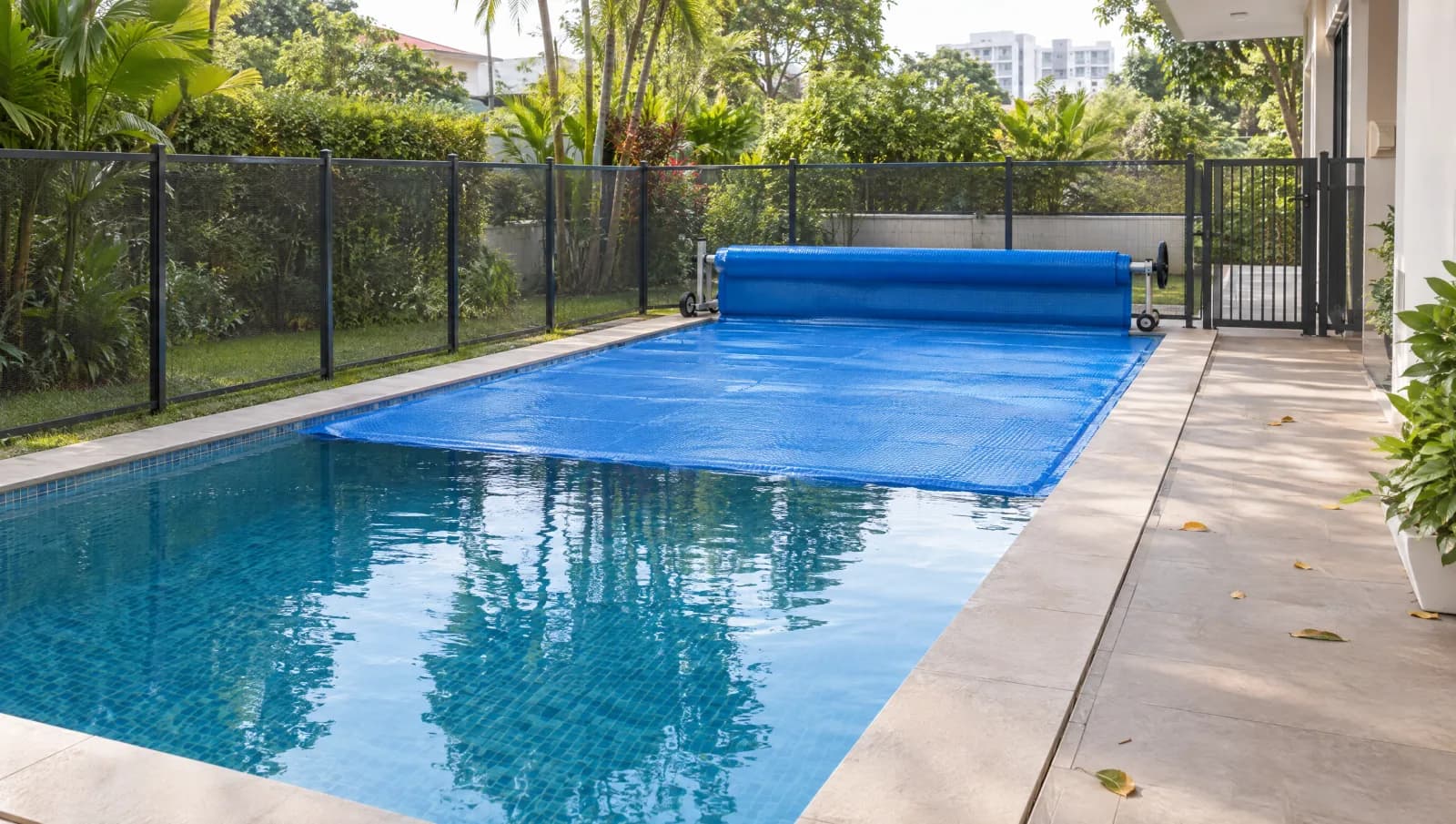
| Water loss and keeping heat in | A solar blanket or other surface cover | How much of the water it covers and whether someone will handle it every day |
| A child or pet getting into the water | A cover tested as a safety cover, with its fittings | The test report, how it is fitted, gaps at the edge, the controls and upkeep |
| Opening and closing a large cover | A reel or automatic system that suits the cover | How it works, where it goes when open, access for servicing and what happens if it stops |
Covering the water can reduce evaporation and help retain heat when the cover is used consistently and appropriately. In a US university study the EPA cites, covers cut evaporation while in use by up to 95 per cent for solid and mesh covers, and 50 to 95 per cent for solar blankets depending on their shape and how much of the water they cover. Those are US figures, and the saving stops when the cover comes off, so how easy it is to put on and take off every day matters as much as what it’s made of.
Debris Covers
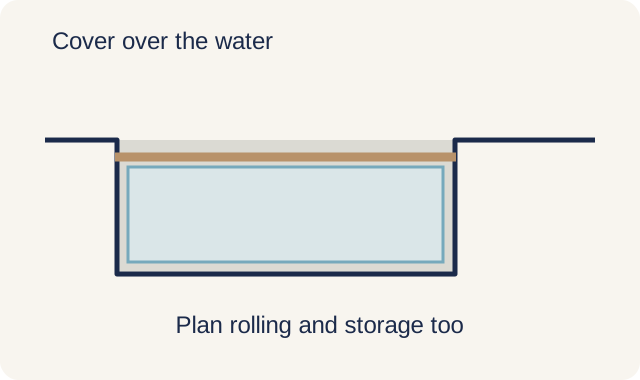
A leaf or debris cover catches leaves before they reach the water, but what happens in rain depends on whether it’s mesh or solid. Mesh lets rainwater and some debris through, while water can collect on a solid cover and may need pumping off. Beside trees and in heavy rain, that difference shows up quickly.
Ask the installer to show you where the rainwater goes and how leaves are cleared off without tipping them into the pool when the cover opens. The cleaning instructions should say how to do it safely and with what. Unless a cover is made and fitted as a safety cover, nobody, children included, should walk, sit or play on it, not even to reach a pile of leaves or a puddle on top.
If you swim often, think through opening the pool every time. Where does the wet cover go, can the person who’ll do it actually handle it, and does the rolled or folded cover leave a clear path round the pool? A cover that’s easy to take off can work well, but one made to stay anchored over the pool for months at a time is harder to take off and put back every day.
Ask to see the cover working, or at least a sample, before the deck layout is fixed. Make sure the quote includes the reel, anchors, housing or storage bag if your cover needs them. You need those parts as much as the cover itself, even when an advertised price covers only the cover material.
Safety Covers
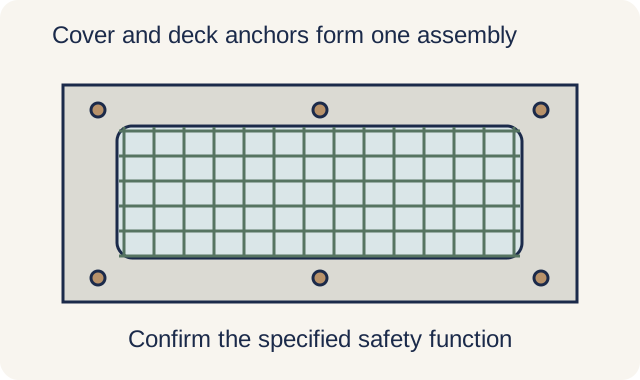
A safety cover is only as good as the whole setup, meaning the cover, its anchors or tracks, and how it’s fitted to your pool. The US Consumer Product Safety Commission says power safety covers should meet ASTM F1346, the American standard for pool safety covers, and the EPA notes that its tests include load bearing, draining surface water and checking there are no gaps between the cover and the pool. It’s an American standard rather than a Singapore rule, but it gives you something concrete to ask for. Ask for the test report or certificate, check that it names ASTM F1346 and the exact model you’re being offered, and check that the fittings and your pool’s shape match what was tested. Words like “strong” or “automatic”, or a photo of someone standing on a cover, don’t tell you any of that.
The same CPSC guidance says barriers are not childproof but do provide layers of protection, and it counts a power safety cover as one layer alongside a fence or wall and door alarms. That’s US advice, but the point holds anywhere. A safety cover is one layer, not a replacement for a fence, a shut door or an adult watching.
An adult should be watching whenever children are near the water, including while the cover opens or closes. Ask how the key or control is kept out of children’s reach, who checks the pool is clear before the cover closes, and how it’s locked once shut. A safety cover only protects anyone when it’s fully closed and secured.
Think about the whole route a child could take from the house to the water, not just the cover. The pool safety guide explains how a fence, gates and alarms fit around the cover. If a safety cover is damaged, stuck partly open or won’t lock, keep everyone out of the water and children away from the pool, and have a qualified technician from the installer fix it. Nobody swims while any part of the cover is over the water, even with an adult watching.
Solar Covers
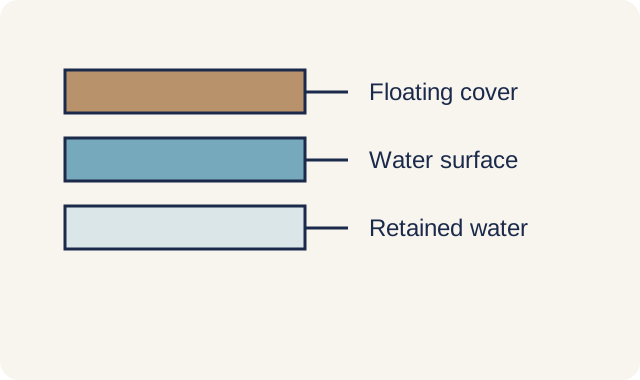
A solar or thermal blanket floats on the water. It cuts evaporation and holds warmth in, which matters more in a heated pool, because evaporation cools the water and the heater then has to put that heat back. If you’re deciding whether to heat your pool, plan when the blanket goes on and who will put it there.
A solar blanket is not a safety cover. It floats, so a child or pet who falls onto it can end up underneath, and the CPSC has warned against swimming in a pool partially covered by a solar cover because of entrapment risk. Take it off completely before anyone swims. Folding it back at one end doesn’t make the rest of the pool safe to swim in.
An unheated pool still loses water to evaporation, so a blanket can help there too, and whether you want the extra warmth depends on how warm your family likes the water. Ask for the maker’s instructions on pool chemicals, storage and sun exposure while it’s rolled up. A general claim about energy savings won’t tell you how to look after that particular blanket.
Keep up the normal water care. A cover doesn’t mean you can switch off the filter or stop testing and treating the water. Tell whoever looks after your pool water about the cover, so their routine and the daily opening and closing fit together.
Manual vs Motorised Reels
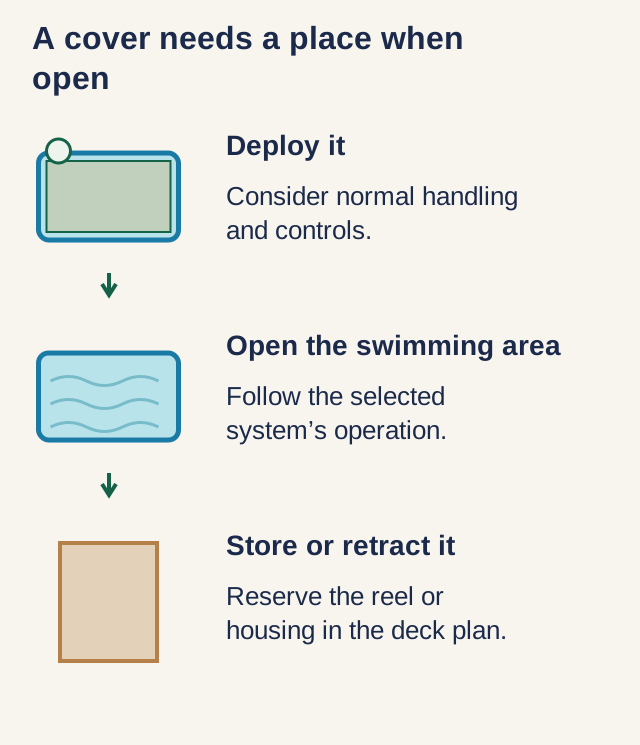
A reel rolls the cover up and off the water. Hand-crank and motor-driven reels can help with some cover types, while automatic covers can travel on tracks at the pool edge. A motor makes a cover easier to open and close, but it doesn’t make it a safety cover.
Picture opening the pool on an ordinary day with the deck furniture out, not only in a sales demonstration on an empty deck. If the reel sits at one end, leave room for the rolled cover and a clear path around it. If the cover pulls back into a housing, ask how a technician gets to the mechanism and how water that collects in there drains away.
On an existing pool, get any deck changes, anchors, housing and electrical work priced along with the cover. EMA advises that electrical installation or wiring work should be carried out or supervised by a Licensed Electrical Worker, and that includes new wiring for a motorised cover. Check the maker’s fitting requirements against your pool and deck before anything is ordered.
Ask the installer what happens if the power fails or the cover stops partway, and how that model’s manual release is meant to be used in a power cut. If the cover jams or stops partway, nobody swims while any of it is over the water. Switch it off at its control, keep children away from the pool, and leave freeing it to the installer’s technician. Keep the technician’s contact details with your handover documents.
When you compare quotes, split out the cover, the reel or motor, any deck or electrical changes, fitting and testing, and then the parts and servicing you’ll still pay for later. There’s no current independent Singapore price for an installed pool cover that we can quote, so your price comes from a quote for your own pool. That matters especially when adding an automatic cover to an existing pool, where the deck and pool edge decide how much work it takes.
Picking the Right Combination
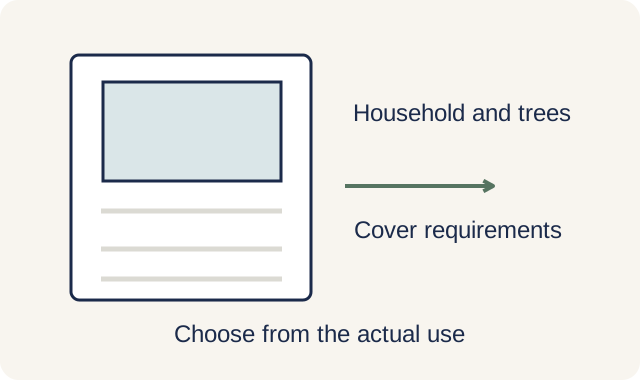
If leaves are the problem, start with leaf covers and what clearing them takes after rain. If you mainly want to cut evaporation, pick a blanket or system the person handling it can really take off and put back every day. If you’re worried about a child getting into the pool, start with the whole barrier plan (fence, gates and doors), then the test report for the safety cover you’re offered.
A plunge pool with an automatic cover needs the same checks as a bigger pool. A small pool doesn’t mean there’s room for the reel, the housing or the anchors the cover needs, so have the whole layout drawn with the deck furniture and the paths around it. Don’t lay one cover on top of another unless both makers say that’s fine.
The swimming-pool buying guide puts the cover alongside the other choices in building a pool. If you’re planning a pool, send us the pool size or plans, a few photos of the deck around it, and what you want the cover to do. That’s enough to talk it through. We then do a free site assessment, and our fixed-price quote follows within 3 to 5 working days of it, because the price comes from measuring on site, not from photos.
Common questions
What can I use instead of a pool cover?
Instead of a cover, you can skim leaves out, fence the pool to help keep children away, or use a liquid evaporation suppressant, but each one does only one of a cover’s jobs. Skimming deals with leaves already in the water, and a fence controls access without covering the water. A liquid suppressant forms a thin film on the surface but does not keep debris out. An EPA table puts its cut in evaporation at 15 per cent, against up to 95 per cent for a cover in use, and it’s not a barrier of any kind. Check with whoever looks after your pool water before adding one.
Is a pool drain cover the same thing?
No. A pool cover goes over or floats on the water, while a drain cover is a fitting over an outlet in the pool itself. If a drain cover is missing, broken or loose, keep everyone out of the pool and have a qualified pool technician deal with it. Don’t try to refit or repair it yourself, and keep the pool closed until the technician has fixed it.
Swimming Pools across Singapore
Need help with your project?
Tell us what you need on WhatsApp and send a few photos. We'll arrange a free site assessment, then give you a fixed-price quote within 3 to 5 working days.