On this page
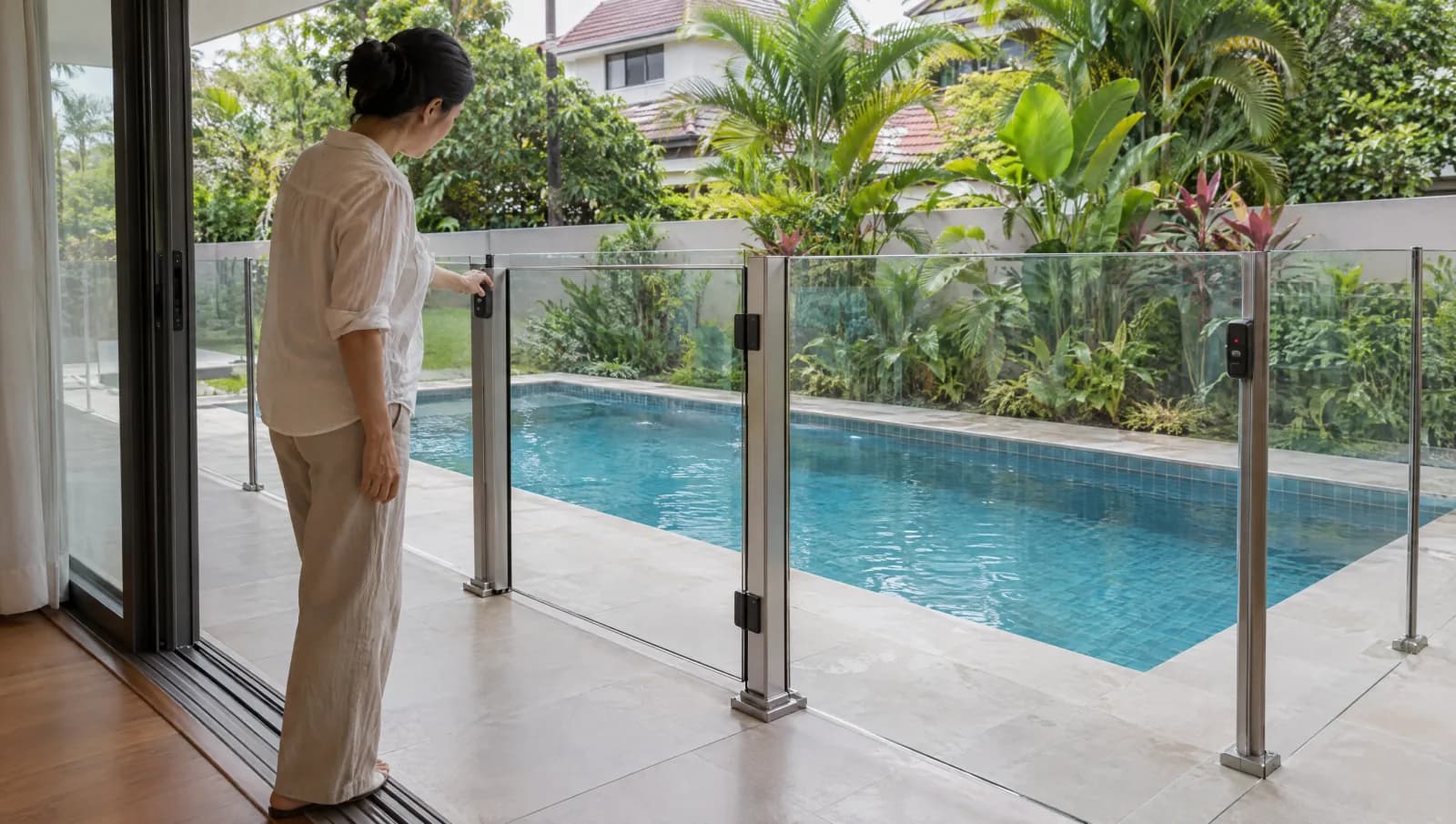
View In PDFPool safety needs several protections working together. A fence can restrict access, a suitable safety cover can provide another barrier, and an alarm can alert someone to a problem. None removes the need for supervision. Plan those measures around the people who use or visit your home, including how they reach the pool from the house.
Plan the Pool Barrier Before the Deck Is Finished
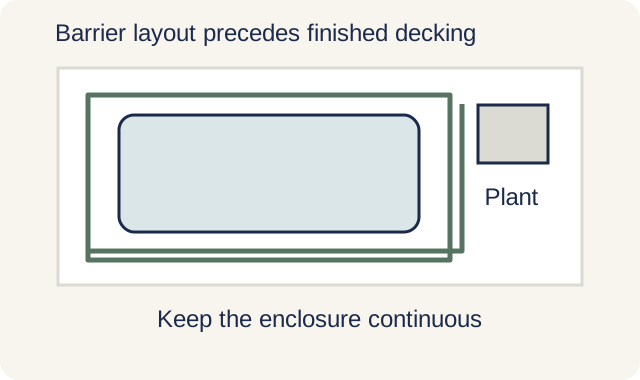
Plan the swimming pool barrier before the deck and landscaping are finished. Its supports, gate and connection to the house need room and a suitable fixing base. Retrofitting can still be possible, but may require opening finished surfaces or changing the surrounding layout. Deciding early keeps those choices visible in the pool design.
A barrier helps prevent an unsupervised child reaching the water, but it does not replace active adult supervision. Have the designer assess the complete enclosure, gates, openings and nearby climbable objects, and confirm the requirements applicable to your property. The layout needs to work as a barrier in everyday use, including when the household is entertaining or moving between the house and garden.
Treat protection as several measures working together: restricted access to the water, active supervision when children are nearby and appropriate covers or alarms as additional measures. No product makes a pool child-proof. The household needs a routine that restores the barrier after every use, including during gatherings when doors are left open.
The Main Barrier Types for a Landed-Home Pool
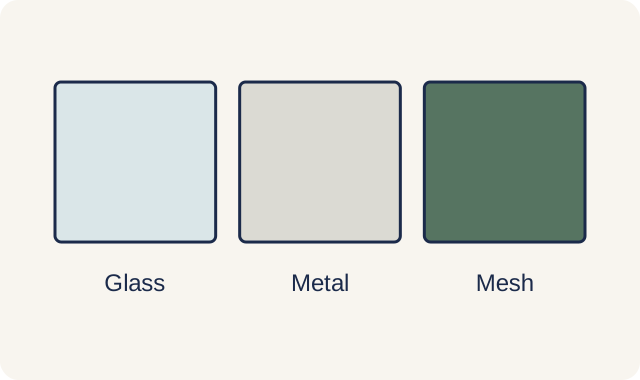
Glass panels preserve the view across a pool while forming a physical barrier. Their performance depends on the glass specification, supports, openings and gate design, not simply a frameless appearance. Cleaning access matters because water deposits and fingerprints remain visible on clear panels.
Metal fencing can provide a visually open barrier, but the bar arrangement, openings and gate details need a safety review. For exposed coastal sites, ask the fabricator to specify suitable materials, coatings and fixings for the conditions. A description such as 'outdoor metal' does not explain how the joints and hardware will be protected or maintained.
Removable mesh systems can allow parts of the enclosure to be dismantled, using the supports specified for that design. Removal also removes the protection. Do not make dismantling the normal response to entertaining around children; choose a layout the household can keep secure and restore immediately after authorised removal.
Where Pool Covers and Alarms Fit
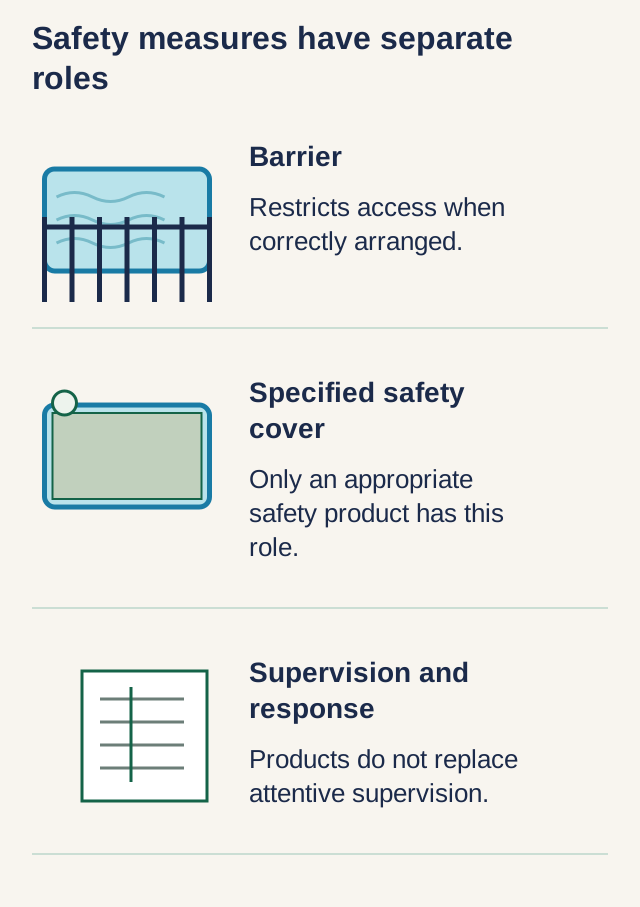
A purpose-designed safety cover has a different role from a debris or thermal cover. It must fit the pool and be installed, closed and maintained according to its instructions. A partially open or damaged cover cannot provide the intended protection. Confirm the cover's tested use rather than inferring safety from the material's thickness.
Gate, water-disturbance and wearable alarms detect different events. Their usefulness depends on correct installation, testing and someone being close enough to respond. A missed alarm, depleted battery or open gate must not be the only thing separating an unsupervised child from the water.
The general principle of layered pool protection is useful here, but overseas guidance is not a Singapore approval standard. Have the local designer establish the requirements for the actual property. Supervision remains essential when the pool is in use, regardless of the barrier and cover selected.
Build-Stage vs Retrofit: Get the Sleeves In Early
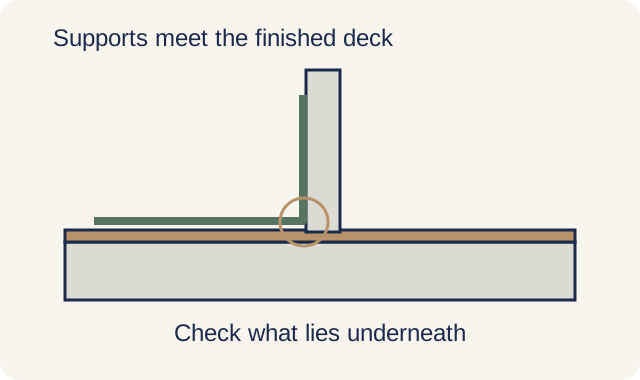
During construction, the designer can coordinate barrier footings or sleeves with the pool shell, deck and concealed services. Different systems use different supports, so do not cast generic sleeves before a layout and fixing design exist. If a future barrier is planned, document compatible provision rather than assuming it can be added at negligible cost.
Retrofitting a barrier can involve protecting finished surfaces, locating a suitable fixing base and reinstating the surrounds. Have the installer check what lies beneath the deck before proposing fixings. Ask for these works to be included in the quotation so the price covers the completed barrier, not just panels delivered to site.
If you are renovating the pool, decide the barrier layout before the deck and landscaping are finished. Its supports, gate position and access route need to be coordinated with the surrounding work. This makes the practical requirements visible while the design can still accommodate them.
What to Put in Writing Before You Sign
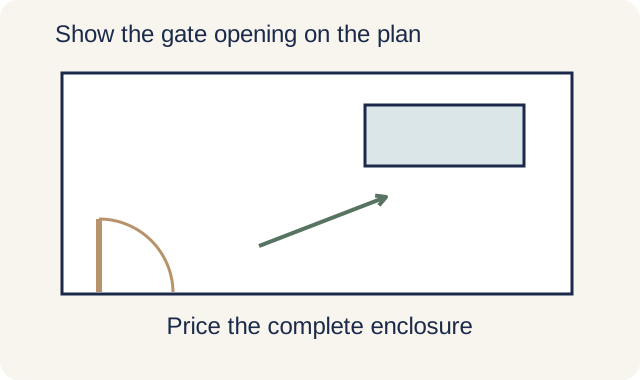
Confirm whether the pool quotation includes the barrier, gate hardware, supports and installation. The design should show where the gate opens and how the enclosure meets the surrounding building or boundary. A clear scope makes it easier to compare proposals and identify any work that would otherwise be priced later.
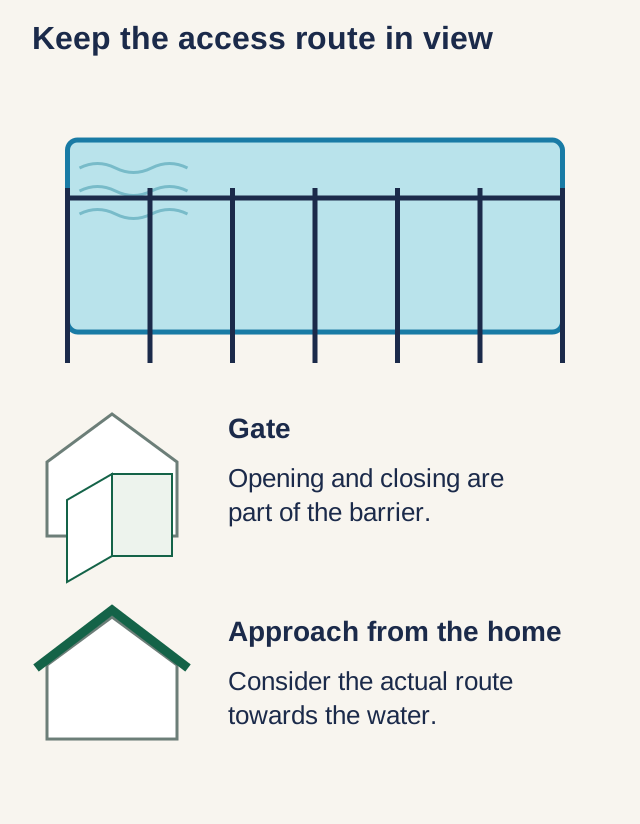
Specify the gate's closing and latching behaviour, opening direction and secure access arrangement. The gate should return to its protective state after normal use and be checked regularly for obstruction, wear and changes in alignment. Ask the installer to demonstrate that operation at handover; a panel specification says little about an unreliable gate.
Name who supplies and installs each part, including supports, panels, gate hardware and repairs to the surrounds. For a swimming pool project discussion with DirectHome, bring the proposed pool layout and the household's access needs. These make it easier to identify the barrier work that needs to be included before construction proceeds.
Frequently asked questions
Is removable mesh fencing safe enough, or do I need a permanent barrier around my Singapore pool?
A removable system needs assessment as a complete barrier, including supports, openings and its gate. Its protection is absent while dismantled, so the household must be able to keep it in place and secure. Have the designer confirm suitability and local requirements; adding an alarm does not make an unsuitable fence acceptable.
Can I add a pool safety fence after my pool is already built and the deck is finished?
Yes, subject to the deck, fixing base and layout being suitable. A retrofit may involve opening finished surfaces and reinstating them afterwards. Have the installer assess the structure, waterproofing and nearby services before selecting a fixing method. If a barrier may be added later, coordinate that provision with the original designer rather than assuming that any deck can accept it.
Does a pool cover count as a child-safety barrier on its own in Singapore?
Do not assume a cover alone meets your property's requirements or the household's safety needs. A safety cover is different from a debris cover and only works as intended when correctly installed, closed and maintained. Assess the enclosure, access doors, supervision and additional protective measures together.
Should pool fencing be priced separately from the pool itself when I get quotes?
Ask for the barrier, gate hardware, supports, installation and making good to be explicitly included or excluded. Check that the quoted layout matches the pool drawings. This establishes what you will receive and makes any separately priced work visible before you accept the contract.
Swimming Pools across Singapore
Need help with your project?
Tell us what you need on WhatsApp and send a few photos. We'll arrange a free site assessment, then give you a fixed-price quote within 3 to 5 working days.