On this page
View In PDFPool maintenance combines water treatment, cleaning and equipment care. A clear routine helps the owner and maintenance provider understand who does each task and when a change needs attention. Start with the pool's operating instructions and service arrangement, then keep track of results so recurring problems are investigated rather than repeatedly treated in isolation.
Pool Maintenance in a Tropical Climate
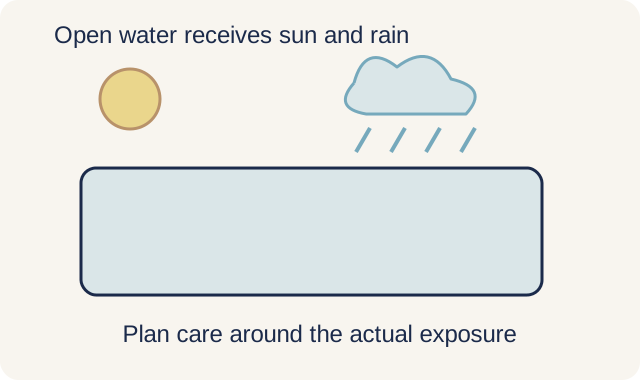
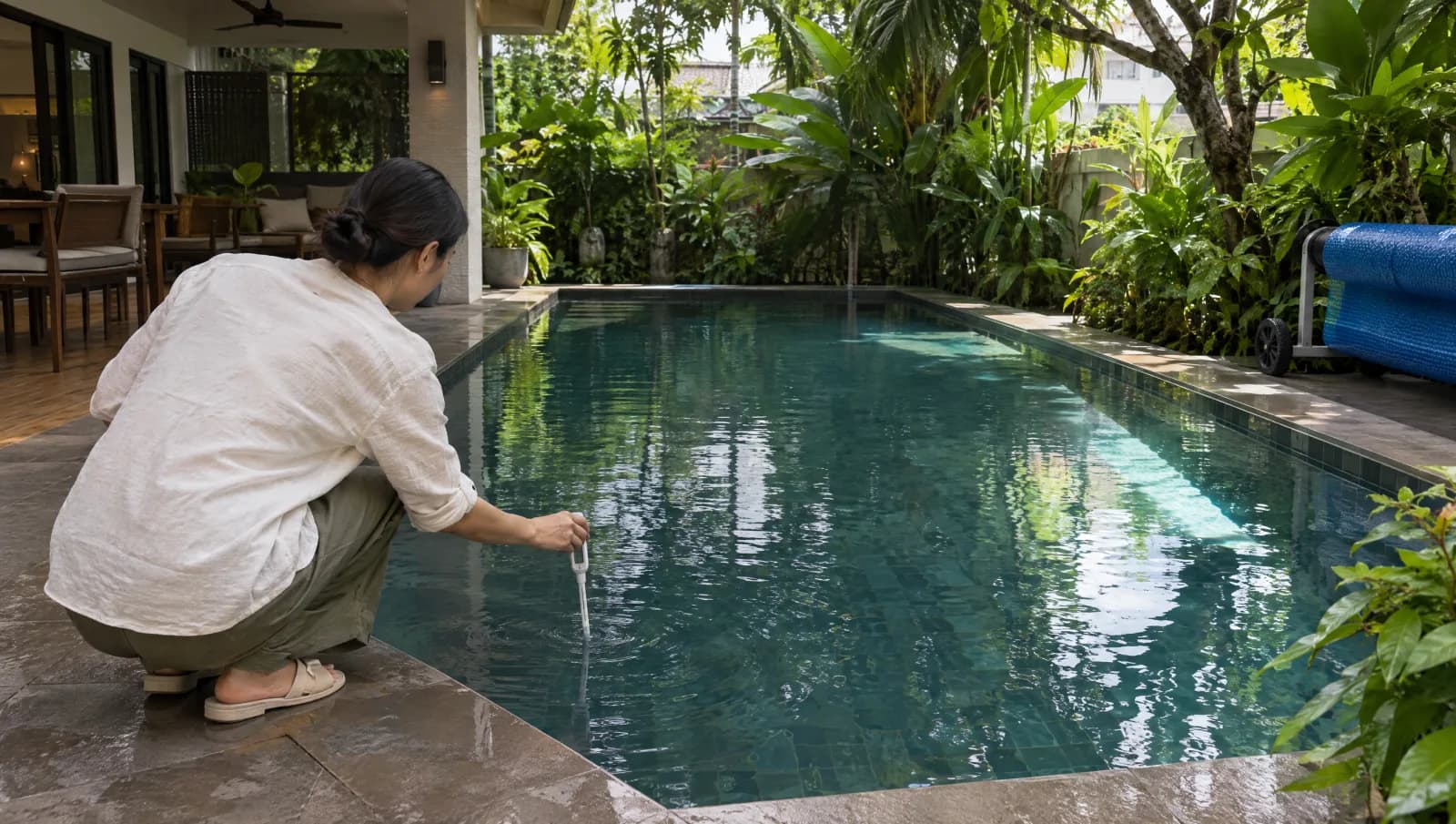
An outdoor pool in Singapore needs a routine that responds to rain, sunlight, swimming and garden debris. Sunlight and material brought in by swimmers can reduce chlorine concentration; rain and debris can change the readings and cleaning workload. Check what changed instead of treating every cloudy day or high bill as the same problem.
A useful maintenance plan sets out routine cleaning, water testing, equipment care and what to do when readings or performance change. The required frequency depends on use, debris and the installed system. A fixed short weekly routine is not a guarantee against problems.
Water Chemistry Basics
| Water-care measure | What it does | Useful home-pool reference |
|---|---|---|
| Free chlorine | Disinfects; the filter alone does not kill germs | CDC: at least 1 ppm, or at least 2 ppm with cyanuric acid/stabilised chlorine |
| pH | Affects chlorine performance, comfort and corrosion | CDC: 7.0–7.8 |
| Water balance for the finish/equipment | Helps limit scale, staining and surface damage | Use the actual finish and equipment ranges |
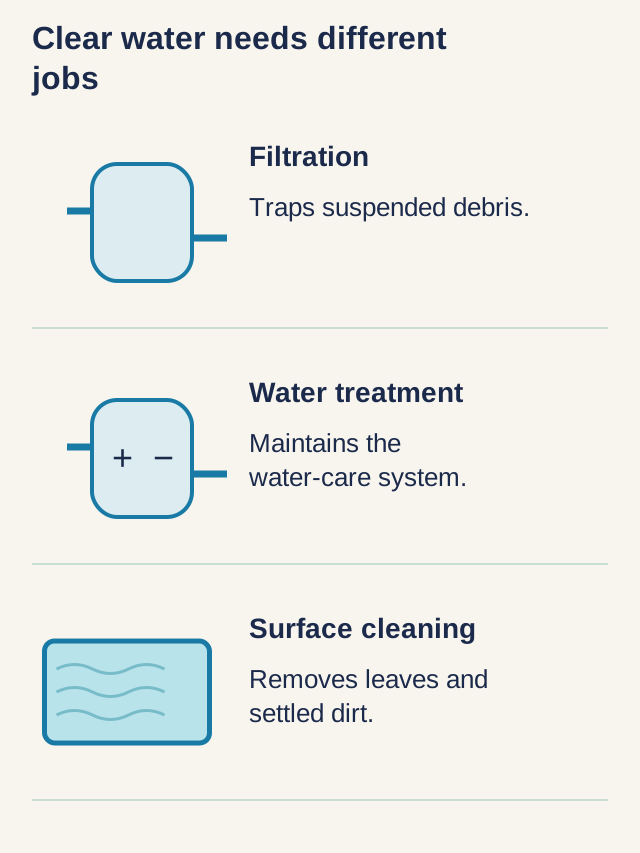
Filtration catches particles; sanitiser acts on germs in the water. Clear water can still need treatment, which is why free-chlorine and pH tests belong together. When pH rises, chlorine becomes less effective; water that is too acidic can attack pipes and fittings. The pH reading therefore helps explain why the same chlorine result may not deliver the same protection or comfort.
For a home chlorinated pool, CDC recommends checking chlorine and pH at least twice daily and more often with heavy use. Its reference is pH 7.0–7.8 and free chlorine of at least 1 ppm, rising to at least 2 ppm where cyanuric acid or stabilised chlorine is used. Your pool professional should reconcile this with the permitted range for the actual system and products. A minimum is not permission to keep adding chlorine, and one satisfactory test does not guarantee swimming safety.
Balance also protects the finish. Scale can collect dirt and discolour a pebble surface, so repeated staining is a reason to review water results as well as cleaning. Keep the treatment and finish instructions together, and let the professional set any additional alkalinity, hardness or stabiliser checks appropriate to the installation.
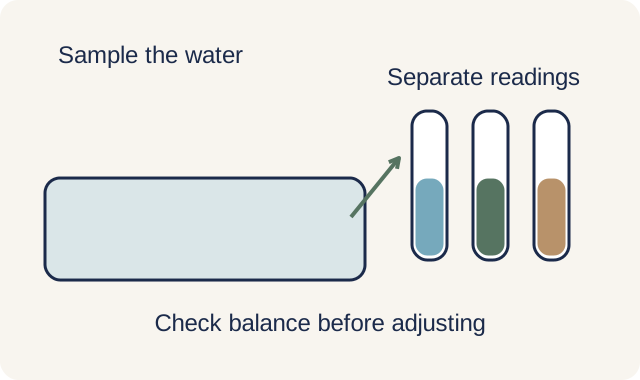
Have the pool professional specify the testing schedule and acceptable operating ranges for the treatment system. Chlorine, pH and other readings must be interpreted together. Test after events that can change the water balance, and do not use a cloudy or improperly treated pool until assessed.
Use a suitable test method, keep reagents in date and follow the instructions. Digital equipment and test strips have different limitations; price alone does not establish accuracy. Chemical handling and dosing should follow the actual product directions, with incompatible chemicals kept separate.
Filtration and Circulation
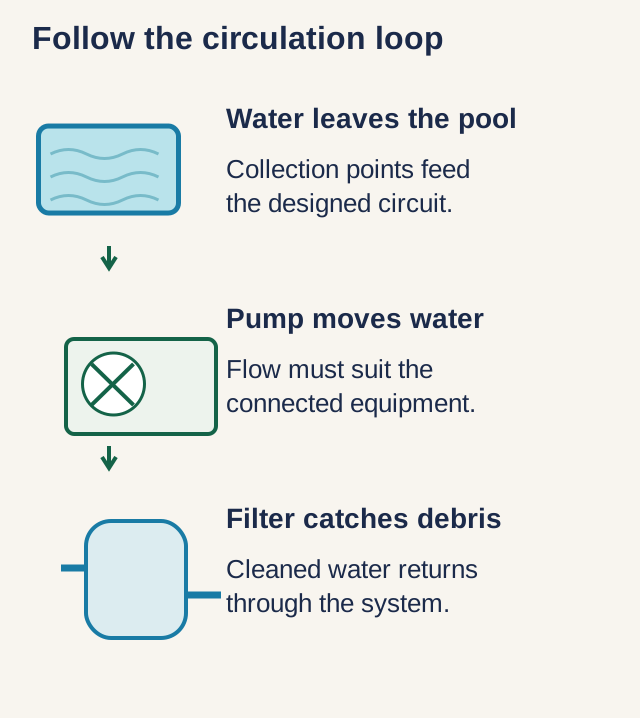
The pump schedule should maintain the required filtration and treatment for the actual pool and equipment. Use the designer's commissioned settings rather than a universal eight-hour run. Off-peak electricity is only cheaper where your actual tariff offers it; do not assume a standard overnight discount.
Filter care is model-specific. Cartridge filters are cleaned by the method in their manual rather than backwashed like suitable sand or other backwash filters. Pressurised housings can be dangerous: have a competent technician handle isolation, pressure release and internal servicing, and use the manufacturer's condition criteria for cleaning and replacement.
Skimming and Brushing
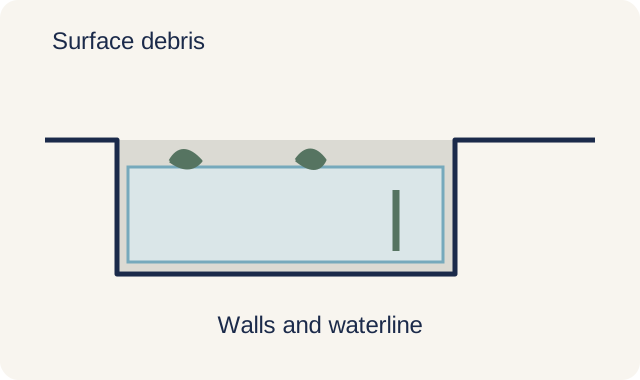
Leaves and other debris add cleaning work. Follow the pool's safe cleaning instructions and maintain secure access while working near the water. A robotic cleaner can help where compatible, but does not replace water testing, supervision or required equipment care.
Brush appropriate surfaces as directed in the pool-care plan, using tools suited to the finish. Check areas where debris or growth collects and report persistent staining or algae. Brushing alone cannot correct unsuitable water balance or a circulation fault.
When to Call a Professional
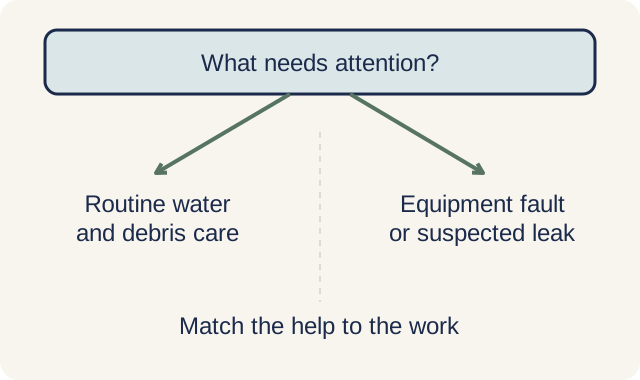
Routine owner tasks should stay within the supplied training and instructions. Leave electrical work, pressure-system servicing, chemical treatments requiring specialist handling, leak detection and structural repairs to competent professionals. Do not drain the pool or open a pressurised filter as a general DIY step.
Agree service frequency from the system's needs and actual use. Confirm the contract's scope, excluded repairs and any maintenance conditions in the warranty. A quarterly visit is not a universal rule or automatic protection of warranty cover.
Send DirectHome the pool and equipment details to discuss the work required. Confirm assessment and maintenance availability and charges before booking.
Swimming Pools across Singapore
Need help with your project?
Tell us what you need on WhatsApp and send a few photos. We'll arrange a free site assessment, then give you a fixed-price quote within 3 to 5 working days.