On this page
View In PDFA pool heater is worth considering when the water is regularly uncomfortable at the times your household wants to swim. Singapore's warm climate does not answer that question for every pool or swimmer. Start with the actual conditions and intended use, then compare heating equipment, electricity or fuel use and maintenance before adding it to the project.
Singapore Pools Are Rarely Cold
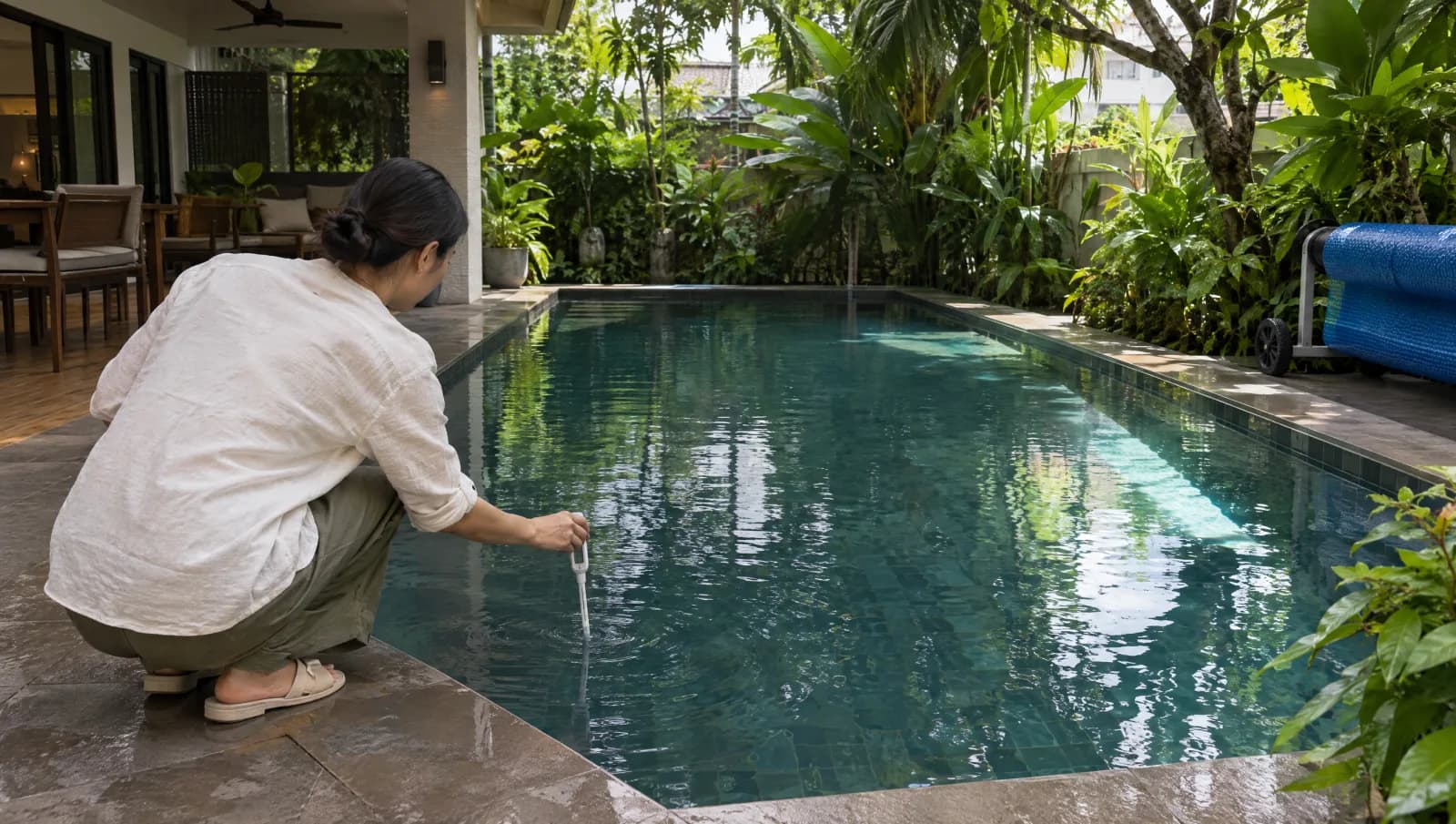
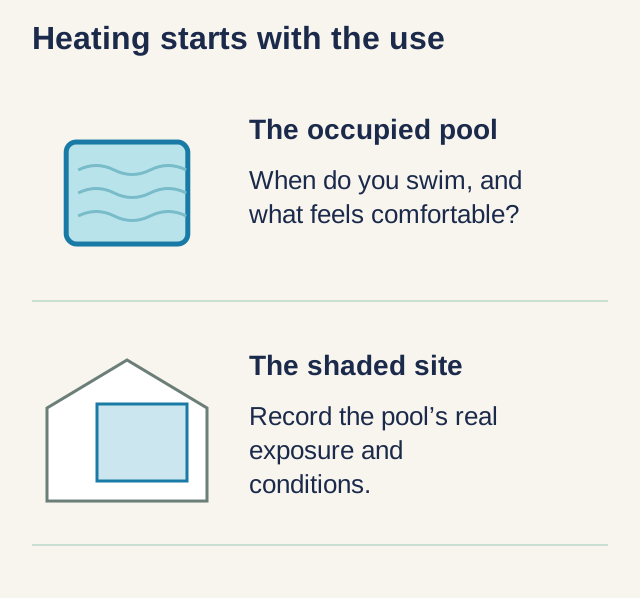
A pool in Singapore may be comfortable without heating, but air temperature is not a reliable substitute for the water temperature at the time you swim. Measure the existing pool over the household's usual swimming periods before deciding it needs a heater.
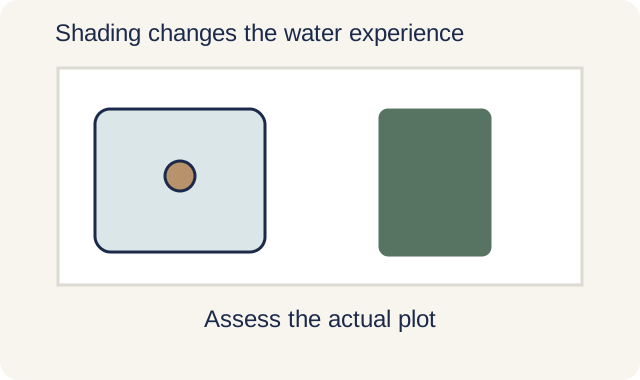
Shade, wind, rain, depth and surrounding buildings affect how the water gains and loses heat. An exposed lap pool and a sheltered plunge can behave differently. Set out the temperature and usage you want, rather than assuming every small pool needs heating.
When Heating Actually Makes Sense
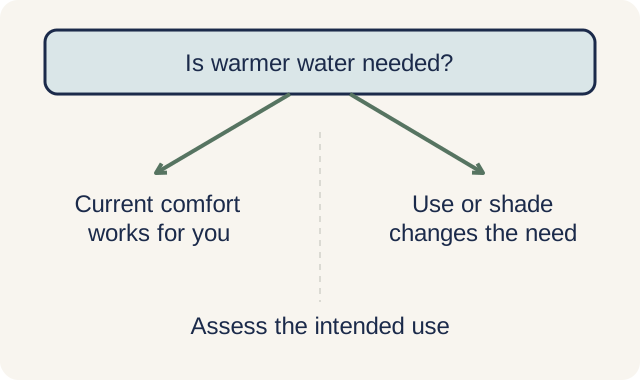
Heating may be useful where a consistent warmer temperature is a personal preference or part of a professionally advised activity programme. It is not a general treatment for joint pain or recovery. For therapeutic use, obtain appropriate clinical advice on temperature, duration and suitability for the person.
A shaded pool may remain cooler than the household prefers at its usual swimming time. Measure that pattern rather than using compass direction alone as a shortcut. Compare the comfort benefit with the system's complete installation and operating cost.
Heat Pump vs Solar vs Gas
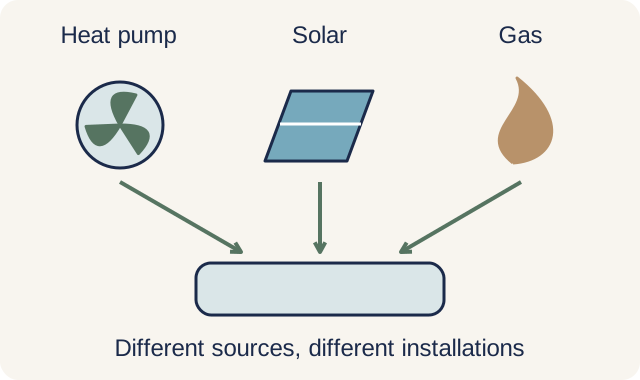
A heat pump transfers heat from the surrounding air into pool water. Suitability depends on the required heat output, operating conditions, available airflow and electrical supply. Include noise, condensate drainage and maintenance access in the proposed location.
Solar heating requires a suitable collector area and depends on available sunlight; fuel-fired options have their own supply and installation requirements. Compare systems against the desired temperature and schedule rather than a universal local technology ranking. A qualified installer should establish the appropriate option.
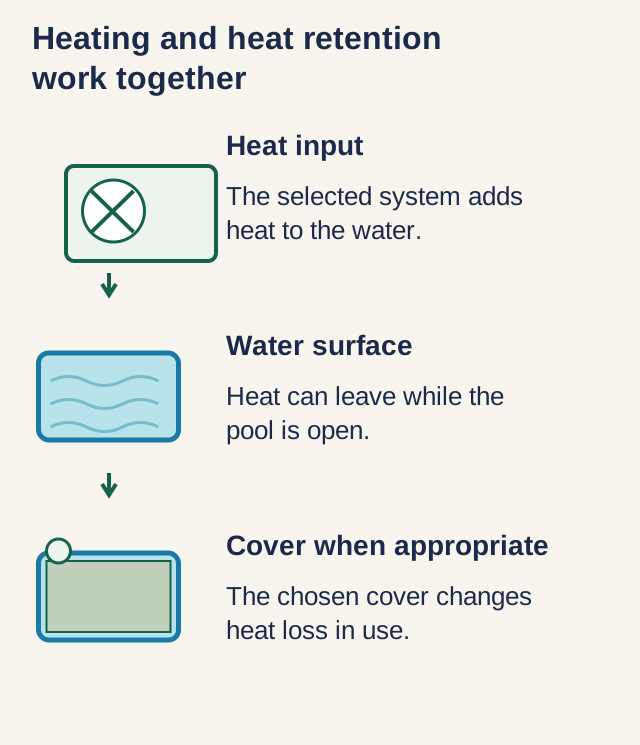
A heater must first raise the stored water towards the desired temperature and then replace heat being lost. Wind and evaporation at the surface can continue taking heat away even when the air feels warm. A heat pump also needs unobstructed airflow to collect heat from its surroundings. These mechanisms explain why a sheltered equipment location, sensible setpoint and compatible cover can affect both comfort and electricity use.
Running Costs to Expect
| Example electrical use | Calculation | Electricity before GST |
|---|---|---|
| Initial warm-up only | 2 kW input × 10 operating hours = 20 kWh | S$6.38 once |
| Light maintenance heating | 2 kW ×2 h/day ×30 days = 120 kWh | S$38.29/month |
| Longer maintenance heating | 2 kW ×6 h/day ×30 days = 360 kWh | S$114.88/month |
At the 1 July–30 September 2026 domestic tariff, the same assumed 2 kW electrical input costs three times as much when it runs six hours rather than two. The warm-up row is an additional one-off event only if it falls outside the monthly hours. It does not tell you how quickly your pool reaches temperature: that requires water volume, heat output and heat-loss calculations.
For a heat pump, electrical input is the electricity it consumes; heating output is the heat delivered to the water. Do not multiply advertised heating output by the tariff. Compare supplier estimates for the same pool, target temperature and swimming schedule, including any extra circulation hours. Solar collectors can reduce purchased heating energy but still require suitable sunlight and circulation; a gas option needs a separate fuel-use calculation. Equipment purchase, servicing and cover costs remain outside the table.
Estimate electricity from the proposed heater's input, intended operating hours and actual tariff. Distinguish warming the pool initially from maintaining it thereafter. Heat loss varies with weather, pool surface area and how the pool is used, so a fixed monthly allowance is unreliable.
A suitable cover can reduce evaporative heat loss while fitted, but savings depend on how consistently it is used. Confirm compatibility and safe removal arrangements. A thermal blanket is not a safety cover and must never be treated as protection for children.
The Honest Recommendation
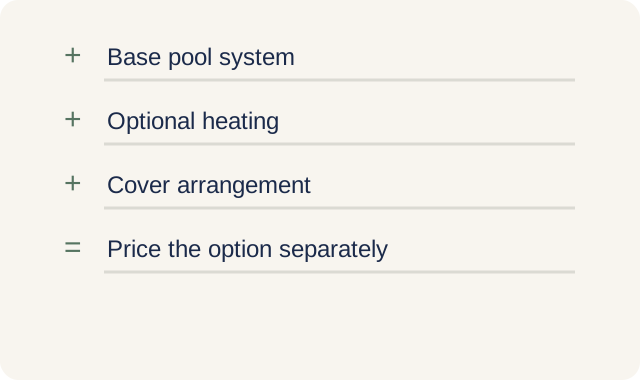
Start with measured water temperatures and the household's desired use. If unheated water already meets those needs, heating may add little value. If it does not, compare a properly sized system and cover with a clear energy estimate and maintenance plan.
Send DirectHome the pool details, shading and intended swimming schedule to discuss the installation scope. Ask for heating as a separately priced option so you can assess its equipment, running cost and site requirements before committing.
Swimming Pools across Singapore
Need help with your project?
Tell us what you need on WhatsApp and send a few photos. We'll arrange a free site assessment, then give you a fixed-price quote within 3 to 5 working days.