On this page
View In PDFFour things decide how long painting your home takes. Each wall's repairs come first, the wall must be dry enough, the paint's data sheet sets the wait between coats, and your building sets the hours. You may not need to move out, since painting goes room by room, but each room is out of use while it's painted and drying.
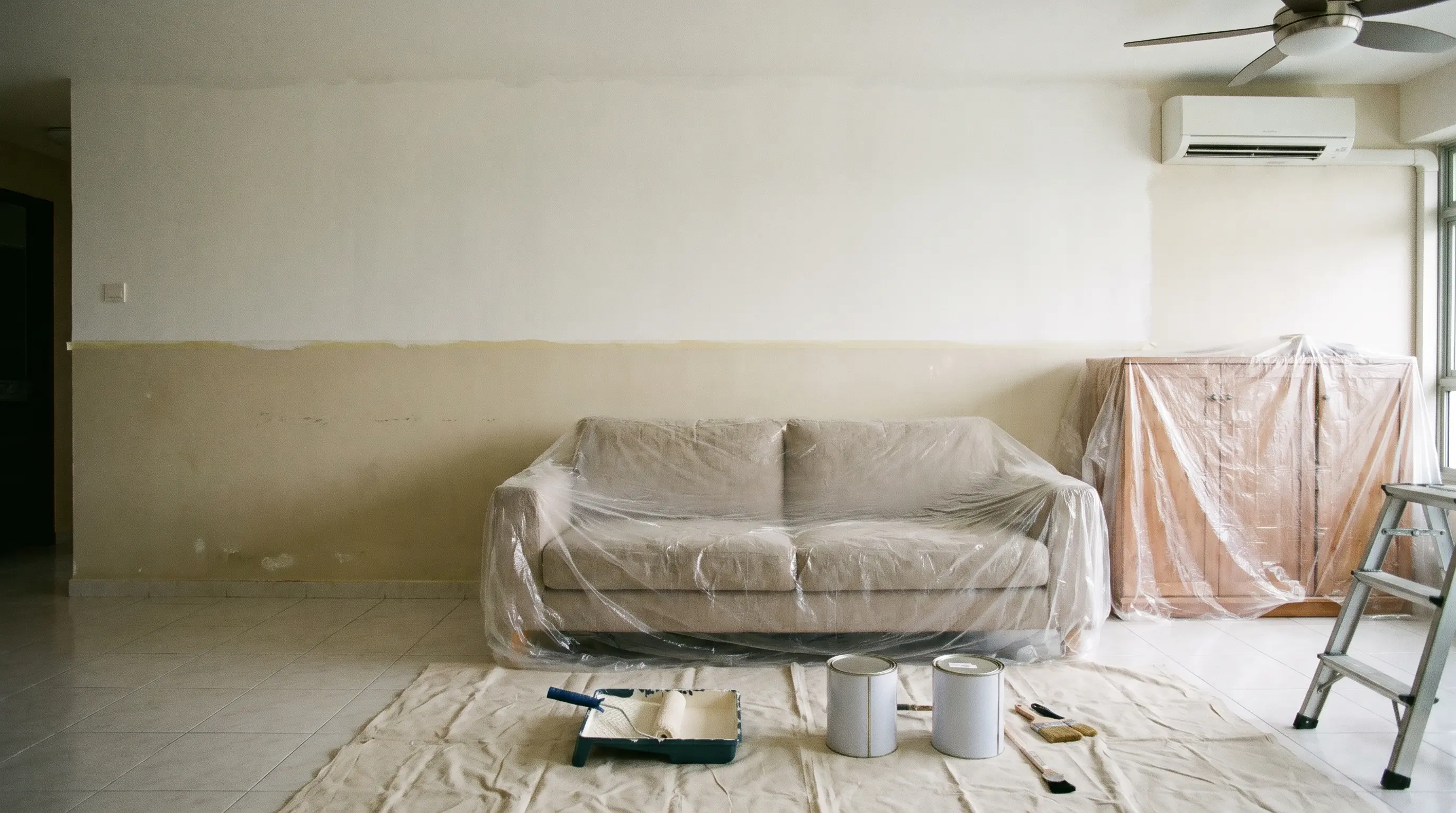
Here's what each of those adds, and how to plan around the rooms you still need. Our interior painting service starts with a free site assessment, and the painting buying guide covers choosing the paint and comparing quotes.
What each stage of a paint job waits on
A paint job isn't one long stretch of painting. It's a run of stages for every room, and much of the time sits in the waits between them.
| Stage | What it waits on | Where that is set |
|---|---|---|
| Moving furniture and covering floors | How much stays in the room, and who moves it | Your quote |
| Repairs, such as scraping, filling cracks and treating mould | The repair itself, then rubbing the wall down and dusting it off | The paint's data sheet, under surface preparation |
| Letting the wall dry | A moisture reading low enough for the paint | The paint's data sheet |
| Sealer coat | The wait before the next coat | The sealer's data sheet |
| Two finish coats | The wait between coats | The paint's data sheet |
| Airing the room and handing it back | Ventilation time, and longer if new carpentry went in too | NEA's advice, agreed with your painter |
Two of those stages have numbers on paper: how dry the wall must be, and the wait between coats. The rest depend on your walls and your building, which is why they only show once someone has looked at the rooms.
The wait between coats is printed on the data sheet
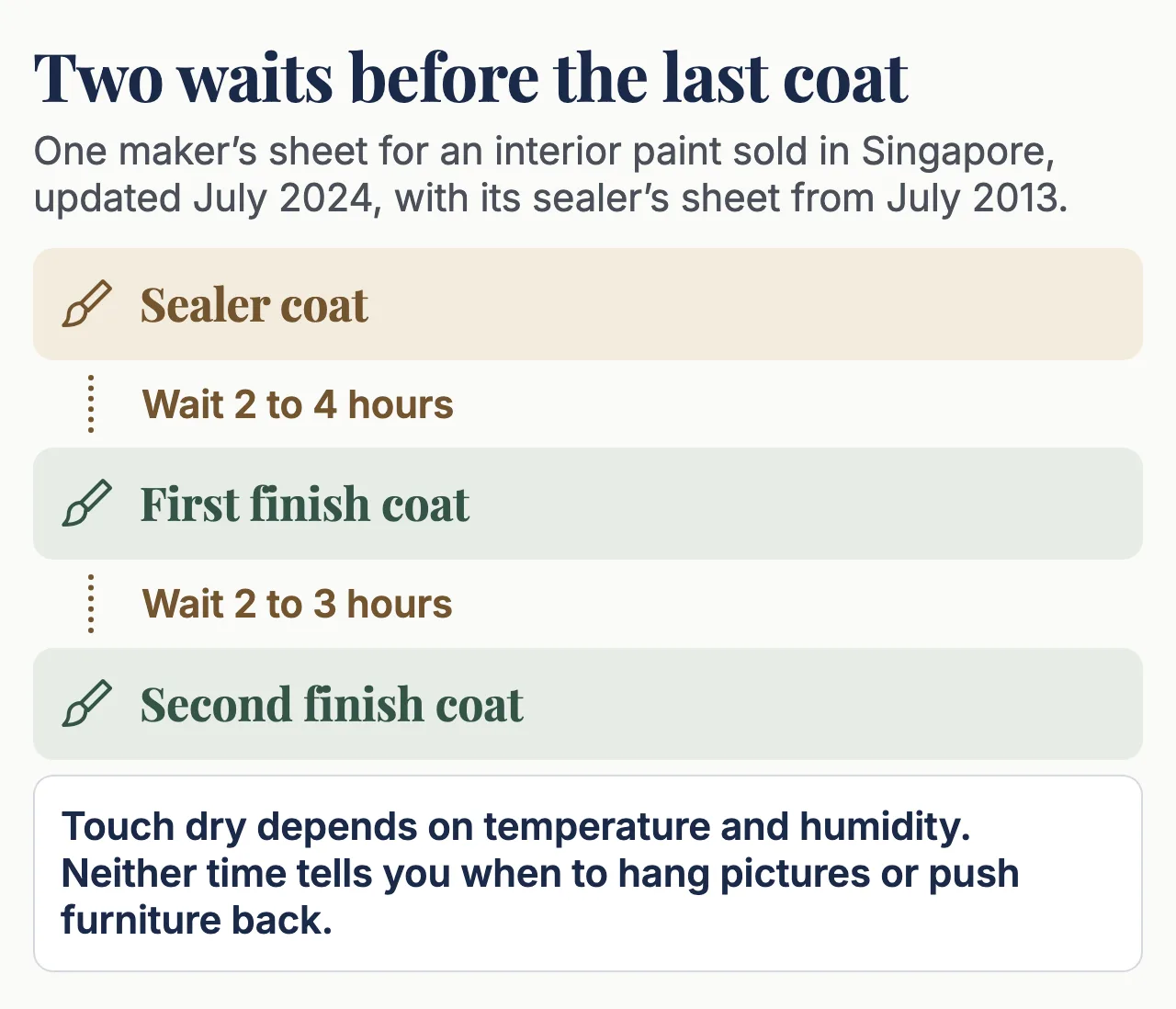
Every paint has a technical data sheet from its maker. It sets the paint's system: which sealer goes on first, how many finish coats follow, and how long to wait before each next coat.
Take one maker's data sheet for an interior paint sold in Singapore as an example. That sheet, updated July 2024, lists one coat of sealer and then two finish coats, with the maker's water-based sealer on new or sound walls.
The maker's sheet gives the paint a recoat time of 2 to 3 hours. The maker's sheet for the sealer, dated July 2013, gives 2 to 4 hours before the next coat.
So every wall on this system waits twice before its last coat: once after the sealer, and once between the two finish coats. More painters in the room don't shorten those waits, because each one belongs to the coat on that wall. Whether a whole home can be painted in one go turns on how many rooms there are and what their walls need first, so ask the painter to show you which rooms are done when.
Touch dry isn't the same as ready to use
The same maker's sheet says touch dry is dependent on temperature and humidity. The recoat time only tells the painter when the next coat can go on. Neither is a time for hanging pictures or pushing furniture back against the wall, so agree that with your painter.
Why Singapore's humid air matters
That maker's sheet ties the paint's touch-dry time to temperature and humidity, and the air here changes a lot within a day.
The Meteorological Service Singapore says relative humidity varies from more than 90% in the morning just before sunrise to around 60% in the afternoon on days without rain, and that it frequently reaches 100% during prolonged periods of rain. Those are outdoor readings, and an open window lets that air into the room.
We recommend a plan that leaves room in the waits, rather than one that only works if every coat dries in the shortest time on the sheet.
Repairs and damp walls come before any paint
Paint needs a sound, clean, dry wall, so cracks are filled and mould is dealt with before the first coat goes on.
One maker's sheet for an interior paint also asks for the wall to be rubbed down with abrasive paper and dusted off, and for areas with fungi or algae to be treated before painting.
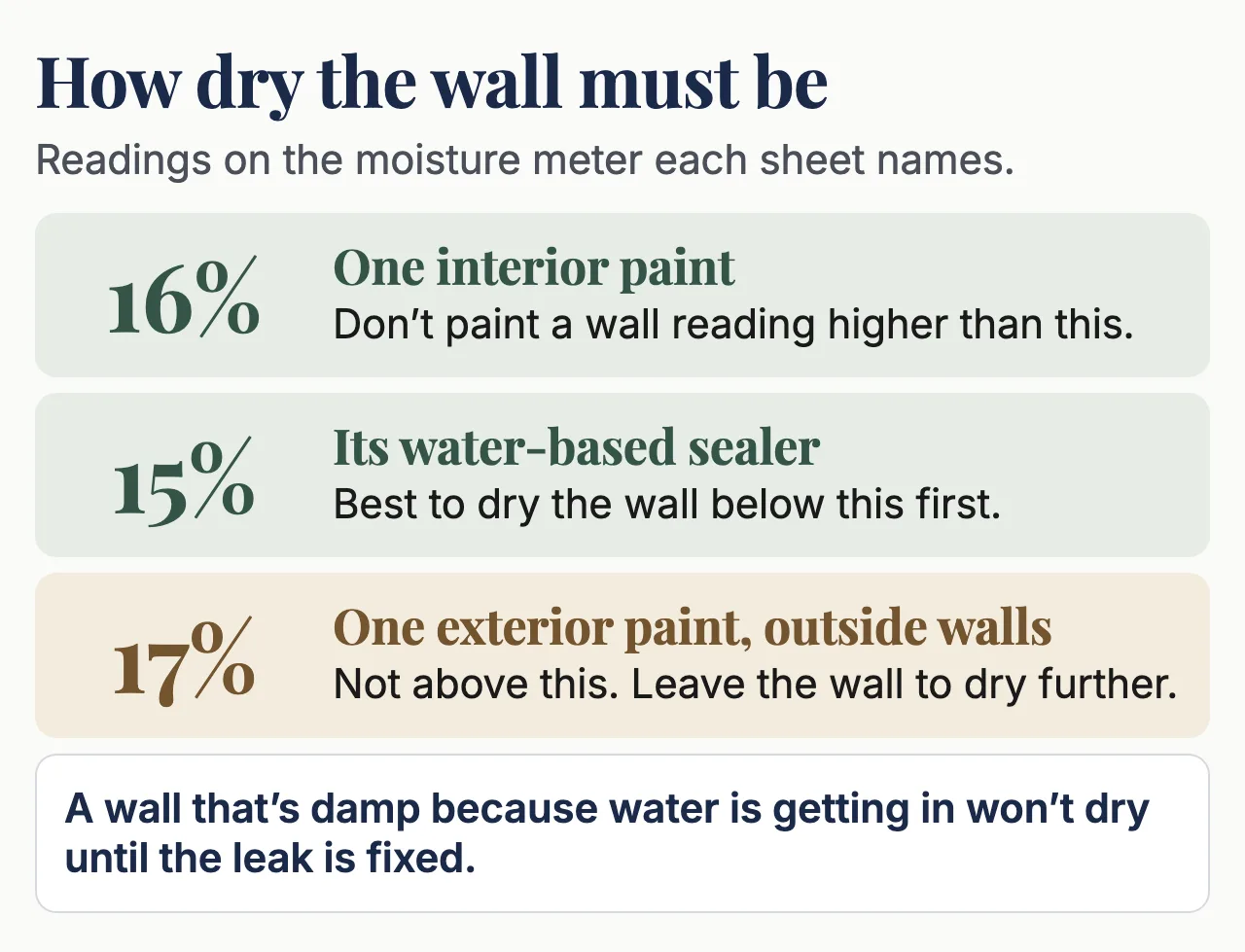
Then the wall has to be dry enough. The maker's sheet says not to paint a wall saturated with dampness, with a reading higher than 16% on the moisture meter the sheet names, and to let the excess moisture evaporate. The maker's sealer sheet says it's best to dry the wall to a reading below 15% before the sealer goes on.
Ask for moisture meter readings on any wall that was damp or has just been washed, rather than going by how it looks.
A wall that's damp because water is getting in won't dry until the leak is fixed. Our article on finding the cause of a damp outside wall before repainting explains how that's traced, and what a painting quote should include shows how each repair should be listed.
A crack that keeps reopening after it's filled needs more than paint. When we take on a painting job and that happens, we arrange an engineer to look at it.
Can you stay at home while it's painted?
Staying in comes down to which rooms you can do without, and when. Painting goes room by room, and each room is out of use while it's painted and drying.
The rules for interior paint have changed. From 1 January 2026, NEA does not allow interior paints with formaldehyde content of 0.01% or more to be made, imported or sold for use in Singapore. NEA's advice for renovations is still to discuss ventilation with your contractor upfront and build adequate ventilation time into the schedule.
If new carpentry goes in at the same time
If new carpentry or other materials that give off formaldehyde go in alongside the painting, NEA says premature occupancy increases the risk of formaldehyde exposure, even when low-emission products are used. It advises you to extend ventilation for several weeks after completion and delay moving into heavily renovated areas.
That advice is about those materials, not the paint, but it can decide when you move back into a room.
Plan the order so the rooms you need come back first
- Paint before you move in, if you can. An empty home has no furniture to move or cover, and every room is free at once.
- Keep somewhere to sleep. If you're living in, agree which rooms are painted on which days, and don't let every bedroom be out of use on the same night.
- Do the rooms you sleep in early in the run, so they've had longer to air before you need them.
- Clear what you'll need first. Furniture is moved away from the walls or out of the room and covered, so take out anything you'll want during the work.
Your building's hours and the weather decide how many days it spans
Painters can only work in the hours your estate or landlord allows. The same rooms take more days where those hours are short, so find them out before you agree dates.
In a condo
Condo units are managed by their MCST, the management corporation, and BCA says you should check with the developer or the MCST, and your Sale and Purchase Agreement, about renovation restrictions before carrying out any work. Ask the management office which days and hours painting is allowed, whether you need to apply first, and how the lift and corridors must be protected.
Here's when a condo renovation needs MCST approval.
In an office or shop
Your lease and the building's rules can set when work is allowed, so get them before you agree dates. If the space has to stay open in the day, ask the building whether painting can be done after hours or split by area, so you know which rooms your staff can use.
Outside walls of a landed house
Outside, the weather sets the pace too. One maker's sheet for an exterior paint says not to apply it during wet weather, and not on areas reading above 17% on the moisture meter the sheet names, which should be left to dry further.
In Singapore, it rains on an average of 171 days a year, and rainfall is higher from November to January. Repainting the outside of a house is a separate job, covered by our facade and exterior service.
Get a room-by-room plan before the painters start
We start with a free site assessment. We look at every wall and ceiling you want painted, note the cracks, mould and damp that need time before paint, and go through which rooms you need to keep using.
You get a fixed-price quote within 3 to 5 working days of the visit, never from a photo. Our specialist painters do the work, and we supervise it through to handover. Have your estate's renovation guidelines or your lease ready, so the plan fits your building's hours.
Common questions
Can I have some rooms painted now and the rest later?
Yes. Each room runs through its own repairs, coats and waits, so the work can be split. Keep the product name and colour code of each paint you use, so the rooms painted later can use the same paint, and so can any touch-ups.
Need help with your project?
Tell us what you need on WhatsApp and send a few photos. We'll arrange a free site assessment, then give you a fixed-price quote within 3 to 5 working days.