On this page
View In PDFBefore buying a house with a lift, check its operating permit, maintenance history and the arrangements for taking over ownership and servicing. A comfortable test ride only shows how it performed at that moment. Records help you understand unresolved work and upcoming responsibilities before the lift becomes part of the home you own.

This review may also shape a future home-lift installation or replacement project. If the existing lift cannot support the household’s needs, its model, drawings and the way it fits through the house give the project team a useful starting point. First, though, understand what you are inheriting.
A viewing ride tells you less than the records
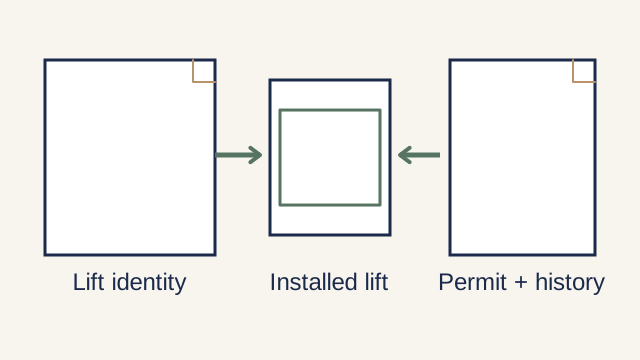
A lift travelling smoothly during a viewing shows how it behaved on that occasion. It does not establish the date of its last service, whether an outstanding defect has been closed or who will respond after the seller moves out. The practical risk is a gap between enjoying the feature during the purchase and being able to manage it as the owner.
Begin with equipment identity. Match the lift identification, address and model information across the permit, maintenance agreement and service reports. If the house has more than one lift or a separate goods-moving installation, keep their records distinct. A document for equipment elsewhere on the property cannot establish this lift’s status.
BCA requires a valid Permit to Operate before a lift is used. Use the public PTO enquiry or the certificate’s QR code to check the displayed status and expiry. Record what was checked and when. If there is a mismatch or no valid permit, resolve it with the owner and relevant professionals before relying on the lift.
Check the permit, equipment condition and handover arrangements separately
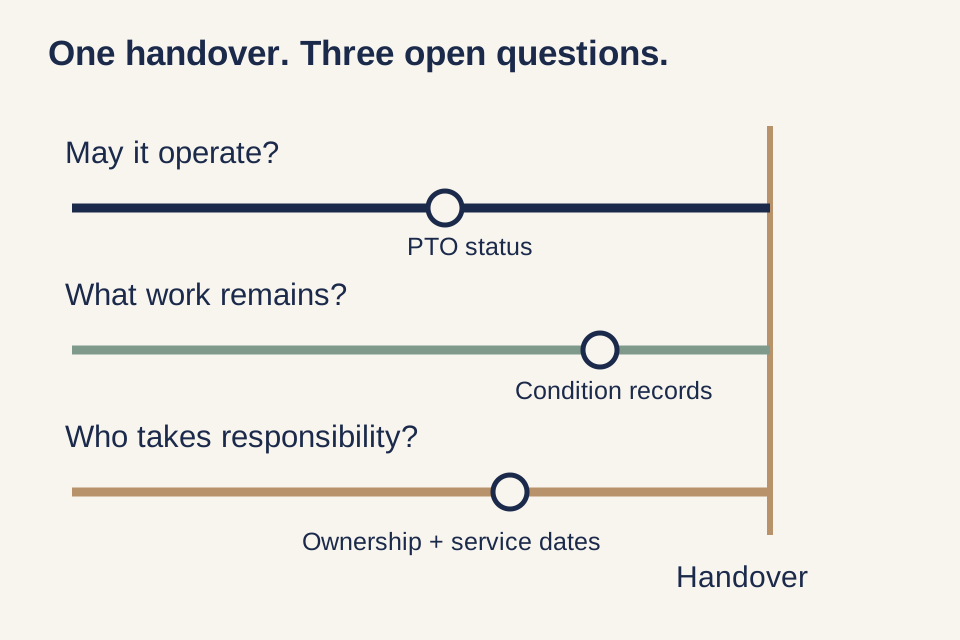
A current permit, a recent service report and an ownership update do different jobs. The permit addresses current operating status. The service history helps reveal what has happened to the equipment and what work remains. The ownership record establishes who can manage the installation through the official system. Progress on one track does not close another.
That separation is helpful when documents arrive piecemeal. Rather than marking “lift paperwork received” after one email, keep a small register with the document, its date, the equipment it covers and the next action. This makes a missing report visible without treating the entire lift as either accepted or rejected on incomplete information.
Read the service history for unresolved work
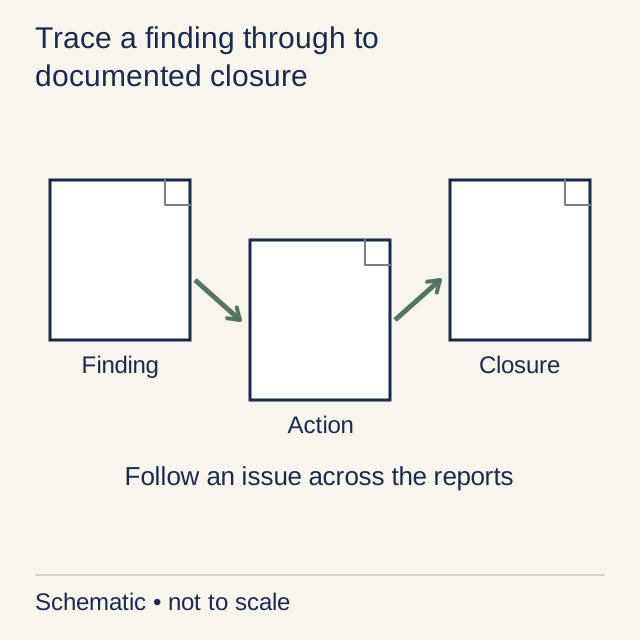
Request recent maintenance reports, the latest annual inspection and test documents, repair records and any outstanding recommendations. The lift-owner good-practice guidance supports reviewing condition and obtaining relevant takeover records. Have a suitably qualified lift professional explain findings that affect safe use or the likely scope of work.
The useful sequence is observation, recommendation and closure. A report that identifies a faulty component should lead to a repair record or a clear explanation of what remains unresolved. “Attended” is not always the same as “repaired”, and an invoice does not necessarily explain the condition of everything else. Read adjacent reports together to see whether the same issue recurs.
For example, if several reports describe trouble at one landing, the relevant question is whether the cause was identified and the remedy verified. It would be premature to infer that the entire lift needs replacement. It would also be premature to dismiss the pattern because the most recent viewing was uneventful. A condition review can turn that history into a defined next step.
Age belongs in the record, but it should not decide the conclusion alone. Equipment support, component condition, previous changes and parts availability all affect the options. Keep a known repair quotation separate from a possible future modernisation project; combining them can make the immediate cost of taking over the house impossible to understand.
The sale does not automatically change the lift owner in LEAP
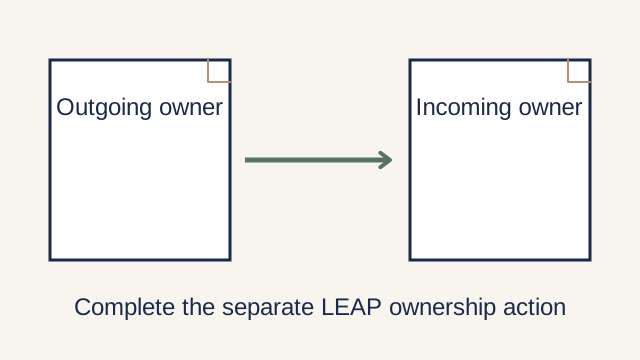
For a private landed property sale, BCA’s LEAP FAQ states that the system is not automatically updated to the incoming owner. The outgoing owner should transfer ownership through LEAP. Put this action into the handover arrangements while the seller is still available to complete it.
The completion evidence should be the appropriate system record, not an assumption that transferring the property title has updated every linked service. Keep the lift’s ownership administration alongside the property transaction without confusing the two. Your conveyancing adviser can address how outstanding obligations are dealt with in the sale; the lift professionals and BCA processes address the equipment.
LEAP also supports changes to the fixed-installation service contractor and appointment of an owner representative. If someone will manage the lift for you, establish the correct access arrangement. Do not pass the seller’s Singpass credentials or personal account access around as a substitute for an ownership update.
Agree the dates when the old service ends and the new one starts
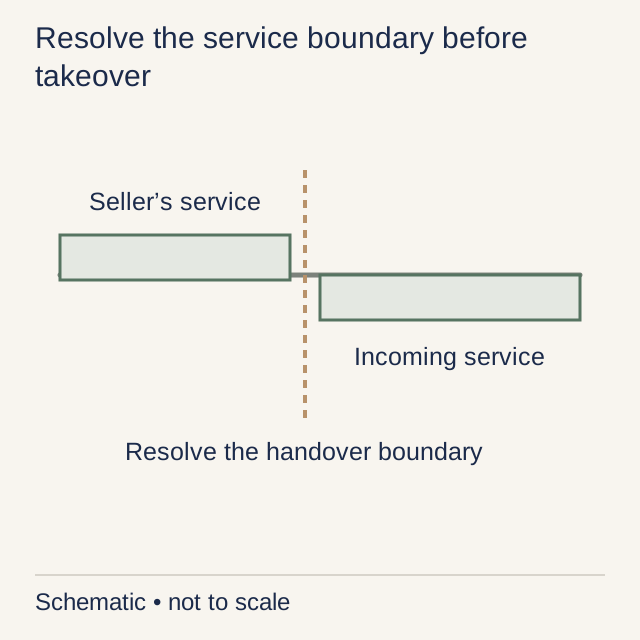
The seller’s maintenance arrangement may not automatically become yours. Read the actual contract to establish its term, transfer conditions, cancellation position and work already booked. A warranty has its own transfer and servicing conditions, so keep it separate from the maintenance agreement.
An uninterrupted arrangement needs a named provider, an effective start date, the next scheduled visit and a contact route for faults. If you change providers, the incoming company needs time to establish model support and review the equipment. It is better to resolve that before the outgoing arrangement ends than discover the boundary during a breakdown.
Support terms should describe what happens after a call. Contact, attendance, diagnosis and completed repair are different stages. If a household member relies on the lift to reach a bedroom, a telephone number without clear attendance and repair arrangements may leave daily access unresolved. Consider a temporary household plan while outstanding defects or a service change are being addressed.
Learn the lift’s operating and support arrangements before taking over
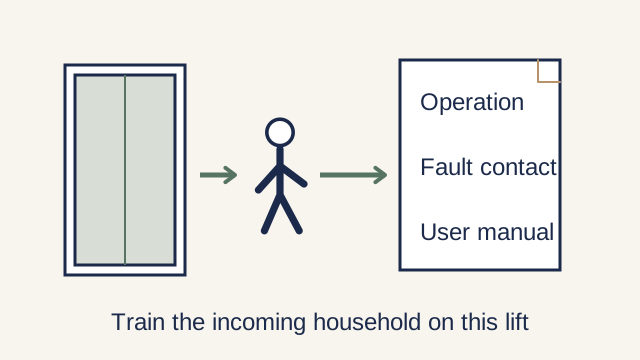
The handover should include model-specific operating instruction for everyone who will use or help manage the lift. The household needs to understand the controls, normal stopping behaviour, alarm or communication system and what to do if travel stops. Battery lowering or other emergency features must be explained for the installed model; do not assume a familiar feature from another lift behaves the same way.
Keep the manufacturer’s user instructions accessible and distinguish them from technical maintenance documents. A homeowner does not need to become a lift technician to own the equipment. They do need to know whom to contact, how to describe a problem and how to keep people away from a lift that has been taken out of service. Do not force doors, enter the shaft or attempt a rescue procedure.
If the incoming household has different access needs, include them in the review. A lift that suited the seller may have a doorway, carrier or landing approach that does not suit your walking aid or wheelchair. Test suitability through a proper assessment of the intended user and equipment, with professional support where needed.
Before you take over the lift
0 of 7 reviewed
Use this to track your review. Checks stay on this page while it is open.
Use the missing records to define the next action
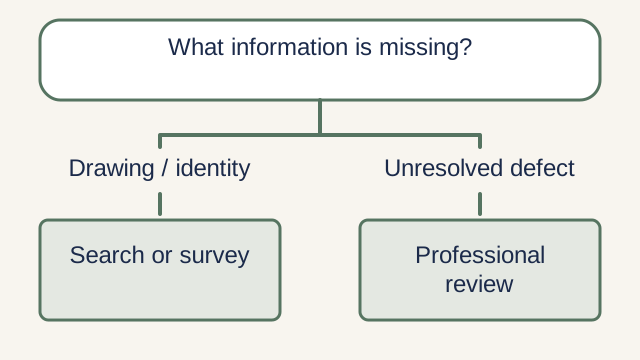
A missing drawing calls for a document search or survey. An unresolved defect calls for professional review and a repair scope. An approaching permit expiry calls for a clearly assigned inspection and renewal arrangement. Treating each gap specifically is more useful than accepting a general reassurance that the lift has always worked.
If the review points towards substantial changes, the home-lift buying guide helps connect access needs with a new installation. Bring the existing drawings, condition findings and intended users’ requirements to that discussion. Preserve the current equipment records even if replacement becomes the preferred option: they show how the lift connects to the house and what was changed during earlier work.
The goal before handover is a lift whose status, condition and responsibility you can trace. Keep a dated list of anything still open, with a named person and agreed next action. That turns an attractive property feature into an installation the new household can take responsibility for with clear information.
Home Lifts across Singapore
Need help with your project?
Tell us what you need on WhatsApp and send a few photos. We'll arrange a free site assessment, then give you a fixed-price quote within 3 to 5 working days.