Part of our complete guide
Roof Waterproofing in Singapore: A Buying Guide →Key takeaways
- Existing roof condition determines whether retention is defensible.
- Ask which layers were inspected, how suitability was established and what remains unknown.
- Compare removal and retention options on equivalent details, protection and close-out scope.
Neither answer should be automatic
“We always remove everything” and “we can coat straight over it” are incomplete answers to a roof-renewal enquiry. The first may include unnecessary removal of serviceable material. The second may leave an unsuitable layer beneath new work. Ask what evidence supports the proposal for your roof and what would cause the team to change its recommendation.
Sika Canada’s repair-or-replace guidance distinguishes local repair, recovering and replacement after condition assessment. It flags concealed deck condition and wet insulation as issues that recovering may not resolve. This is useful general refurbishment context, not a Singapore compliance rule or an endorsement of a particular system.
Name the layers before comparing the work
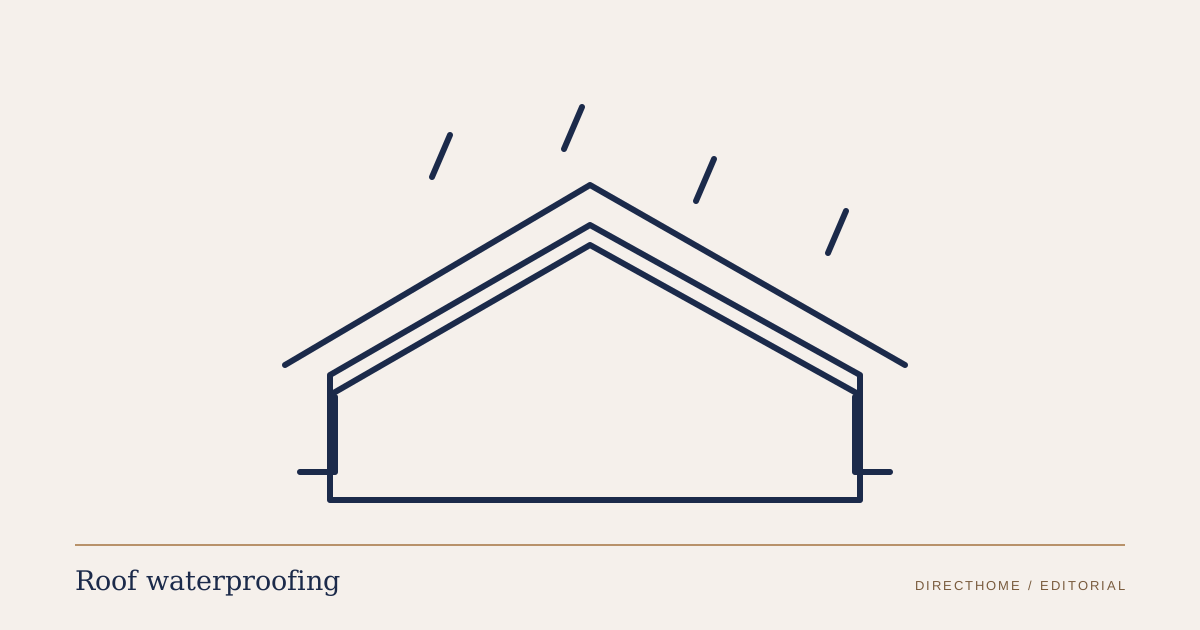
Ask for a simple roof build-up sketch. It should distinguish the visible finish from the waterproofing, any insulation or screed, and the structural substrate where known. “Remove existing waterproofing” can mean very different work if one bidder assumes an exposed membrane and another allows for removing tiles and layers beneath them.
Label uncertain layers as unknown. The sketch need not pretend that a surface visit has revealed everything. Its value is to show which assumptions support the quote and where an investigation is needed. Use the same sketch when discussing outlet levels, door thresholds and interfaces with parapets so each trade understands which material stays.
Use an evidence-to-scope record
The following is an editorial comparison tool. The appointed team decides the inspection and test methods and interprets the results; this table does not diagnose a roof remotely.
Scroll across to compare all columns →
| Evidence question | If adequately resolved | If still unresolved |
|---|---|---|
| What is the existing build-up? | Compare identified layers and compatible proposed interfaces. | Allow investigation before treating the retention price as final. |
| Is the retained material suitable? | Request the written acceptance basis for retaining it. | Ask what checks distinguish local defects from wider unsuitable areas. |
| What lies beneath the visible surface? | Link findings to the locations actually inspected. | Record concealed areas and the risk allocation explicitly. |
| Can details accommodate the new build-up? | Price the agreed outlet, edge and threshold details. | Resolve detail changes before ordering the new system. |
| What triggers removal? | Use measured findings and an agreed decision process. | Avoid an open-ended variation controlled only by a verbal judgement. |
Separate material compatibility from structural condition
The new system’s manufacturer should be able to explain the permitted substrate and preparation for the specified assembly. A short product name does not establish that a particular old surface is acceptable. Request the current local system documentation and written clarification where the old material or repair history is uncertain.
Separately, suspected structural deterioration requires the appropriate professional assessment. BCA’s structural submission guidance explains the Qualified Person’s role where structural works are involved. A coating proposal is not a structural diagnosis, and a membrane’s crack-bridging claim should not be read as permission to leave an unexplained structural problem untreated.
Sources: Building and Construction Authority: Structural Plan submission
Two hypothetical roofs lead to different questions
Roof A has records identifying the existing assembly, and the investigation supports retaining identified areas. An overlay proposal can then be evaluated against the accepted substrate, detail changes and new system requirements. The owner should ask why removal would add value before paying for it. That conclusion remains specific to the inspected roof.
Roof B has several undocumented repair layers and uncertainty beneath a covering. A low overlay price cannot resolve that uncertainty. The next purchase may be a defined investigation, followed by a revised scope. If findings support partial removal, ask how retained and replaced areas will meet and who accepts those junctions.
These are decision examples, not DirectHome project reports. Neither house is assigned an invented service life, saving or success rate. The point is that equivalent-looking roofs can justify different procurement sequences once the evidence differs.
Make tender prices comparable
Ask each bidder to separate investigation, removal, disposal, repairs, retained-area preparation, new waterproofing, details, temporary protection and final checks. A full replacement price and a surface-only overlay price are not directly comparable, even if both are divided by the same roof area.
For uncertain quantities, agree how findings will be photographed, measured, priced and authorised. State whether work pauses for approval and who can approve a change. CCS’s renovation guidance supports clear scopes and transparent treatment of changes; the contract should turn that principle into the project’s actual procedure.
Keep a record of what the new job covers
At handover, retain the final build-up sketch, areas removed or retained, inspection findings, compatible system details and any warranty limitations relating to old work. If a future contractor sees only a uniform new surface, this record will explain what is beneath it.
Choose the proposal whose scope follows the evidence and whose remaining uncertainties are clear. If two competent teams disagree, ask them to identify the different assumptions before turning the disagreement into a contest of product brands.
Sources and scope
Our editorial team checked the references below. Manufacturer guidance applies to the products and arrangements it describes; confirm the documents for your proposed installation.
- Repair, Recover or Replace
Sika Canada · Checked
General condition-based repair and reroofing considerations, including concealed wet insulation; Canadian product and code assumptions are not Singapore requirements.
- Structural Plan submission
Building and Construction Authority · Checked
Structural-plan applicant qualifications, permit process and additional certification considerations for A&A.
- Guide on Fair Trading Practices for Renovation Industry
Competition and Consumer Commission of Singapore · Checked
Consumer guidance on clear scope, price, timelines, changes and agreed remedies.
All roof waterproofing resources →
Related Services
Roof Waterproofing across Singapore
We deliver roof waterproofing for landed homes in:
Need Help With Your Project?
Get a free site assessment and no-obligation quote.
About the author
Written by the DirectHome team, Singapore home-upgrade contractors coordinating licensed lift, pool, roofing and gate specialists. We coordinate BCA-permitted works through licensed specialist partners across landed property in Singapore.