On this page
View In PDFA MoneySmart guide to landed renovation, updated in April 2026, suggests a 10 to 20% contingency, especially for older homes. Size your A&A contingency from the hidden problems your team can't yet rule out, like a pipe in the way of a new opening. Fittings you haven't chosen and changes you ask for go in separate lines.

Treat that percentage as a rough check, because it needs a base. Ten per cent on top of a quotation that already prices checks behind the walls and floors, plus known repairs, is held for genuine surprises. Ten per cent on top of one that leaves both out can be used up by work you already knew was coming. That matters when you compare A&A proposals for a landed home, because adding the same percentage to each doesn't make them comparable. Start by sorting what is known, what is assumed and what is still undecided.
Separate hidden problems, undecided fittings and changes you request
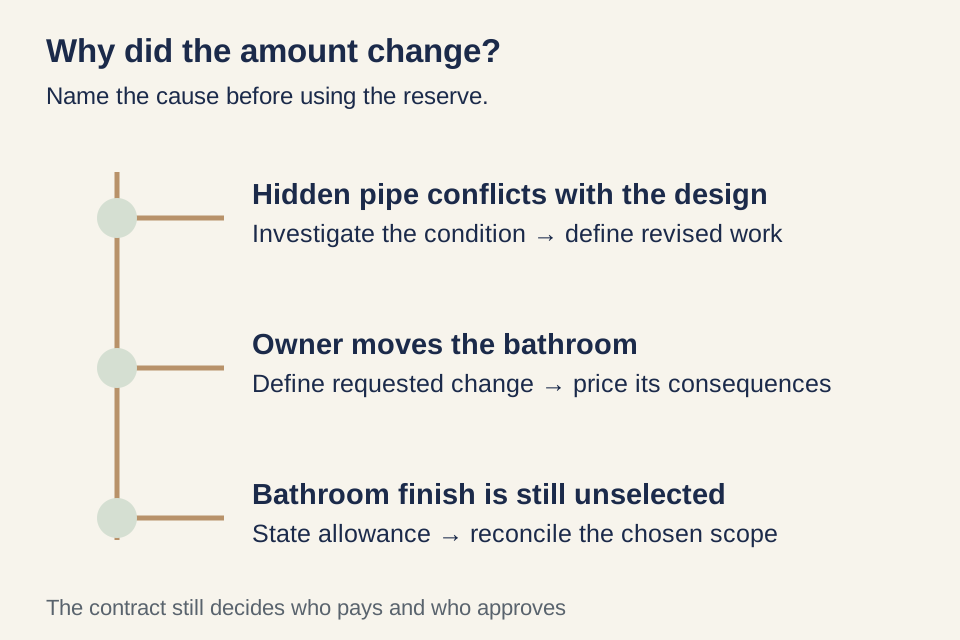
A pipe found in the path of a new opening is a hidden condition, something the house revealed rather than something anyone chose. Moving that opening because you've changed the room layout is an owner change. Picking the tiles for a bathroom that's already in the agreed scope is a selection against an allowance. All three can happen in the same corner of the house, and each one is budgeted differently.
Keeping them apart makes each conversation concrete. A hidden condition needs findings and a proposed fix. A change you ask for needs its additions, omissions and knock-on effects priced. A selection needs checking against the allowance the contract already carries. Calling every difference "contingency" makes it harder to see what your household is choosing and what the building has revealed.
The contract still matters. Something being unexpected to you doesn't automatically make it an extra, and a contractor calling it a variation doesn't settle who pays for it. Check what the contract includes, what it assumes and how it shares the risk of hidden conditions before deciding whether a charge is yours.
Investigate the parts of the house that could change the price
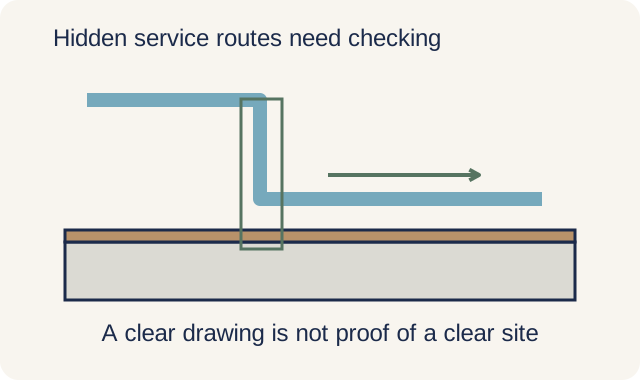
Some unknowns can be shrunk before anyone prices the job. Existing drawings, a measured survey and targeted checks by a professional can show whether a new structural opening, an extension or a new pipe route is likely to work. A check is worth paying for when its result would change the design, the way it's built or the price. If you're still choosing between replanning, extending or rebuilding to gain a room, settle that first, because each route opens up different parts of the house.
Services plans are a starting point, with limits. PUB says qualified persons must obtain the relevant services plans and verify the sewers, drains and water mains with a site survey before designing, because the plans may not show the existing sewer connection or common drain at a property, and may leave out connection pipes smaller than 100 mm. A route with no pipe marked on a plan isn't proven clear.
Other conditions stay hidden until work starts. Ask for each one to be described specifically, with what was assumed for pricing and when that assumption can be checked. "Existing structure excluded" is too broad to tell you the likely consequence. A useful scope says which retained part has been assessed, which part can't be reached yet and how a finding will be handled.
Don't investigate hidden parts of the house yourself. Opening up finishes, digging or exposing pipes and cables needs an agreed professional scope, safe access and the right precautions. Your part is to decide whether a proposed investigation is worth paying for before you commit to the design it tests.
Budget separately for fittings you have not chosen
| Budget line | What it represents | What resolves it |
|---|---|---|
| Agreed base scope | Defined work under the quotation or contract | The identified drawings, specification and inclusions |
| Declared allowance | A known item whose final selection or quantity remains open | A selection or measured scope reconciled under agreed terms |
| Condition reserve | Money the owner holds for identified uncertainties | Investigation or findings leading to an agreed response |
| Owner change | A requested departure from the agreed design or work | A priced change with its effects and approval recorded |
If the renovation includes new bathroom fittings but you haven't chosen the models, the need is known and only the price is open. That belongs in a clearly labelled allowance, not hidden inside a general reserve. Check whether the allowance covers supply, delivery, installation and any accessories the fittings need.
A supply-only allowance can be sensible if it's labelled that way and the installation is priced elsewhere. The trouble starts when what the allowance covers shifts during selection. Compare the item you choose with the original inclusion and account for any difference once, including a credit where you pick something cheaper and the contract provides for one. If you plan to buy some fittings yourself, settle delivery, installation and warranty responsibilities before they arrive.
Keep selection deadlines beside the allowances. A late decision can cost more than the product itself if it changes dimensions, pipe positions or the order of work. An early choice with complete technical details can reduce those knock-on effects, even when the finish you choose costs more.
Build the reserve from the remaining risks
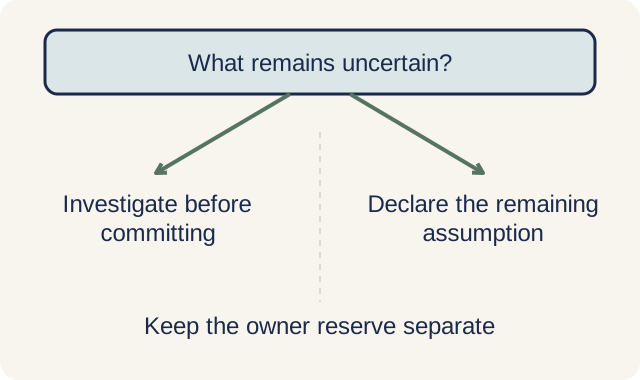
The 10 to 20% in MoneySmart's April 2026 guide to landed renovation is a general buffer for setbacks such as permit delays, rising material costs and unexpected foundation or drainage problems. Your house sets the real figure. A project with reliable drawings and a well-understood structure carries different risks from one with unverified foundations or pipes that may need moving, and a single percentage can't see that difference.
So build the reserve from the risks that remain. For each one, write down the part of the work it affects, what the price assumed, the check or stage of work that will settle it, and what happens if the assumption turns out wrong. Your team can then say which risks are worth investigating now, which need a priced alternative and which need money held back.
Ask for each open risk to be priced, not just named. The Competition and Consumer Commission of Singapore's guide for renovation contractors says mandatory charges that can't be calculated in advance should be disclosed, with an estimate, before the contract is signed, and that there should be agreement on how delays and contingencies are managed. Asking for an estimate against each open risk applies the same idea to the money you hold back, and gives you something real to hold it against.
Hold your reserve apart from the contract total unless the contract includes a matching sum. Money set aside in your own account isn't money the contractor is entitled to spend. Nor is the reserve a prediction that every listed problem will happen. It's there so that when a hidden problem does turn up, you can decide on the fix without hunting for the money first.
How the reserve adds up
| Open risk | What the team prices if it happens | What settles it |
|---|---|---|
| A hidden pipe clashes with the agreed opening | Rerouting the pipe and making good, minus any work already in the contract | Opening up at that spot |
| Old timber you planned to keep turns out to be unsound | Replacing the affected section beyond the agreed scope | Exposing the timber once the finishes come off |
| Removing a finish you planned to keep reveals more repair work | Repairs outside the contract and outside the two responses above | Taking that finish off |
| All three are still open | Each priced response, added once | Each line is released or spent as its own risk settles |
Add one priced response for each risk, once. Holding money for all three means planning for all three to happen, which is cautious but honest about what is still open. Don't add two alternative fixes for the same problem, and don't count making good twice where the pipe reroute already includes it.
Leave out anything the contract already carries. If a fittings allowance is inside the contract price, it isn't added to the reserve. If the fittings you pick cost more than the allowance, the agreed difference goes in the fittings line, not the reserve. Upgrades you might want sit in their own line, so money held for hidden problems isn't quietly spent on nicer taps.
Then work out your total as a share of the contract price, remembering what that price already includes, and put it beside the rule of thumb. If they're far apart, find out why. A total well below the rule of thumb can be right for a house with reliable drawings and a structure that has already been checked. If one risk makes up most of a large total, that is the risk to investigate before the design is fixed.
Some risks can't be priced yet, such as a possible structural problem nobody has looked at. Adding an arbitrary sum won't make the budget reliable. Investigate it, get a defined alternative priced, or hold off on the part of the design that depends on it.
Review the whole effect of a change
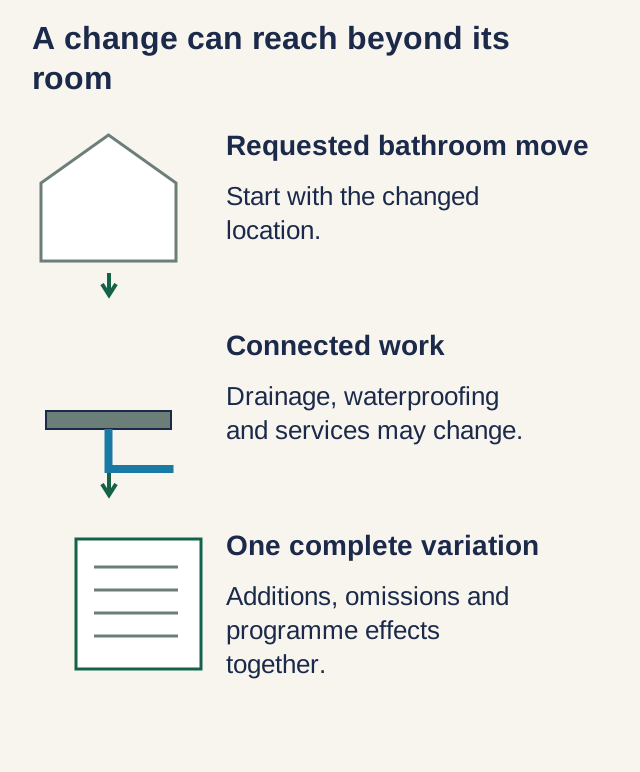
A proposed change should explain the finding or request, the revised work and the parts of the original scope it replaces. It should also show the effect on the schedule and on any finished work next to it. Moving a bathroom, for example, can change drainage, electrical work, waterproofing and finishes outside the room itself, and the new floor needs the same waterproofing checks before it's tiled.
Agree before work starts how changes are priced and approved. CCCS's guide says prices should be itemised and that changes to the contract or work orders should be made only with your express agreement. Settle who can approve a change and how urgent discoveries reach you, so a time-sensitive decision can still be made properly and silence is never treated as a yes.
When something is found, don't pick a fix from a photo alone. The responsible professional or trade should explain the finding, the workable options and what is still uncertain. You can then judge the price against what the fix achieves, instead of being asked to approve an unexplained extra to keep work moving. If you're living at home during the A&A works, ask too how each option changes which rooms you can use.
Check how much reserve remains after each change
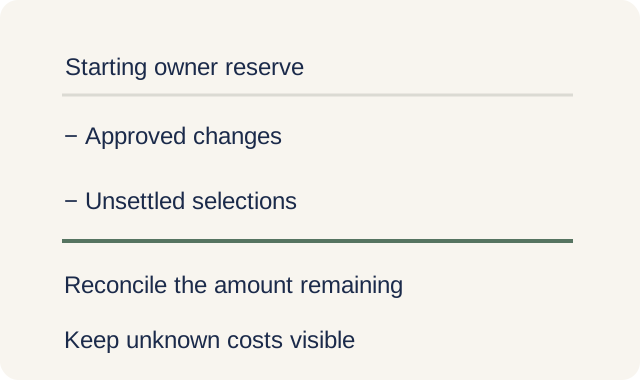
As work goes on, keep approved extras, fittings still to be chosen and the money left in your reserve in separate columns. If a bathroom allowance hasn't yet been settled against the fittings you picked, that cost is still waiting. Counting only the extras already approved makes the remaining budget look bigger than it is.
Release the reserve one line at a time. Say the pipe turns out to be clear of the opening and the timber needs a smaller repair than priced. The pipe line is released, part of the timber line is spent and the rest released, and the making-good line stays held until that finish has come off. Money becomes free only when the team confirms the risk it was held for has closed, and even then it isn't an automatic invitation to order upgrades.
The A&A buying guide puts budgeting alongside feasibility, design and building work. DirectHome offers a free site assessment, followed by a fixed-price quote within 3 to 5 working days. Bring your plans and any quotations you already have, and tell us which building conditions or product choices are still unknown, so we can go through which need investigating or a clearer price before you decide how much to keep aside.
Common questions
If my A&A quote is fixed-price, do I still need a contingency?
A fixed price covers the agreed scope and the assumptions written into it. A condition outside those assumptions, such as a pipe the quote assumed was clear, can still need extra work, and the contract decides who pays for it. Read what the quote assumes about hidden conditions, then hold a reserve for the risks it leaves with you.
Can the contractor spend my contingency without asking?
Not if the money sits in your own account. If the contract itself carries a contingency or provisional sum, its terms set how that money is drawn and what happens to any part left unspent, so read that clause before you sign. Either way, CCCS's guide for renovation contractors says changes to the contract or work orders should be made only with your express agreement.
Does an older landed house need a bigger contingency?
It can. MoneySmart's April 2026 landed renovation guide says the buffer is particularly critical for older landed homes, where structural surprises are more likely, and notes that older homes may need rewiring, plumbing upgrades or asbestos removal. None of that is for you to open up yourself; it belongs in the investigation your team prices. How much more yours needs comes down to what has already been checked. A well-investigated older house can carry fewer open risks than a newer one nobody has opened up.
Need help with your project?
Tell us what you need on WhatsApp and send a few photos. We'll arrange a free site assessment, then give you a fixed-price quote within 3 to 5 working days.