On this page
View In PDFYou can stay home during A&A works only if the occupied areas keep safe access, usable bathrooms and essential services while construction is separated from daily life. An untouched bedroom is not enough if its route or water supply disappears. Review the work stages with your contractor before deciding whether staying is practical for your household.
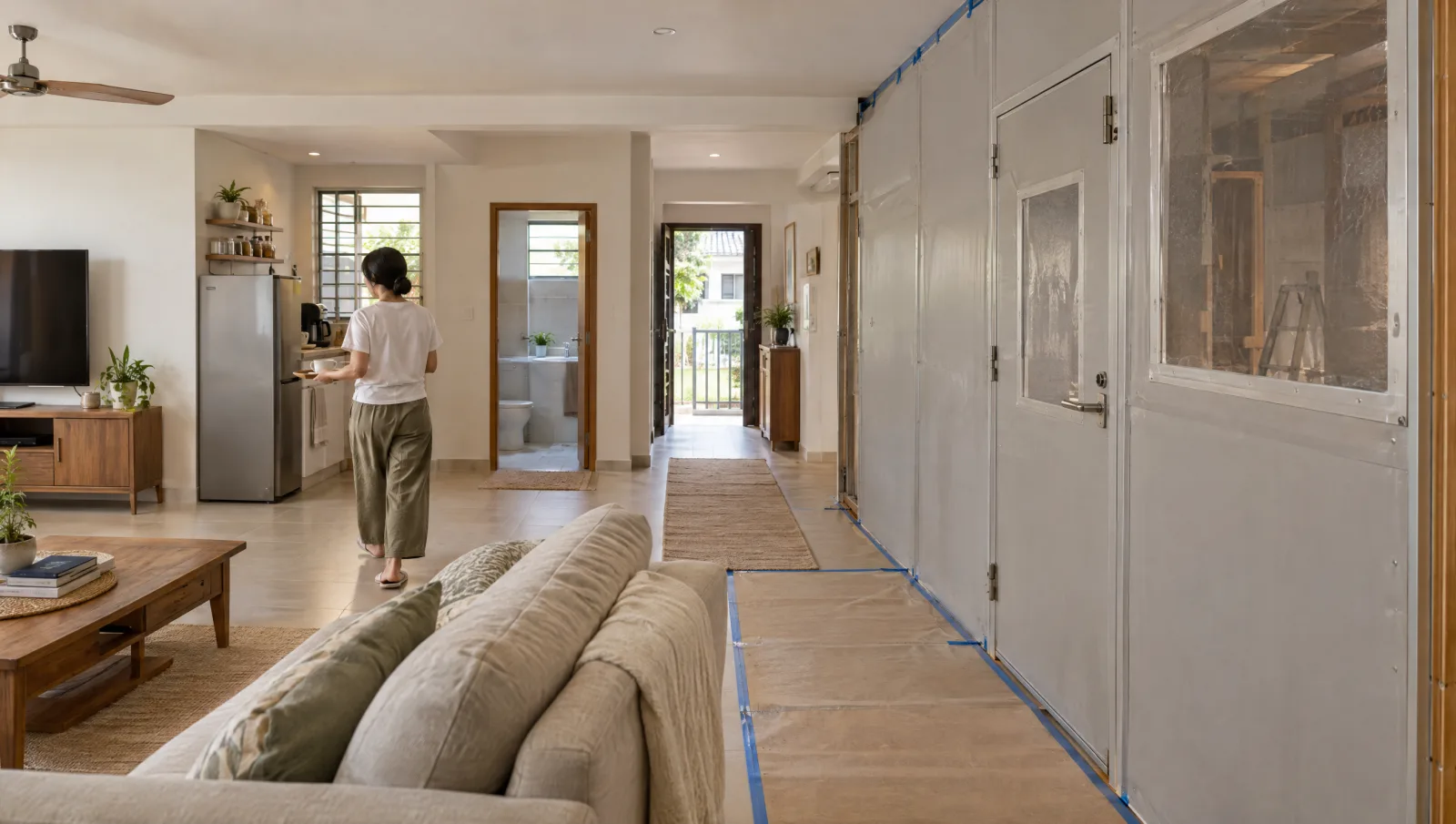
For A&A works, whether you can stay depends on the actual work. The answer can change between a limited rear extension and work through the main structure, roof or staircase. It can also change during the same project: a household may be able to stay for one phase and need to leave for another.
Keep a place to sleep, wash, cook and leave the house
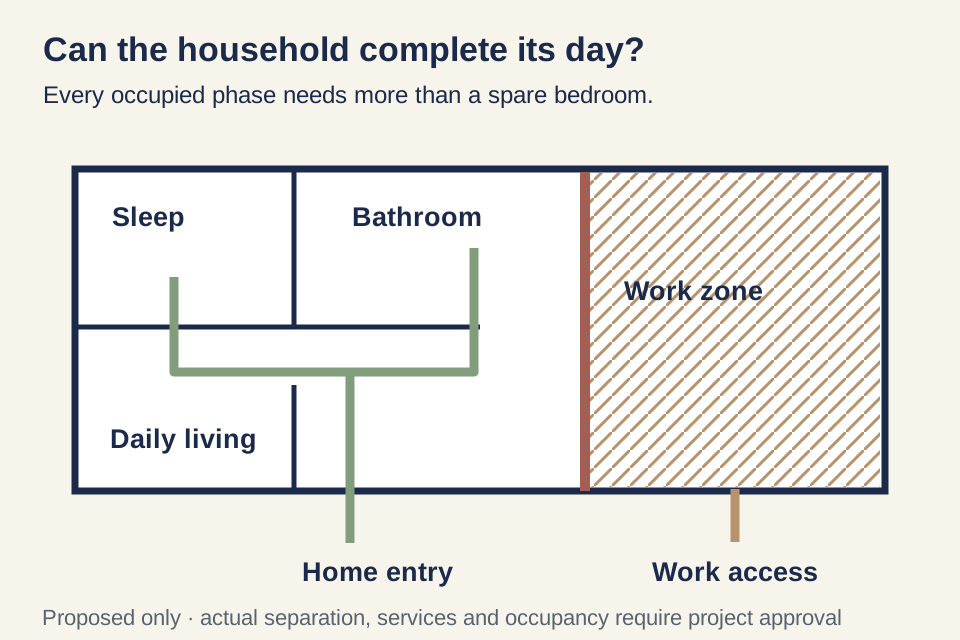
Write down where everyone will sleep, wash, prepare food and leave the house. Include school mornings, home working, caring responsibilities and the needs of anyone who cannot move easily between floors. These are the conditions the phasing proposal has to satisfy, rather than inconveniences to improvise around later.
Then trace the physical routes. A retained upstairs bedroom does not provide a workable occupied arrangement if the staircase below it is being removed. A bathroom behind the construction zone is not conveniently available simply because its plumbing still works. Follow the complete route from the occupied room to every essential function and to the exit.
The construction team and relevant professionals must establish the actual temporary arrangements. Homeowners should not create their own access across an excavation, dismantled stair or active work area. If a phase cannot provide an acceptable occupied route, that phase needs a different programme or temporary accommodation.
Check which rooms and routes are available at each stage
| Household function | Dependency to show in each phase | Fallback when it is unavailable |
|---|---|---|
| Sleeping | Weather protection, separation and a usable exit route | Move the affected occupants to an agreed alternative |
| Washing and toilet use | Working water, drainage and access outside the work zone | Use an approved alternate facility or leave for that phase |
| Food and drinking water | A usable preparation area and suitable services | A defined temporary arrangement that fits household needs |
| Entry and escape | A route kept clear of construction activity | Change the work sequence or accommodation plan |
| Work, study or care | Suitable space during the relevant hours | Use a different location for the affected period |
A programme organised by trades tells you when demolition, structure, roof work and finishes happen. Add a household view beside it: which floors are available, which facilities are operating, and which paths are closed. The two views should agree at the start and end of each working day, including weekends and interruptions.
A rear extension may initially leave the existing house intact, then require an opening that connects the new area to the old. That connection can be the point when a previously workable occupied arrangement changes. Plan for the transition itself, not only the long periods before and after it.
Roof work creates another transition. The relevant team needs to specify temporary weather protection and what happens if conditions prevent the planned closure. A forecast is not a substitute for a protection plan. The room underneath should not be treated as available merely because the roof activity is shown as a short bar on the schedule.
Work elsewhere can cut off a room’s water or power
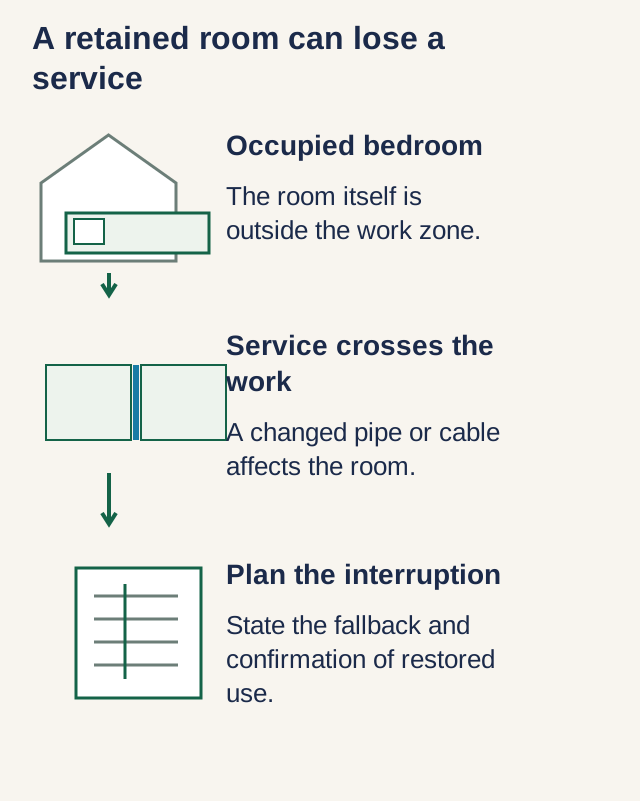
Electrical, water, drainage and air-conditioning work can affect rooms outside the visible construction area. A cable or pipe may pass through the part being altered, and a temporary disconnection can interrupt a function on another floor. The team should map these dependencies before promising that a retained room will remain fully usable.
Distinguish a planned interruption from an ongoing temporary service. A household may arrange to be out for a coordinated daytime shutdown, while a temporary bathroom used for several weeks needs a dependable complete arrangement. Neither should be left to an informal assurance that something can be connected when needed.
State who tells the household about an interruption and when the service is confirmed ready for use again. A completed trade task is not necessarily the same as a function being restored. Testing, cleaning, safe access and any professional acceptance relevant to the work should be accounted for before the household resumes use.
Noise and dust follow the route through the house
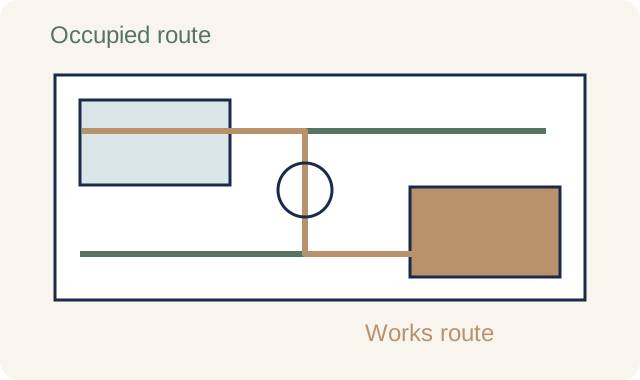
Physical separation needs to fit the movement of people and materials. A barrier across one doorway achieves little if workers must repeatedly open it to carry demolition waste through the living area. The proposed delivery and removal routes should be shown alongside the occupied route, with conflicts resolved in the programme.
Consider what remains connected through an open stair or void. A household can be physically on another floor while sharing noise, dust or odour with the work below. Discuss which activities make the occupied arrangement unsuitable, and whether those activities can be grouped into a period when the affected occupants are elsewhere.
NEA regulates noise from A&A works in landed properties. Applicable working restrictions are part of the programme, but they do not promise quiet conditions during a permitted work period. Someone conducting calls, sitting examinations or resting during the day needs a practical arrangement that goes beyond checking the permitted hours.
Check the next living arrangement before work moves into it
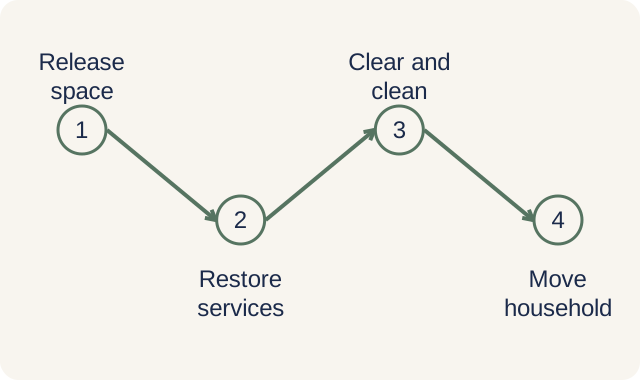
Before a work zone moves, the contractor should identify what becomes available and what closes next. The household needs time to move belongings and adjust routines. A phase change is a coordinated handover of space, not simply the date the next trade is booked.
Set a clear release condition for each occupied area. The actual criteria depend on the work but should cover completion of the relevant safety measures, usable services, clear access and the cleaning needed before occupancy. Avoid a household plan that relies on stepping around incomplete work every evening.
Keep the agreed schedule and process for delays or contingencies in the contract information. Update the occupation plan when those arrangements change, so a construction delay does not silently turn into an unplanned period without essential facilities.
Agree when to move out and where to stay
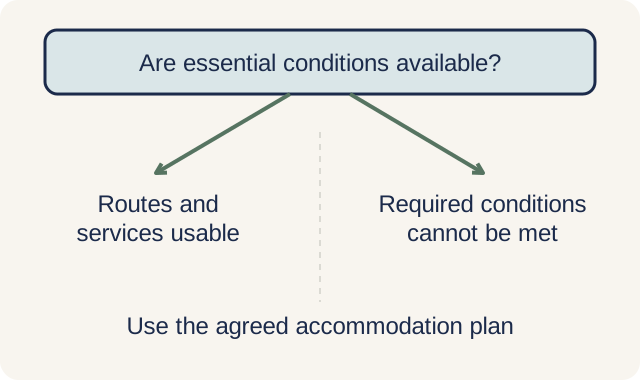
“We will move out if necessary” is incomplete until the household knows what makes it necessary, where it will go and how quickly it can move. A useful trigger relates to the agreed conditions: a required route cannot be released, essential services cannot be restored, or the project team determines the occupied arrangement is no longer suitable.
Temporary accommodation has practical details beyond its nightly price. Consider school and work travel, mobility, pets, stored belongings and the duration the household can commit to. A short stay arranged in advance may be less disruptive than a last-minute move triggered after a room has already been opened up.
Use the A&A buying guide to review the full project sequence alongside this occupation test. Share the available plan, who will remain at home and the functions that must be maintained with DirectHome. That gives the phasing discussion a concrete brief and makes any period away from the house visible before construction begins.
Need help with your project?
Tell us what you need on WhatsApp and send a few photos. We'll arrange a free site assessment, then give you a fixed-price quote within 3 to 5 working days.