On this page
View In PDFIf an LED light flickers when dimmed, the lamp and dimmer may not be working well together. A “dimmable” label does not establish compatibility with every control or lighting arrangement. Ask the installer to check the exact products and how they are connected before replacing a roomful of fittings or assuming the dimmer alone is faulty.

Ask the installer to check the lamps, dimmer and number of lights on the circuit together. This is particularly important when products came from different suppliers. If you are also planning ceiling and lighting work, confirm compatibility before ordering the replacement fittings or controls.
Why a light that turns on may still dim poorly
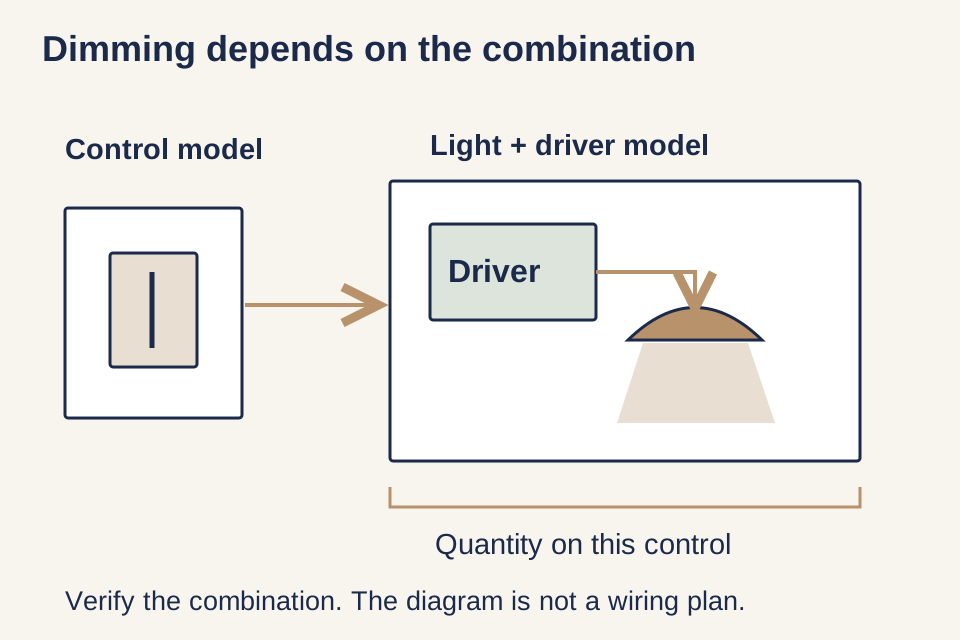
An LED lamp contains electronics that operate differently from an old filament lamp. With mains dimming, the control changes the power waveform reaching the lamp, and the electronics must be designed to work with that behaviour. A manufacturer’s explanation of mains-dimmable LED technology describes why compatibility requires particular circuitry.
For a homeowner, the consequence appears in ordinary use: the light may behave acceptably at full output but offer an unsatisfactory low setting, an abrupt change or visible flicker while dimming. Those symptoms are reasons for the installer to investigate. They do not allow you to diagnose a specific component from appearance alone.
There is another distinction at the fixture. A replaceable LED bulb and an integrated LED fitting are different purchasing arrangements. In the integrated fitting, the supplied or specified driver can be part of the compatibility question. An invoice that names only the decorative fitting may leave out the component that determines how it is controlled.
Check the exact light and dimmer models tested together
| Record for each controlled group | What to identify |
|---|---|
| Light | Exact lamp or luminaire model and supplied version. |
| Driver, where applicable | Exact model, control method and location in the installation. |
| Control | Exact dimmer or control-system model and relevant configuration. |
| Group | Quantity and types of lights operated together. |
| Evidence | Applicable manufacturer document or written confirmation, with date and market. |
| Expected use | Useful low setting, dimming behaviour and normal switch operation. |
| Responsibility | Who confirms the combination and resolves an unsuitable result. |
A useful confirmation names exact model codes, including the relevant light or driver version. “Works with LED” is too broad. A dimmer product family can contain several models, and a fitting sold with alternative drivers may support different control methods. Match the documents to the products being supplied.
Manufacturer compatibility matrices illustrate the level of detail involved: identified lamps and dimmers, quantities and notes about tested behaviour. The linked example is dated 2022. It explains the structure of evidence; it should not be used as approval for a current purchase. Request the latest applicable information from the supplier.
Check the document’s market as well as its date. Confirm that its model codes and market apply to the products being supplied; a link from a local page is not enough. The supplier and electrical worker should confirm the actual local combination.
A blank or “not tested” entry leaves compatibility unestablished. It is not automatically a fail, and it is not a pass. Obtain specific confirmation or select a documented alternative. Where a supplier proposes a demonstration, record its exact components and limits so it does not become a vague assurance based on a different lamp.
Recheck compatibility if a model or the number of lights changes
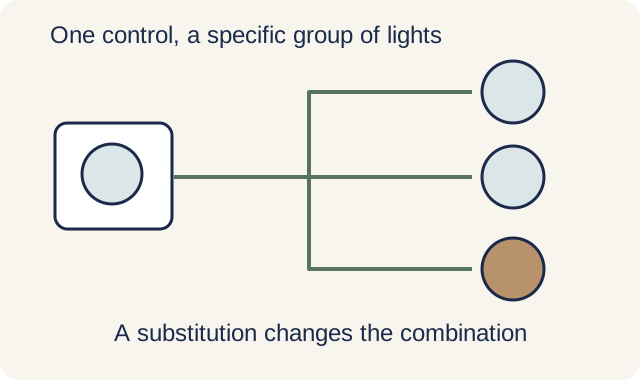
A successful demonstration with one light does not necessarily establish the behaviour of a different group. Compatibility information can specify a range of lamps on a control. Have the installer check the proposed quantity and any mixture of fittings against the selected equipment’s requirements. Do not infer an acceptable quantity by dividing a headline dimmer wattage by a bulb wattage.
The same reasoning applies to substitutions. A replacement with the same visible shape or nominal brightness may contain different electronics. If the supplier changes a lamp, driver or control before delivery, have the combination reviewed again. A finish-colour substitution and a driver substitution do not have the same effect on this decision.
This is also why keeping model information matters after handover. When a bulb or driver eventually needs replacement, the record provides a starting point for a suitable match. Buying the closest-looking item can leave one part of a previously consistent group behaving differently.
Decide what you mean by a good low setting
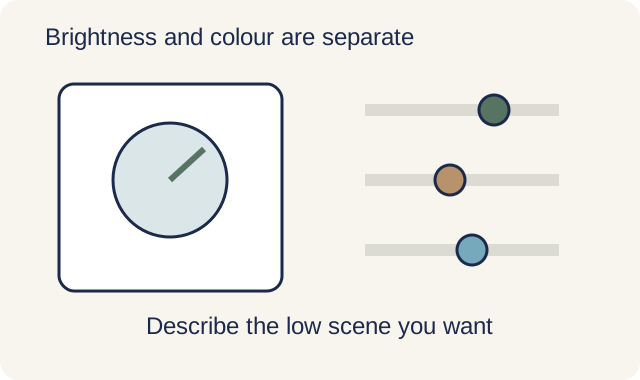
Dimming brightness and changing colour tone are separate behaviours. Some dim-to-warm products become warmer in appearance as output reduces; ordinary dimmable products may simply become less bright. If you want that warmer evening effect, specify it rather than assuming every dimmable LED produces it.
Describe the intended scene in plain language. For example, a dining pendant may need a comfortable low level for a quiet meal while still giving enough light to see the table. A reading light has a different task. A slider reaching its minimum position is not the same thing as the room reaching a useful minimum brightness.
Control grouping matters as much as the dimming range. If a wall wash and the reading lights always rise and fall together, the room may offer less flexibility than expected even when every component is compatible. Resolve which lights need to operate independently before treating the wall plate as a purely decorative selection.
Demonstrate the behaviour you intend to use
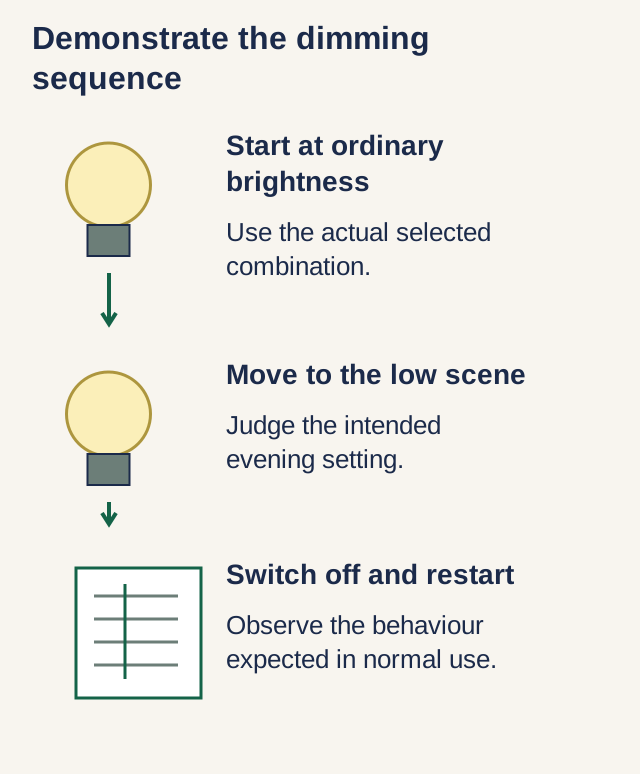
Agree the ordinary-use demonstration before installation is complete. The supplier or installer should present the proposed or installed combination using its intended controls, with any limitations explained. The homeowner’s role is to observe whether the result serves the room. It does not include opening fittings, altering wiring or experimenting with electrical components.
Review the intended controls with the installer
0 of 5 reviewed
Use this to track your review. Checks stay on this page while it is open.
This review is a practical acceptance aid, not a laboratory flicker measurement or an electrical safety test. A phone video can show banding affected by the camera and display as well as the light, so it should not be treated as a diagnosis by itself. Record a concern and have the installer evaluate it using appropriate methods. Fixed electrical work must be carried out or supervised by an appropriately licensed electrical worker.
The ceiling and lighting buying guide connects controls with the room layout, ceiling work and maintenance access. Keep the agreed light, driver and dimmer models with the drawings, including how many lights each control serves. Ask the installer to demonstrate the settings you intend to use before handover, while any poor dimming behaviour can still be addressed.
Need help with your project?
Tell us what you need on WhatsApp and send a few photos. We'll arrange a free site assessment, then give you a fixed-price quote within 3 to 5 working days.