On this page
View In PDFQuartz and mineral worktops suit households that want simple cleaning and accept using trivets. Porcelain and sintered surfaces offer options with greater tolerance of hot cookware, while solid surface is worth considering when repairability matters. Granite and marble need different treatment around acidic ingredients; laminate needs particular care at wet seams. Choose the material around the cooking and cleaning you actually do, then check the exact product and finish.
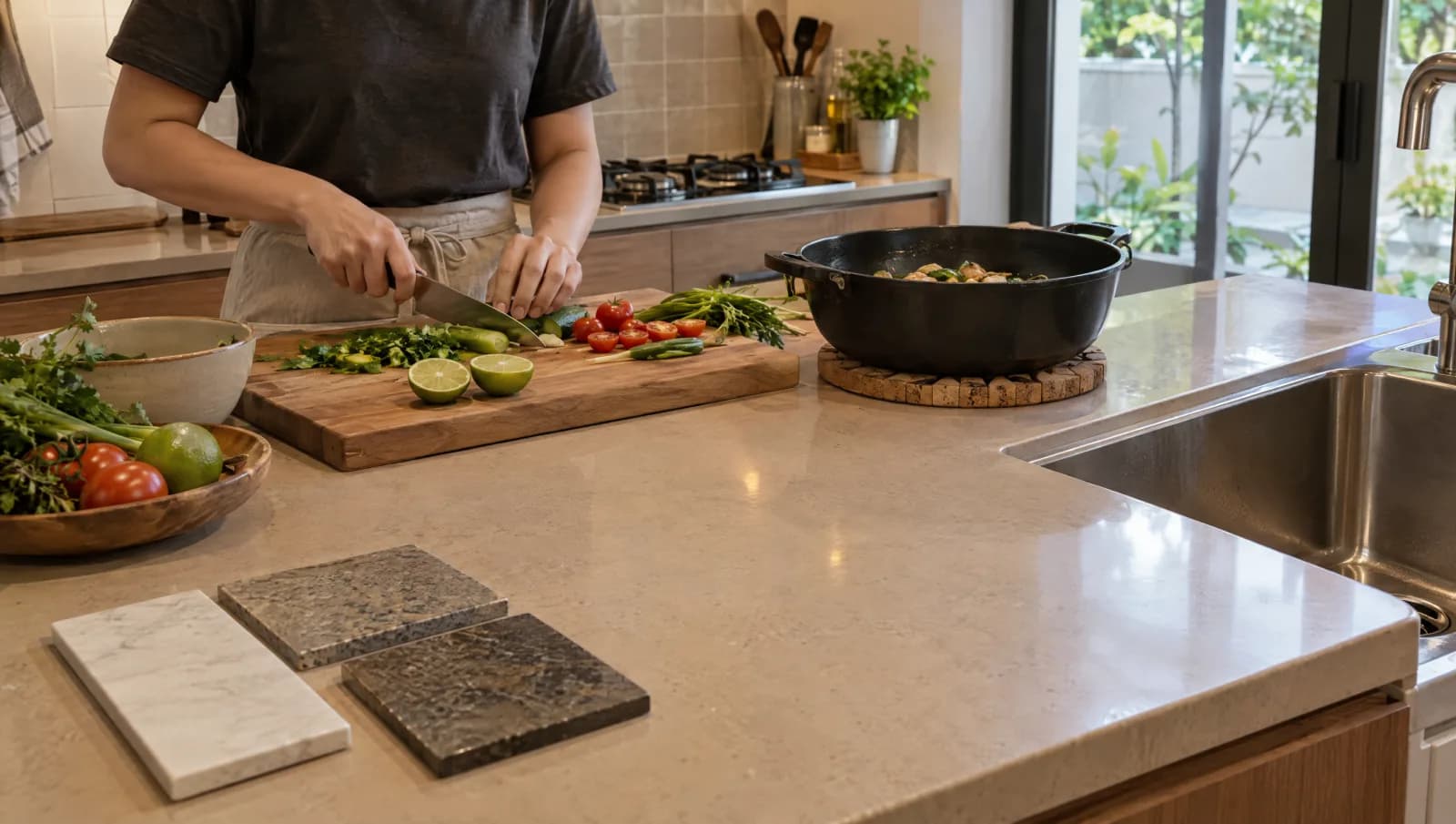
During a landed kitchen renovation, compare the worktop together with the sink, hob and cabinetry. The space between them determines where you can prepare food, put down pans and wash up. A worktop sample shows the material, not the space you will have beside the hob. Check the kitchen drawing for a practical place to put down the cookware you use.
How six worktop choices differ in daily use
| Material | Useful everyday strength | Care or limitation that changes the choice |
|---|---|---|
| Quartz / mineral composite | Non-porous options with no sealing routine. | Use trivets and boards; exact finish affects visible smudges and cleaning effort. |
| Porcelain / sintered surface | Options that tolerate hot cookware and resist scratches. | Heat rules vary; prolonged appliance heat and exposed edges still need protection. |
| Solid surface | A renewable surface: some scratches and damage can be refinished. | Protect from hot cookware and cutting; everyday abrasion can show. |
| Granite | Generally better resistance to kitchen acids than calcium-based stone. | Use suitable cleaners; sealing needs depend on the particular stone. |
| Marble | Natural stone appearance for households willing to accept surface change. | Acidic spills can etch the finish; stain resistance does not mean acid resistance. |
| Laminate over a supporting board | Routine wiping with mild cleaner is straightforward. | Protect from heat and cutting; water entering seams can swell the board. |
For a busy indoor kitchen, quartz or a similar mineral composite is a sensible shortlist when you want a straightforward cleaning routine. The quartz and mineral surfaces in this care guide need no sealer but require protection from hot cookware and sharp tools. The practical tradeoff is simple: low routine maintenance still leaves you responsible for heat protection.
If moving hot cookware is central to how you cook, compare porcelain or sintered products with the quartz shortlist. This porcelain range permits cookware straight from the hob or oven, but calls for an insulating mat beneath appliances that produce heat for a long time. Its exposed edges can chip under hard knocks. That makes heat tolerance a useful advantage, without making the entire fitted worktop immune to damage.
“Sintered” is a manufacturing description, not one standard level of performance. The heat guidance for an ultra-compact sintered surface also recommends protection during prolonged exposure, especially for thinner versions. Read the actual product instructions when comparing these surfaces; a general showroom claim that a material is heatproof is too broad.
Solid surface offers a different advantage. This solid-surface material can be renewed because its composition continues through the thickness; deeper scratches and difficult finishes can be assessed for professional repair. It still needs a chopping board and heat protection, and everyday abrasion can show. Consider it if being able to restore wear matters more to you than avoiding every mark in the first place.
Granite and marble should not share one “natural stone” score. Siliceous stones are generally more resistant to kitchen acids than calcium-based stones. Marble can lose its polish where acidic ingredients react with it: an etched patch is a change to the finish, not just dirt left on top. If you regularly handle lime juice or vinegar and want an even-looking surface with little attention, we would shortlist a suitable composite or porcelain before marble.
Granite still needs stone-appropriate cleaning and protection. Sealing requirements vary with the actual stone; a sealer improves resistance to staining rather than making it stain-proof. Ask what the selected slab needs instead of assuming all natural stone must be sealed on the same schedule. Choose marble when its appearance is worth the possibility of visible wear to you, and discuss how refinishing would be handled.
Laminate has a different weak point: the worktop is an assembly, not just its decorative face. The care instructions for this laminate warn that water entering seams can make the material underneath swell. Hot cookware and cutting also need protection. It can suit a household comfortable with wiping spills promptly, but the sink junction and exposed ends deserve close attention where washing-up repeatedly leaves water.
These tradeoffs help narrow the choices before you compare colours. Start with the habits you are least willing to change: handling hot pans, leaving a wet draining area, using acidic ingredients, or accepting occasional refinishing. Once two or three materials fit those habits, test their place in the actual kitchen layout.
Walk through one ordinary meal
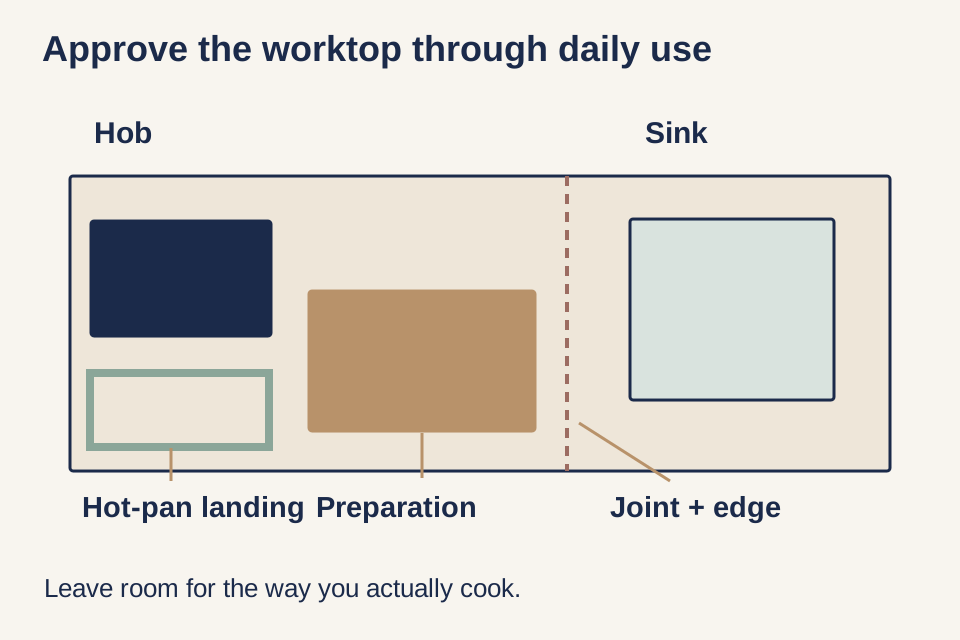
Begin with the preparation you repeat most often. Put the chopping board, usual pan, dishes and countertop appliances into the proposed layout at their real sizes. You do not need an elaborate performance test; you need to see whether preparation, cooking and clearing can happen without continually borrowing the same small patch of surface.
This exercise makes the heat question practical. If the chosen surface requires a trivet, give that trivet a convenient landing position near the cooking or oven route. The care instructions for this quartz and mineral surface family recommend protection under hot items and the use of cutting boards. Treat those as requirements of that product family, then obtain equivalent instructions for each alternative.
A protected landing area is only convincing if it remains available during cooking. If a coffee machine, drying rack and grocery bags will occupy it, adjust the layout or storage before relying on that space. The point is to make the recommended care easy enough to follow when the kitchen is busy.
Read the exact finish as well as the material family
| Daily task | What to establish | Design response to consider |
|---|---|---|
| Moving a hot pan or tray | What heat protection the exact product requires | A convenient, clear protected landing area |
| Chopping and food preparation | Cutting-board and surface-care requirements | Board storage beside a usable preparation area |
| Wiping spills near the sink | Permitted cleaners and drying guidance | A sink and rear junction that can be reached easily |
| Using heavy countertop equipment | Support and use requirements of the surface and appliance | A supported position agreed with the fabricator |
| Cleaning a textured finish | Expected routine and appearance in the room | Approve a sample with the person who will use it |
Keep the product name, colour, finish and thickness on the shortlist. A polished sample and a textured sample within the same family can look and behave differently in daily cleaning. Ask for the care document that applies to the actual selection, rather than accepting one general statement that the material is durable.
Some honed and textured finishes need additional routine care, and the visibility of droplets or smudges can differ from a polished surface. Review a useful sample under the proposed kitchen light and from the angle at which you will normally see it. This is an appearance and effort preference; it does not need a universal ‘best finish’ ranking.
Ask the household member who normally cleans the kitchen to take part. Discuss the products and methods already used, then compare them with the permitted routine. If a preferred cleaner or habit is incompatible, decide whether changing that habit is realistic. A surface can be a sound product and still be a poor choice for the way a particular household wants to live.
Spend time at the sink edge and the corner
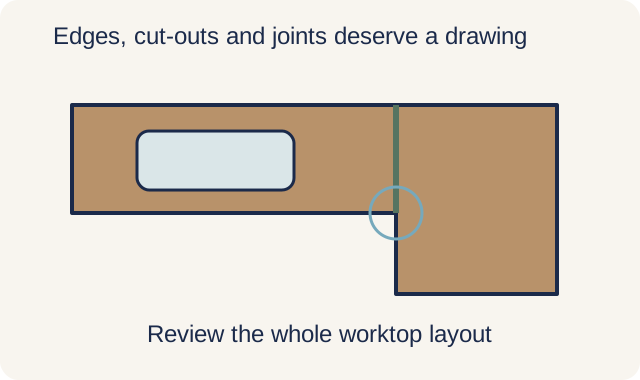
The middle of a sample is usually the easiest part to like. Ask to see the proposed edge profile, sink arrangement and exposed corner as well. Discuss how pots, trays and the dishwasher-loading movement pass those details. The fabricator should explain the suitable edge and support arrangement for the selected material, with the detail recorded on the drawing.
Ask where joints will appear in the actual layout and how any visible pattern will run across them. A small swatch cannot show a long vein, a change in direction at an L-shaped return or the joint needed to make and transport the worktop. Review the full layout before approving the surface on the assumption that it will look like one uninterrupted slab.
Access matters at this stage too. If a sink, tap or appliance later needs attention, what can be reached without removing the top? Ask how the chosen sink is supported and who installs the sink supports. These are fabrication and service questions, so the answer belongs with the people supplying and installing the actual work.
Ask what a repair would look like
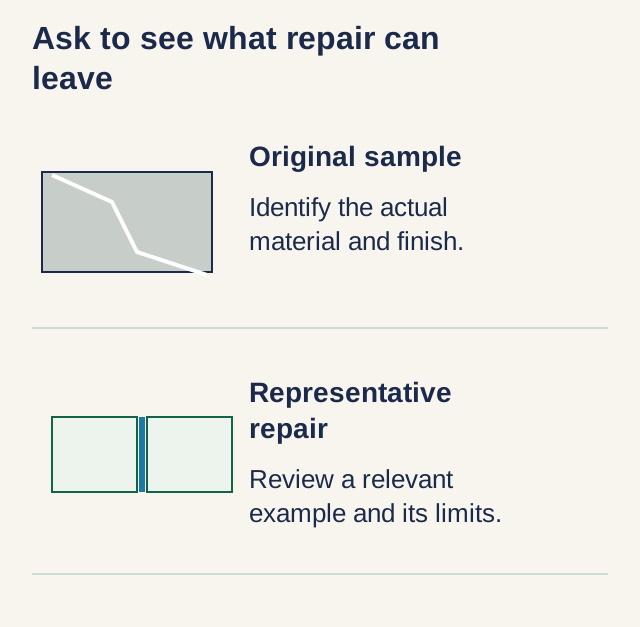
Separate a visible surface mark, a chipped edge, an opened joint and a crack when asking about repair. They are different complaints and may lead to different remedies. Request the expected appearance and limitations of a repair for the chosen product instead of accepting a broad assurance that every damage can be fixed.
The care guidance for one composite surface distinguishes repairable edge damage from cracking that may not have a lasting repair. That is a product-specific warning against treating all defects alike. It does not prove that another material is unrepairable or that a repaired spot will be invisible.
For a long or unusually shaped worktop, ask what replacement of one affected section would involve. The answer may depend on joint locations, access, retained cabinetry and whether a matching product remains available. You cannot guarantee future availability today, but retaining the full product reference and installation drawing gives a future assessment a much better starting point.
A covered outdoor kitchen is still a separate decision
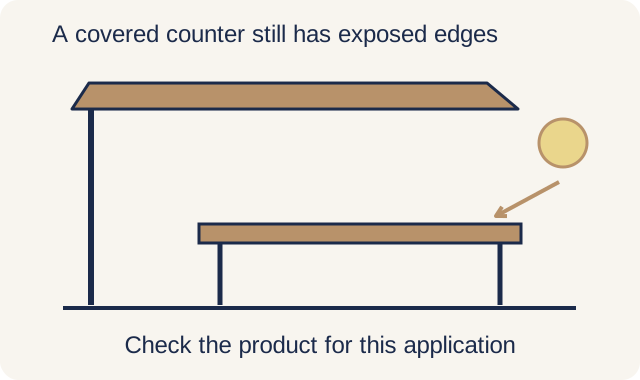
If the plan continues from an indoor kitchen to a patio or barbecue area, check the exact product for that exposure. Similar colours do not establish the same permitted use. For example, the outdoor-use restriction for this composite product is tied to ultraviolet exposure. Do not remove that limit simply because the proposed counter sits under a roof.
Tell the supplier where sun, rain and cleaning water can reach the surface and its edges. Ask for the appropriate application and installation guidance, including the supporting construction. If one surface cannot serve both locations, visual continuity may still be possible with separate suitable products and a deliberate junction between them.
Compare the finished worktop, not an isolated rate
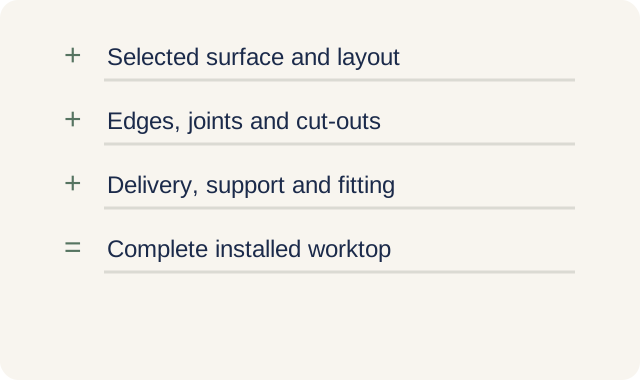
A fair quotation comparison names the product and finish, the measured layout, edge treatment, cut-outs, joints, transport, installation and any supporting work. Identify which sink or appliance details remain provisional. If one proposal includes a shaped return or additional cut-out while another omits it, the headline rates are not yet prices for the same kitchen.
Use the landed kitchen buying guide to coordinate this decision with the wider renovation. Bring the shortlisted care sheets and samples to the layout discussion, together with the cookware and appliance dimensions that matter most. Approve the worktop when its daily use makes as much sense as its appearance.
Need help with your project?
Tell us what you need on WhatsApp and send a few photos. We'll arrange a free site assessment, then give you a fixed-price quote within 3 to 5 working days.