On this page
View In PDFYou have already had the aircon serviced, so it is frustrating when the room is still warm. Before paying for another treatment, check the ordinary cooling settings and contact the company that carried out the work. Ask it to review the unresolved problem and explain any further investigation or charge.
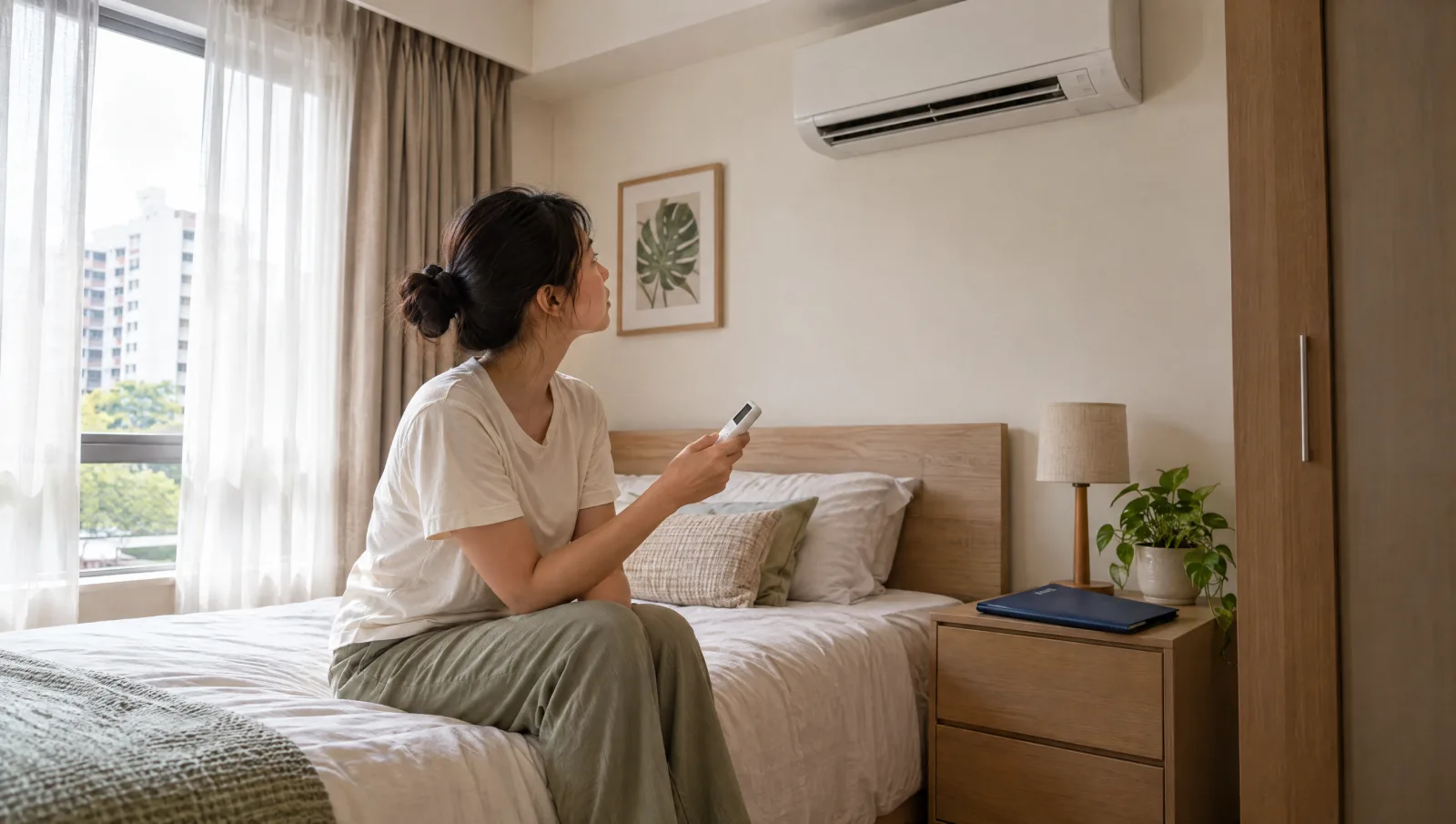
When you contact the company that carried out the aircon servicing, describe what is still wrong. Weak airflow, air that blows but does not cool the room, and cooling that fades after a while can have different causes. You do not need to diagnose the fault yourself to give the technician a useful starting point.
If there is a burning smell, smoke, repeated electrical tripping or water reaching electrical equipment, stop using the affected unit and seek qualified help. For an ordinary cooling concern, use only the normal controls and observations described below; leave equipment diagnosis to a technician.
Establish what the service was meant to do
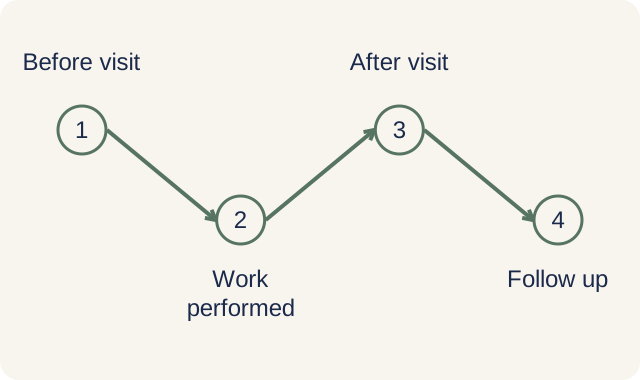
Check what the completed service included. Cleaning, clearing a drain, diagnosing a fault and replacing a component are different jobs. The receipt or service report should identify which units were attended and what was done. This helps you and the company work out whether the original complaint remains unresolved or a different problem needs investigation.
Tell the company whether the room was already warm before the visit, became warm immediately afterwards, or cooled well for a time and then stopped. Mention any relevant room changes, such as new furniture blocking airflow. These details help the technician compare the current problem with the work already completed.
You should not have to choose another treatment without an explanation of what it is meant to fix. Ask the company to review the earlier work and explain its proposed next step. The timing deserves attention, but a problem appearing after servicing does not, by itself, prove that the service caused it.
Check the normal controller settings
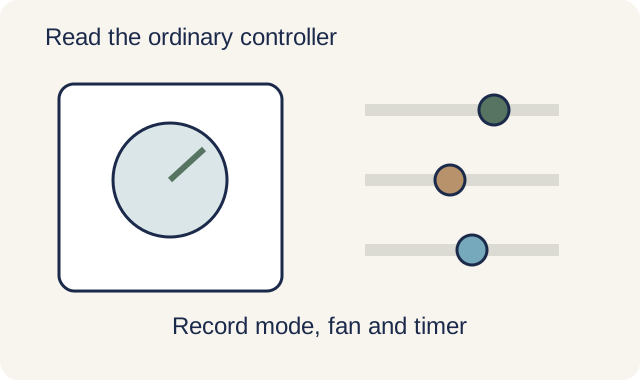
Check that the remote or wall control is set to cooling rather than fan-only mode. Compare the temperature, fan and timer settings with your owner's manual. Fan-only mode circulates air without cooling it, while a timer can change operation when you are not expecting it.
Close doors or windows that let warm air into the cooled room, and check for an obvious blockage in front of the unit from a safe position. Settings, open windows and obstructed airflow can affect cooling. If correcting one of these restores comfort, you may have resolved the concern without another service visit.
Use only the normal controls and access described in the user manual. Leave panels closed and do not climb to the outdoor unit. If the room remains warm, note the settings you used so the technician can assess it under the same conditions.
Repeatedly changing settings or restarting the unit makes the problem harder to describe. Once you have checked normal cooling mode, give the service company a consistent account of what happens instead of trying progressively lower settings.
Is the airflow weak, or does the room stay warm despite it?
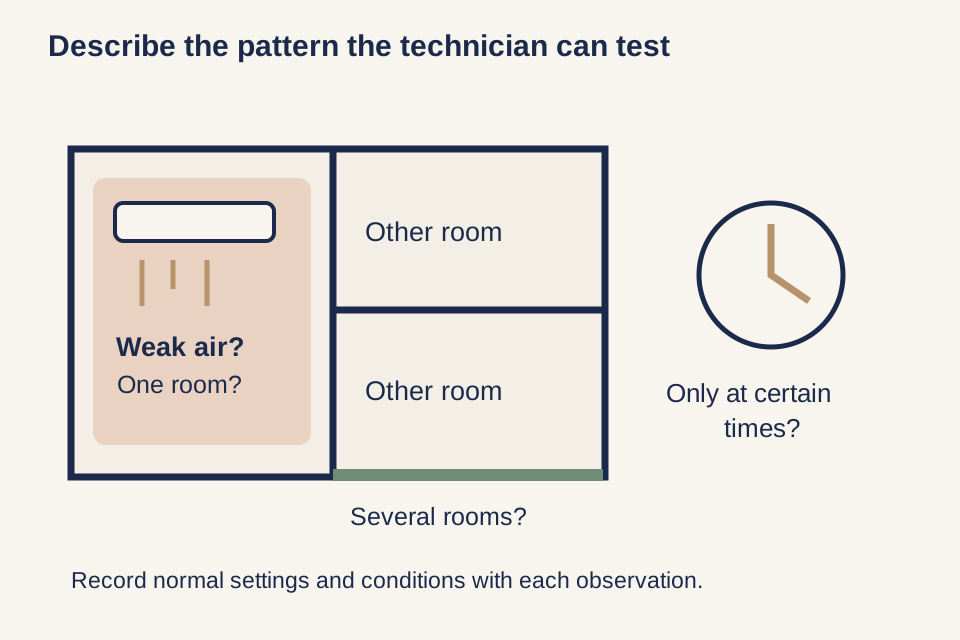
Weak airflow can make a room uncomfortable even when the unit is running. Tell the technician whether the airflow changed after the service and whether there is a new sound. They need to assess the air path and equipment; do not reach into the outlet to inspect the fan.
If air is moving normally but the room stays warm, say that clearly. The technician then needs to assess cooling performance and the room conditions, rather than treating it as only an airflow problem. Feeling air at the outlet confirms movement, but it does not establish that the system is cooling the room properly.
If visible ice appears, stop using the affected unit and arrange assessment. Do not chip it away or apply heat. Ice can have more than one cause, including airflow and refrigerant-related issues. The appearance does not choose the repair.
These observations help the service company decide what to inspect. They are useful clues, not a reason to buy a particular part or treatment before the fault is identified.
| What you notice | Why the distinction matters | What to tell the service company |
|---|---|---|
| Airflow is weaker than before | The air path or equipment needs checking; warmth alone does not identify the cause. | Whether it began after servicing and whether there is a new noise. |
| Air blows, but the room stays warm | Air movement and effective cooling are different things. | The mode and settings, affected room and how long it has been running. |
| Several rooms become warm together | Some equipment may be shared between those rooms. | Which units were running together and whether all rooms were affected. |
| Cooling works at first, then fades | Timing may help the technician reproduce the problem. | When comfort changes under ordinary use; do not repeatedly restart a faulty unit. |
Is it one room, several rooms or one time of day?
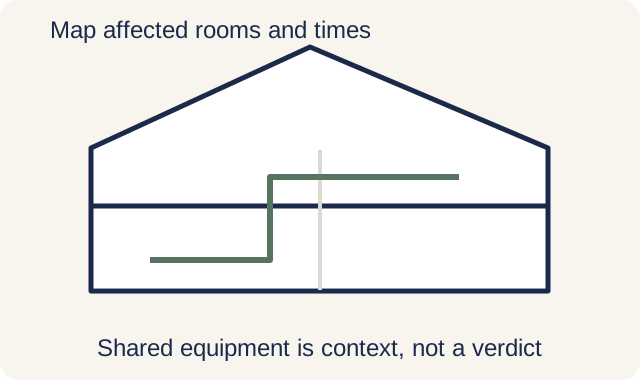
List the affected rooms and whether their aircon units were running at the same time. If you already know that they share an outdoor unit, mention it. You can use the installation record for that information; there is no need to trace pipes or access outdoor equipment.
One warm room may need a different investigation from several rooms that lose cooling together. Some components serve an individual room and others are shared. The pattern helps narrow the inspection, but it does not identify a failed component on its own.
Also describe when the problem happens. A bedroom that becomes warm only when other units are running raises a different question from one that never cools on its own. If afternoon sun makes the difference, the technician should consider the heat entering the room as well as the equipment's performance.
The aircon buying guide explains the broader system-selection questions if the investigation moves towards replacement or redesign. A service concern should first establish what is happening in the current installation.
Ask what the technician found and which repair it supports
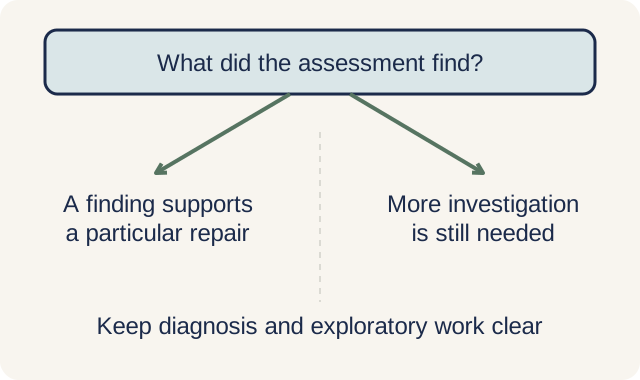
Ask the technician to explain what was checked, what was found and how the proposed work addresses the cooling problem. The explanation should connect the finding to your room's symptoms. If further investigation is needed, you should know what it is intended to establish before authorising it.
If another cleaning treatment is proposed, ask what remains dirty or obstructed and why the previous service did not cover it. There may be a valid reason for different work, but the company should explain that reason and its price before you agree.
If refrigerant is said to be low, the next question is why. An installation charge issue and a leak are different causes of low refrigerant. Adding refrigerant alone will not repair a leak. The professional should establish the relevant cause and propose a repair and verification method. The homeowner should not attempt pressure testing or refrigerant work.
Some faults take more than one step to identify. In that situation, agree the next investigation's scope and cost, including any access needed. Ask what the result will help decide so you know whether you are paying for diagnosis or a repair.
Prepare for the follow-up visit
0 of 5 reviewed
Use this to track your review. Checks stay on this page while it is open.
Check whether the original cooling problem has improved
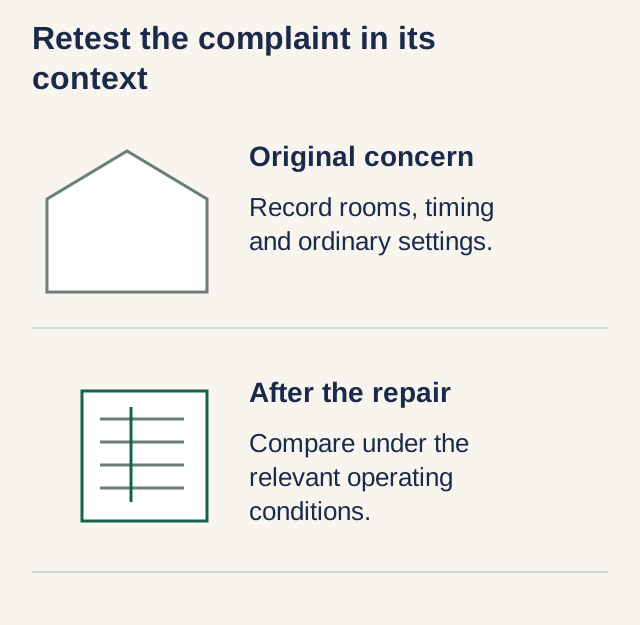
After the work, check whether the original problem has improved under similar conditions. If the bedroom became warm when other rooms were being cooled, testing it only with those units off may not answer your complaint. Explain the normal household use so the technician can choose a relevant check.
Keep the report showing the findings, work done and any repair warranty. If the room remains warm, refer to those records when contacting the company again. The next step should build on what has already been checked instead of repeating a treatment without a new reason.
You can keep the first message simple: “The bedroom aircon was serviced on [date], but the room is still warm. It is in cooling mode, and [describe the airflow and any other affected rooms]. Please review the work completed and let me know how you will investigate, including any charge.” Adapt this example to what actually happened in your home.
Need help with your project?
Tell us what you need on WhatsApp and send a few photos. We'll arrange a free site assessment, then give you a fixed-price quote within 3 to 5 working days.