D15/D16 · Premium Landed
Staircase Renovation in East Coast, Singapore
East Coast staircase renovation spans the full range from value-tier overlays to premium open-riser rebuilds, reflecting the breadth of the housing stock and homeowner profiles. Most work targets second-generation refresh of staircases originally finished decades ago.
Why East Coast
Staircase Renovation for East Coast homes
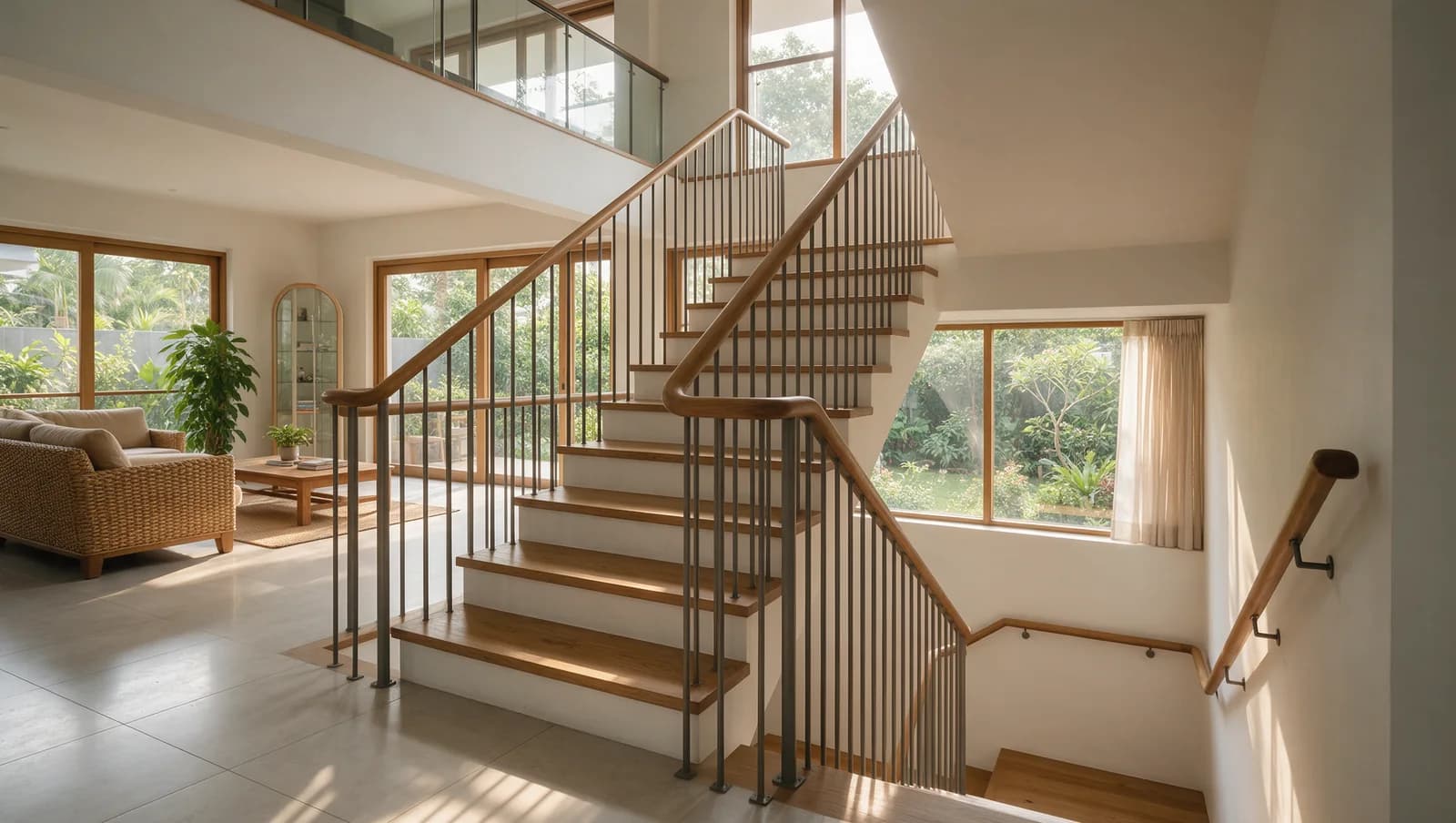
Original staircases here are typically timber-clad concrete with chunky timber balustrades. The dominant refresh path is replacing the timber treads with engineered timber or stone and switching balustrades to powder-coated metal or laminated glass. LED integration is increasingly standard. Structural changes are less common than in older neighbourhoods because the original staircases are generally still appropriately proportioned.
Premium-standard scope range here. Solid timber or stone tread upgrades with metal or glass balustrades dominate, with LED integration a common add-on. We scope each staircase after a free site assessment.
The refresh formula that works across this belt is simple: keep the concrete, renew the treads in engineered timber or stone, swap the heavy balustrade for glass or slim metal, and let LED lighting do the evening work. The staircases that need more than that usually announce it at the first site visit.
Common Questions
Staircase Renovation in East Coast: FAQ
How much does staircase renovation cost?
There's no independent published price for staircase work in Singapore to point you to, so here is what makes the job bigger or smaller. Laying new treads over sound old ones is the smallest job. Stripping old tiles or stone first adds the removal, repairs to what's underneath and more dust. Stone treads weigh much more than timber and each front edge is cut and finished, which adds work. A straight flight is simpler than one that turns on wedge-shaped steps, where each step is cut to its own shape. The railing or banister is priced on its length, whether it's glass, metal or timber and how it fixes into the steps or wall, and glass also on the type of glass and whether it sits in a channel or on separate fixings. Lights set into the steps or wall add an electrician's work. Moving or rebuilding the staircase is bigger again, because structural work brings an engineer's plans, BCA's plan fee where one applies and a permit before work starts, then making good the floors and ceilings on both levels. Get the finish job and any rebuild priced separately so an overlay quote isn't compared with a new staircase. Staircase renovation costs goes through the budget in more detail.
Can I put new timber over the existing treads?
Yes, if the old treads are firm and the stairs under them are sound. The catch is at the two ends of the flight. New treads raise every step by their thickness, so the steps in the middle stay even with each other, but the bottom step gets taller and the top step shorter by that amount, unless the floor at that end is raised too. A step that's a different height from the rest is easy to trip on. The extra layer can also change the nosing, the front edge of each step, and raising a landing floor can stop a door there from clearing it. Get the finished step heights drawn and checked before the timber is ordered. The first and last steps after an overlay explains how that's worked out.
Is timber or marble better for stairs?
Neither is better for every house, but they feel and wear differently. Marble feels cool and hard underfoot, while timber feels warmer and softer, which you notice with bare feet. Timber dents and scratches more easily, but one damaged tread can be sanded and refinished or replaced on its own. Marble is harder but can chip at the front edge, and a chip needs a stone repair or a new tread. Grip comes more from the finish than the material, so polished marble or glossy varnished timber is slicker with damp feet than a honed or textured surface. Try samples in the finish you'd actually get. Marble is also much heavier, so check the existing stairs can carry it. Staircase materials compared covers timber, stone, glass and steel.
Do staircase changes need BCA approval?
Building works need BCA's approval and a permit unless they're on the list of insignificant building works in the Building Control Regulations. That list includes replacing existing floor and wall finishes, and replacing a railing, balustrade or similar barrier with the same material, design and fixing details, unless it's made of non-laminated glass. Moving or rebuilding a staircase isn't on it, and neither is a railing in a new material or design. Only a Qualified Person who is a registered Professional Engineer in the civil or structural discipline can submit structural plans, and BCA's permit comes before structural work starts. BCA advises private property owners to engage a Qualified Person, a registered architect or professional engineer, to advise on the clearances needed from BCA and other authorities such as URA, and whether your tread work counts as a finish is a question for the Qualified Person. For a landed house built for the owner's own use, BCA's rules on handrails, landings and stair width, tread and riser, and its barrier rules on height, gaps and climbing, don't apply, but structural design has no exemption. When staircase work needs BCA approval goes into more detail.
What is an open riser staircase?
It's a staircase with open gaps between the treads, instead of the upright boards (the risers) that close them. On a landed house built for the owner's own use, BCA's staircase rules on stair width, tread and riser, and its rule that a barrier must have no gap a person can slip through, don't apply, so nothing in those rules makes the gaps child-safe. If young children or older parents use the stairs, decide whether to close the gaps between the treads or fill in the railing. Safer stairs for children and older parents goes through the options.
Can I move my staircase or change it to a spiral?
It can be done where the structure and the rooms allow, but it's a different job from renovating the finish. Moving the staircase or reshaping it, into a spiral for example, means changing the opening in the floor above, cutting where the new stairs arrive and closing where the old ones did, and changing what holds the stairs up. That's structural work, so the structural plans come from a Qualified Person who is a registered Professional Engineer, and BCA's permit comes before work starts. The rooms on both floors change too, so check where the new stairs land upstairs and what they take from the room below. Spiral or straight stairs compares the space each needs and how easy each is to use.
Have a different question? See the full Staircase Renovation guide or WhatsApp us.
Get Started
Free Quote for East Coast Homes
Tell us about your staircase renovation project in East Coast. We'll arrange a free site assessment and provide a detailed, no-obligation quotation.
Your Contact Details
Also Serving