D15 · Premium Landed
Kitchen Renovation in Opera Estate, Singapore
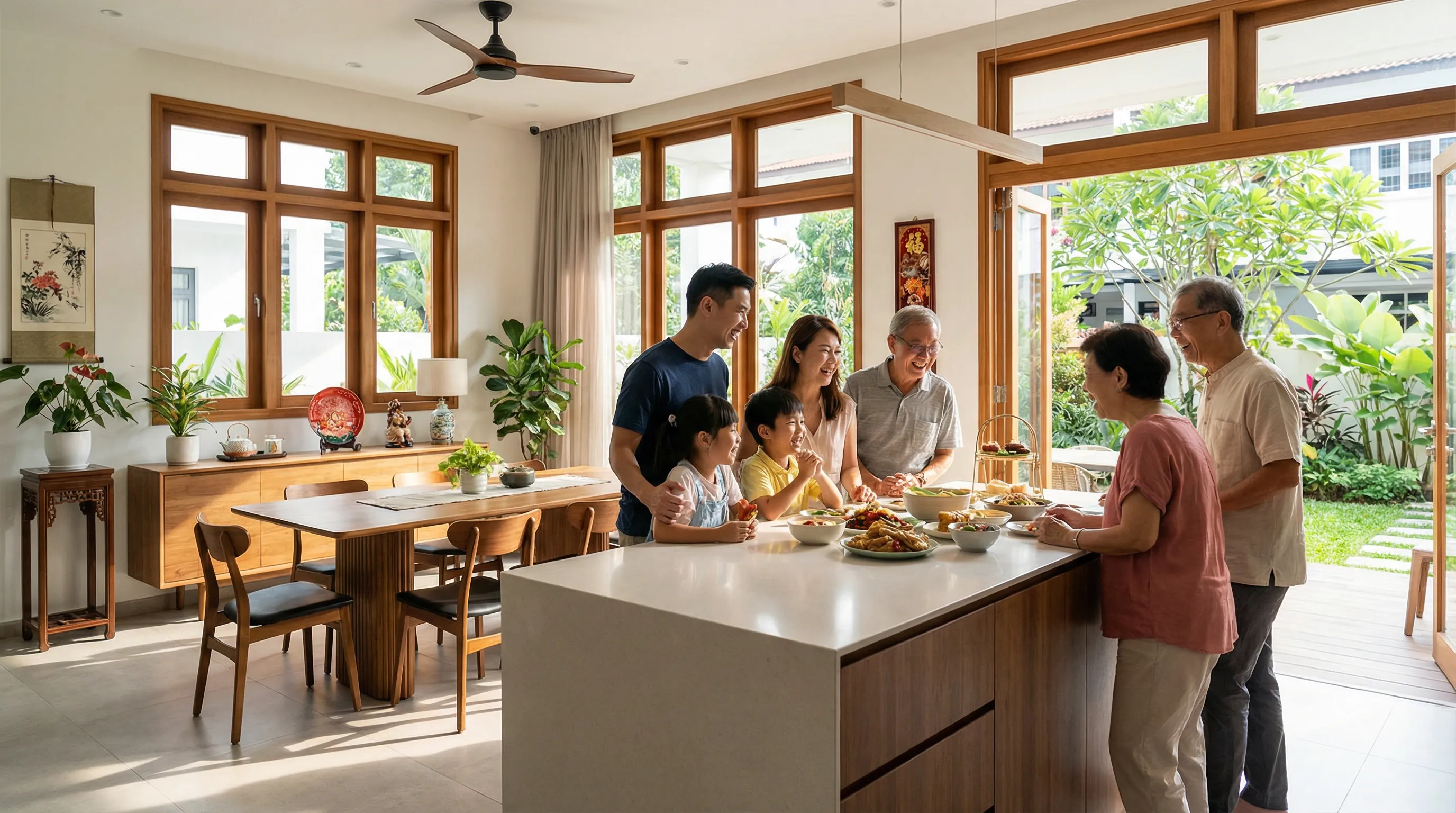
Most landed homes cook in two kitchens. The dry kitchen faces the dining table and holds the island and the finishes people see, while the wet kitchen sits behind it, where the wok-frying and the washing up happen. We plan both together, then run the hacking, plumbing, wiring, waterproofing, tiling and carpentry as one job under one contract. We serve homeowners across Opera Estate (D15): Quiet residential pocket off Siglap Road, predominantly 1970s to 1990s terrace homes due for second-generation renovation cycles.
Why Opera Estate
Kitchen Renovation for Opera Estate homes
Quiet residential pocket off Siglap Road, predominantly 1970s to 1990s terrace homes due for second-generation renovation cycles.
Opera Estate projects follow our standard scope for landed properties. We provide a tailored quote after a free site assessment, no obligations.
Common Questions
Kitchen Renovation in Opera Estate: FAQ
How much does a landed kitchen renovation cost in Singapore?
The price depends on how much you change, not on the size of the floor. Keeping the sink and hob where they are is the cheap end. Moving them, adding an island, or opening up walls means new pipework and wiring, and that is what moves the number. The carcass material, the worktop and the hood route matter too. We put a price to it after a free site visit.
How long does a landed kitchen renovation take?
It depends on how much moves. A refit that keeps the existing layout is a much shorter job than a full rebuild of both kitchens with the plumbing and wiring moved and new waterproofing, and some of the time is waterproofing and screed curing that cannot be rushed. If walls are coming out or the kitchen is being extended, approval time comes on top. We put the schedule in your quote before we start.
Do I need approval to renovate or extend my landed kitchen?
Not for a like-for-like refit inside the existing walls. Approval comes in when you remove or cut into a structural wall or beam, or enclose part of the yard or porch to make the kitchen bigger. Those jobs need a qualified person to file the paperwork with the authorities, and we bring that person in and manage it. How long approval takes is not ours to set.
What is the difference between a dry kitchen and a wet kitchen?
The dry kitchen is the open one facing the dining area, used for prep, coffee and light cooking. The wet kitchen is the enclosed one at the back that takes the wok, the gas and the washing up. The split exists to keep grease and smell away from the rest of the house, and in a landed home it is worth keeping. If you rarely wok-fry, we can shrink the wet kitchen into a compact utility zone instead.
What hood and ducting do I need for wok cooking?
You need a strong hood close to the hob, ducted out through an outside wall, not a recirculating filter. Keep the duct run short with few bends, and let replacement air into the wet kitchen, or the hood has nothing to pull against. We confirm which wall the duct can exit through at the site visit, before the cabinet layout is fixed, because moving it later means moving cabinets.
Which cabinet materials last in Singapore humidity?
Moisture-resistant plywood in the dry kitchen, aluminium or stainless steel in the wet one. Plywood takes laminate and spray finishes well and gives you the widest choice of looks. Metal carcasses will not swell if a leak sits unnoticed under the sink, which is why we put them where the water and the heat are. Plain particle board at the back of a landed house is the one to avoid.
Have a different question? See the full Kitchen Renovation guide or WhatsApp us.
Get Started
Free Quote for Opera Estate Homes
Tell us about your kitchen renovation project in Opera Estate. We'll arrange a free site assessment and provide a detailed, no-obligation quotation.
Your Contact Details
Also Serving