On this page
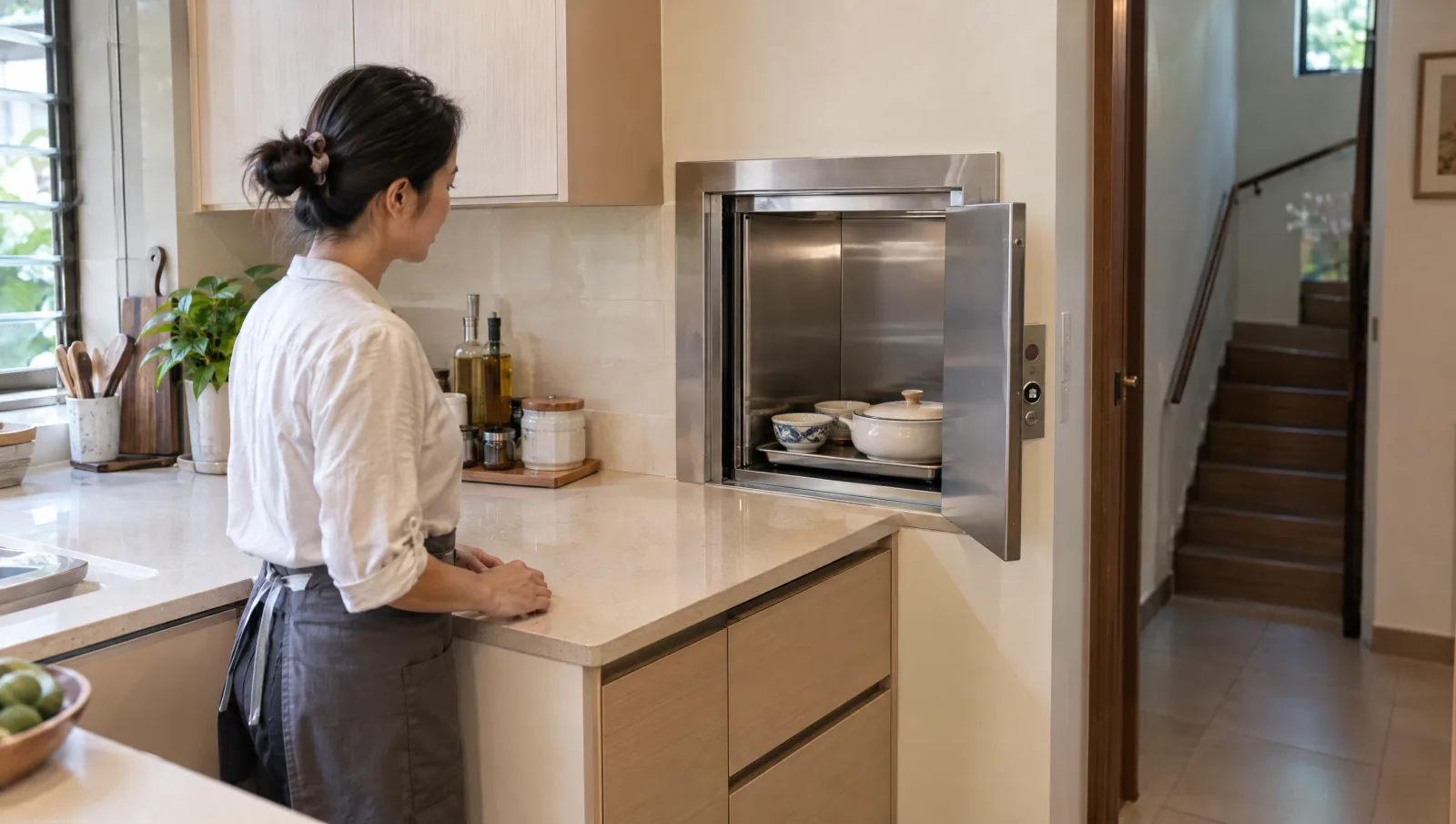
View In PDFA home lift carries people between floors; a dumbwaiter carries goods and must not be used for passengers. Start with what your household needs to move. Sending meals or laundry upstairs is a different requirement from providing access for a family member, and a house may have a reason to plan for both.
They Are Not Interchangeable
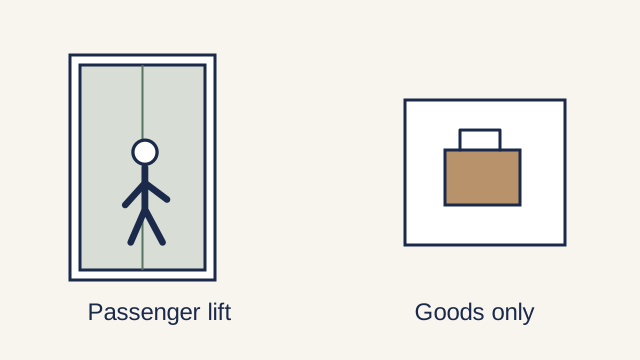
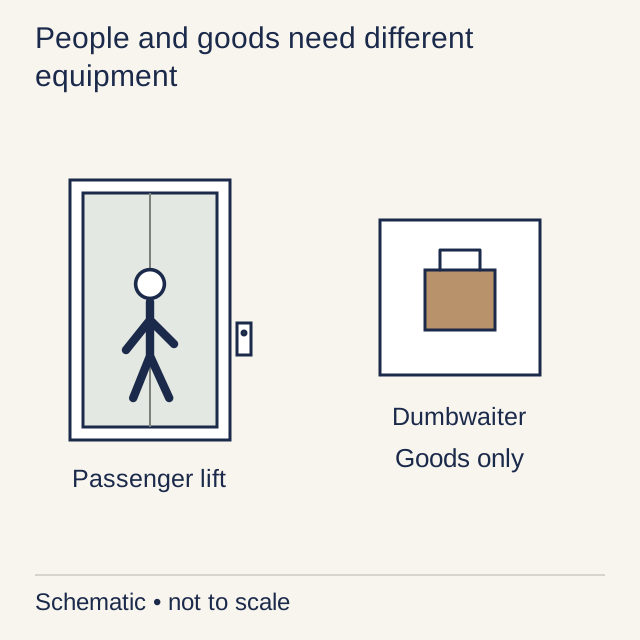
A passenger home lift and a dumbwaiter solve different movement problems. A dumbwaiter is designed for goods only, not for a person to ride in. Never use a goods-only appliance to carry a child or adult, even if its load rating appears sufficient. The intended use belongs to the equipment design, not just its capacity.
The right choice depends on whether your real problem is moving objects between floors or moving people. Sometimes it is both, and the answer is one of each.
What a Dumbwaiter Actually Costs
A dumbwaiter quotation should identify the goods, maximum load, carrier dimensions, door opening and loading height at each stop. A tray service between kitchens needs a different arrangement from moving bulky laundry baskets. Confirm how the goods can be loaded and removed without awkward lifting.
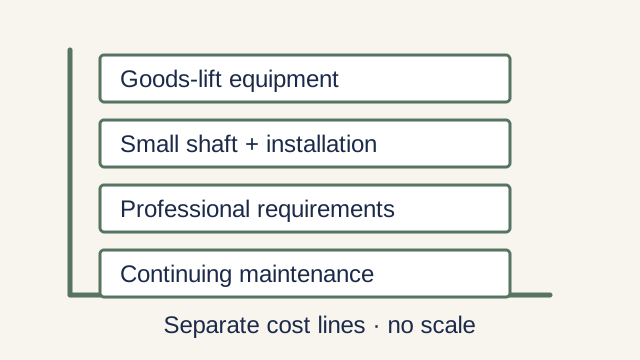
Compare equipment with the associated shaft, openings, supports, electrical work, finishing and service obligations. Have the supplier and relevant professionals establish the actual regulatory classification and installation process. Do not assume that a goods-only description creates a blanket exemption or a universally simpler approval route.
For a two-stop, goods-only 50 kg dumbwaiter, the total is the equipment-and-installation quote plus the house work and any applicable professional or approval charges. The following invented figures show the calculation only. They are not Singapore market prices, a supplier offer or a budget recommendation.
| Two-stop worked example | Assumed amount |
|---|---|
| Equipment, controls, two landing doors and installation | S$12,000 |
| Opening, enclosure and supports | S$4,000 |
| Electrical work | S$800 |
| Finishing and making good | S$1,200 |
| Professional/testing services appropriate to the confirmed classification | S$1,000 |
| Subtotal before applicable tax and unpriced official charges | S$19,000 |
The arithmetic is S$12,000 + S$4,000 + S$800 + S$1,200 + S$1,000 = S$19,000. Replacing only the equipment amount with S$10,000 would reduce that subtotal to S$17,000; it would not remove the openings or electrical work. A longer route, heavier goods or a third stop changes the specification and needs another quotation.
Keep any official charge unpriced until the equipment classification and applicable process are confirmed. Maintenance, later repairs and tax where applicable are additional to this example. A goods-only carrier should never be counted as the cheaper answer to a family member’s need for passenger access.
Where Dumbwaiters Genuinely Win
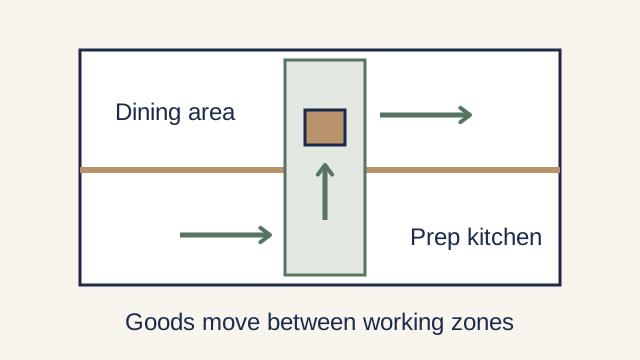
A dumbwaiter can reduce repeated carrying between a preparation kitchen and dining area, or between a laundry room and another floor. Its value comes from a route with useful loading and unloading points. If the user still has to carry the same heavy items up another set of steps, the installation has not solved the full task.
Draw the workflow with representative items: where the tray is prepared, where it waits, how the door opens and where it is set down on arrival. Check cleaning and spill management for food use and the permitted loads in the manual. This is more informative than comparing nominal cabin sizes without the surrounding work surfaces.
Where People Mistake One for the Other
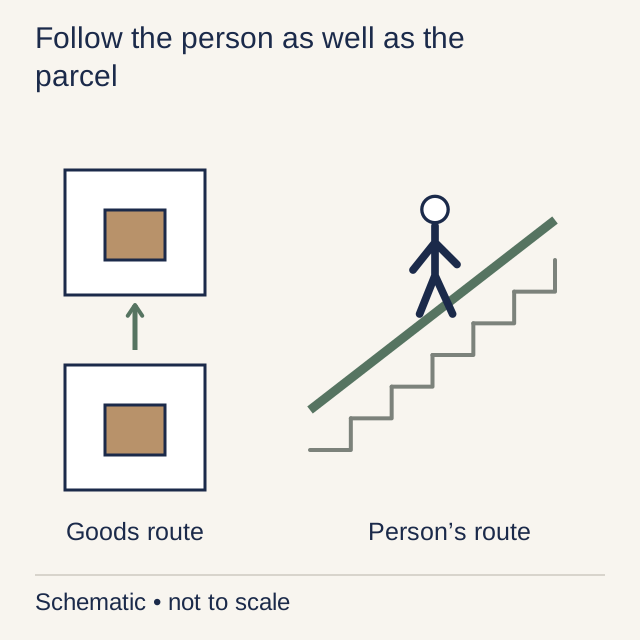
Separating goods from the person can help when carrying is the difficult part but the person can use the stairs safely. It does not solve the climb itself. Walk through loading, walking to the other stop and unloading before deciding whether the saved carrying effort justifies the installation.
If your real problem is mobility for an ageing parent or your own knees, a dumbwaiter does not solve it. A passenger lift or a stairlift does. The dumbwaiter can be a useful add-on later, but not a substitute.
Could You Have Both?
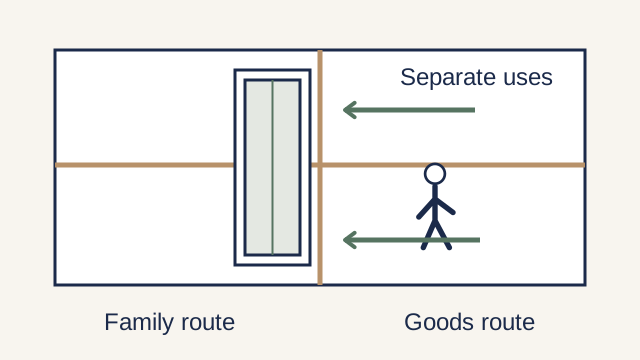
A household may have separate passenger and goods routes. If considering both, show them on the same plans and identify space, support, power, doors and service access for each. Compare the benefit of separate equipment with using a suitable passenger lift for permitted everyday loads.
Early coordination can avoid later clashes, but do not assume that either installation can easily be added after the house is finished. Reserve only a professionally assessed provision and keep its intended dimensions and service route recorded. An empty cupboard is not automatically a future shaft.
How to Pick for Your Home
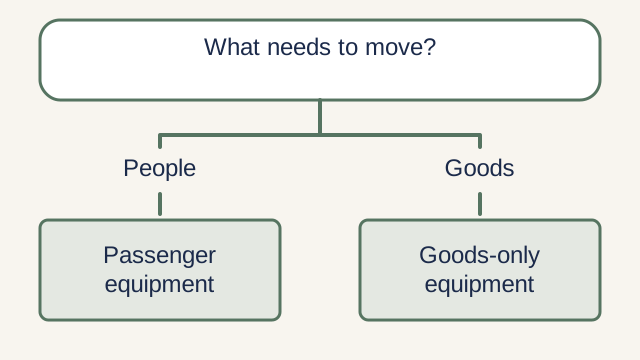
Decide whether the essential problem is moving a person, moving goods or both. Then assess a suitable equipment and workflow proposal for that task. A cheaper goods-only appliance is never a substitute for a passenger installation when the person cannot use the stairs safely.
Obtain current, separately scoped quotations for the feasible options, including building work and continuing care. Ask the provider to identify the installed classification, owner responsibilities and support terms. The right answer is a complete useful route rather than a comparison of two unrelated headline equipment prices.
Home Lifts across Singapore
Need help with your project?
Tell us what you need on WhatsApp and send a few photos. We'll arrange a free site assessment, then give you a fixed-price quote within 3 to 5 working days.