On this page
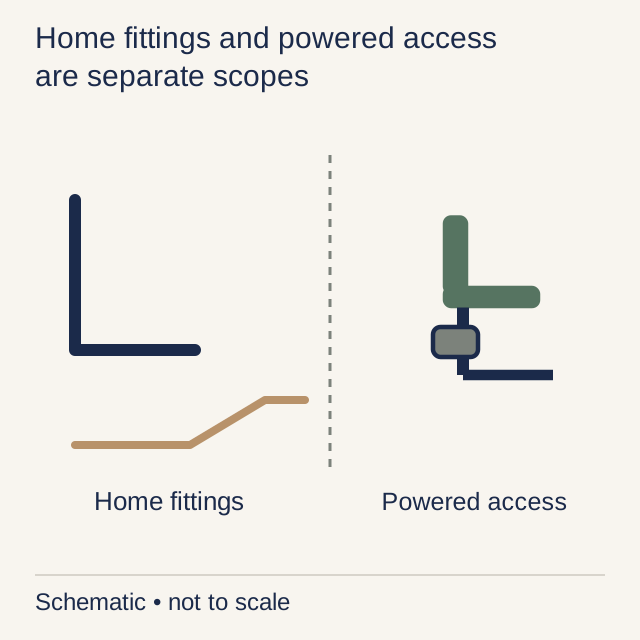
View In PDFEASE and EASE (Private) support different housing situations and specified accessibility improvements. Do not assume that help with entrance access covers a lift between internal floors. Check the scheme that applies to your property and the work it supports, then plan any separate stairlift or home-lift purchase around the person who needs it.
The Honest Headline First
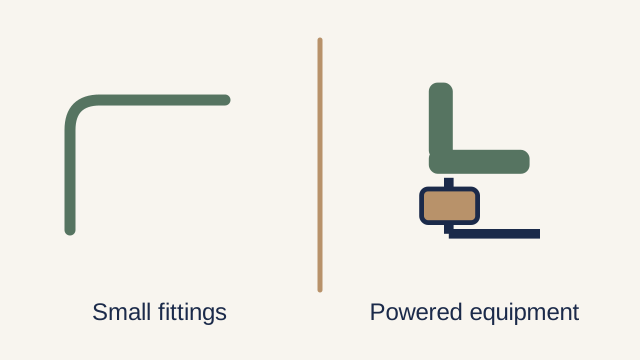
Do not assume an EASE application will pay for an internal stairlift or a passenger lift between floors. Those are not listed fittings in the two programmes. There is an important distinction, however: HDB EASE can offer a wheelchair lifter at a multi-step main entrance when ramp solutions are not feasible.
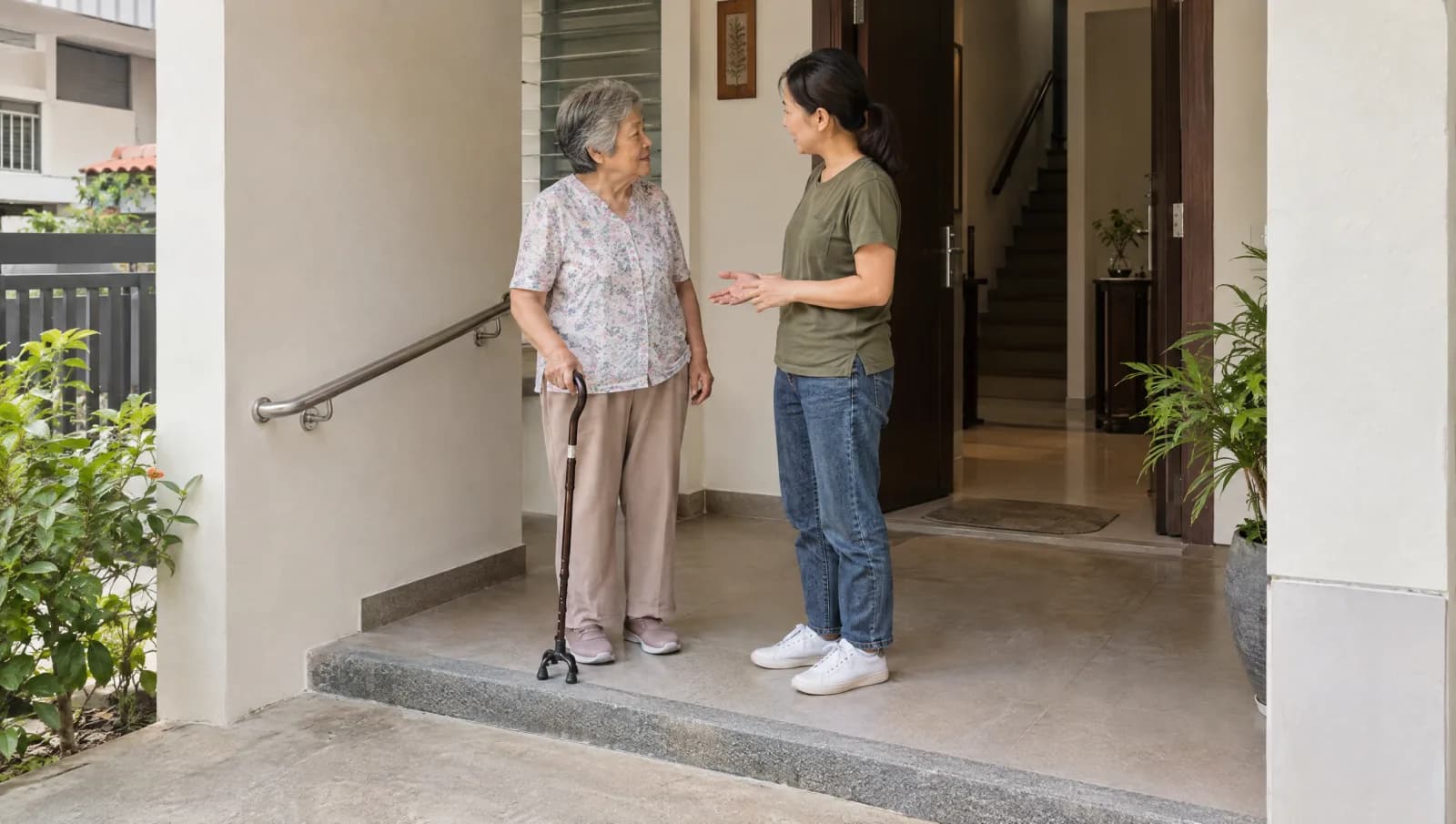
Start with the access problem rather than the word lift. A wheelchair user crossing a stepped HDB entrance, a person moving between floors inside a house and someone needing support in a bathroom face different journeys. The available programme and professional assessment need to match the actual need.
HDB EASE: For HDB Flats
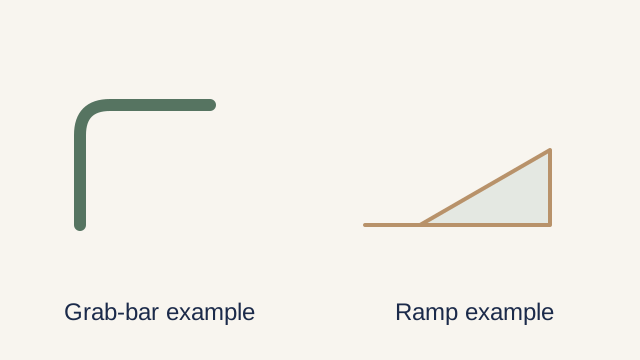
HDB EASE subsidises selected safety and accessibility improvements in eligible flats. Its current list includes grab bars, slip-resistant bathroom-floor treatment, shower seating, selected entrance changes and accessibility solutions. Eligibility, suitability and the household contribution must be checked against the chosen items.
For a multi-step main entrance, HDB assesses ramp solutions first. A wheelchair lifter is offered only when ramps are not feasible; it is not a grant for any powered chair or passenger lift a household chooses. The installation can also involve owner-paid gate changes and continuing maintenance.
Keep the entrance solution separate from an internal staircase proposal. Ask HDB’s appointed team to assess the entrance and explain the contribution and ongoing duties before you accept it. A quotation from another supplier does not establish programme eligibility.
EASE (Private): New for Private Homes
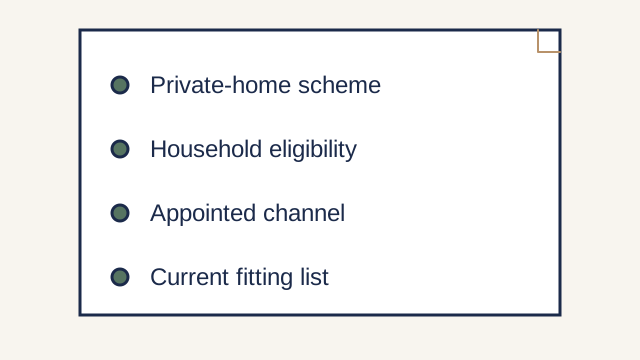
EASE (Private) began its phased rollout on 1 April 2026. The official programme offers eligible private-property households S$1,200 in vouchers towards 75% of selected fitting costs from appointed contractors. This is a capped contribution, so the household pays its share and any cost beyond the available voucher support.
The current fittings catalogue lists grab bars, slip-resistant treatment to existing bathroom flooring, a foldable shower seat, bidet spray, entrance handrail, home fire alarm device and single-step ramp. Installation depends on technical feasibility; these items do not include an internal stairlift or passenger home lift.
Check the current household and senior eligibility and application status through the official EASE (Private) portal. Its application guidance includes a route for people aged 60 to 64 who require help with an Activity of Daily Living. Confirm the required assessment and any property-owner or management consent before ordering work.
Why an Entrance Lifter Is Different From an Internal Lift
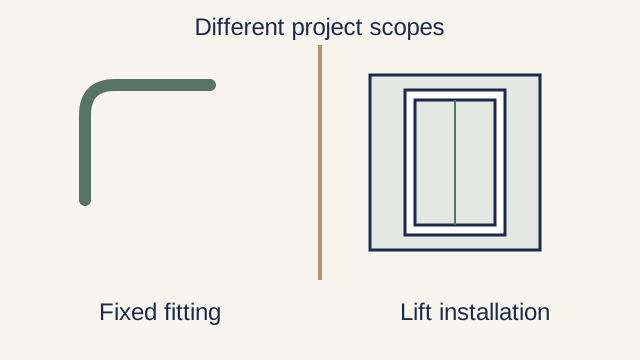
A wheelchair lifter for a stepped entrance solves a particular change in level. An internal stairlift follows a staircase with a seated user, while a passenger home lift travels between landings in a different installation. Similar names do not make those devices interchangeable in a programme’s approved fitting list.
Avoid the broader claim that no Singapore assistance could ever help with powered mobility. This guide establishes the scope of these two programmes, not every charitable or individual assistance arrangement. For the proposed stairlift or home lift, budget separately unless the relevant scheme administrator gives specific written confirmation of support.
Use the Grant for What It Covers, Then Plan the Lift Separately
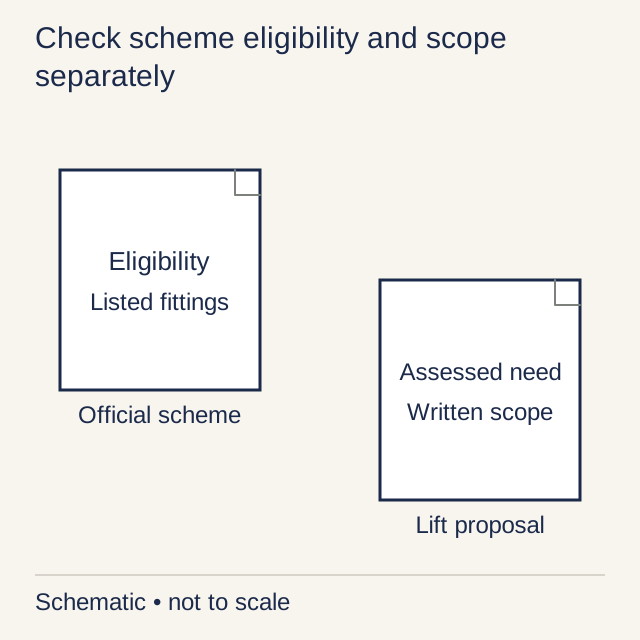
Use the appropriate programme for the fittings it covers and assess the internal access problem separately. A grab bar, suitable bathroom fitting or entrance solution may be useful even when it does not remove the difficulty of climbing an internal flight. Let the user’s abilities and daily route determine the priorities.
For a stairlift, assess transfers, seating and the remaining stair route; for a home lift, assess landing space, building work and ownership duties. Do not spend a deposit on the assumption that a voucher will reimburse the purchase later. Ask the provider for a full written scope and funding-independent price.
DirectHome does not administer these government applications. Use the official HDB or EASE (Private) channel for eligibility and approved contractors. An enquiry about a separate installation is not an application for public support.
Where to Confirm the Details
Use the official HDB EASE page for flat-related coverage and the EASE (Private) portal for private homes. HDB directs EASE (Private) enquiries to BCA. Use that route for questions about eligibility, appointed contractors and the application.
Check the current catalogue, eligibility, contribution and application instructions before proceeding. For separate stairlift or home-lift enquiries, describe the route, storeys and user’s needs and request a suitability assessment. Keep grant applications and equipment contracts clearly identified so each decision rests on the correct terms.
Frequently asked questions
Can I use an EASE grant to pay for a stairlift in Singapore?
An internal stairlift is not a listed EASE fitting. HDB does offer a wheelchair lifter for a multi-step main entrance when ramp solutions are not feasible; that is a different, assessed entrance solution.
Does any Singapore grant cover a home lift?
A passenger home lift is not listed under these EASE programmes. This does not establish the scope of every other possible assistance arrangement; seek written confirmation from the relevant administrator before relying on funding.
How much is the EASE (Private) voucher and what does it cover?
Eligible households receive S$1,200 in vouchers towards 75% of selected fitting costs from appointed contractors, subject to the current programme terms and technical feasibility. The catalogue includes bars, a shower seat, bidet spray, alarm, floor treatment and a single-step ramp.
Who qualifies for EASE (Private)?
Check the current eligibility and required assessment at the official EASE (Private) portal, including the route for seniors aged 60–64 needing help with an Activity of Daily Living. Do not assume eligibility from age alone.
Does DirectHome claim the grant for me?
No. Apply through the official HDB or EASE (Private) channel. DirectHome does not administer the grant application.
Stairlifts across Singapore
Need help with your project?
Tell us what you need on WhatsApp and send a few photos. We'll arrange a free site assessment, then give you a fixed-price quote within 3 to 5 working days.