On this page
View In PDFStaircase work needs BCA approval and a permit unless it’s on BCA’s list of minor works. Moving the stairs, cutting a floor opening or changing their supports needs a structural engineer first. BCA’s standard sizes, like treads of at least 225 mm and risers up to 175 mm, don’t apply to a house built for the owner’s own use.
Start With the Actual Scope
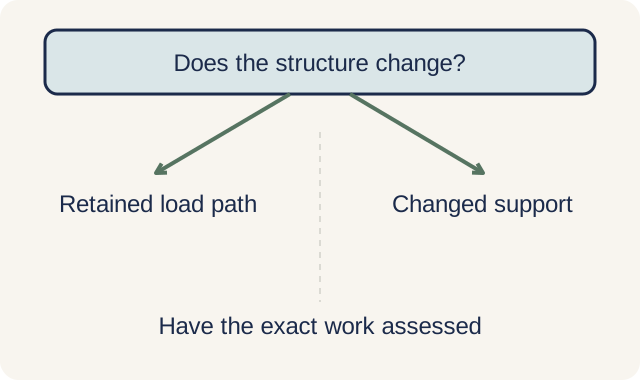
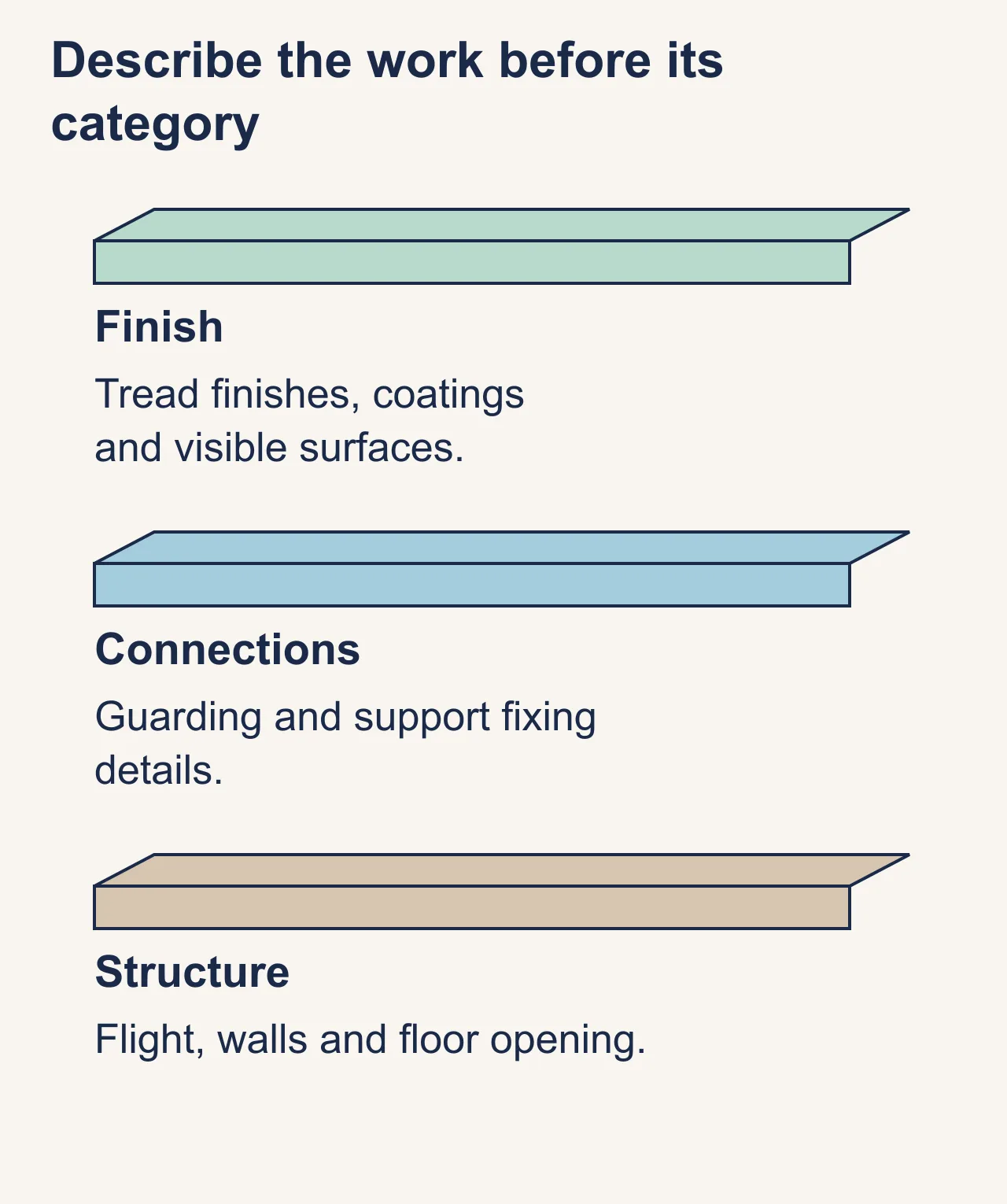
For staircase renovation, start with what stays and what changes. Sanding a timber finish, replacing a load-bearing tread and relocating the whole flight are different jobs. A description such as “replace stairs” is too broad to decide which approval route applies.
The minor jobs that need no plans are what BCA calls insignificant building works, listed in the First Schedule of the Building Control Regulations. For stairs, the relevant entries are replacing existing floor and wall finishes, and replacing a railing or balustrade with the same material, design and fixing details, as long as it isn’t non-laminated glass. The list has no entry for building, replacing or moving a house staircase, and the only new slab openings it covers are for building services, no more than 150 mm across in an upper floor. BCA requires a permit for all building works except those on this list, so a new flight, a new floor opening or new supports need approved plans and a permit.
Work on the list can still need approval from another authority, such as URA, so BCA’s guidance says owners should engage a Qualified Person, or QP, to advise on the clearances needed from BCA and other authorities. Have the QP confirm whether your tread work counts as a finish before relying on the list.
The QP needs the existing drawings, the proposed layout and enough site information to understand the construction. Drawings alone may not show a previous alteration. Have uncertain supports investigated by the project team before fabrication, with the affected area secured and safe access maintained.
What changes for a house built for your own use?
In a house built for the owner’s own use, BCA’s exemptions for landed houses remove only the staircase requirements for handrails, for landings, and for stair width, tread and riser sizes. They don’t exempt structural design and construction. They also don’t remove BCA’s headroom rule or the barrier needed on any open side of the stairs that has a drop of 1,000 mm or more. For that barrier, they lift only BCA’s requirements on its height, its gaps and how easily it can be climbed. Have the QP confirm whether the house qualifies, rather than assuming that every private residential staircase receives the same treatment.
Keep two answers in the proposal: whether plans and a permit are needed for the work, and which design provisions apply to the house. The first concerns permission to carry out the alteration. The second affects how the approved staircase is designed.
Finish Repairs and Changes That Need Closer Review
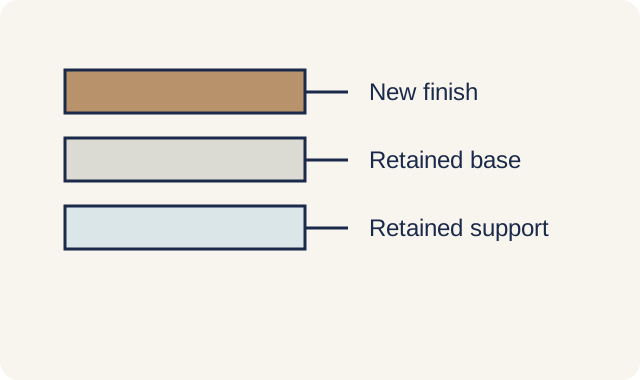
A finish sits on the part that supports your weight. If the work only renews that finish, the supporting stair can remain; if a timber tread itself spans between supports, removing it changes a load-bearing component. Have the scope name which of those jobs is intended before accepting “cosmetic work” as the description.
An overlay also changes the finished step levels. A build-up on the treads can leave the first and last steps different from the rest unless the adjoining floor finishes are considered. Our guide to stair overlays and first and last step levels explains why the floor-to-floor measurement belongs in the design.
A handrail provides something to hold; a balustrade guards an open edge. Replacing either can involve new fixings and loads, even if the overall appearance changes very little. Compare staircase balustrade options after establishing what the supporting edge can carry.
Which staircase dimensions does BCA specify?
For stairs to which these provisions apply, BCA’s Approved Document V7.08 gives an acceptable-solution route including a minimum 1,000 mm clear stair width, maximum 175 mm riser and minimum 225 mm tread within a residential unit. Landings have a minimum 1,000 mm clear width, with one at floor levels and door openings; intermediate landings are required within 18 risers except for spiral stairs. The owner-use exemptions described above must be checked before treating these dimensions as mandatory for a landed home.
The same document gives handrails an acceptable height of 800 to 1,000 mm above the pitch line, the line joining the leading edges of the steps. It puts a handrail on at least one side of any flight with more than 5 steps, so this route doesn’t call for one on a flight of 5 steps or fewer.
Under the same acceptable solution, a barrier on an open side is at least 1.0 m high, measured straight up from the pitch line on a flight, and has no gap a 100 mm ball could pass through. On open-riser and floating stairs, the open gap between two consecutive steps also has to stop a 100 mm ball. The triangle formed by a tread, a riser and the bottom edge of the barrier has to stop a 150 mm ball. In a house built for the owner’s own use, an open side with a drop of 1,000 mm or more still needs a barrier, but BCA’s height, gap and anti-climb requirements for it don’t apply.
An exemption is not a reason to choose awkward steps. Set out how the household will use the stairs, including anyone who needs a steady grip, and agree a design that is comfortable and safe for them.
Structural Changes to Resolve Before Construction
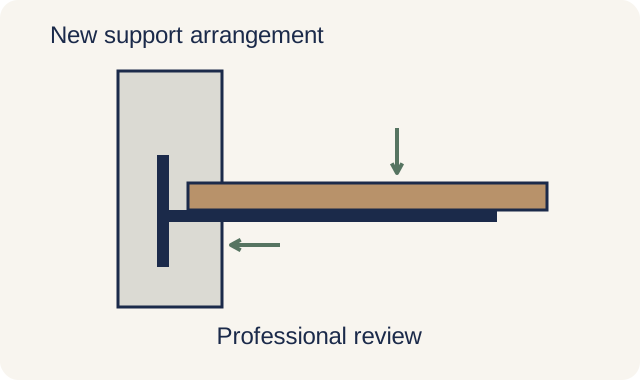
Moving a staircase can require a new opening upstairs, closing the old opening and supporting both the new flight and the surrounding floor. The difficulty comes from how those loads reach the rest of the building. Drawing the stairs in a new spot is easy; the engineering is working out what holds up the new flight and the floor around both openings.
Floating stairs raise the same question. A tread may look as though it emerges from a wall, but its support must transfer the load into suitable structure. An existing partition cannot be assumed to perform that role simply because it occupies the right position.
Where structural submission is required, BCA restricts structural plan applications to a QP who is a registered civil or structural Professional Engineer. The structural plan approval and permit to start structural work are distinct steps. Establish both responsibilities before demolition, including any temporary support needed during the change.
The programme also needs to address access to the upper rooms while the existing stairs are unavailable. Ask the project team how the work area will be separated from the household and at what point the new route can safely be used. A fabrication date alone does not answer that question.
Is a spiral staircase legal?
Yes, BCA’s Approved Document allows for spiral stairs. It excuses a spiral staircase from the intermediate landing otherwise needed within every 18 risers, and it measures a tapered tread 500 mm from its narrow end, so the 225 mm minimum tread is checked along that line where the size provisions apply. In a house built for the owner’s own use, the landing, width, tread and riser provisions don’t apply, but the structural rules and the barrier on any open side with a drop of 1,000 mm or more still do. Have the QP check your actual layout before you order one.
Spiral treads narrow towards the centre post, so how much step your foot gets depends on where you walk. For the layout decision, read spiral versus straight staircases alongside the proposed dimensions.
Are stairs included in gross floor area?
URA generally includes staircases in gross floor area by projecting the flight upwards onto the relevant floor. Its guidance excludes intermediate staircase levels that are not connected to a floor. So a moved or added staircase still counts as floor area. Have the architect check the whole layout against URA’s rules.
Conservation Shophouses Are a Special Case
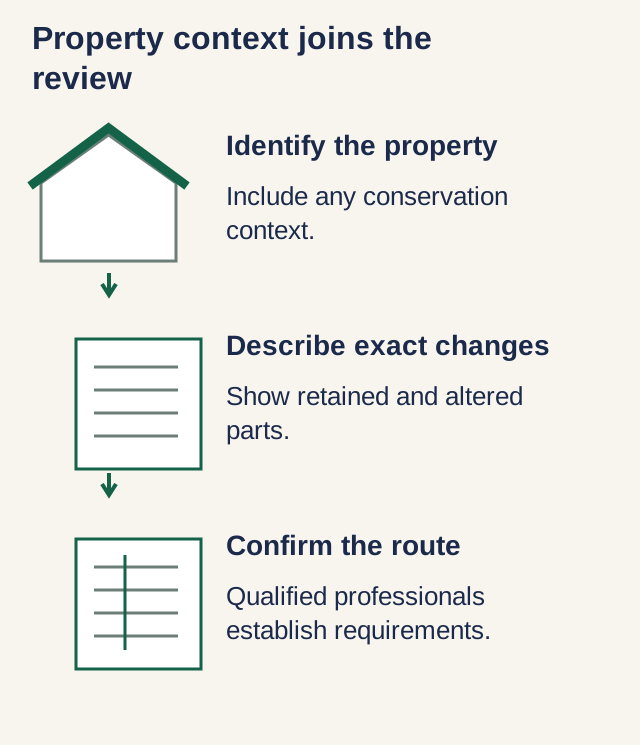
URA’s conservation approval process is separate from whether BCA requires plan submission. In a conserved building, adding or removing an internal staircase is Category 2 work, which needs URA Conservation Permission before work starts. The submission has to come from a QP who is a Registered Architect or a Professional Engineer.
Under URA’s Historic District staircase guidance, an existing staircase can be retained or relocated with the original railings reinstated. Where the building has timber floors, a new staircase replacing or supplementing the existing one is to use lightweight material such as timber or metal; a new reinforced-concrete staircase is not allowed under that guidance. This is a district-specific rule, not a restriction on all landed houses.
Have the proposal show which original parts remain, which are repaired and which are replaced. That gives the architect a concrete design to assess and submit. If a technical requirement calls for a modification, resolve the conservation evaluation before components are removed.
What Happens if You Skip It
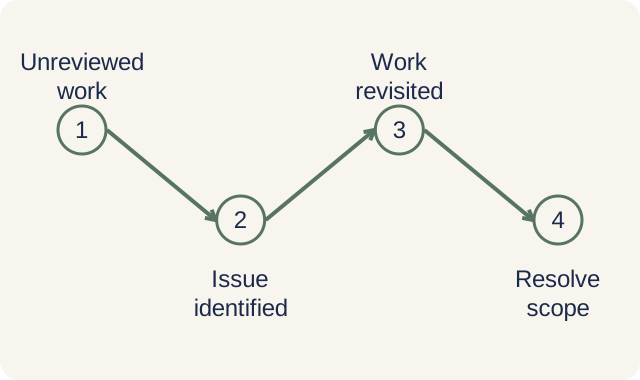
BCA says an owner found with unauthorised additions or alterations has committed an offence under the Building Control Act and faces enforcement action. BCA advises owners who want to retain unauthorised works to engage a QP to submit plans and obtain other necessary approvals. A retrospective submission is a route for assessment, not a promise that the staircase can stay.
If you’re buying a house whose staircase has been altered, have an architect or engineer compare the actual construction with the approved plans. BCA also cautions that a legal search only reveals unauthorised works already brought to its attention. A clean search therefore does not prove every alteration has approval. If you already own the house, the same comparison of the stairs as built against the approved plans shows what was changed.
The physical consequence can be expensive rework. For example, discovering after fabrication that a new support cannot connect as proposed means the design and affected finishes need revisiting. Keep the approved drawings and recorded changes together so later owners and project teams can understand what was built.
Putting Approval Responsibilities in the Quote
The quotation should connect each part of the work to the person responsible for it. Name the party assessing the existing stairs, the designer of any structural change and the party handling necessary submissions. State whether their fees and any investigation work are included.
| Before committing | What should be clear |
|---|---|
| Scope | Finishes, treads, guarding, frame, supports and floor openings retained or changed. |
| Design basis | Property use, applicable exemptions and the proposed dimensions and support arrangement. |
| Approvals | Required submissions and permits, their responsible parties and the point when work may start. |
| Construction | Temporary protection, access upstairs, making good and how unexpected findings are handled. |
| Handover | Final drawings, relevant approvals and the record of material changes. |
If opening up reveals construction different from the drawings, the affected work needs reassessment before proceeding on the original assumptions. Agree how the scope and price will be revised if that happens. This keeps a finish renewal from quietly becoming unpriced structural work.
With us, you get a free site assessment first, where we visit and measure the stairs, and then a fixed-price quote within 3 to 5 working days. We arrange the specialist firm, the engineers, the QPs and any BCA submissions, supervise the work and hand the stairs over. Our specialist does the staircase work itself, and we stand behind it with a warranty and after-care.
When you talk to us about staircase renovation, bring the existing plans, photos taken from safe positions and a sketch of the change you want. Photos help us understand the job before the visit, but the price comes from the site assessment, never from a photo. If you don’t have the plans, BCA sells owners copies of their approved plans. Our staircase renovation guide helps connect the approval decision with materials, household access and the finished layout. The staircase materials comparison helps narrow the finish once the structure and approval route are clear.
Staircase Renovation across Singapore
Need help with your project?
Tell us what you need on WhatsApp and send a few photos. We'll arrange a free site assessment, then give you a fixed-price quote within 3 to 5 working days.