On this page
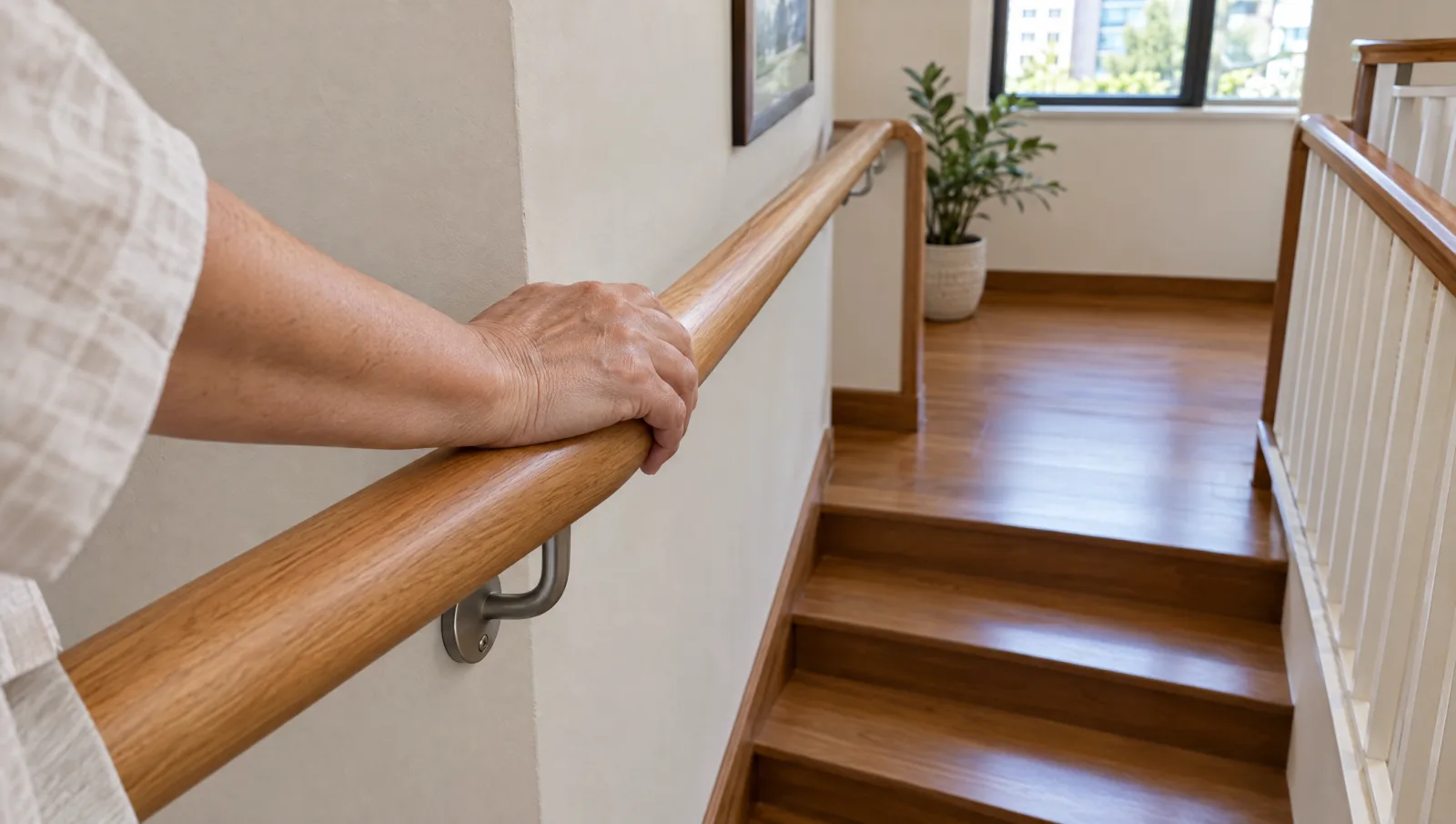
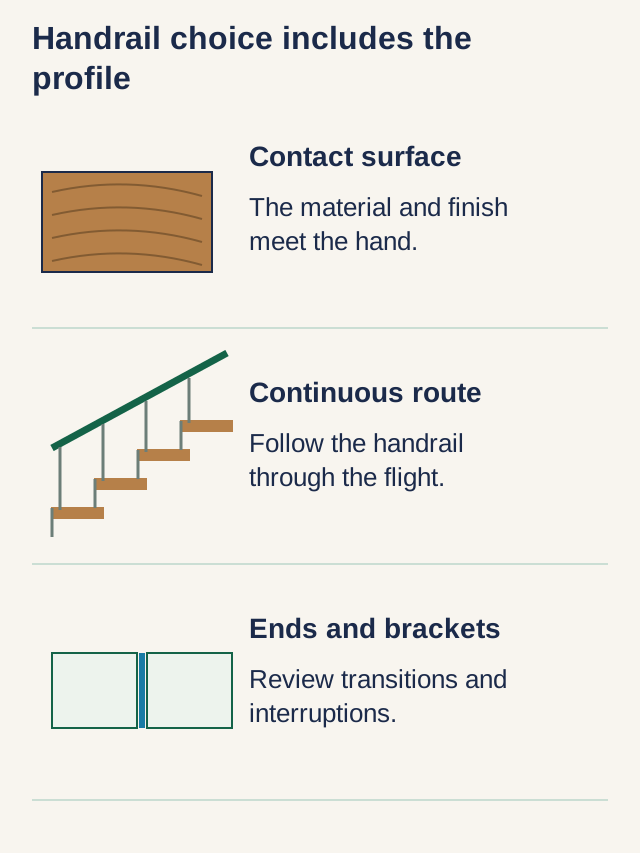
View In PDFA comfortable handrail gives the user a shape they can hold securely along the stairs. Its size, position and continuity matter alongside the material and finish. Try the proposed grip where possible and consider children, older family members and anyone with limited hand strength before choosing mainly for appearance.
Why the Handrail Deserves Its Own Decision
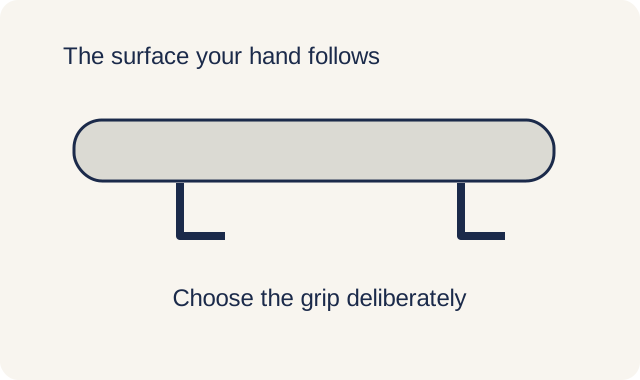
The handrail often gets chosen as part of the balustrade package, but it deserves its own review. It is the surface your hand follows on the way up and down. Grip shape, continuity and bracket positions affect daily use as much as the material’s appearance.
A well-chosen handrail also pulls the staircase together visually. The wrong handrail makes even a good staircase look unfinished; the right one elevates a budget build.
Timber Handrails
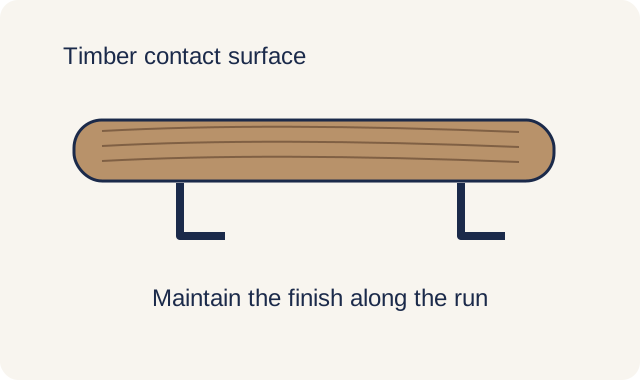
Timber gives a warm-feeling grip and can match treads or adjacent joinery. Compare the actual species, finish and cross-section on a sample. A broad decorative cap is not automatically easy to grasp; profile should suit the users as well as the balustrade.
Timber handrail pricing depends on length, curved sections, joints, brackets and finishing. Check for wear in high-contact areas and follow the specified coating’s care instructions. Refinishing needs to suit the existing finish rather than follow a universal five-to-eight-year cycle.
Stainless Steel Handrails
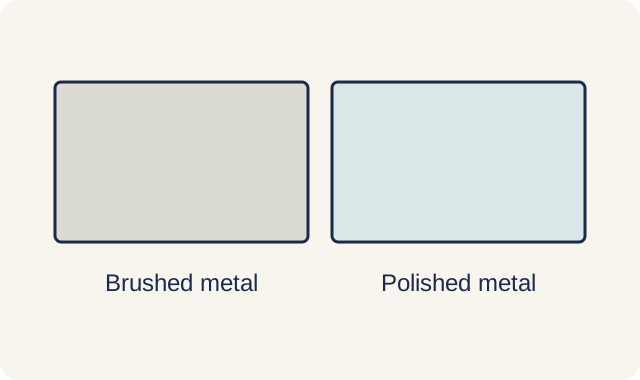
Stainless handrails can suit glass or metal balustrades, with round and shaped profiles available. Specify the grade and surface finish for the location, including any outdoor or coastal exposure. Stainless still needs appropriate cleaning and can stain or corrode under unsuitable conditions.
Compare the complete installed rail, including bends, ends and bracket fixings. Stainless may feel cooler and harder than timber, so handle a sample before choosing. Brushed and polished finishes show scratches and fingerprints differently; decide which appearance you can maintain.
Brass and Bronze Handrails
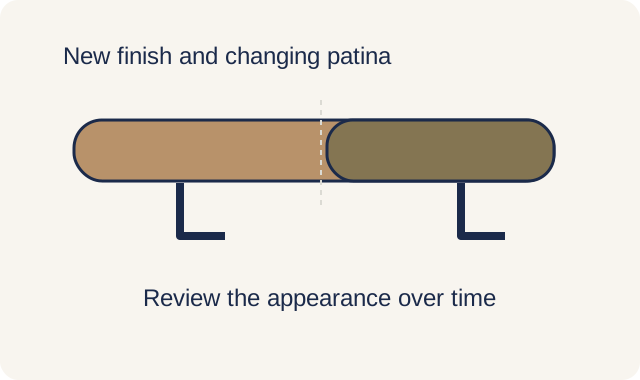
Brass and bronze can suit classical interiors or provide contrast in a modern stair. An unlacquered surface develops patina, while a clear-coated or PVD-finished product has different care and wear characteristics. Confirm the underlying metal and coating rather than choosing from the colour name alone.
Material, profile, bends and surface treatment all affect fabrication cost. Include the brackets and their substrate in the design, particularly for heavier sections. Request cleaning guidance because a product that polishes bare brass may damage a protective coating.
Leather-Wrapped Handrails
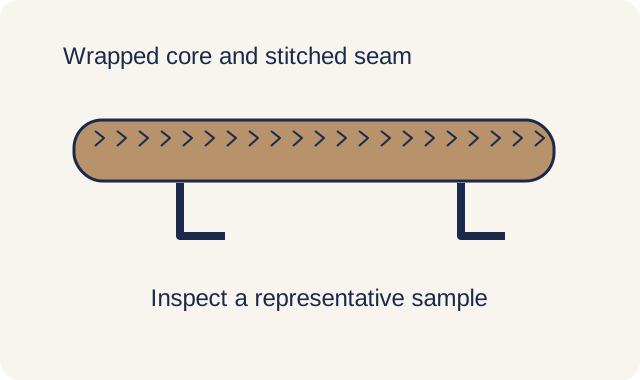
Leather wrapping creates a distinctive tactile surface over a timber or metal core. The leather, seams and adhesive system need to suit repeated hand contact and the indoor environment. The core and fixings still provide the structural support; the wrapping is a finish.
A sample should show seam placement, grip thickness and how ends are finished. Confirm how worn wrapping can be repaired or replaced and what cleaning products are permitted. Compare the complete custom scope rather than assuming a standard installed rate per metre.
Profile and Ergonomics
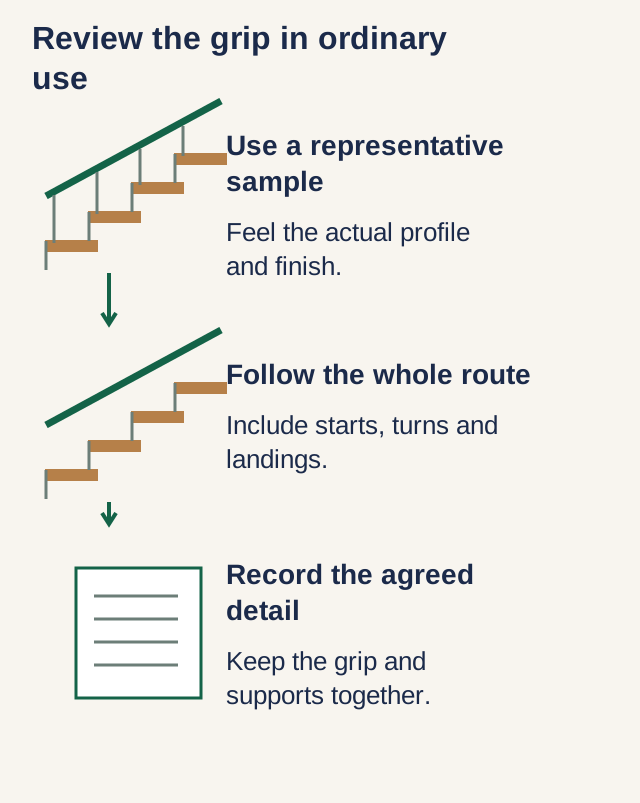
Try the profile with the people who will use it. Fingers should wrap comfortably around the grip without being obstructed by the wall or brackets. Round or rounded profiles are worth comparing, but one diameter does not fit every user or resolve the applicable design requirements.
Edges should be rounded over rather than left sharp. The transition where the handrail meets the wall bracket or balustrade should be smooth. If your hand catches on a fixing point each time you slide down, the design has failed.
Future-Proofing for Older Adults
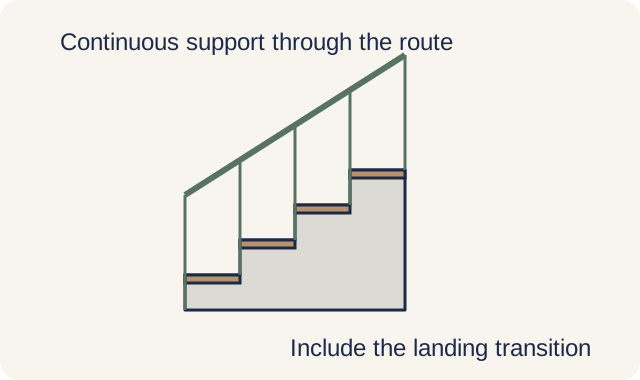
If older parents live with you, a continuous handrail running the full length of the staircase, ideally turning back into the landing, provides a constant support point. Single-section handrails that stop short at each landing are harder to use safely with reduced grip strength.
Support on both sides may help some users, but the height and position should respond to their reach and the available clear width. If a stairlift is planned, coordinate the rail, seat movement and handrail arrangement with its surveyed layout. Do not automatically remove a useful handrail to make space.
Matching Handrail to Balustrade
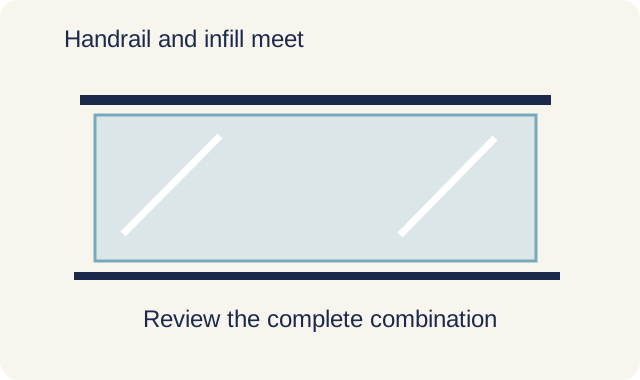
Glass infill can pair with a slim timber or stainless handrail, with brackets and channels forming part of the finished appearance. Metal balusters can take a matching rail or a contrasting timber grip. Timber or decorative iron balustrades also allow different handrail materials; compare the junction, grip and finish together.
Done well, the handrail is the punctuation mark at the end of the sentence. Done badly, it is the typo that catches your eye every time you walk past.
Staircase Renovation across Singapore
Need help with your project?
Tell us what you need on WhatsApp and send a few photos. We'll arrange a free site assessment, then give you a fixed-price quote within 3 to 5 working days.