On this page
View In PDFSpiral stairs can use less floor space, but their shape changes how people walk and move items between floors. A straight staircase usually needs a longer run, with a different effect on the room layout. Compare the space saved against everyday access, furniture movement and the needs of everyone using the stairs before settling on the design.
Layout Is a Constraint, Not a Style Choice
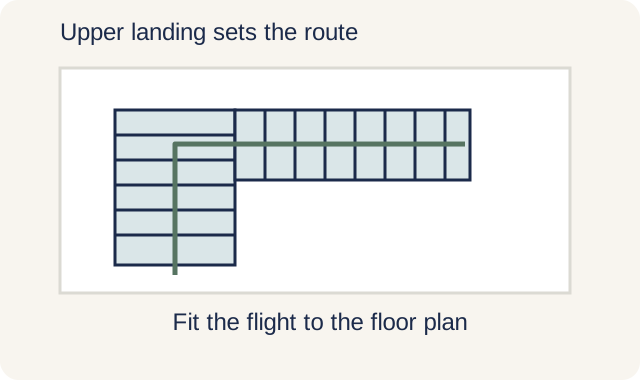
Most homeowners pick a staircase style first, the look they want, and then try to fit it into the available footprint. That order is backwards. The layout is dictated by the floor plan, the ceiling height, the position of the upper-floor landing, and how you actually move through the house.
Get the layout right and almost any style works. Get it wrong and even the most beautiful staircase becomes awkward to use, hard to navigate with furniture, or unsafe for older family members.
Straight Staircases
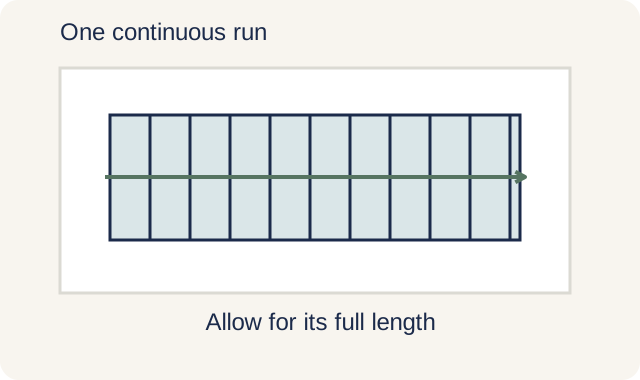
A straight staircase follows one run, subject to any landing requirements in the design. Repeated tread geometry can simplify fabrication, and a straight route can suit a straight-rail stairlift. The run needed depends on floor height, tread and riser geometry and landings; it cannot be inferred from house type alone.
Best for landed homes with a longer floor plate or for cases where the staircase can run along a wall. The minimal visual mass also suits modern open-plan interiors.
L-Shaped and U-Shaped Staircases
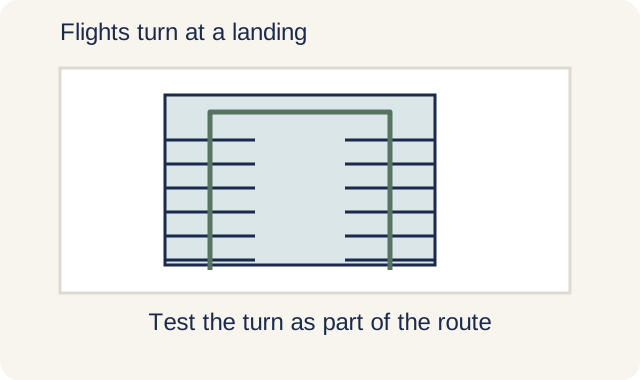
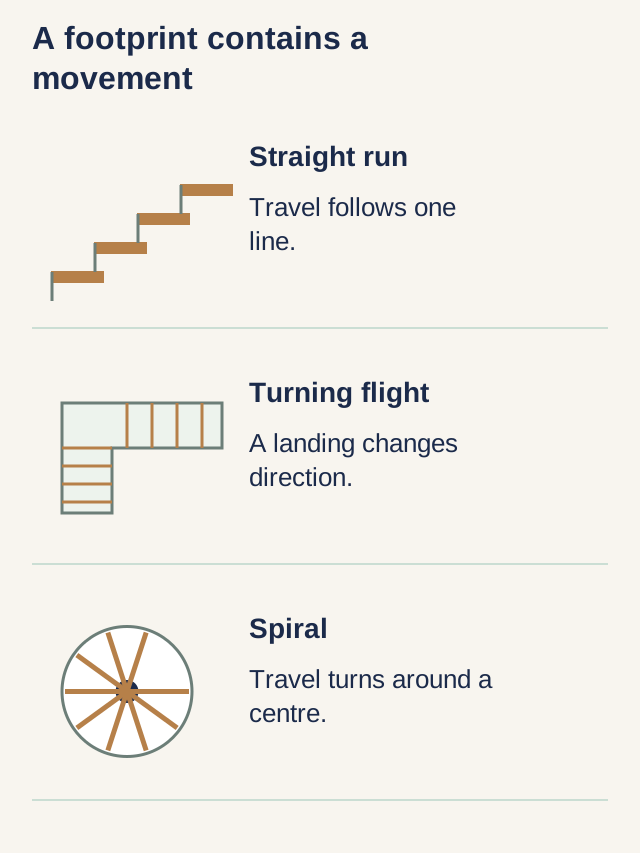
An L-shaped staircase changes direction once; a U-shaped staircase returns towards the starting side. A landing or winder arrangement determines how the turn works. Compare the whole well, upper-floor opening and headroom, because a compact plan can still produce an awkward arrival upstairs.
A landing provides a level place to pause and can interrupt a long flight. It does not guarantee that a fall stops there. Handrails, visible tread edges, slip resistance and enough space to turn remain important for children and older adults.
Spiral Staircases
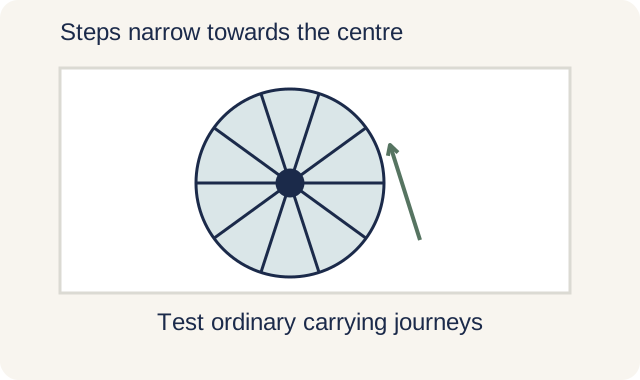
A spiral wraps wedge-shaped treads around a central support and can fit a compact plan. The nominal diameter is not the usable tread width: the centre post, handrail and narrow inner edge consume space. Test the actual walking route and headroom rather than selecting from the outline alone.
Furniture handling and uneven tread width can make a spiral awkward as everyday access. SCDF’s spiral-staircase rules prohibit it as the sole means of escape for Purpose Group I buildings and specified maisonettes and penthouses. A compact fit therefore does not establish suitability for attic or roof access.
How Each Layout Affects Cost
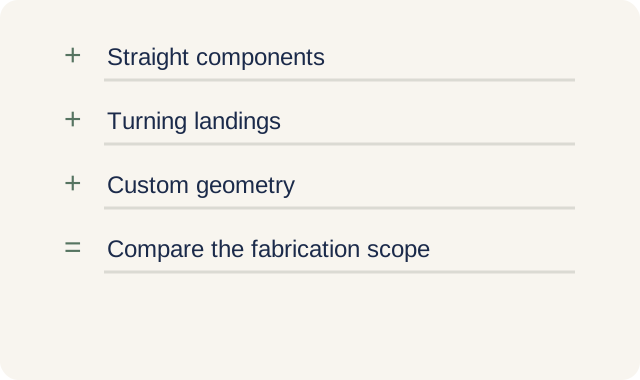
A straight arrangement can simplify repeated fabrication, while turns add landing structures or shaped treads. The difference is not a reliable percentage: existing supports, access and finishes may outweigh the layout. Compare a complete measured scheme for each option.
A prefabricated spiral and a custom internal spiral have different supply and site scopes. Foundation or slab connections, delivery, assembly, guarding and finishes may be separate from the kit price. Include them before comparing a spiral with a conventional flight.
Future-Proofing for Aging Parents
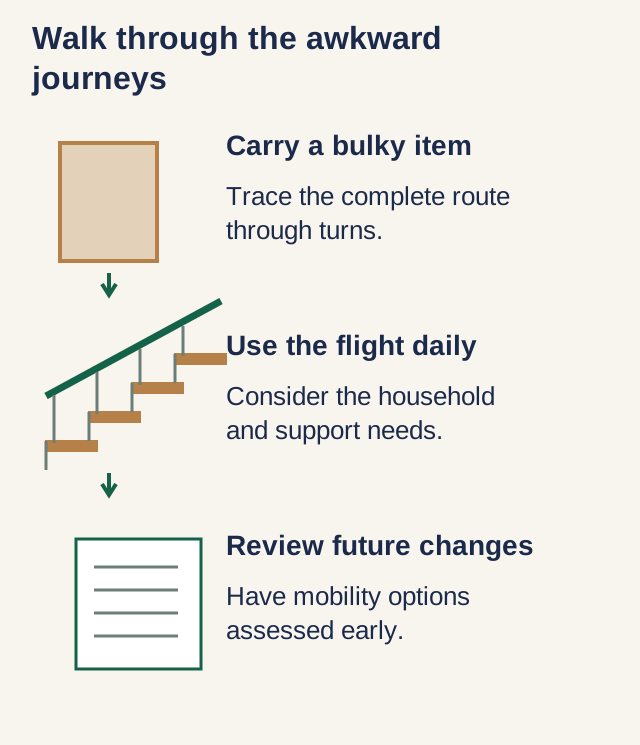
A straight stair can suit a straight stairlift rail. Turns normally need a rail designed for that route, and some compact or spiral arrangements may be unsuitable for a particular model. Reserve space for the user, folded seat and transfers at both ends; an installer’s survey should establish feasibility.
It is worth thinking about this before you commit. A staircase renovation today that locks out the option of a stairlift later can force a much bigger renovation when needs change.
Matching Layout to Your House
For a terrace, first compare layouts within the existing stairwell so you can see whether a move is necessary. A wider semi-detached home or bungalow may offer more options, but headroom, landings and the escape route still constrain them. Attic or roof access needs the same assessment rather than an automatic spiral choice.
When in doubt, sketch the existing floor plan and walk through a typical day: carrying laundry, helping a child upstairs, moving a mattress. The layout that handles the messy real-life cases is the right one.
Staircase Renovation across Singapore
Need help with your project?
Tell us what you need on WhatsApp and send a few photos. We'll arrange a free site assessment, then give you a fixed-price quote within 3 to 5 working days.