On this page
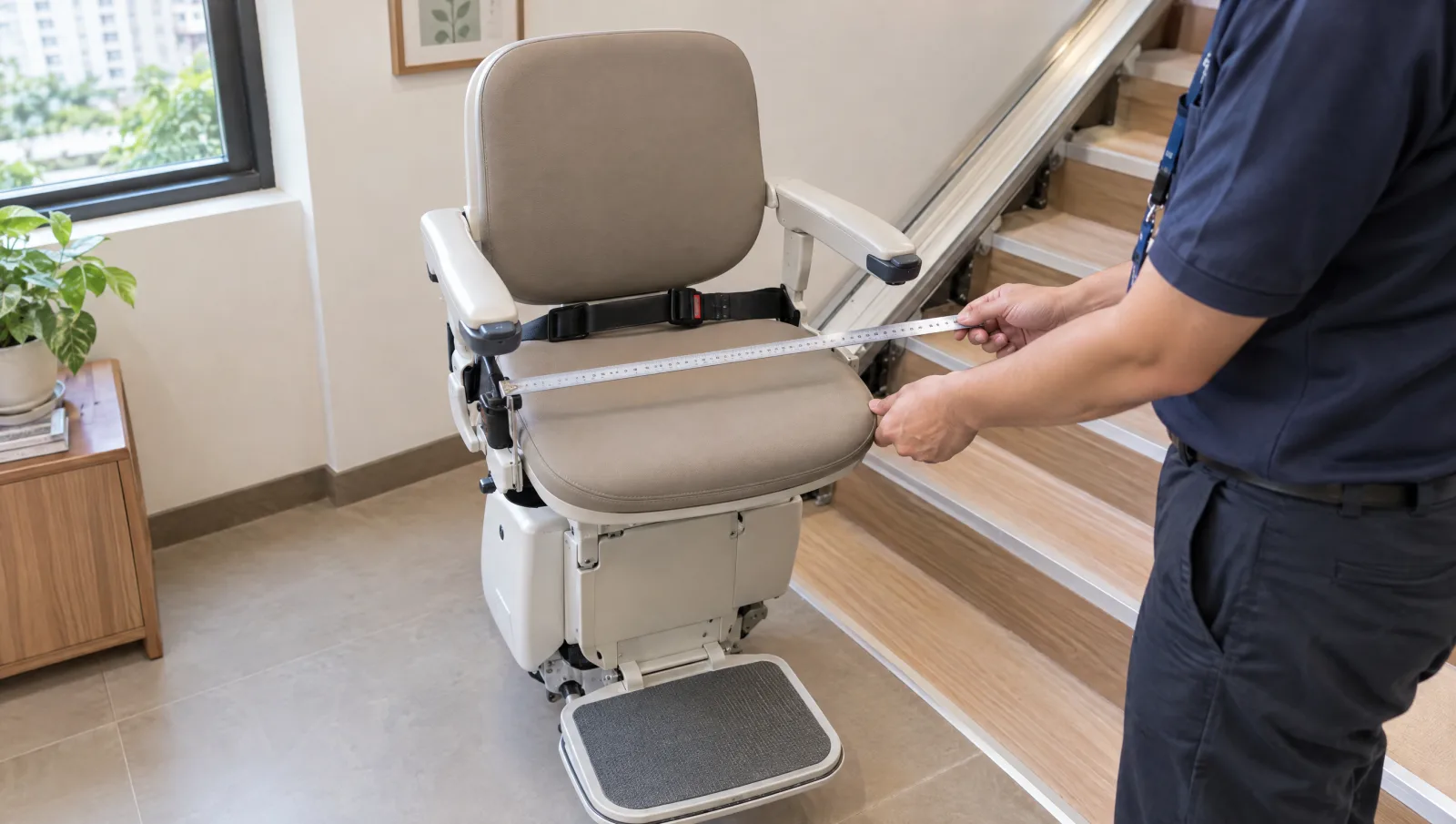
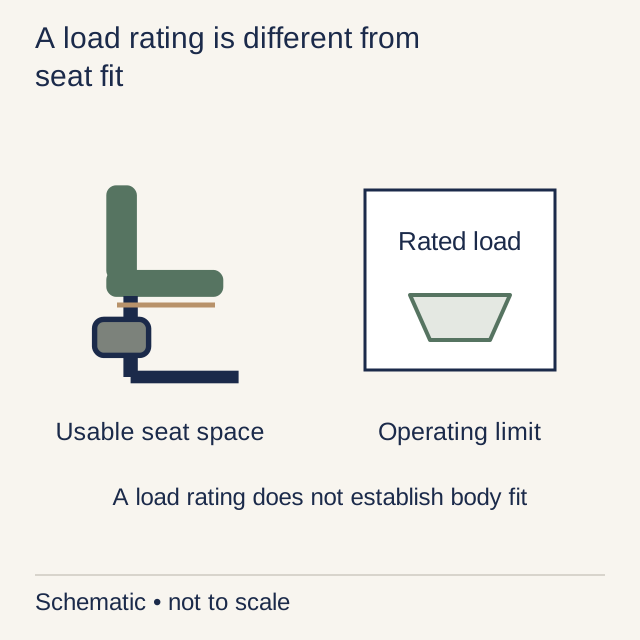
View In PDFThe 130 straight stairlift is rated at 127 kg, or 159 kg in its HD version; the 180 curved model is rated at 120 kg. The exact configuration matters. Your family member must be within its permitted load, fit comfortably in the chair and be able to get on and off at both landings. A higher weight rating alone does not answer all three questions.
Standard Weight Capacity
| Exact product configuration | Stated maximum capacity | Scope |
|---|---|---|
| 130 straight, standard | 127 kg | Standard configuration on the linked manufacturer page. |
| 130 straight, HD version | 159 kg | A separately specified higher-capacity version, not every 130. |
| 180 curved | 120 kg | Curved model on the linked manufacturer page. |
For a hypothetical 125 kg rider, the 120 kg configuration is outside its limit and must not be used. The 127 kg configuration is within the published weight limit numerically, but that two-kilogram difference does not settle suitability: the permitted loading definition, accurate user weight, seat fit, posture and exact supplied variant still need assessment. A higher rating should be chosen where the actual requirements call for it, not by applying a homemade safety-margin formula.
The rating is a maximum operating limit, not a recommended target and not a comfort score. The same household may find a straight high-capacity chair suitable on one staircase but need a different product for a curved route. Do not transfer a rating from one rail system or variant to another because the chairs look similar.
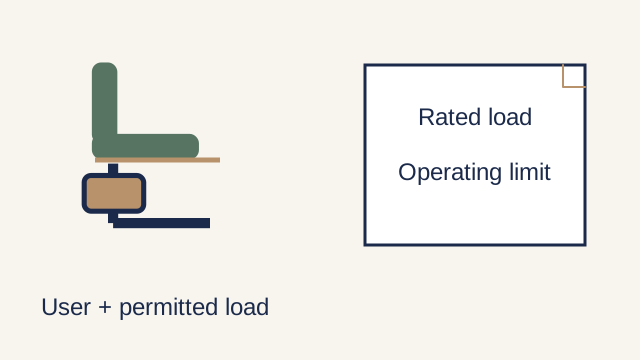
Use the maximum permitted user load stated for the exact stairlift configuration. Different models and variants carry different ratings; a general “standard capacity” label is not enough to select equipment. Record the rating in the quotation and confirm it against the installed label and manual.
A stairlift is intended for its permitted user arrangement, normally one person in the specified seat. Do not carry a child or pet on the rider’s lap or treat remaining rated capacity as spare passenger space. Follow the manual’s restrictions on carried items as well as its weight limit.
Heavy-Duty Models
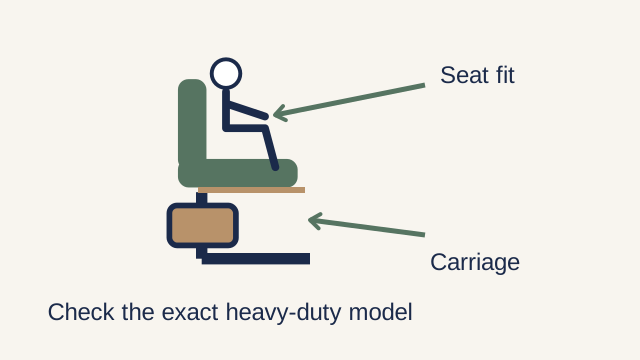
In the straight-model example, 159 kg belongs to the stated HD version. A quotation that only identifies the model family leaves that distinction unresolved. Have the exact capacity variant identified before ordering and confirm the delivered equipment and manual agree; a sales description cannot raise the limit printed for the installed chair.
A higher-capacity variant may use a different carriage, seat or rail arrangement. Ask the supplier to identify the complete configuration rather than adding a “heavy duty” description to a standard quotation. Confirm local supply, service support and the rated operating conditions for that exact model.
Price the options that meet the user’s needs on the same installed basis. Include any changed seat, rail, mounting or powered assistance. A higher rating does not by itself prove better comfort or a longer life; compare the fit, transfer sequence and supported use directly.
Seat Width Is Separate From Weight Capacity
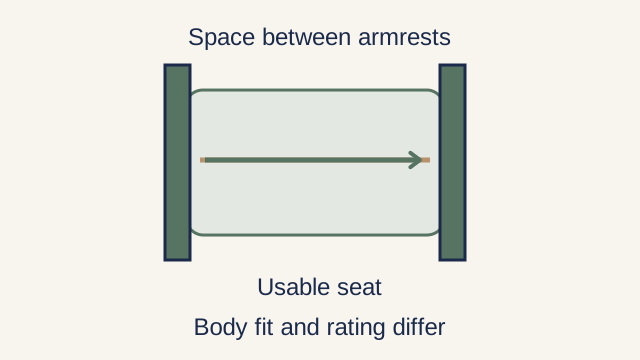
| Chair configuration | Width between armrests | What the measurement tells you |
|---|---|---|
| 130 straight standard arms | 445 mm | Usable width between the arms, not the full chair width. |
| 130 straight wide-arm version | 495 mm | 50 mm more between arms; not proof that the load rating increases. |
| 180 curved | 480 mm | A different chair/route combination; its stated load rating remains 120 kg. |
These dimensions show why a capacity upgrade and a wider chair are separate questions. The 480 mm curved chair is wider between the arms than the 445 mm straight example, yet has a lower stated maximum load. Check the person’s sitting position and comfort in the proposed configuration rather than assuming that the highest number solves both needs.
The user can be below a model’s weight limit and still find its seat unsuitable. Check usable seat width between the armrests, depth, belt adjustment, footrest position and the ability to keep limbs within the permitted travel envelope. Do this with the intended user wherever possible.
A wider seat is not automatically better. It can alter support, reach to controls and clearance through a bend. Arrange a supervised trial of the proposed configuration and explain any posture or transfer difficulty to the supplier and care professional before the final selection.
Why Capacity Affects Ride Quality
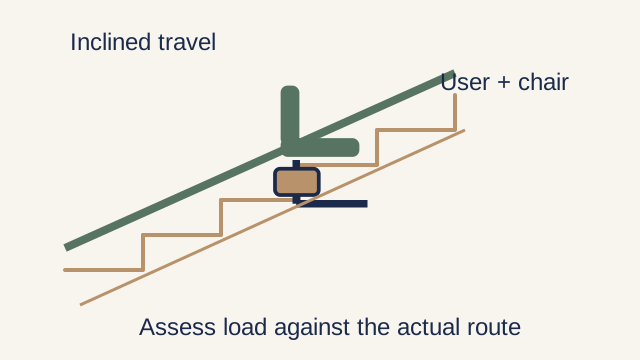
The 130 straight product’s angle table also distinguishes its configurations: a standard seat post is listed for 29–55°, while a short seat post is listed for 40–55°. Those figures apply to that model’s stated arrangements. They show why changing the seat height or powered options is not simply a comfort decision; the configuration must also suit the surveyed incline.
Capacity, approved incline and travel arrangement must be checked together in the selected model’s documentation. Do not infer suitability from a universal stair angle or total rise. Ask the supplier to show that the surveyed rail design falls within the system’s permitted operating conditions.
Assess ride comfort during a suitable demonstration rather than predicting it from motor size. Unexpected slowing, noise or stopping on an installed lift should be reported to the service provider; it is not a reason to accept a strained ride as normal or to self-adjust the drive.
Future-Proofing the Choice
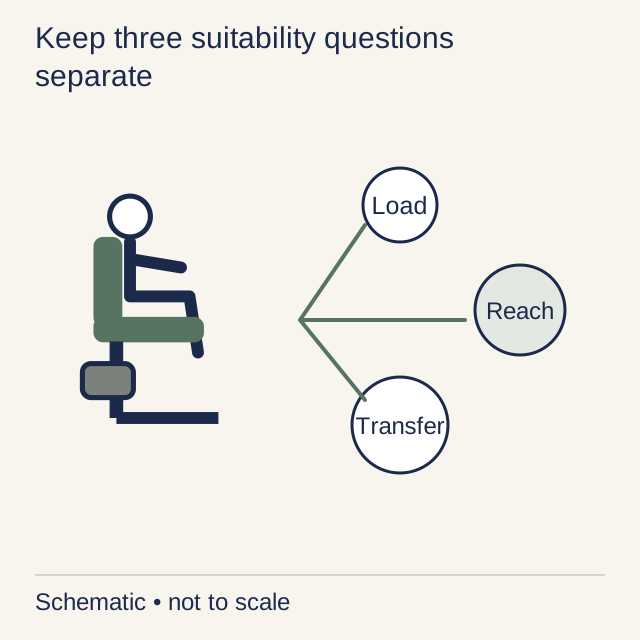
Discuss foreseeable changes in mobility, posture and transfer assistance alongside weight. A chair that works today may stop meeting the household’s needs if the user can no longer transfer from a wheelchair. A larger weight rating would not solve that different problem.
Ask which options can be changed later and which would require a new chair, rail or installation. Keep those written answers with the quotation. Future flexibility is useful when it is supported by the actual model, rather than an assumed service life or a generic allowance added to the user’s weight.
How to Decide
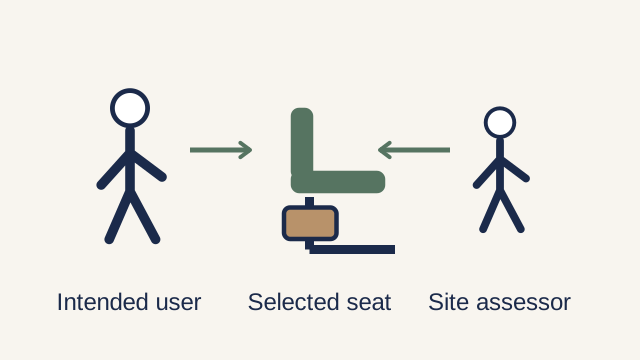
For a stairlift assessment, send staircase photographs and the required route, and arrange a private discussion of the rider’s weight and transfer needs. If a care professional already advises on seating or transfers, bring that advice to the assessment. The useful outcome is one identified configuration that meets the load limit, fits the person and works at both landings.
Give the supplier an accurate user weight and describe how the person will approach, sit, operate the controls and leave the chair. Keep within the manufacturer’s exact limits; do not use a homemade ten-kilogram rule to decide a model’s suitability.
Have the surveyed configuration and any care assessment resolved before ordering. The installed stairlift also needs the Singapore PTO and registered-contractor process. Capacity, user suitability and lawful operation are separate checks, and each needs to be satisfied.
Stairlifts across Singapore
Need help with your project?
Tell us what you need on WhatsApp and send a few photos. We'll arrange a free site assessment, then give you a fixed-price quote within 3 to 5 working days.