On this page
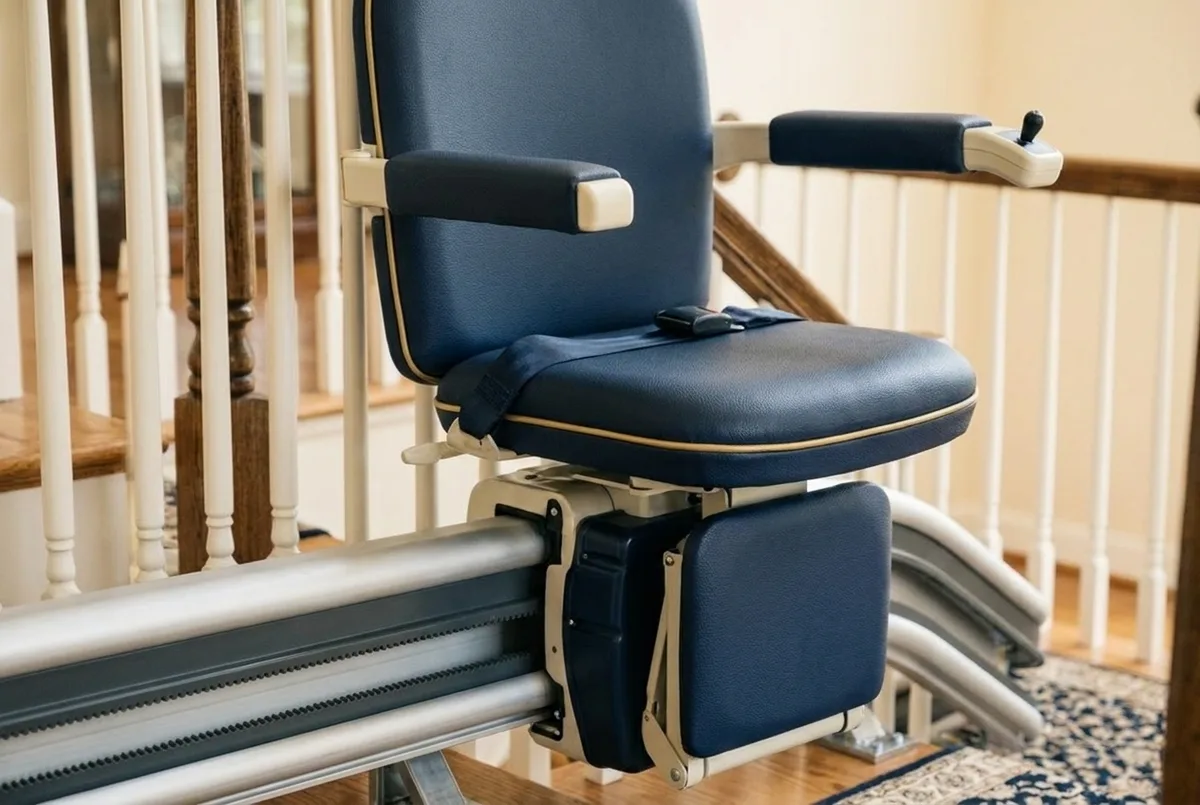
View In PDFA stairlift's safety features need to work for the person riding it. A belt, swivel seat, footrest and controls serve different purposes, and each must be comfortable to use. Review them during a demonstration with your parent, including getting on and off, rather than assuming a long feature list proves the chair is suitable.
Why Safety Features Are Not Optional
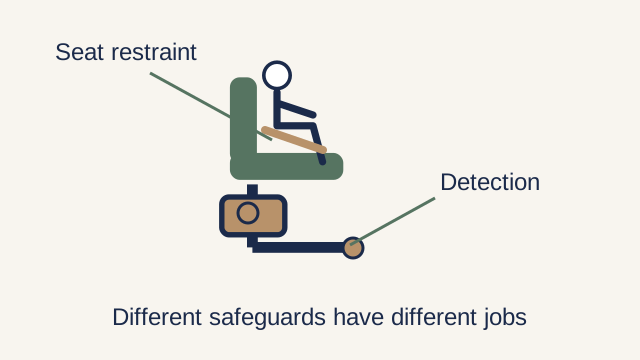
A stairlift’s safety depends on the selected equipment, its installation, the person using it and continued care. A list of features cannot establish that a chair suits a user who has difficulty transferring, sitting upright or operating the controls. Involve an occupational therapist or the user’s care team where suitability is uncertain.
Ask the supplier to explain the exact model and its operating precautions, including optional features. Confirm the Singapore PTO and registered-contractor requirements as well. Overseas technical standards do not replace the local installation and operating process.
Obstruction Sensors
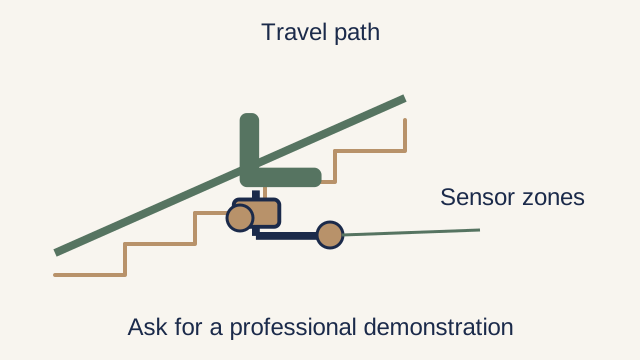
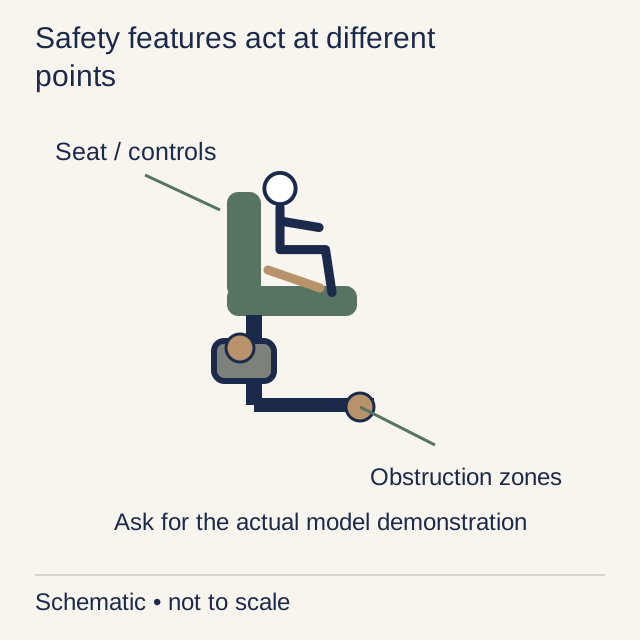
Obstruction protection acts in defined zones around the carriage or footrest; it does not see every object or guarantee a stop before contact. Some systems use contact-sensitive edges. Keep the route clear of people, pets and objects before travel even when the chair has obstruction protection.
Have the competent installer demonstrate the fitted system using the manufacturer’s procedure. Do not put a towel, hand or other object in the path to create a home test. If the lift stops unexpectedly, follow the installed manual and contact the service provider where needed; repeated resets do not establish that the route is safe.
Seatbelt Detection and Soft-Start
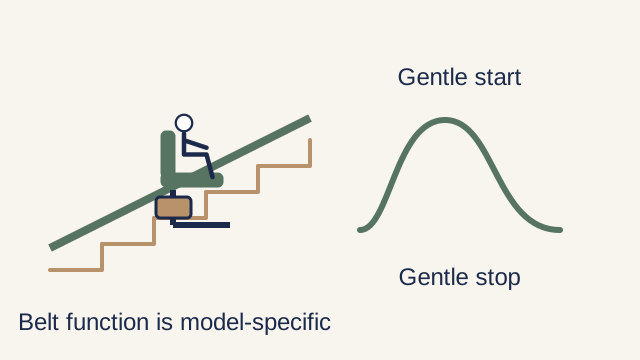
Wear the supplied belt as the manual directs. Belt types and interlocks differ, so ask whether the quoted model prevents travel with an unfastened belt, gives a warning or relies on the user fastening it. Try the actual buckle while safely seated during the suitability assessment; an inaccessible latch can defeat an otherwise useful feature.
Gentle acceleration and stopping can improve comfort, but a smooth demonstration is not a clinical suitability assessment. Have the intended user try the proposed configuration with appropriate assistance. Explain pain, balance or transfer difficulties to the care professional and supplier so they can assess the whole journey.
Powered Swivel and Swivel-Stop
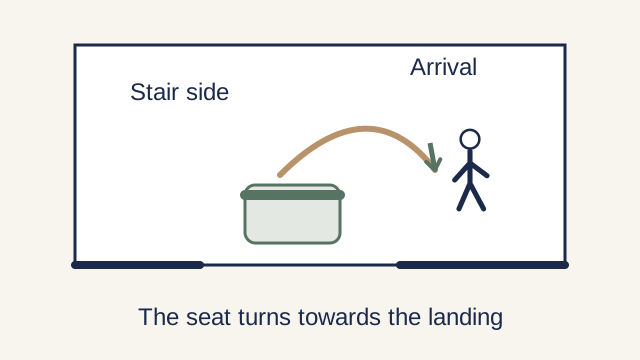
At the upper landing, the transfer arrangement should let the user leave the seat onto a safe standing area. A manual or powered swivel may help, depending on the model and the user’s abilities. Check the final seat position, locking action, foot placement and door movement together; a powered option alone does not guarantee a safe transfer.
The carriage must be in the manufacturer’s permitted travel position before moving along the rail. Ask the installer to demonstrate the relevant swivel interlock on the installed chair. Do not describe that position simply as facing the stairs: orientation depends on the system, and the user should follow the actual manual.
Battery Backup
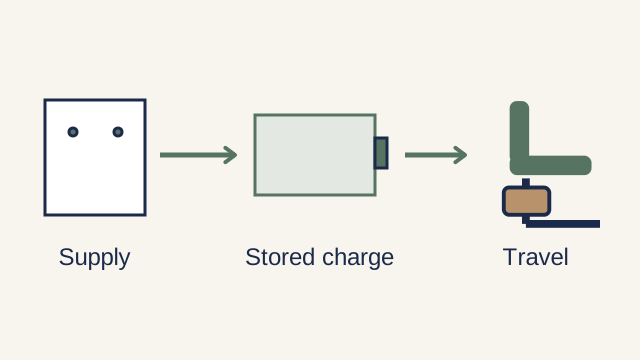
Battery-powered stairlifts can provide travel during a mains interruption, subject to charge, battery condition and the installed system. Charging and battery care are therefore part of normal ownership. Obtain the model’s outage instructions rather than relying on a promised universal number of trips.
Do not deliberately disconnect power for a monthly ride test unless the manufacturer or responsible service provider specifies that procedure. Ask the contractor to check battery condition during the appropriate service visit. Make a household access plan for an outage or fault that lasts longer than the available charge.
Overspeed Governor and Manual Brake
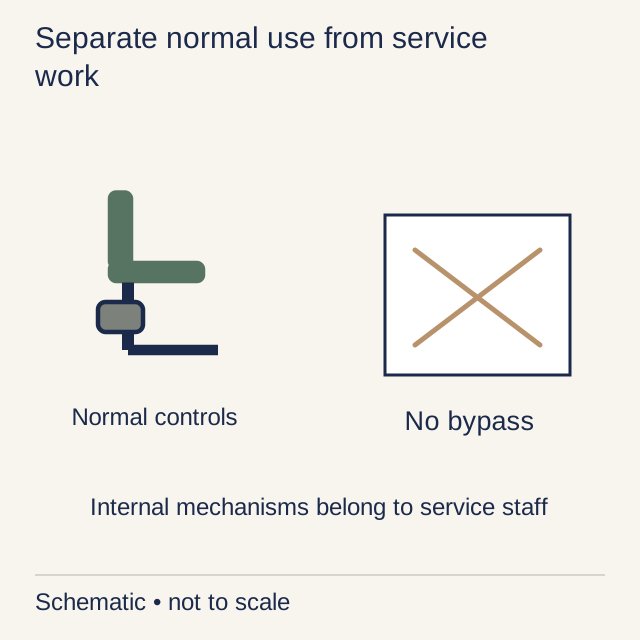
Normal braking and overspeed protection do different jobs. The drive motor brake holds the carriage when normal travel stops. An overspeed governor responds to movement above its permitted speed and triggers the safety stopping arrangement; it is a backup for abnormal movement, not the control used to stop at each landing. The Acorn 180 manual identifies a drive motor brake and an overspeed governor as separate components. Their exact mechanisms and maintenance procedures belong to the selected model, so no feature list can promise that every possible failure is harmless.
The speed-responsive braking principle is to detect excessive movement and act on the stopping system before normal controls can be relied upon. It does not detect a person’s poor balance or make an unsafe transfer safe. If that protection operates or the chair stops with a fault, the cause needs professional investigation before the household relies on it again.
A “manual brake” or handwinding device should not be mistaken for a passenger’s emergency handbrake. Recovery arrangements let an appropriately trained person control a stopped lift under the manufacturer’s procedure. On the Acorn 180, the F7 instruction expressly says not to handwind downwards and to contact the supplier immediately. Giving everyone a generic brake-release instruction would defeat the model-specific limits that make recovery controlled.
Manual recovery equipment, where provided, is not automatically a homeowner control. Do not release a brake, use a handwheel or attempt to move an occupied carriage unless the installed instructions explicitly permit the action for the trained person involved. Keep the service contact and a means of calling for help accessible to the user.
Other Features Can Matter to This Household
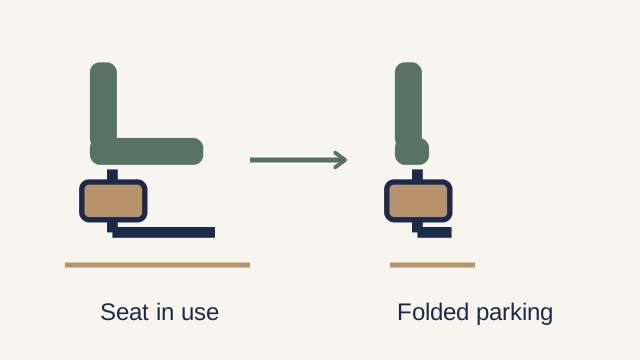
A key lock may matter when children could operate the chair; a folding footrest may determine whether the user can prepare it without bending; and remote controls may let a caregiver bring an empty chair to the correct landing. These are practical requirements when they address a real need, rather than interchangeable extras.
Compare the actual transfer sequence and the space left for other stair users. Record which features are included, who will demonstrate them and how failures are handled. Safe use requires suitable equipment, a sound installation, lawful operation and correct care together; passing a five-feature shopping checklist cannot replace those checks.
Stairlifts across Singapore
Need help with your project?
Tell us what you need on WhatsApp and send a few photos. We'll arrange a free site assessment, then give you a fixed-price quote within 3 to 5 working days.